Tag

Working Memory

All articles tagged with #working memory

health-and-fitness1 year ago

Study Finds Athletes Have Superior Working Memory to Non-Athletes

A meta-analysis by the University of Jyväskylä found that athletes consistently outperform non-athletes in working memory tasks, with the most significant advantage over sedentary individuals. The study highlights the cognitive benefits of sports participation, suggesting that physical activity supports brain health and may mitigate cognitive decline with aging. The research emphasizes the importance of an active lifestyle for cognitive enhancement and healthy aging.

health1 year ago

MS Drug Shows Promise in Boosting Memory

Fampridine, a drug used for improving walking in multiple sclerosis, may enhance working memory in individuals with schizophrenia or depression, particularly those with initially poor memory performance. The drug increases brain excitability, allowing faster stimulus processing, and shows potential as a treatment for cognitive impairments. Researchers plan further studies to explore its efficacy in mental health disorders.

neuroscience1 year ago

"Uncovering the Neuroscience of Memory Enhancement and Storage"

Researchers have identified a new type of neuron, called PAC neurons, that coordinate the activity of memory-specific neurons without storing any information themselves, aiding in focus and memory retention. These findings were derived from brain activity recordings of epilepsy patients during memory tasks, shedding light on how working memory functions. Understanding these mechanisms may lead to improved treatments for disorders like Alzheimer’s and ADHD, where cognitive functions are impaired.

science-and-research1 year ago

"The Impact of Formal Musical Training on Working Memory and Creativity"

A study on young Italians suggests that formal musical training may strengthen the link between working memory and divergent thinking, a key component of creativity. The study found that individuals with formal musical education showed a stronger association between working memory and divergent thinking, indicating that musical training may enhance cognitive abilities related to creativity. However, the study's small sample size and age homogeneity suggest the need for further research across different demographics.

neuroscience2 years ago

"The Science Behind Our Superior Perception of Small Numbers"

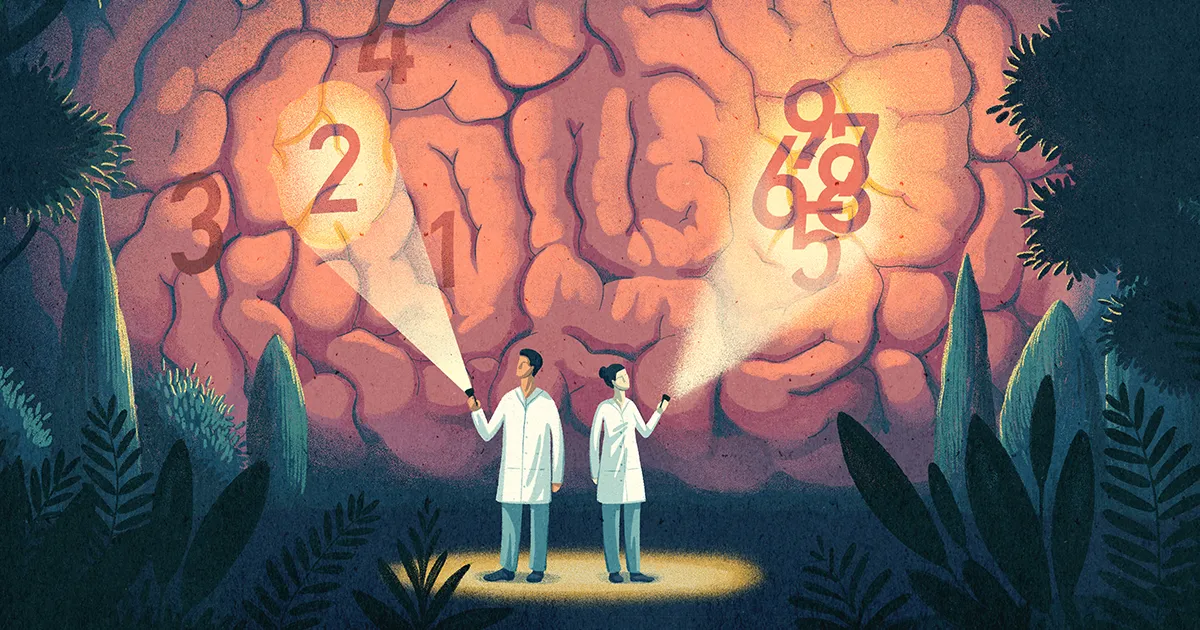
Neuroscientists have discovered that the human brain has separate mechanisms for perceiving small and large numbers. In a study involving epilepsy patients, researchers found that neurons in the medial temporal lobe fired precisely for numbers 4 and below, but became less precise and fired erroneously for larger numbers. This boundary aligns with the limitations of working memory, suggesting a connection between number perception and attention. The findings challenge the previous belief that the brain has a single mechanism for judging numbers and could have implications for math education and artificial intelligence.

health2 years ago

The Impact of Caffeine on Working Memory and Brain Activity

A study published in Scientific Reports suggests that daily caffeine intake may hinder working memory function instead of enhancing it. Previous research focused on acute caffeine intake, but this study investigated the effects of sustained caffeine use on cognitive performance. The study found that daily moderate-dose caffeine intake compromised working memory, as participants displayed higher error rates and longer reaction times during memory-related tasks. Brain imaging revealed increased activity in attention and motor control regions during working memory tasks, but no significant differences in brain activity among the three conditions. The study highlights the need for further research to understand the molecular mechanisms underlying caffeine's effects on cognitive functions.

health2 years ago

The Cognitive Benefits of Music Practice and Listening.

A study conducted by the University of Geneva, HES-SO Geneva, and EPFL has found that practicing and listening to music can alter cognitive decline in healthy seniors by stimulating the production of grey matter. The study followed over 100 retired people who had never practiced music before and enrolled them in piano and music awareness training for six months. Positive impacts have been measured on working memory, and the results open new prospects for the support of healthy aging.

neuroscience2 years ago

Purging and Saving: The Science of Memory Retention.

Cognitive neuroscientists are studying how people forget information and the mechanisms involved in removing information from working memory. Researchers have identified distinct mechanisms by which people remove information from their working memory and have also found that forgetting requires much effort. The hope is that the body of work can lead not only toward better understanding attention and focus but also toward clinical targets for helping patients suffering from disorders ranging from depression and schizophrenia to PTSD and ADHD.

neuroscience2 years ago

Revolutionizing Memory with Spatial Computing.

Researchers at MIT and Karolinksa Institute and KTH Royal Institute of Technology in Stockholm have discovered that the brain creates distinct spaces in the cortex for each general rule of working memory and controls those patches with brain rhythms, a concept the authors call “Spatial Computing.” This system explains how the brain can easily sustain a consistent understanding of a process even when the specific contents keep changing. The researchers realized that all these questions could be resolved by the Spatial Computing theory. Individual neurons representing information items can be scattered widely around the cortex, but the rule that’s applied to them is based on the patch of the network they are in.