
Tag

Medial Temporal Lobe

All articles tagged with #medial temporal lobe

health1 year ago

"Early Brain Connectivity Loss Linked to Alzheimer's Progression"

A study in Alzheimer’s & Dementia reveals that reduced connectivity between the locus coeruleus and the medial temporal lobe is an early indicator of brain atrophy and cognitive decline in Alzheimer’s disease. Lower connectivity during a novelty task was linked to faster atrophy in regions typically affected by Alzheimer’s, especially in individuals with higher amyloid beta levels. This suggests that enhancing this connectivity could slow disease progression. The study highlights the need for further research on diverse populations and the potential of non-invasive brain stimulation as a therapeutic strategy.
neuroscience2 years ago

"The Science Behind Our Superior Perception of Small Numbers"

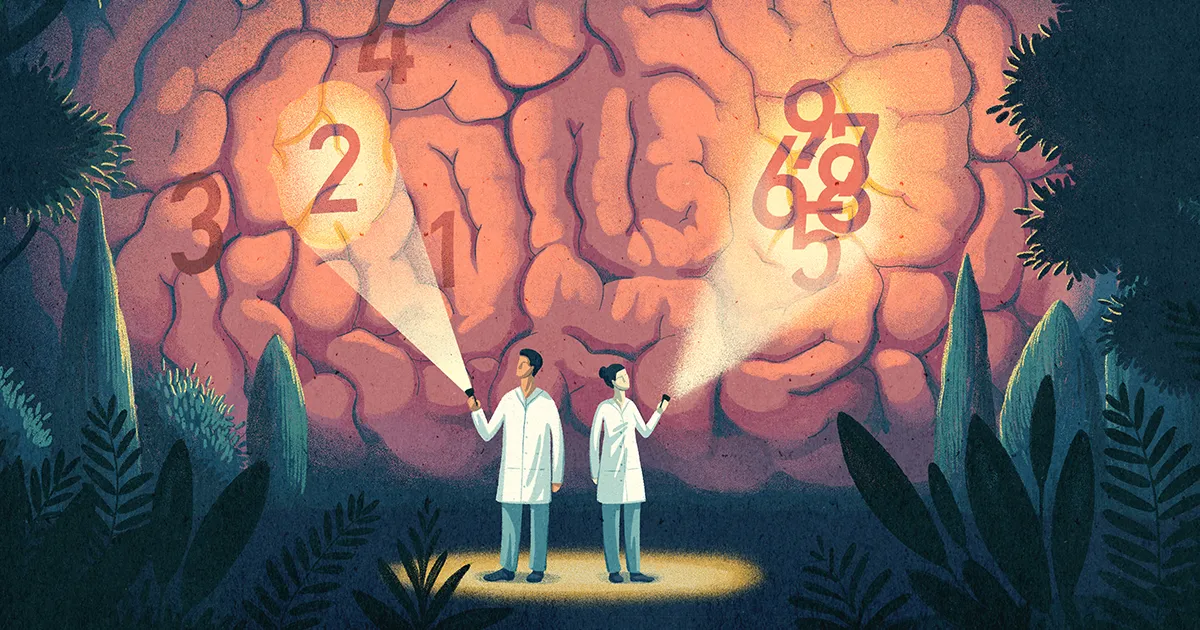
Neuroscientists have discovered that the human brain has separate mechanisms for perceiving small and large numbers. In a study involving epilepsy patients, researchers found that neurons in the medial temporal lobe fired precisely for numbers 4 and below, but became less precise and fired erroneously for larger numbers. This boundary aligns with the limitations of working memory, suggesting a connection between number perception and attention. The findings challenge the previous belief that the brain has a single mechanism for judging numbers and could have implications for math education and artificial intelligence.

neuroscience2 years ago

Unveiling the Power of Light in Reviving Forgotten Memories

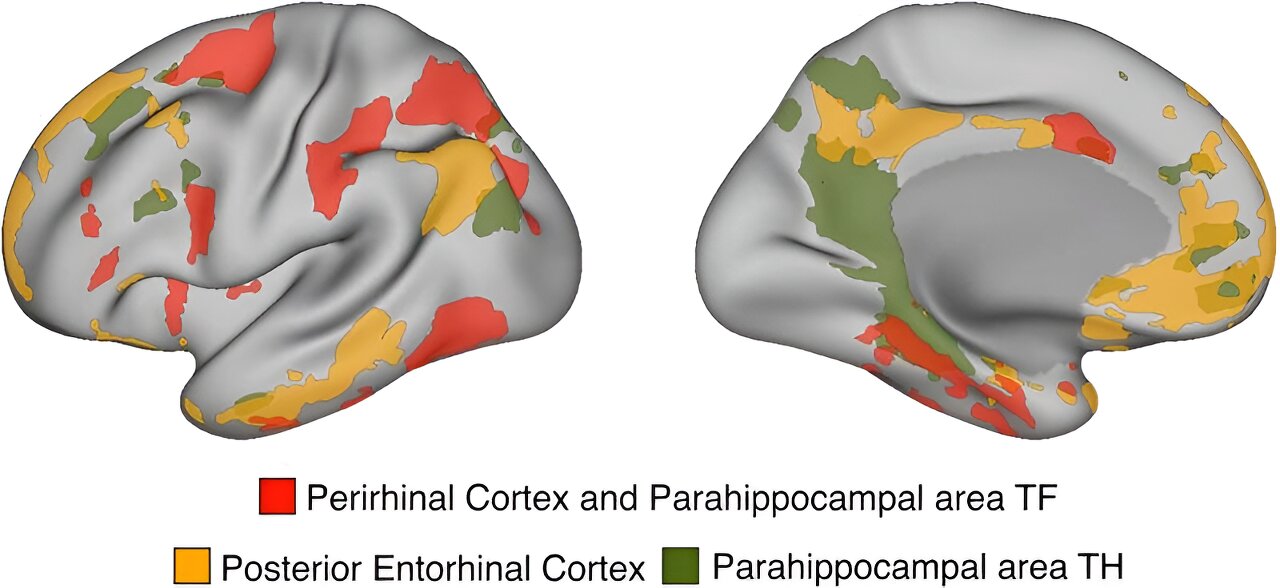
Researchers have used in-depth imaging to study the medial temporal lobe (MTL), a crucial region for memory, and have discovered new cortical networks associated with the MTL. This study provides insights into human memory and potential evolutionary developments. The researchers overcame challenges of anatomical variability and susceptibility artifacts by collecting detailed data from individual subjects. The findings shed light on the connectivity of the MTL with the rest of the brain and highlight potential new cortical pathways in the human memory system compared to non-human primates. The study also suggests that one of the networks connected to the human entorhinal cortex, a region affected early in Alzheimer's disease, may be an evolutionarily young network involved in social processing.

neuroscience2 years ago

Unveiling the Brain's New Mnemonic Networks: The Anatomy of Memory

Scientists at the Max Planck Institute for Human Cognitive and Brain Sciences have used precision neuroimaging and high-resolution fMRI to explore the human memory system. They discovered previously unknown cortical networks associated with different subregions of the medial temporal lobe (MTL), shedding light on the anatomical organization of the human memory system. The study's findings provide insights into the connectivity of the MTL and its potential implications for understanding Alzheimer's disease. The research also suggests the existence of new cortical pathways in the human memory system compared to non-human primates, potentially related to social processing.