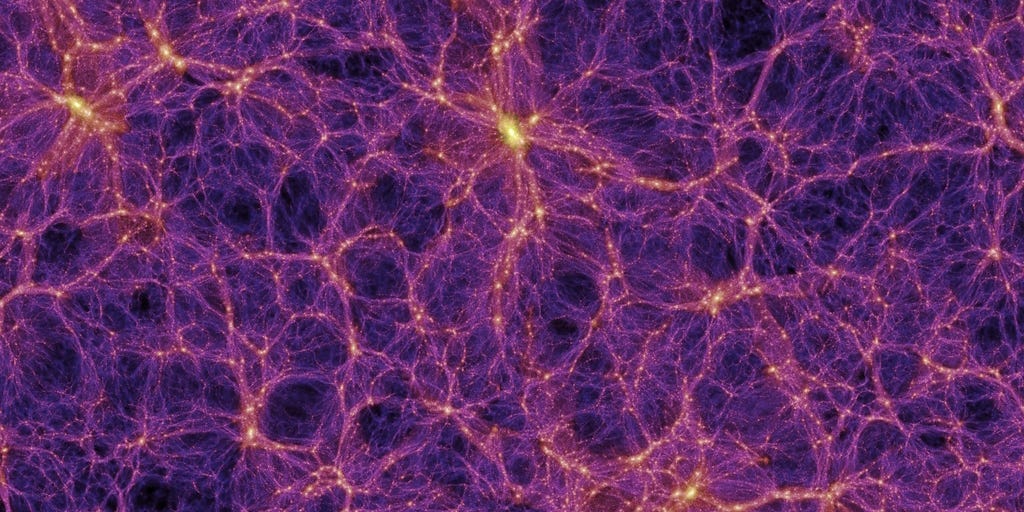
A study using extensive computer simulations suggests that magnetic fields in the early universe were billions of times weaker than a fridge magnet, yet their traces influence the cosmic web, helping refine our understanding of cosmic evolution and star formation.
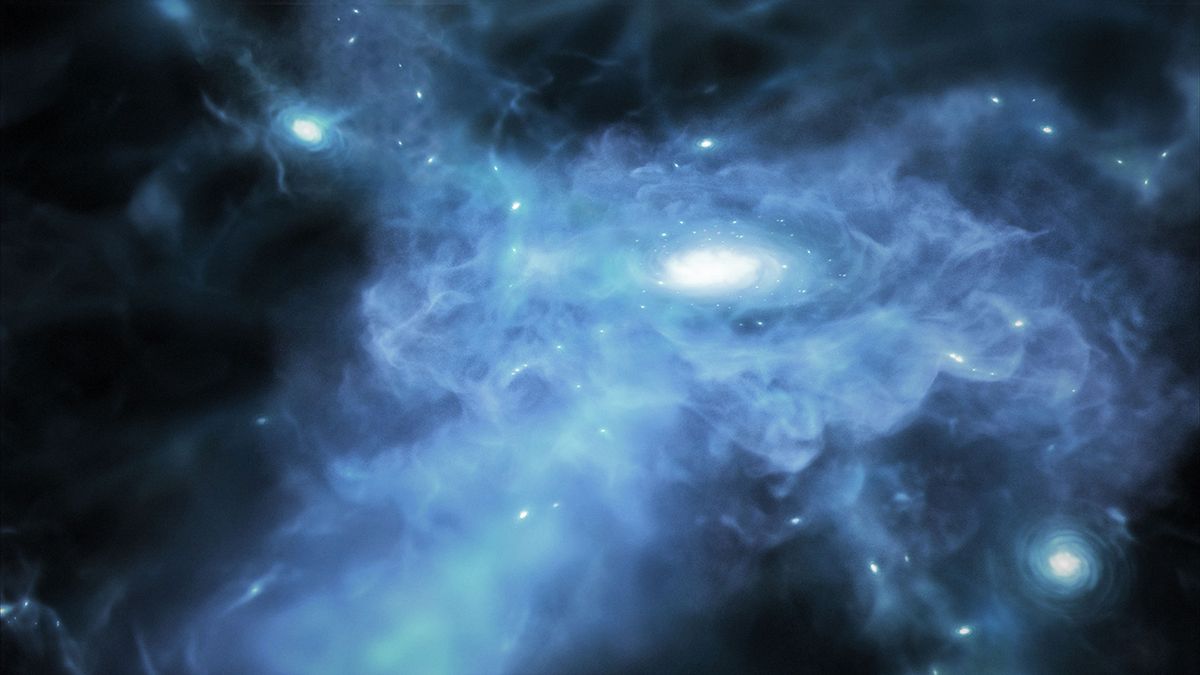
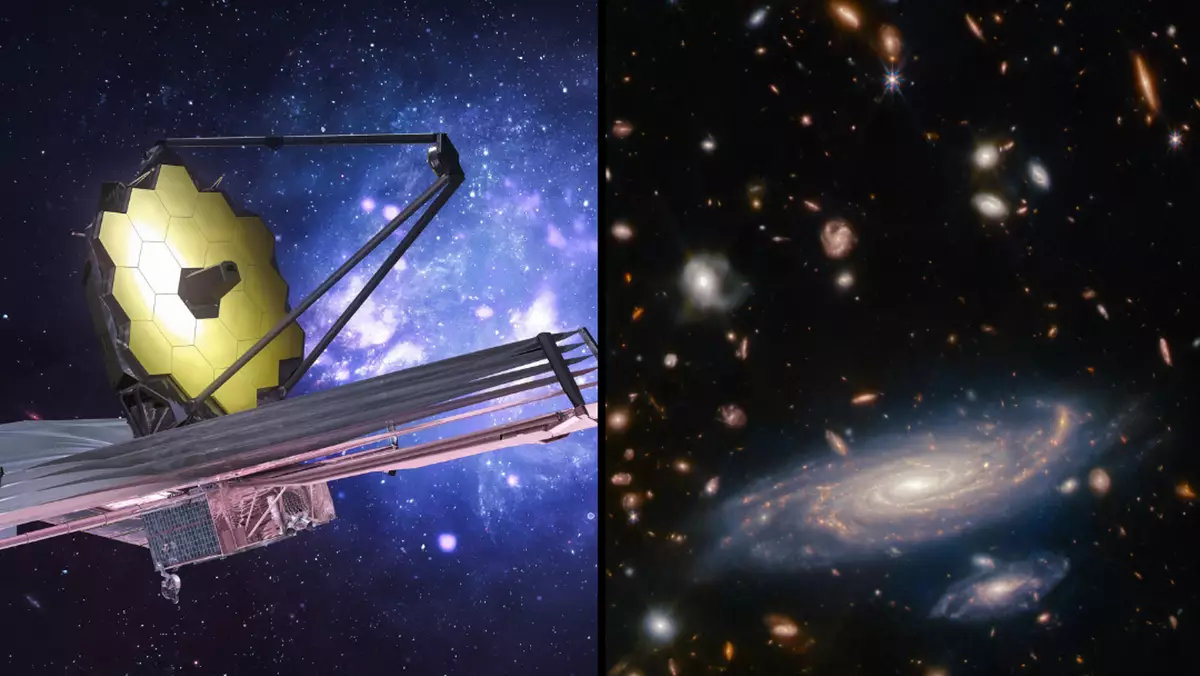
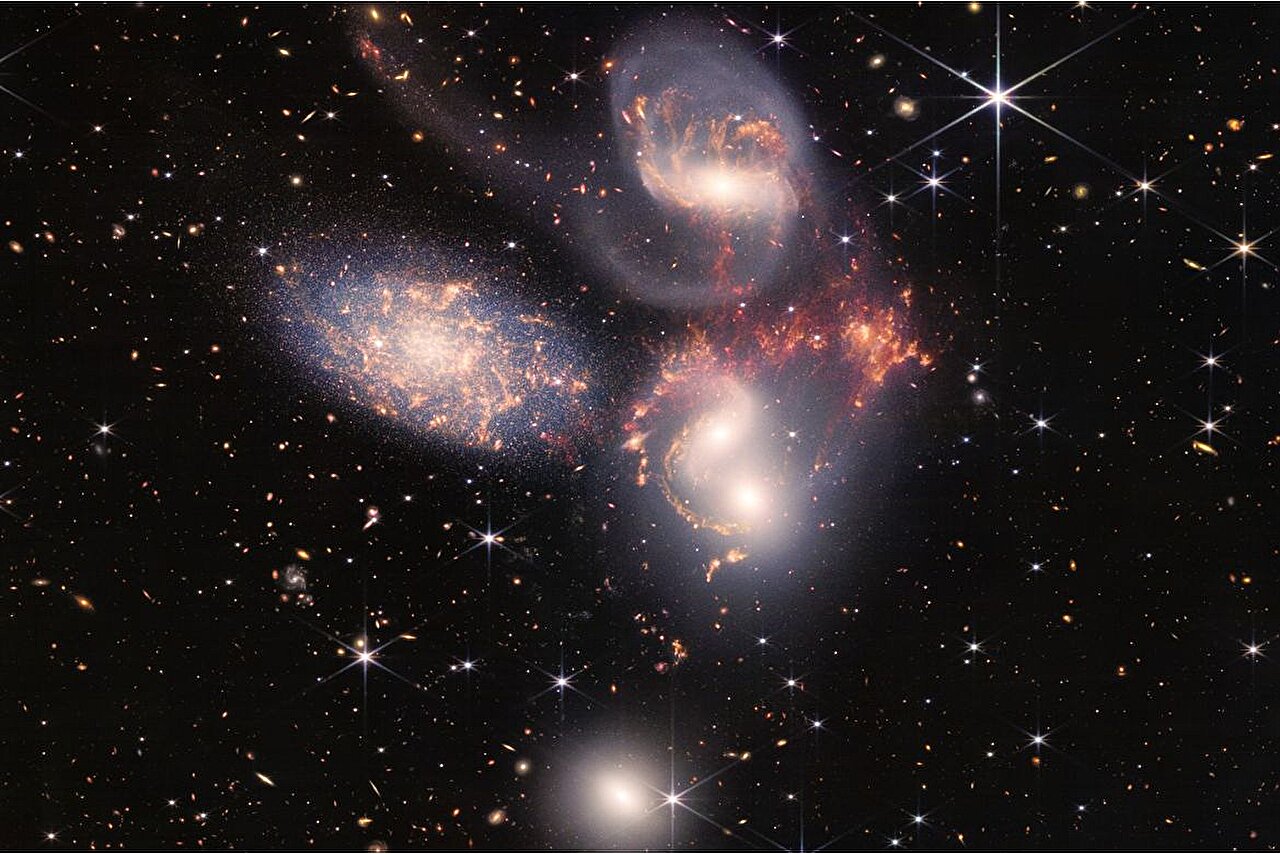
NASA's James Webb Space Telescope has discovered three of the universe's earliest galaxies, formed between 400 million to 600 million years after the Big Bang. These galaxies, observed feeding on helium and hydrogen, provide the first direct images of galaxy formation, marking the birth of the first star systems in the universe.
The James Webb Space Telescope has captured images of three of the universe's earliest galaxies, formed 400 to 600 million years after the Big Bang. These galaxies, seen as red smudges, are in the initial stages of formation, feeding on helium and hydrogen. This discovery provides unprecedented direct images of galaxy formation and offers insights into the early universe's structure and evolution.
The James Webb Space Telescope has made an astonishing discovery, finding a small bunch of red dots identified as some of the earliest galaxies ever formed, shedding light on the coexistence of black holes and the first stars. This challenges the traditional concept of black hole formation and suggests that black holes formed along with the first stars, with their growth initially promoting the stars before transitioning into a mode of turning off the stars. This groundbreaking finding has the potential to change our understanding of how galaxies and black holes started out, opening up new avenues for scientific exploration in astrophysics and the early universe.
Astrophysicists are using the James Webb Space Telescope to search for tiny, bright galaxies near the beginning of the universe to test theories about dark matter. New simulations suggest that interactions between gas and dark matter could have made early galaxies much brighter than previously thought. If the telescope finds these bright galaxies, it would confirm the cold dark matter model, but if only faint galaxies are found, it could challenge current theories about dark matter and prompt a reevaluation of our understanding of the universe's formation.
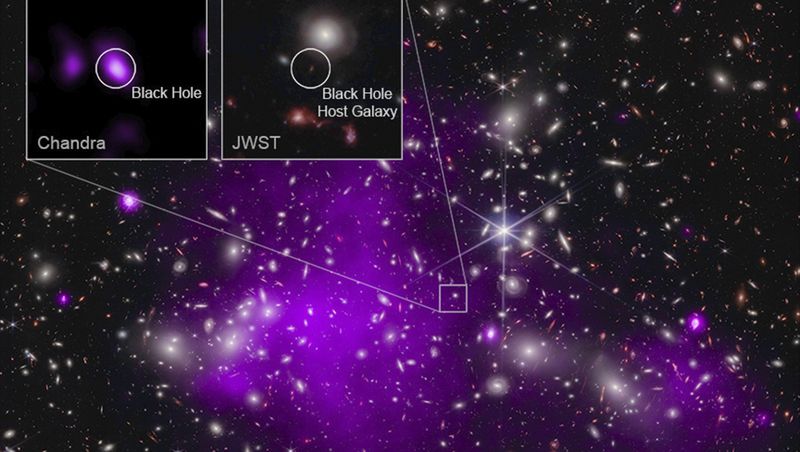
Scientists using data from NASA's James Webb Space Telescope and Chandra X-Ray Observatory have discovered the oldest black hole ever observed, dating to just 400 million years after the Big Bang. This black hole, found in a compact galaxy called GN-z11, challenges previous theories about black hole formation due to its massive size and early existence. The findings suggest that the black hole may have been "born big" or consumed matter at a rate five times higher than previously thought possible, potentially hindering the development of its host galaxy.
NASA's James Webb Space Telescope (JWST) has discovered the earliest known cosmic filament, a long invisible strand connecting ten ancient galaxies. This filament, estimated to be about three million light-years long, could provide insights into the formation of the universe and the interconnectedness of galaxies. The discovery also highlights the role of dark matter and regular matter in creating the conditions for star and galaxy formation. The filament is believed to be anchored by a quasar, and further research aims to understand the emergence of early massive black holes in the cosmic structure formation.