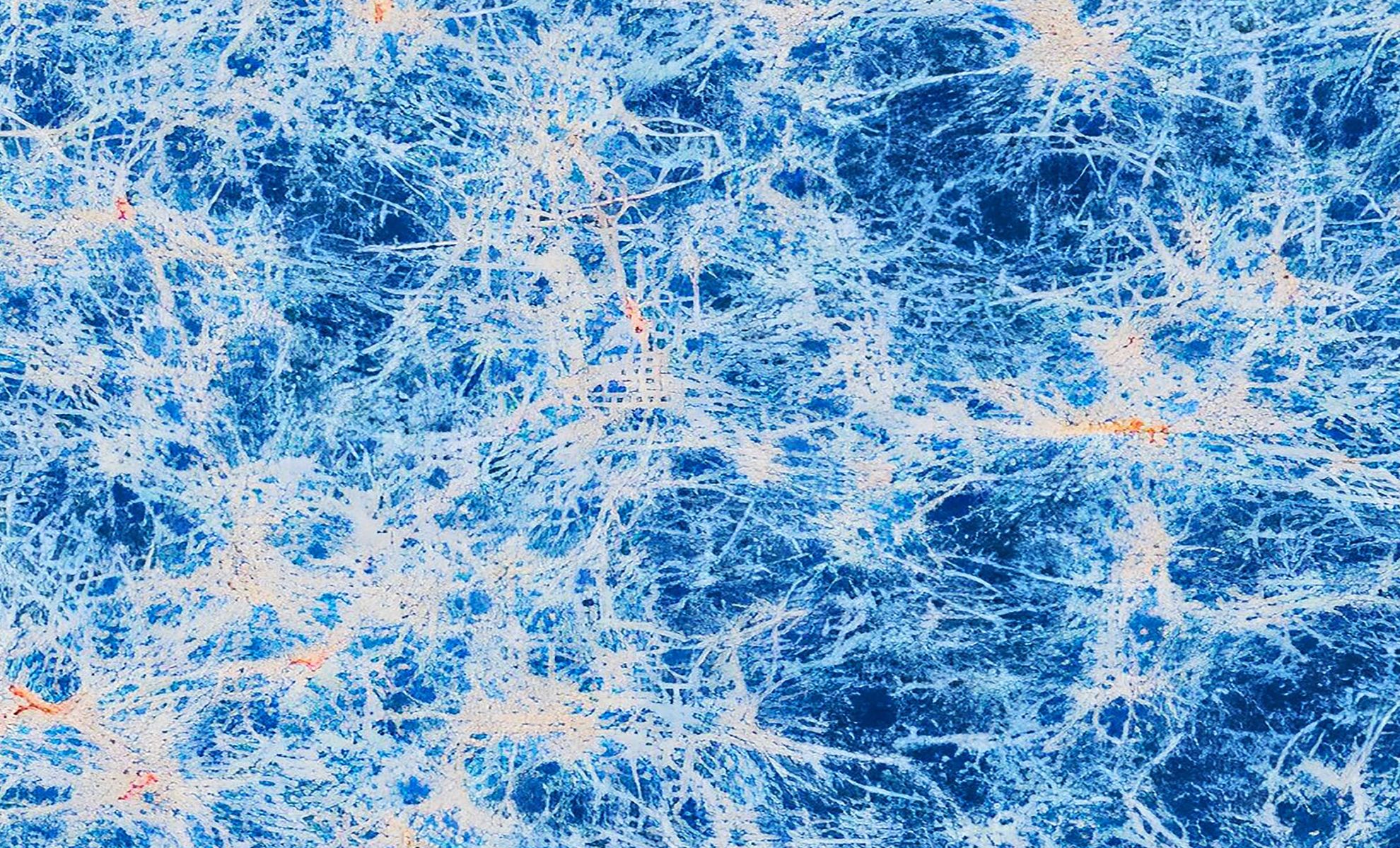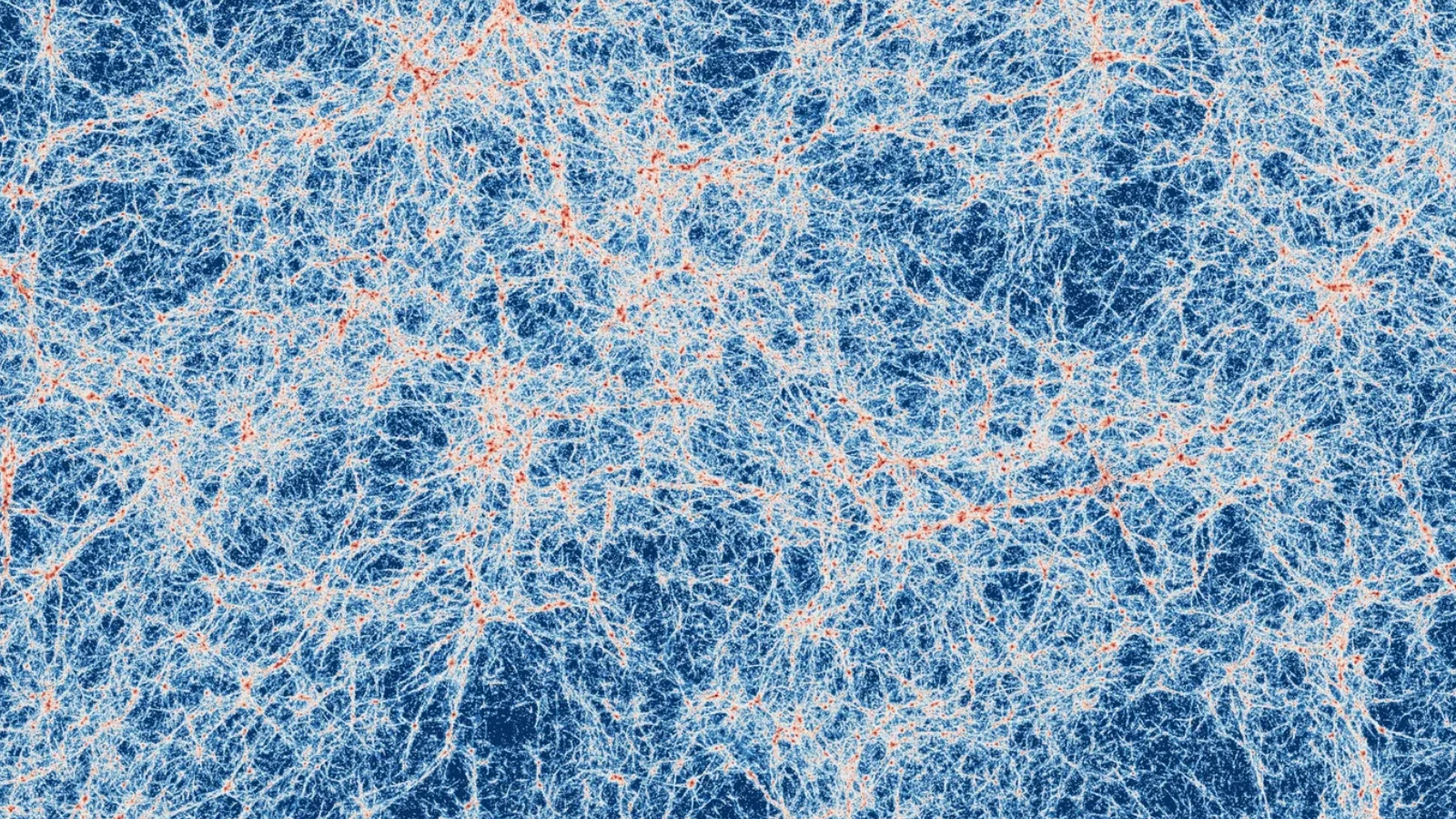
Most of the universe's normal matter isn't in stars or galaxies but is distributed in the cosmic web between galaxies, with recent studies using fast radio bursts confirming that about 76% of normal matter resides in intergalactic space, supporting the Big Bang theory. Dark matter, which makes up most of the universe's mass, remains largely mysterious, but scientists are actively studying it through various methods including underground detectors and telescopes.
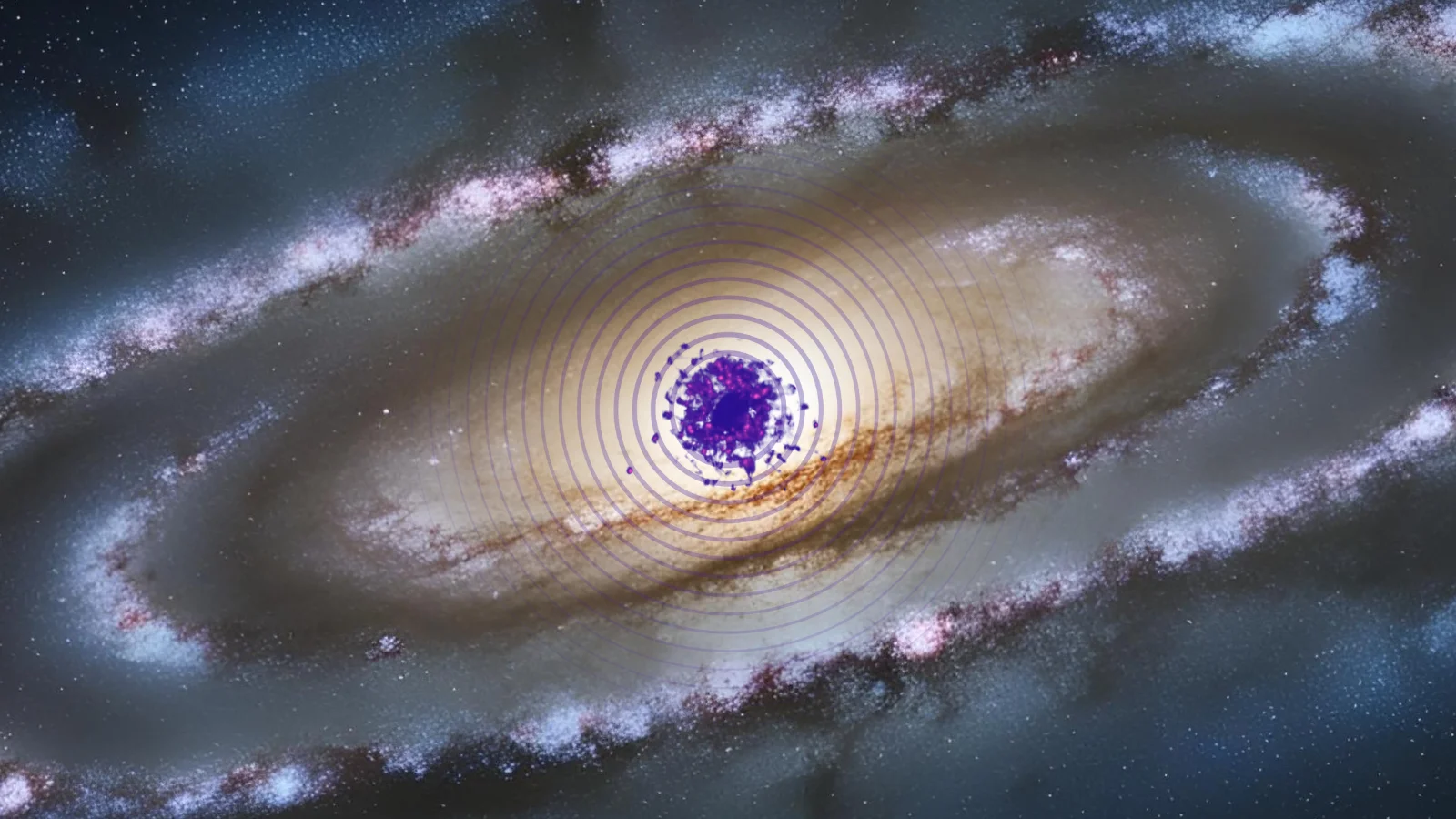
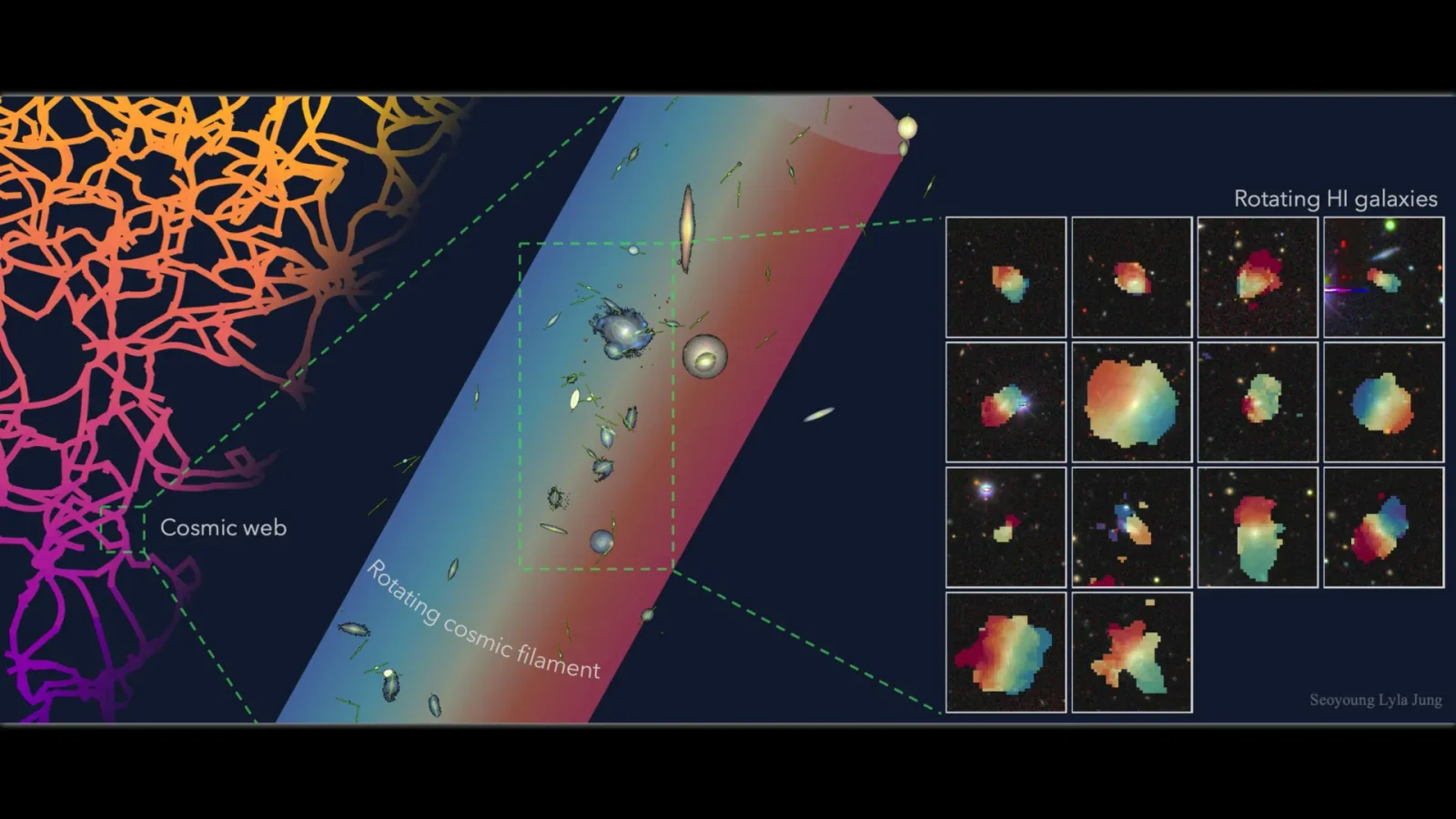
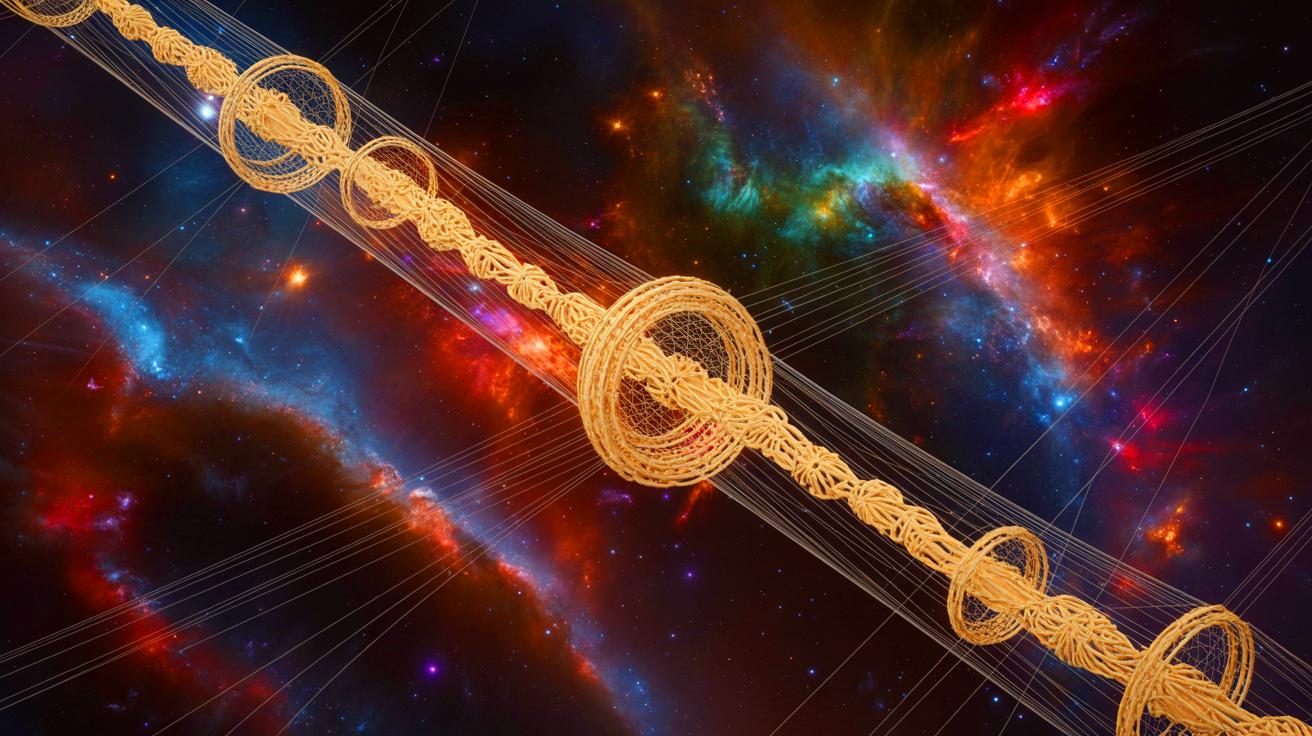
Astronomers have discovered one of the largest rotating structures in the universe, a cosmic filament about 140 million light years away, composed of a thin chain of hydrogen-rich galaxies that appear to rotate collectively, providing new insights into galaxy formation and the dynamics of the cosmic web.
The James Webb Space Telescope has released a stunning image revealing a dense cluster of galaxies and cosmic filaments in the early universe, providing new insights into galaxy formation, the structure of the cosmic web, and the influence of dark matter and dark energy, with observations reaching back over 13 billion years.
Scientists have developed Effort.jl, a fast and accurate emulator that mimics complex models of the universe's large-scale structure, enabling faster analysis of cosmic data from surveys like DESI and Euclid without sacrificing precision.
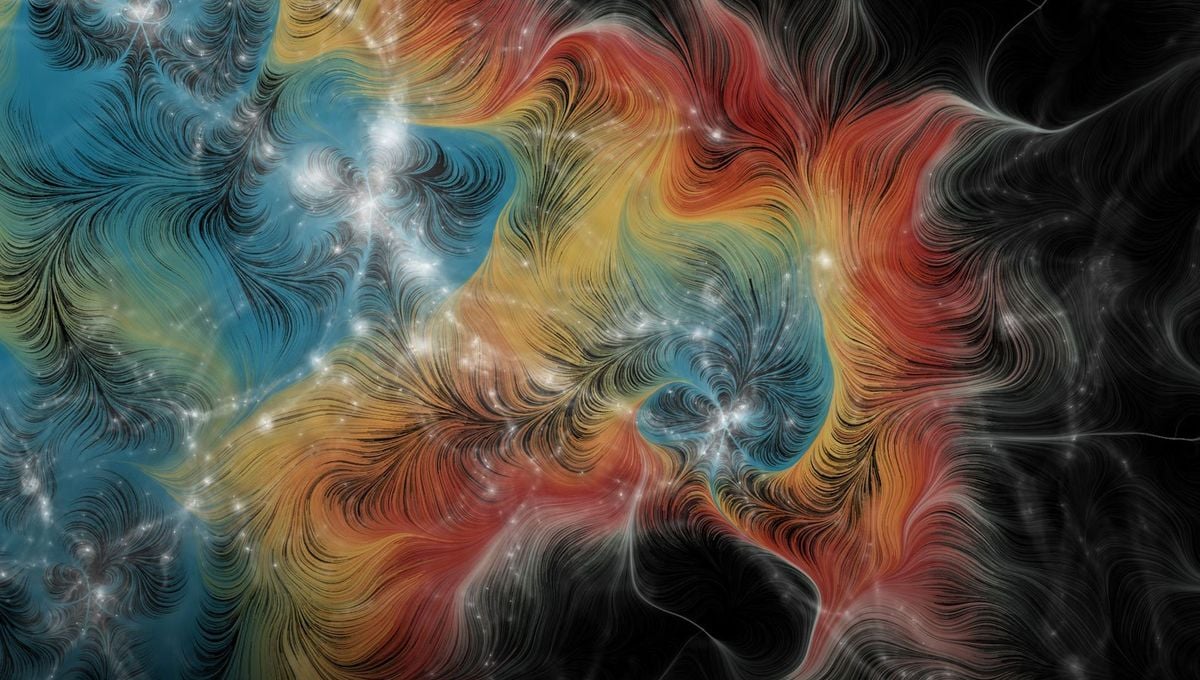
A study using extensive computer simulations suggests that magnetic fields in the early universe were billions of times weaker than a fridge magnet, yet their traces influence the cosmic web, helping refine our understanding of cosmic evolution and star formation.
Astronomers using the MIGHTEE-HI survey discovered a 5.5 million light-year-long rotating galaxy filament connecting 14 galaxies, providing new insights into the early stages of cosmic web structures and galaxy evolution.
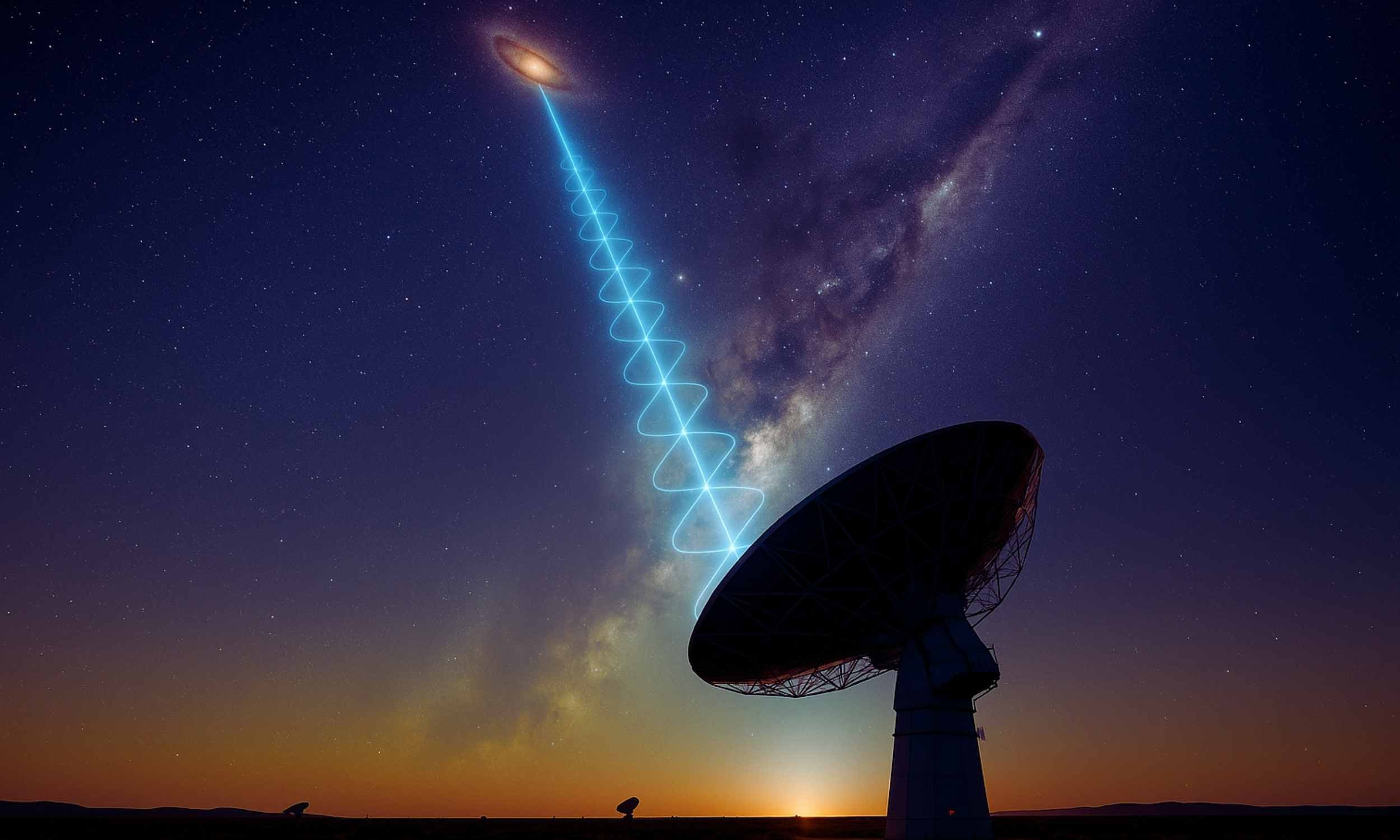
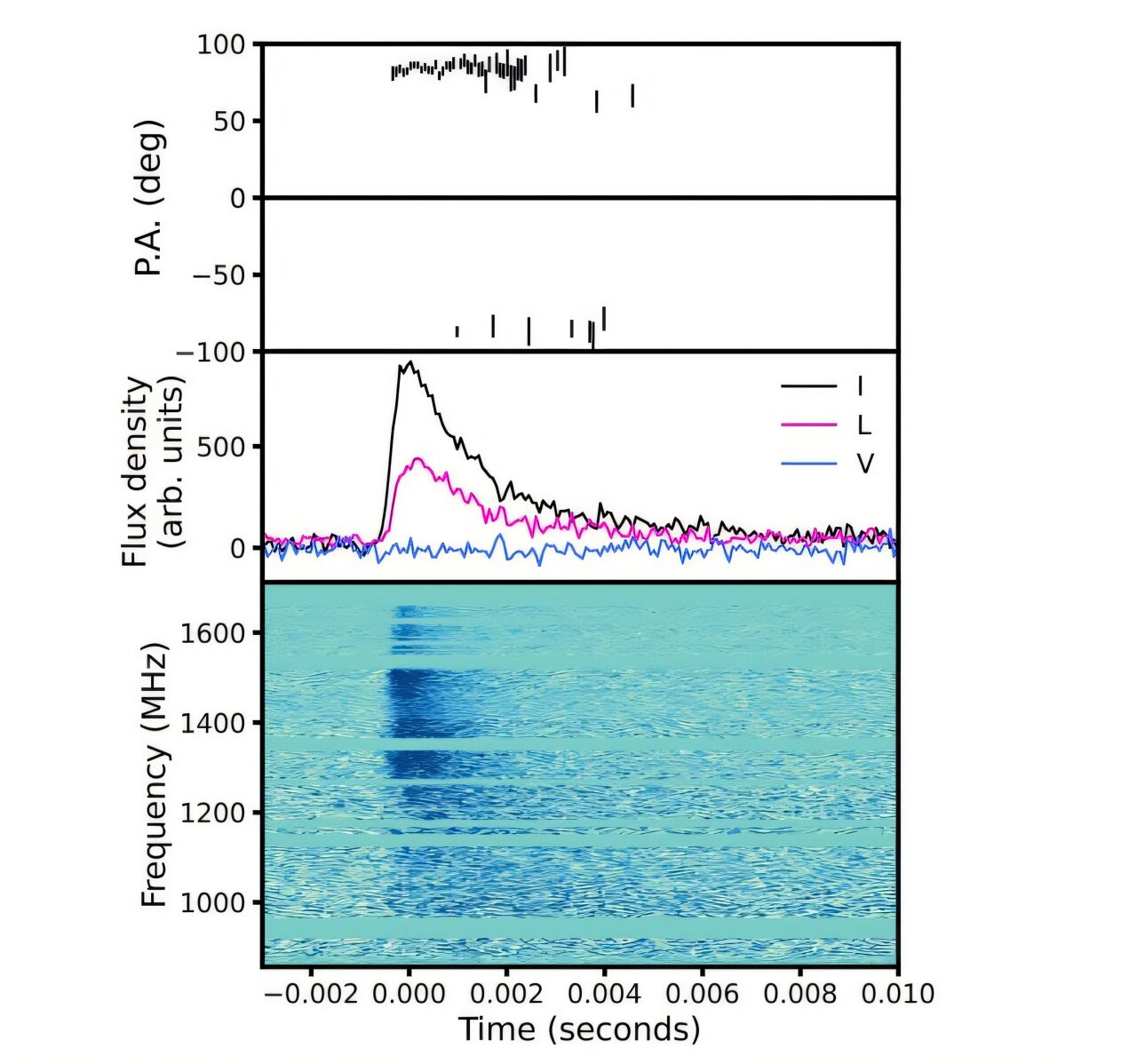
A team using MeerKAT in South Africa discovered a highly active repeating fast radio burst source, FRB 20240619D, emitting hundreds of short radio pulses across multiple frequencies, providing valuable insights into the nature of these cosmic phenomena and their potential origins near magnetars, while also setting limits on optical counterparts and helping map the universe's ionized gas.
Astronomers using the MeerKAT telescope have discovered the most distant fast radio burst, FRB 20240304B, originating just 3 billion years after the Big Bang at a redshift of 2.148, providing new insights into the early universe and galaxy formation.
Scientists have confirmed the existence of the missing 40% of matter in the universe by using Fast Radio Bursts and X-ray observations, aligning observations with cosmological models and completing our understanding of the universe's matter composition.
An international team of astronomers has captured the first direct images of the cosmic web's filaments, providing crucial evidence for theories about dark matter and galaxy formation, by observing faint gas streams connecting galaxies over three million light-years long using advanced telescopes and simulations.
Astronomers have confirmed the existence of the Quipu superstructure, the largest known entity in the universe, spanning over 1.3 billion light-years and composed of 200 quadrillion solar masses. This colossal formation influences cosmic measurements and galaxy evolution, but is transient, destined to break into smaller units over time. Its discovery challenges current cosmological models and enhances our understanding of the universe's vastness and structure.
Astronomers have captured the first direct image of a cosmic filament connecting distant galaxies, providing crucial evidence for the cosmic web's role in galaxy formation and dark matter distribution, using advanced telescopic technology. This breakthrough enhances our understanding of the universe's large-scale structure and paves the way for future research with next-generation instruments.
Astronomers have captured the first direct image of a filament in the cosmic web, revealing gas flowing between two ancient quasars over 11 billion light-years away, confirming theories about how galaxies grow by siphoning gas along web-like structures and providing new insights into dark matter and galaxy formation.
Astronomers have used Fast Radio Bursts to locate and measure the universe's 'missing' ordinary matter, finding that over 75% of it resides in the intergalactic medium between galaxies, marking a major breakthrough in understanding cosmic matter distribution.
Scientists have identified a filament of hot, diffuse gas in the Shapley Supercluster that accounts for some of the universe's missing baryonic matter, aligning observations with cosmological models and helping to resolve the long-standing missing-baryon problem.