Tag

James Webb Space Telescope

All articles tagged with #james webb space telescope

astronomy3 hours ago

Webb’s Tiny Red Dots Might Be Early-Phase Supermassive Black Holes

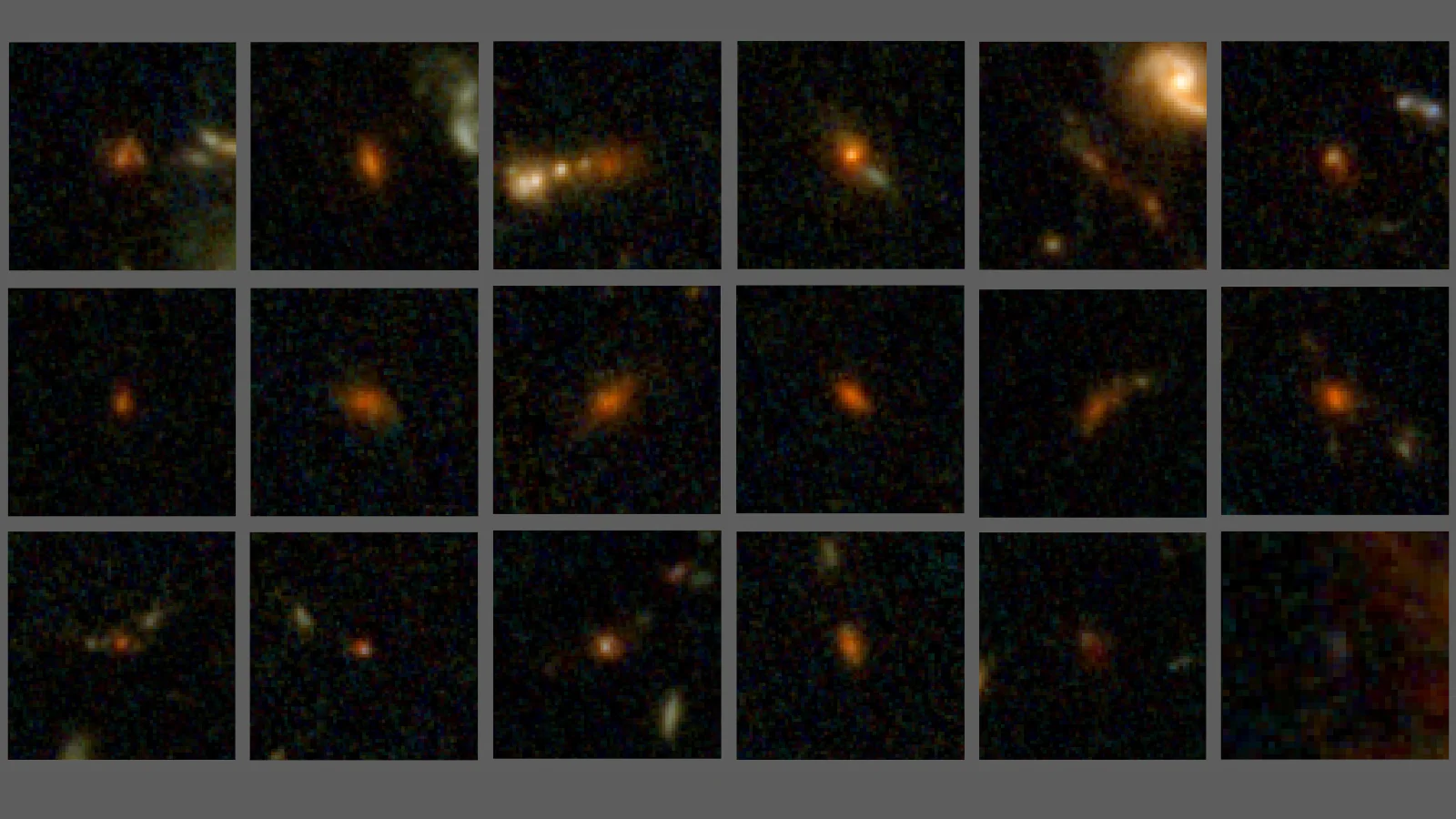
NASA’s James Webb Space Telescope studied 12 ancient galaxies and found that the mysterious “little red dots” are likely supermassive black holes in their youth, not star-rich galaxies. They are extremely luminous yet incredibly compact (more than 250 billion suns in brightness but less than a third of a light-year across), implying black holes roughly 100,000 to 10 million solar masses. Their absence of X-ray/radio emission is explained by surrounding dense gas cocoons that scatter light. If confirmed, these objects could shed light on how massive black holes form in the early universe; the study appears in Nature.

science9 hours ago

SN Ares to Reappear in 2086 Through Gravitational Lensing, Say Scientists

Using gravitational lensing by a foreground galaxy cluster, scientists predict the lensed supernova SN Ares will reappear in 2086, with a 60-year light-delay that could enable ultra-precise cosmology and improved measurements of the Hubble Constant; a second lensed event, SN Athena, may reappear within 1–2 years, offering an earlier data point.

astronomy15 hours ago

Tiny galaxies vanish from the early universe, study suggests

A JWST-backed study using gravitational lensing of galaxy cluster Abell 2744 analyzes faint, distant galaxies from the Epoch of Reionization. It finds a drop-off in ultrafaint galaxies—faint-end suppression—contradicting the expectation that there should be many more tiny galaxies. The result implies early radiation heated surrounding gas, preventing star formation in low‑mass halos and challenging the idea that the smallest galaxies powered reionization; however, conclusions depend on the cluster's lens model, and more JWST data across additional clusters are needed to confirm whether this is a universal trend.

science21 hours ago

Webb reveals slow starvation of Pablo's Galaxy by its central black hole

Using JWST and ALMA, astronomers show Pablo's Galaxy (GS-10578) was starved by its central supermassive black hole, which expelled gas in repeated cycles, halting star formation about 400 million years ago; ALMA found little cold gas while JWST measured a current gas outflow of about 60 solar masses per year and speeds up to 2.2 million mph, indicating a slow starvation rather than a single catastrophic event. This mechanism may help explain old-looking galaxies seen by JWST in the early universe.

space1 day ago

Webb Reveals Slow Black-Hole Starvation Quenching Pablo’s Galaxy

Astronomers using the James Webb Space Telescope and ALMA traced Pablo’s Galaxy (GS-10578) back to about 11 billion years ago and found it ceased forming stars not due to a violent merger but through slow starvation by its central supermassive black hole. Repeated gas outflows expelled star-forming gas and prevented fresh cold gas from refilling the reservoir, leaving the galaxy—seen as a calm rotating disc—without fuel for new stars and ending star formation around 400 million years ago. With an estimated gas-loss rate of ~60 solar masses per year, the remaining fuel could have run out in roughly 16–220 million years, suggesting black-hole feedback as a key quenching mechanism in early galaxies and potentially explaining why some young galaxies look mature in the early universe.

space1 day ago

Webb Reveals Dust Feeding Circinus Black Hole, Upending Core Emission Views

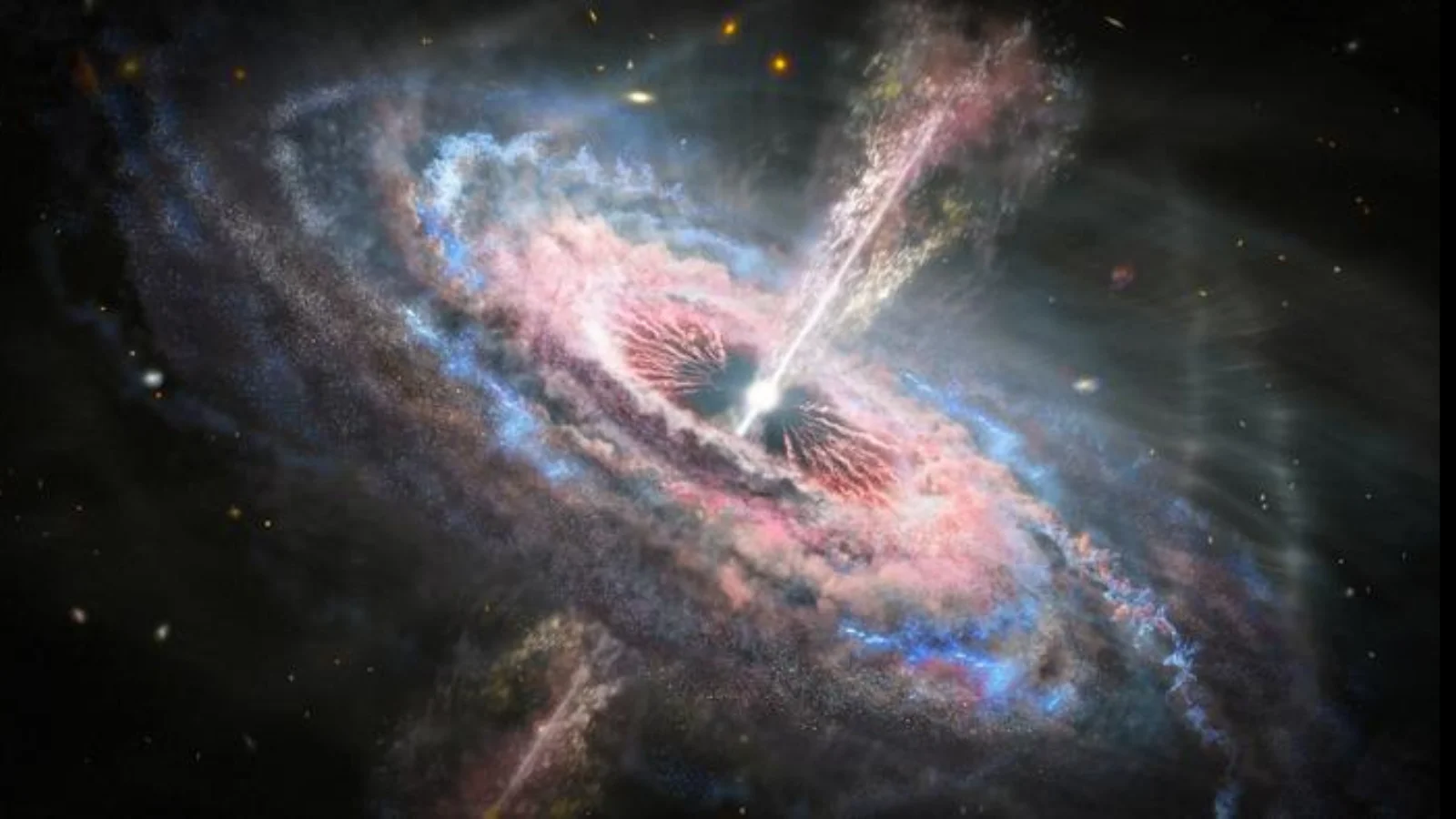
Webb’s Aperture Masking Interferometer on NIRISS allowed a high‑contrast look at Circinus’ core, yielding the sharpest view yet of a black hole’s surroundings. The study finds roughly 87% of the near‑infrared emission comes from hot dust near the black hole’s torus rather than from outflows, overturning decades of models that emphasized outflows. This marks the first extragalactic infrared interferometry in space and demonstrates Webb’s ability to double effective resolution in a focused region, offering a technique to study other bright black holes and build a broader picture of accretion versus outflow contributions.

space1 day ago

Tiny Pandora, Big Insight: Pandora Helps Webb See Real Exoplanet Signs

NASA launches Pandora, a small 17-inch telescope, to calibrate and disentangle stellar activity from exoplanet signals so Webb can more reliably study exoplanet atmospheres. Over its one-year prime mission, Pandora will observe 20 preselected exoplanets to map star variability and correct Webb’s measurements, potentially confirming atmospheres with water or methane while operating on a modest budget and a SpaceX rideshare launch.

science5 days ago

James Webb Telescope Uncovers Mysterious 'Platypus' Galaxies in the Early Universe

Strange cosmic objects observed by the James Webb Space Telescope may be young 'platypus' galaxies or a new class of active galactic nuclei, providing insights into galaxy formation in the early universe. These objects exhibit mixed features of stars and galaxies, challenging existing classifications and hinting at unique formation processes.

science11 days ago

Ancient Black Hole Predates Stars and Galaxies, Challenging Cosmic Origins

Astronomers using the James Webb Space Telescope discovered a massive black hole in a young galaxy from just 700 million years after the Big Bang, challenging traditional theories of galaxy and black hole formation. The black hole's size and the lack of surrounding stars suggest it may have originated as a primordial black hole, formed directly from density fluctuations in the early universe, rather than from star collapse. This finding opens new possibilities about the origins of supermassive black holes and the early universe, though further research is needed to confirm these theories.