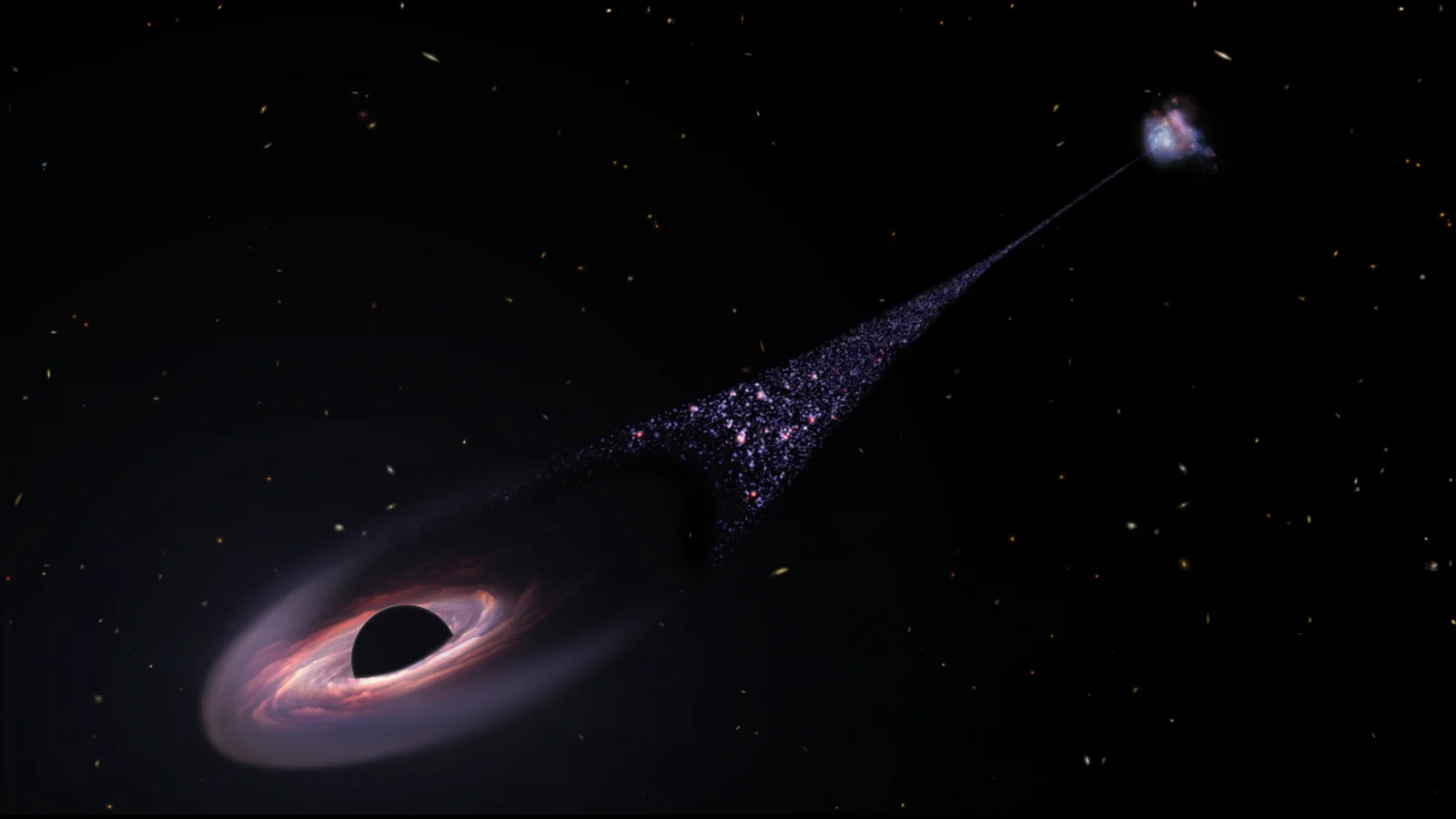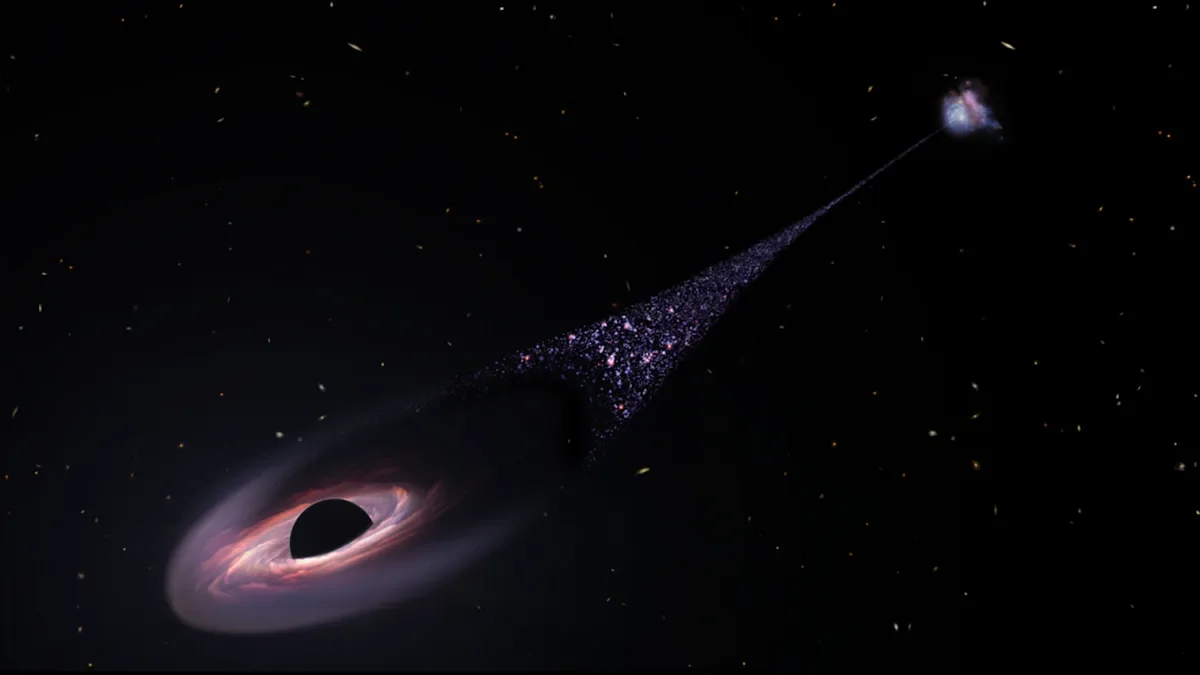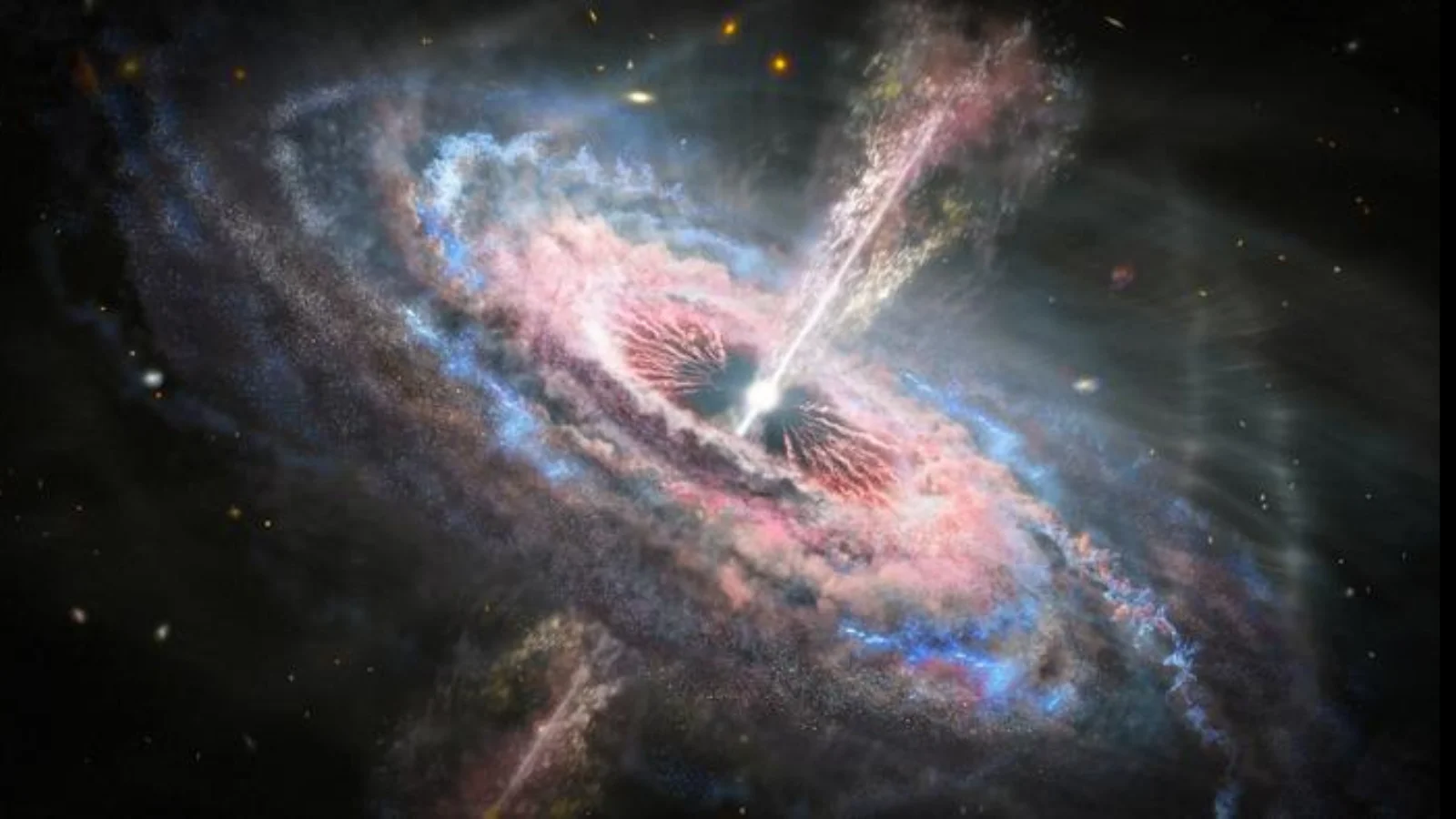
The James Webb Space Telescope has potentially confirmed the first observed supermassive black hole escaping its galaxy at 2.2 million mph, leaving behind a trail of young stars and creating a shockwave detectable in space, providing new insights into galaxy and black hole dynamics.
The James Webb Space Telescope has potentially confirmed the first observed case of a supermassive black hole escaping its host galaxy at 2.2 million mph, leaving behind a trail of young stars and creating a shockwave, providing new insights into galaxy and black hole dynamics.
Using XRISM's high-resolution instruments alongside ESA's XMM-Newton and NASA's NuSTAR, scientists captured unprecedented details of a supermassive black hole in galaxy MCG–6-30-15, confirming relativistic effects near the event horizon, identifying multiple wind zones, and challenging previous models of distant reflection, thus advancing our understanding of black hole physics and galaxy growth.
The 247th American Astronomical Society meeting in Phoenix, dubbed the 'Super Bowl of astronomy,' features new discoveries, debates, and future plans in space science, including insights from JWST, Hubble, and ALMA, and discussions on upcoming missions like the Nancy Grace Roman Space Telescope.
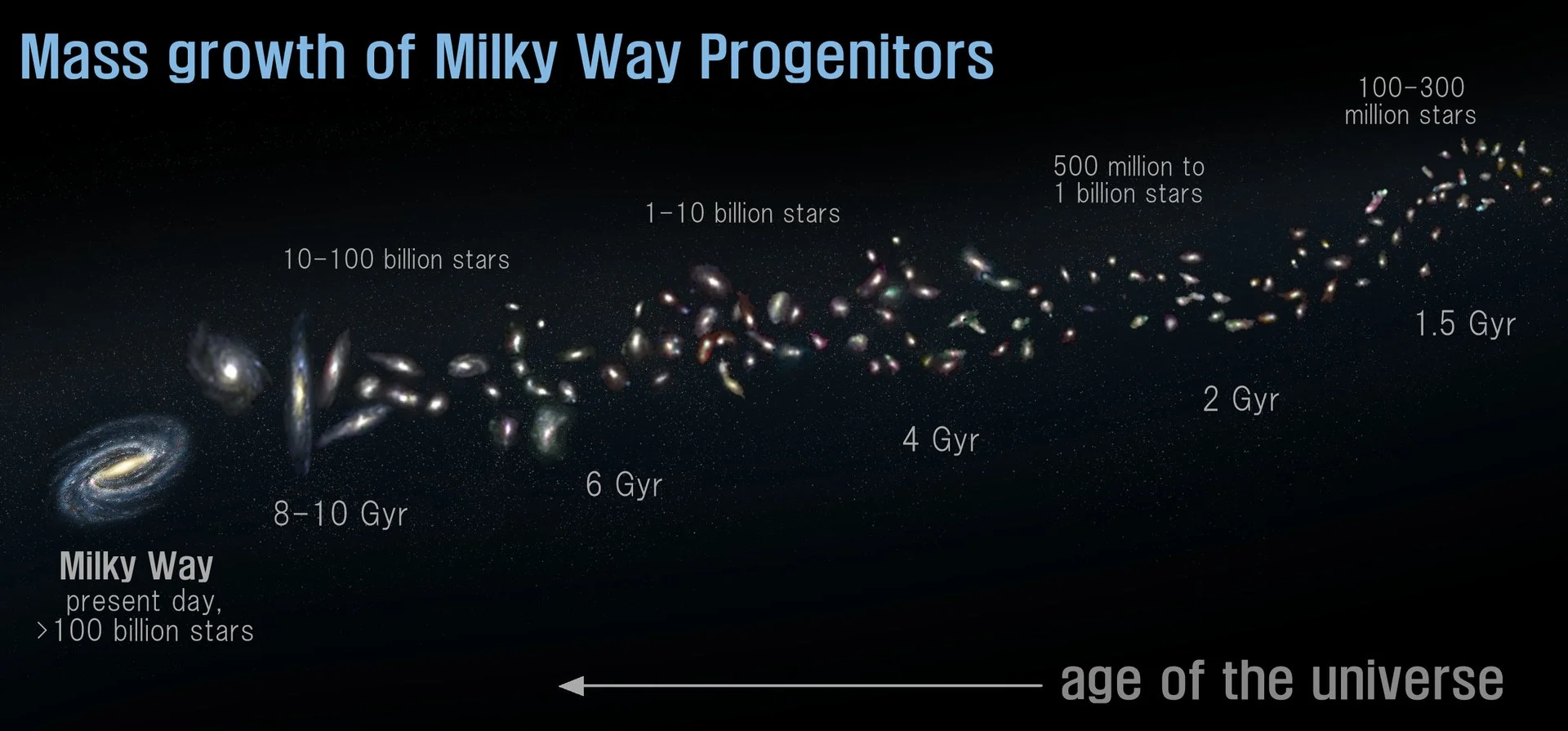
Canadian astronomers used JWST data to create the most detailed timeline of the Milky Way's evolution, revealing a turbulent early history with frequent galaxy mergers and intense star formation, followed by a transition to a stable spiral galaxy.
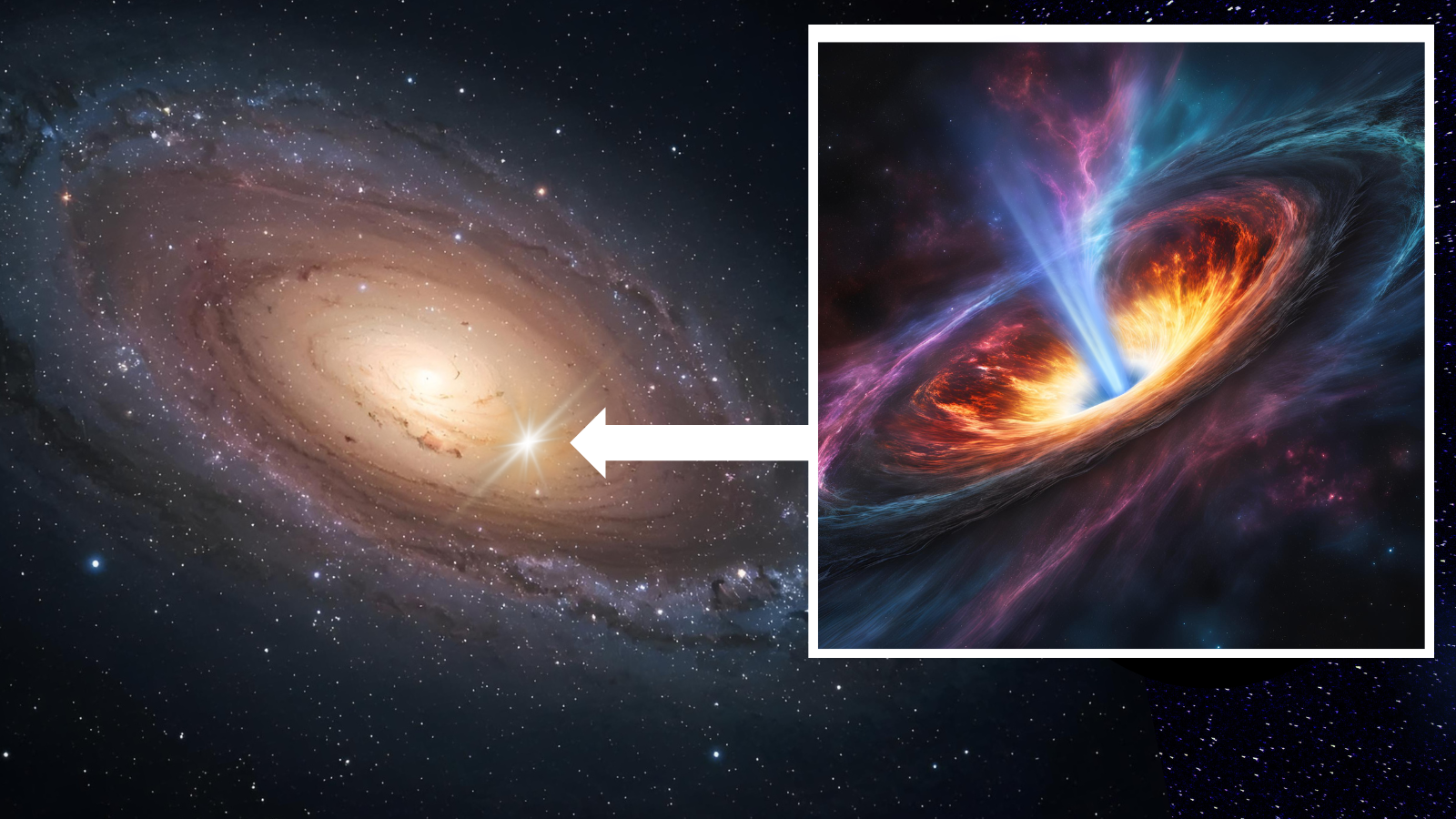
Using the JWST, astronomers observed the galaxy Virgil transforming from a seemingly normal galaxy into a 'cosmic monster' with a supermassive black hole at its core, revealing insights into early galaxy evolution and the potential existence of hidden black hole populations in the universe.
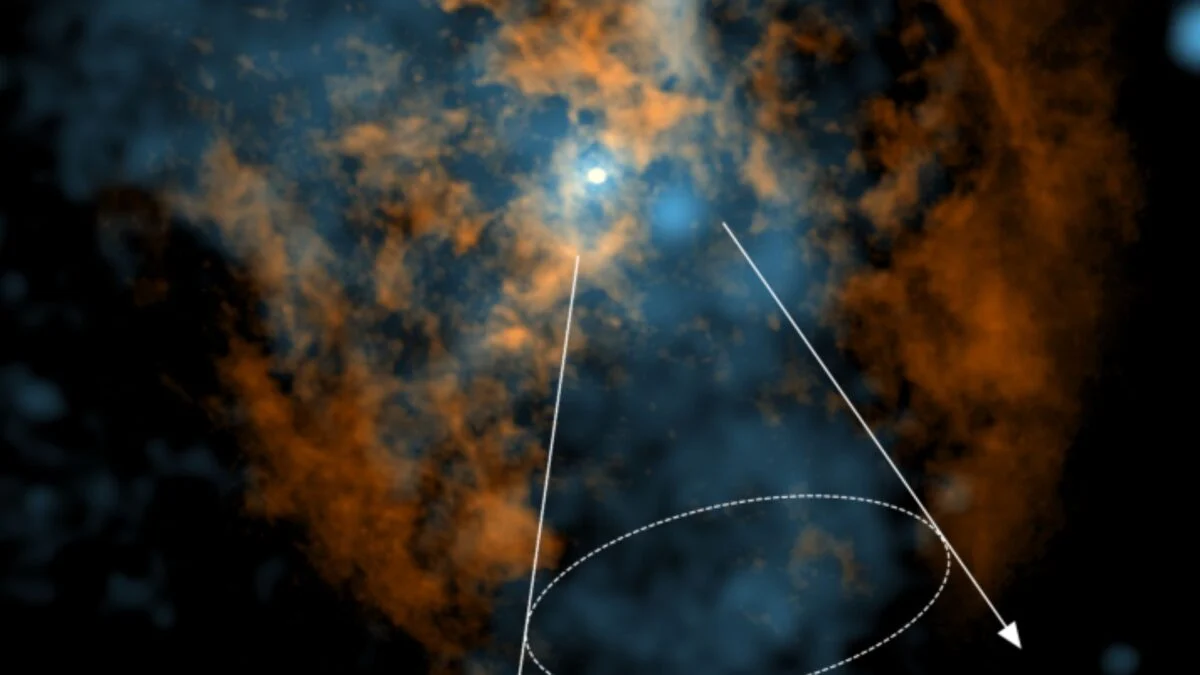
Scientists have made a significant breakthrough in detecting winds from the Milky Way's central black hole, Sagittarius A*, by observing a cone-shaped region of cold gas being blown away, which aligns with hot plasma emissions, providing new insights into the black hole's influence on galaxy evolution.
The Hubble Space Telescope captured an image of galaxy NGC 2775, a peculiar galaxy exhibiting both spiral and elliptical features, possibly due to past mergers, providing insights into galaxy evolution.
Astronomers have discovered a wandering intermediate-mass black hole actively accreting matter and producing jets in a dwarf galaxy, challenging the traditional view that black holes are only found at galactic centers and shedding light on black hole growth and galaxy evolution.
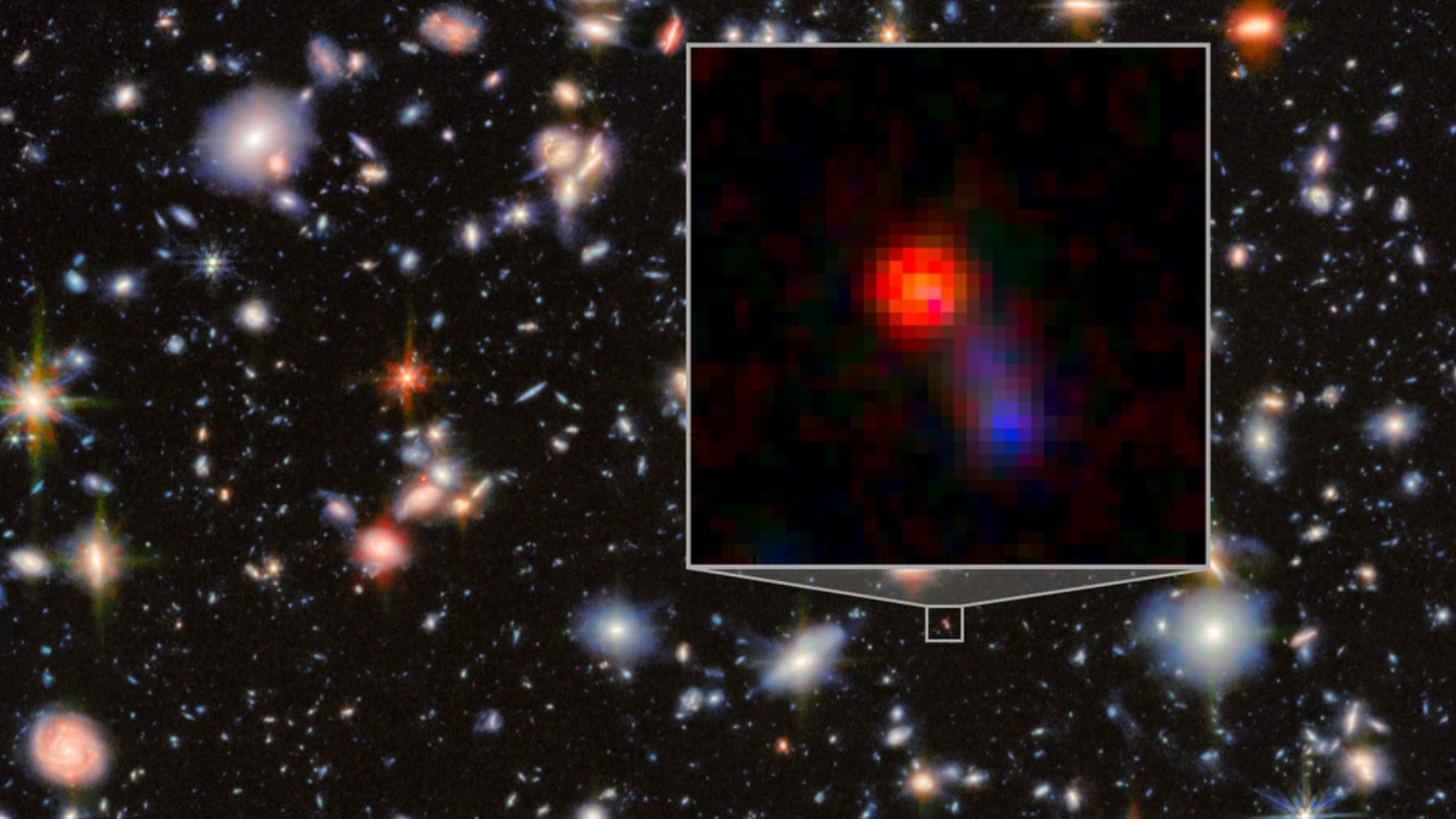
Astronomers using the James Webb Space Telescope discovered over a dozen dormant galaxies in the early universe, challenging previous expectations that young galaxies should be actively forming stars. These galaxies, which paused star formation between 10 and 25 million years ago, suggest a cyclical pattern of starburst and quiescence, possibly driven by stellar feedback processes. The findings, still preliminary, open new avenues for understanding galaxy evolution and the mechanisms that regulate star formation in the early cosmos.
Astronomers discovered a dormant black hole 36 billion times the mass of the Sun in the Orange Galaxy using gravitational lensing, marking a significant milestone in understanding galaxy evolution and black hole growth, with future research expected to uncover more hidden giants in the universe.
The James Webb Space Telescope revisited the Hubble Ultra Deep Field, capturing the deepest and most detailed images of distant galaxies to date, revealing new insights into galaxy formation, evolution, and the universe's early history.
The James Webb Space Telescope has discovered dormant galaxies in the early universe, challenging existing models of galaxy evolution by revealing that some galaxies paused star formation within the first billion years after the Big Bang, due to factors like supermassive black holes and stellar feedback mechanisms, with future observations aiming to uncover more about these galaxies' life cycles.
Astronomers using the James Webb Space Telescope have discovered over a dozen dormant galaxies from the early universe, revealing that galaxies can pause their star formation temporarily due to various feedback processes, and these findings challenge previous assumptions about early galaxy activity.
Scientists have discovered cold hydrogen clouds inside the hot, high-energy Fermi bubbles at the center of the Milky Way, suggesting these structures are much younger than previously thought, and raising questions about how such cold gas survives in extreme environments.