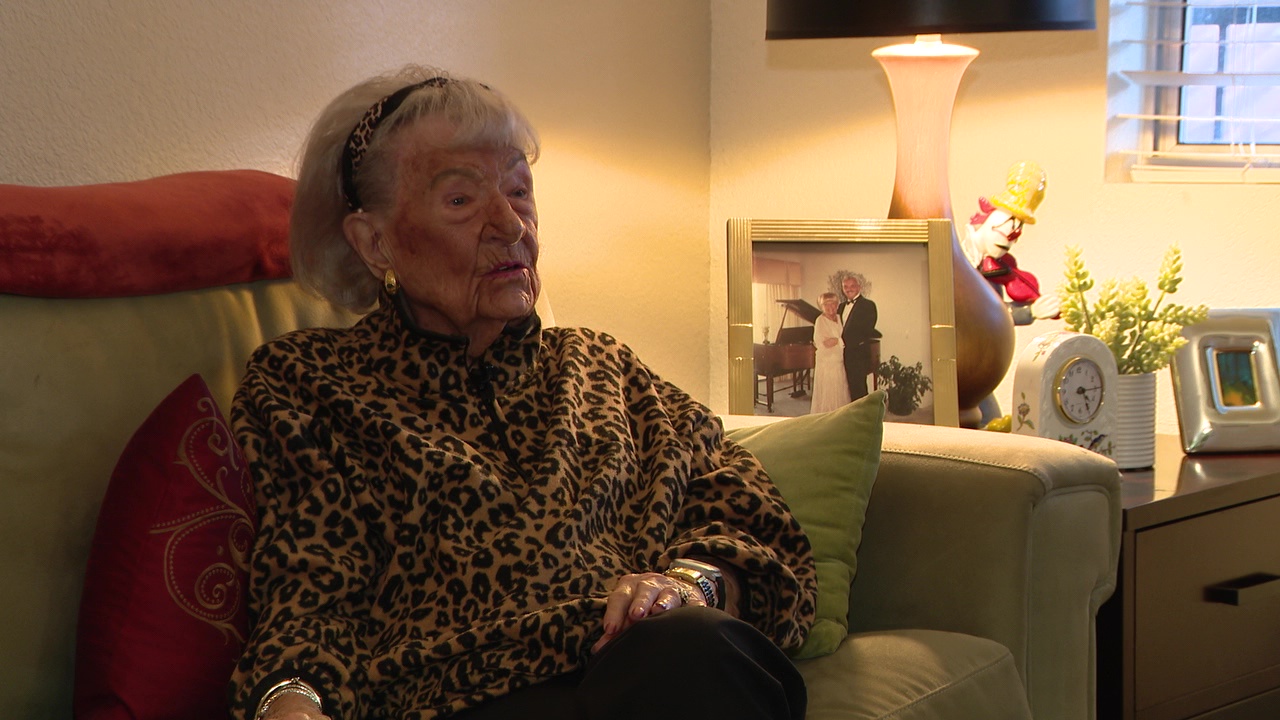
Ednajane 'E.J.' Truax exemplifies a super ager by staying active through gardening, exercising regularly, and maintaining a social life, which research shows can help people thrive into their 80s and 90s.
The article shares five tips from 'super agers' on how to live a healthy life, emphasizing that while genetics play a role, lifestyle choices are crucial for aging well into advanced years.
The article highlights Ednajane 'E.J.' Truax, a 'super ager' who defies typical aging challenges through regular physical activity, social engagement, and a positive attitude, exemplifying research that shows staying active is key to thriving into old age.
A 25-year study by Sandra Weintraub found that the key common factor among super-agers—people over 80 with memory abilities of much younger individuals—is their strong social relationships, highlighting the importance of social connection for maintaining brain health in old age.
A 25-year study from Northwestern University found that 'super agers' over 80 maintain exceptional memory and brain structure similar to much younger individuals, with some brains showing resistance or resilience to Alzheimer's-related proteins. Factors like larger memory-related neurons and social behavior may contribute to their cognitive resilience, suggesting that cognitive decline is not an inevitable part of aging.
Research over 25 years has identified key traits of 'super-agers'—people over 80 with memory abilities comparable to much younger individuals—aiming to understand how they avoid typical cognitive decline and diseases like Alzheimer's.
Scientists at Northwestern University studied 290 super-agers over 25 years and found that their exceptional memory and brain health are linked to unique brain structures, personality traits, and resistance or resilience to Alzheimer’s-related proteins, offering insights into promoting cognitive longevity.
Super agers are individuals over 80 who remain free of chronic diseases, and research suggests that lifestyle, immune system health, and early detection through biomarkers are key factors in achieving such longevity, rather than genetics alone. Advances in medical science now enable better prevention and personalized health strategies, but societal and systemic changes are needed to make these accessible to all.
Eric Topol highlights that healthy aging is more influenced by lifestyle factors such as diet, exercise, social engagement, and sleep than genetics. He advocates for adopting a Mediterranean diet, regular exercise, moderate alcohol consumption, avoiding unnecessary medical tests and supplements, and leveraging emerging genetic and organ clock testing to extend health span. Topol emphasizes that early intervention and lifestyle modifications can significantly increase years lived in good health, and he discusses promising medical advances like GLP-1 drugs for disease prevention.
Scientists are studying a 100-year-old woman named Dorothy Boucek, who is part of a group known as Super Agers, to uncover the secrets to her long and healthy life. Boucek attributes her longevity to a combination of factors, including a happy disposition, a healthy diet, regular exercise, and social engagement. Researchers at the Albert Einstein College of Medicine are studying Boucek's genetic makeup to understand how it contributes to her exceptional brain function and overall health. The goal is to identify longevity genes that could potentially be targeted with medication in the future to help people live longer and healthier lives.
Scientists are studying 100-year-old Dorothy Boucek, a Super Ager with the brain function of someone decades younger, to uncover the secrets to her long and healthy life. Boucek attributes her longevity to a combination of factors, including a happy disposition, a healthy diet, regular exercise, and social engagement. Researchers at the Albert Einstein College of Medicine are conducting the Super Agers Family Study, aiming to enroll 10,000 individuals aged 95 and older, along with their family members, to investigate the genetic factors contributing to long and healthy lives. The study may lead to the development of future interventions, such as longevity-enhancing pills.
Researchers at the University of Rochester have found that older adults whose brain performance improves when they combine a cognitive task with walking may be "super-agers" whose brain ages slower than their body. Brain flexibility is an indicator of brain health, and this research offers a potentially necessary component for tracking the health of an individual’s brain. The markers could be used to assess the degree of disease progression, to evaluate treatment outcomes, and potentially to identify people, pre-clinically, at high risk for developing aging-related or disease-related cognitive decline.