Tag

Subatomic Particles

All articles tagged with #subatomic particles

Virtual Particles and the Foundation of Reality

Originally Published 2 months ago — by Space

Featured image for Virtual Particles and the Foundation of Reality
Source: Space

Virtual particles are a mathematical tool used by physicists to calculate and predict the behavior of forces at the subatomic level, despite not being directly observable. They are essential for understanding interactions like electromagnetism and nuclear forces, and have led to highly accurate predictions, raising questions about their 'reality.' While some see them as useful fiction, their role in modern physics remains profound and indispensable.

The Evolution of the Atom and Its Benefits for Science

Originally Published 3 months ago — by Big Think

Featured image for The Evolution of the Atom and Its Benefits for Science
Source: Big Think

The article discusses how the meaning of the word 'atom' has evolved from its original Greek definition of 'indivisible' to our current understanding of atoms as composed of smaller particles like protons, neutrons, and electrons, highlighting the progression of scientific discovery and the importance of naming conventions in science.

"Antarctic Observatory Detects Seven Potential 'Ghost Particles' from Milky Way"

Originally Published 1 year ago — by Gizmodo

Featured image for "Antarctic Observatory Detects Seven Potential 'Ghost Particles' from Milky Way"
Source: Gizmodo

The IceCube Neutrino Observatory in Antarctica has potentially detected seven tau neutrinos, a type of subatomic particle from deep space, in its 9.7 years of data, providing strong evidence of their existence. These elusive particles, which are fundamental and incredibly light, are part of the dense stream of neutrinos from deep space, and their detection confirms the observatory's earlier discovery of the diffuse astrophysical neutrino flux. The findings, soon to be published, suggest that the chances of background noise mimicking a tau neutrino signal are extremely low, and the discovery paves the way for further exploration with the upcoming Deep Underground Neutrino Experiment in South Dakota.

"The Endless Debate: Unraveling the Particle Mystery"

Originally Published 1 year ago — by Yahoo Life

Featured image for "The Endless Debate: Unraveling the Particle Mystery"
Source: Yahoo Life

Physicists continue to debate the Cheshire cat paradox, which suggests that quantum properties of a subatomic particle can be separated from the particle itself. A new preprint paper proposes that a particle's momentum can also be separated from its mass, while some argue that the paradox is a result of the way data is captured in "weak measurements." The ongoing debate challenges traditional quantum mechanics and suggests that the paradox may be more than just a theoretical curiosity.

"Proton's Strong Force Strength Revealed by Gravity"

Originally Published 2 years ago — by Phys.org

Featured image for "Proton's Strong Force Strength Revealed by Gravity"
Source: Phys.org

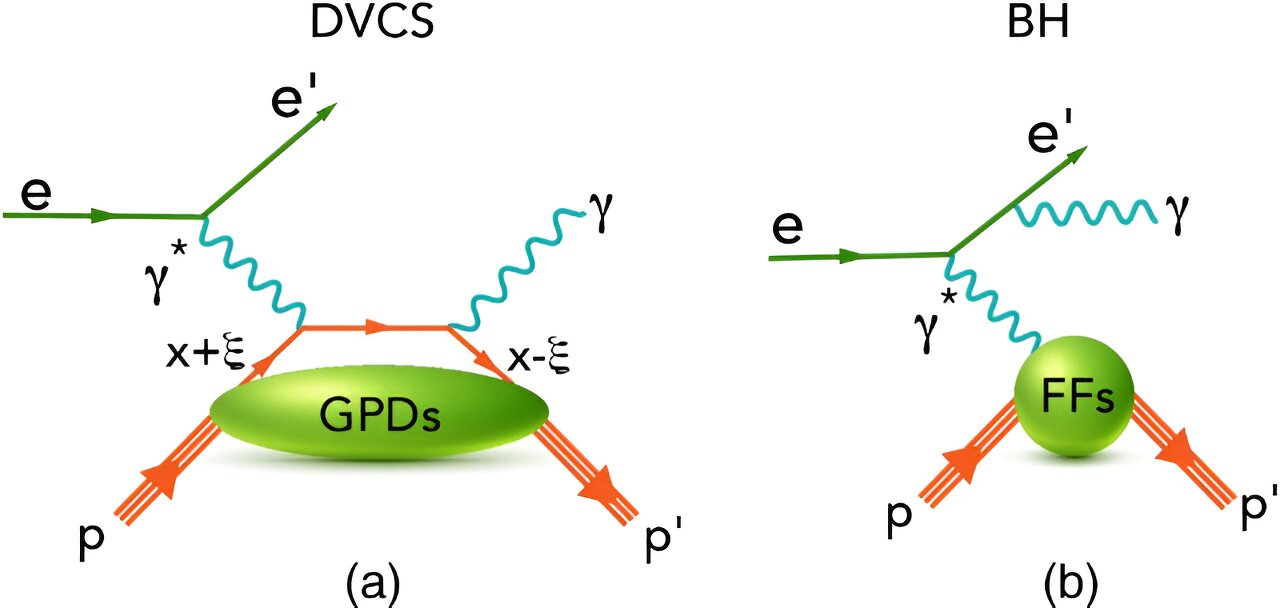
Nuclear physicists at the U.S. Department of Energy's Thomas Jefferson National Accelerator Facility have used gravity to reveal new details about the strong force inside the proton, providing a snapshot of the force's distribution and shear stress on the quark particles. This research, published in Reviews of Modern Physics, marks the second measurement of the proton's mechanical properties and was made possible by a half-century-old prediction and two-decade-old data from experiments conducted with Jefferson Lab's Continuous Electron Beam Accelerator Facility.

Unexplained Cosmic Ray Stuns Scientists as it Hits Earth

Originally Published 2 years ago — by KSL.com

Featured image for Unexplained Cosmic Ray Stuns Scientists as it Hits Earth
Source: KSL.com

Scientists have detected an ultra-high-energy particle, believed to have originated from beyond the Milky Way galaxy, shedding light on the mysterious origins of cosmic rays. The particle, nicknamed the Amaterasu particle, was observed by the Telescope Array in Utah and has an energy equivalent to dropping a brick on your toe from waist height. These high-energy cosmic rays are thought to be related to phenomena such as black holes and gamma-ray bursts, but the exact sources remain unclear. The discovery raises questions about the nature of these particles and their origins in seemingly empty space.

Nobel Prizes Recognize Groundbreaking Discoveries in Physics and Medicine

Originally Published 2 years ago — by The New York Times

Featured image for Nobel Prizes Recognize Groundbreaking Discoveries in Physics and Medicine
Source: The New York Times

The Nobel Prize in Physics has been awarded to Pierre Agostini, Ferenc Krausz, and Anne L’Huillier for their groundbreaking work on techniques that allow scientists to capture the movements of electrons, shedding light on the subatomic realm. By using short light pulses lasting only attoseconds (one quintillionth of a second), the scientists have been able to study the relative positions of electrons in atoms and molecules. This breakthrough in attosecond science has the potential to advance fields such as circuitry, drug design, and medical diagnostics, and provides physicists with a new tool to explore the microscopic world.

Physicists Astonished by Nitrogen-9's Feeble Nucleus

Originally Published 2 years ago — by Interesting Engineering

Featured image for Physicists Astonished by Nitrogen-9's Feeble Nucleus
Source: Interesting Engineering

Physicists have discovered a new atomic nucleus called nitrogen-9, which exists for only one billionth of a nanosecond. Despite its extremely short lifespan, many scientists consider it a nucleus and believe that studying such fleeting nuclei could expand our understanding of nuclear theory and quantum mechanics.

"Breakthrough: Neutrinos Detected from Particle Accelerator at Large Hadron Collider"

Originally Published 2 years ago — by IFLScience

Featured image for "Breakthrough: Neutrinos Detected from Particle Accelerator at Large Hadron Collider"
Source: IFLScience

For the first time, neutrinos produced from nuclear reactions triggered by the Large Hadron Collider (LHC) have been detected, marking a breakthrough in particle physics. Neutrinos are elusive particles that are difficult to capture due to their weak interaction with other matter. The discovery could help scientists gain insights into subatomic particle behavior and resolve unanswered questions in the field. Two independent teams used different approaches to detect the neutrinos, with the FASER collaboration observing 153 detections and the SND@LHC collaboration observing eight candidate events.

Breakthrough: Scientists Uncover Fifth Force of Nature at Fermilab

Originally Published 2 years ago — by The Guardian

Featured image for Breakthrough: Scientists Uncover Fifth Force of Nature at Fermilab
Source: The Guardian

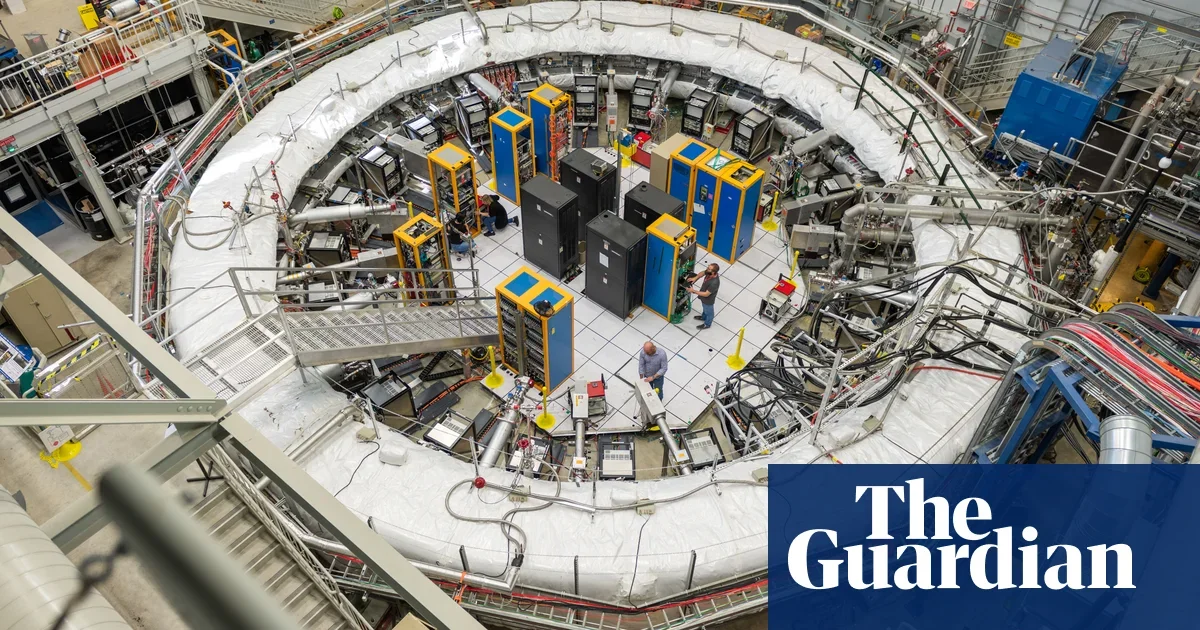
Physicists have observed unexpected wobbling in subatomic particles called muons, suggesting the existence of a fifth fundamental force of nature. The standard model of particle physics currently explains four fundamental forces, but fails to account for gravity and dark matter. The data from experiments at Fermilab in the US indicates a discrepancy between the observed wobbling and the predictions of the standard model, potentially indicating the presence of an unknown particle that could be the carrier of the fifth force. Further research and experiments are needed to confirm and understand this potential discovery.

"Unveiling the Mystery: Exploring the Shape Dynamics of Small Quark-Gluon Plasma Drops with a Fresh Perspective"

Originally Published 2 years ago — by Phys.org

Featured image for "Unveiling the Mystery: Exploring the Shape Dynamics of Small Quark-Gluon Plasma Drops with a Fresh Perspective"
Source: Phys.org

New measurements from the Relativistic Heavy Ion Collider (RHIC) shed light on the shape of quark-gluon plasma (QGP), a form of matter that existed just after the Big Bang. The analysis of data from RHIC's STAR detector suggests that the shape of QGP droplets created in collisions of small nuclei with large ones may be influenced by the internal arrangement of quarks and gluons inside the smaller nucleus. This finding contradicts previous results from RHIC's PHENIX detector, which suggested that the QGP shape was determined by the larger-scale positions of individual nucleons. The differences in results may be due to the different perspectives of the two detectors. Further analysis and experiments are planned to explore these findings and understand the role of subnucleon fluctuations and longitudinal variations in QGP shape.

"Squishing subatomic particles reveals exotic ultradense crystal state of matter"

Originally Published 2 years ago — by Yahoo! Voices

Featured image for "Squishing subatomic particles reveals exotic ultradense crystal state of matter"
Source: Yahoo! Voices

Physicists have discovered a new state of matter called a "bosonic correlated insulator," which takes the form of a highly ordered crystal of subatomic particles. This exotic state of matter, created by densely packing excitons, could lead to the discovery of new types of materials. The research provides new insights into the behavior of bosons and offers potential for creating additional bosonic materials with unique properties.

Quantum physicists discover breakthrough state of matter in ultradense crystals.

Originally Published 2 years ago — by Space.com

Featured image for Quantum physicists discover breakthrough state of matter in ultradense crystals.
Source: Space.com

Physicists have discovered a new state of matter called a "bosonic correlated insulator," which takes the form of a highly ordered crystal of subatomic particles. The researchers created this state of matter by pushing excitons together until they were so densely packed that they could no longer move, creating a new symmetrical crystalline state with a neutral charge. This discovery could lead to the creation of many new types of exotic materials made from condensed matter.

Breakthrough Discovery: Scientists Create Exotic New State of Matter from Subatomic Particles

Originally Published 2 years ago — by indy100

Featured image for Breakthrough Discovery: Scientists Create Exotic New State of Matter from Subatomic Particles
Source: indy100

Scientists have created a new state of matter called bosonic correlated insulator, which is made up of subatomic particles. The material is a lattice-shaped pattern formed from a layer of two different types of subatomic particles: bosons and fermions. The new material doesn't have any practical uses yet, but it helps scientists understand how the universe is put together. The discovery could lead to finding more materials like this in the future.

Discovery of the Beautiful Strongly Bound Dibaryon Particle.

Originally Published 2 years ago — by SciTechDaily

Featured image for Discovery of the Beautiful Strongly Bound Dibaryon Particle.
Source: SciTechDaily

Physicists from the Tata Institute of Fundamental Research and The Institute of Mathematical Science have predicted the existence of a new subatomic particle, a deeply bound dibaryon made entirely from bottom quarks. The dibaryon, named D6b, is composed of two triply bottom Omega baryons and is predicted to be 40 times stronger than the deuteron, making it the most strongly bound beautiful dibaryon in the visible universe. The finding provides insight into the strong forces in baryon-baryon interactions and motivates the search for heavier exotic subatomic particles in next-generation experiments.