Tag

Particle Collisions

All articles tagged with #particle collisions

science7 months ago

Scientists Suggest Black Holes as Cost-Effective Natural Particle Colliders

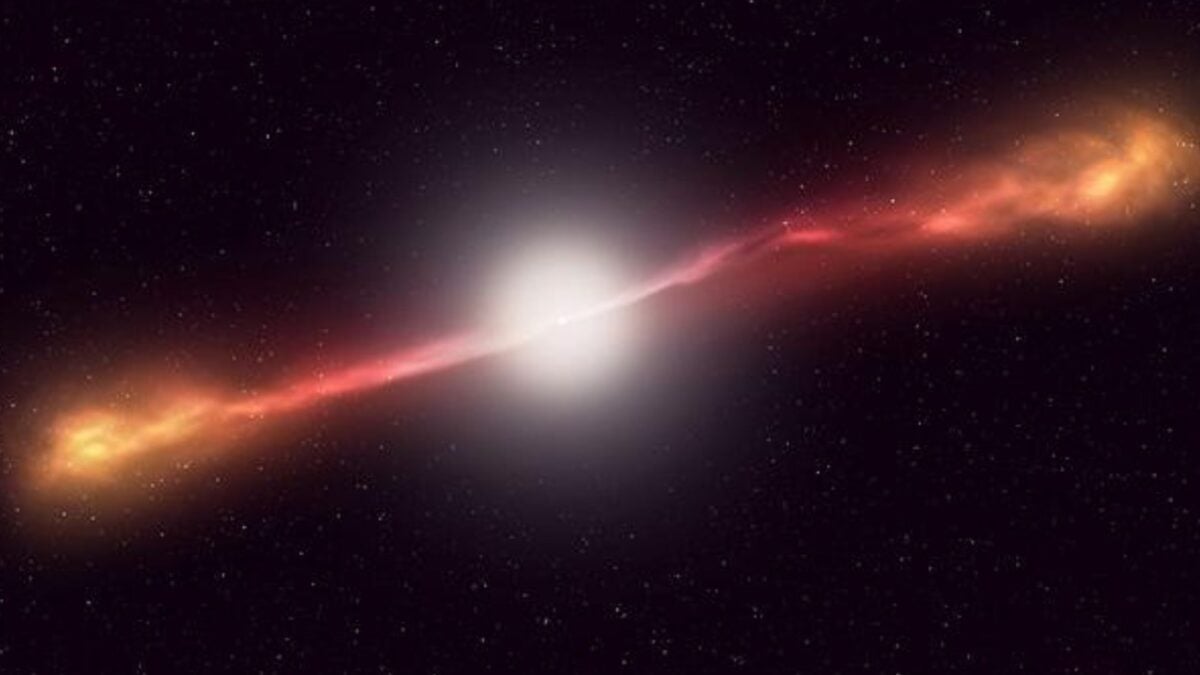
A study from Johns Hopkins proposes that supermassive black holes could act as natural particle accelerators, producing high-energy particles and potentially offering a cost-effective alternative to traditional colliders for studying dark matter and fundamental physics, especially as funding for large-scale experiments like the LHC becomes scarce.

physics1 year ago

"Quarks Found to Exhibit Quantum Entanglement, Study Shows"

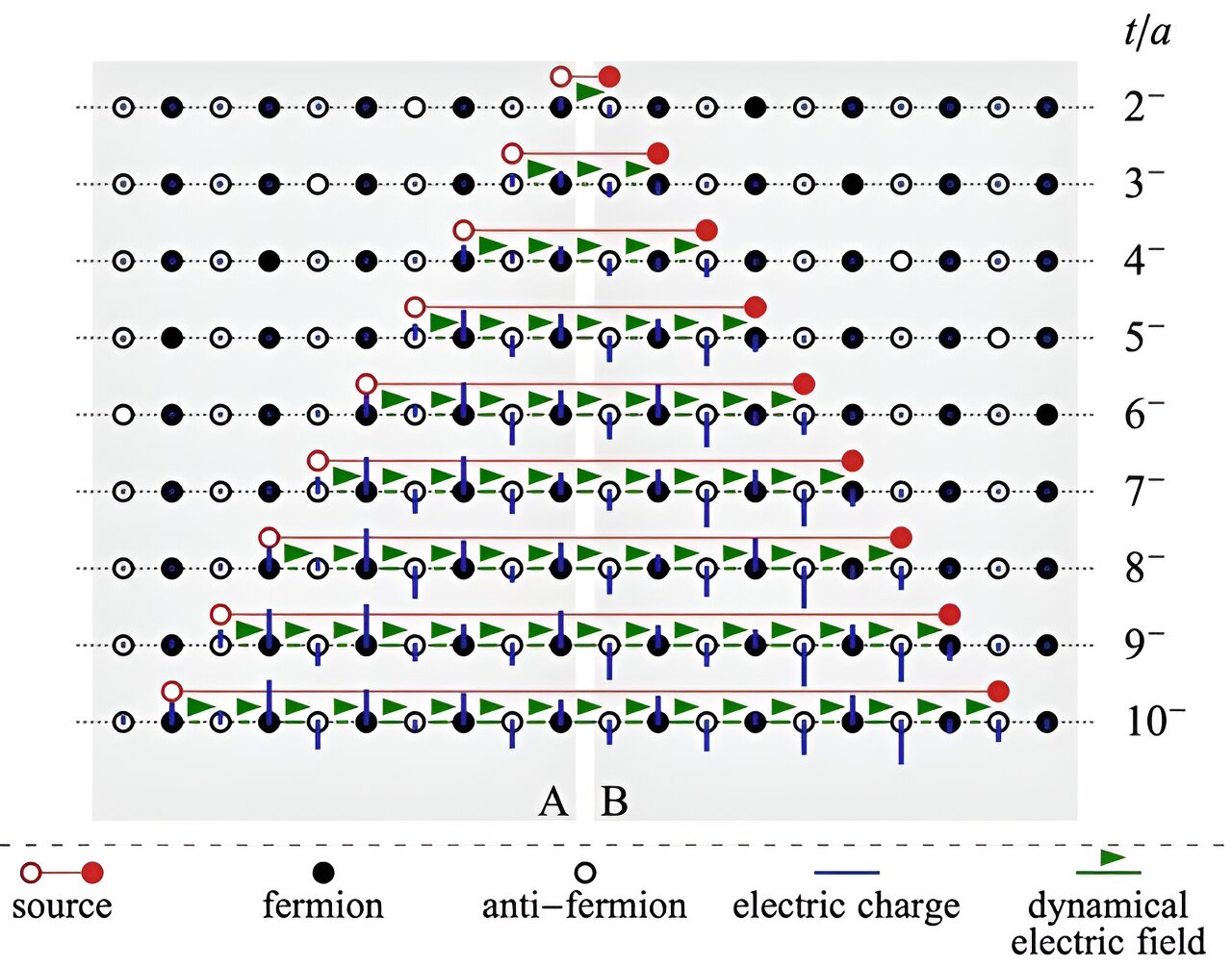
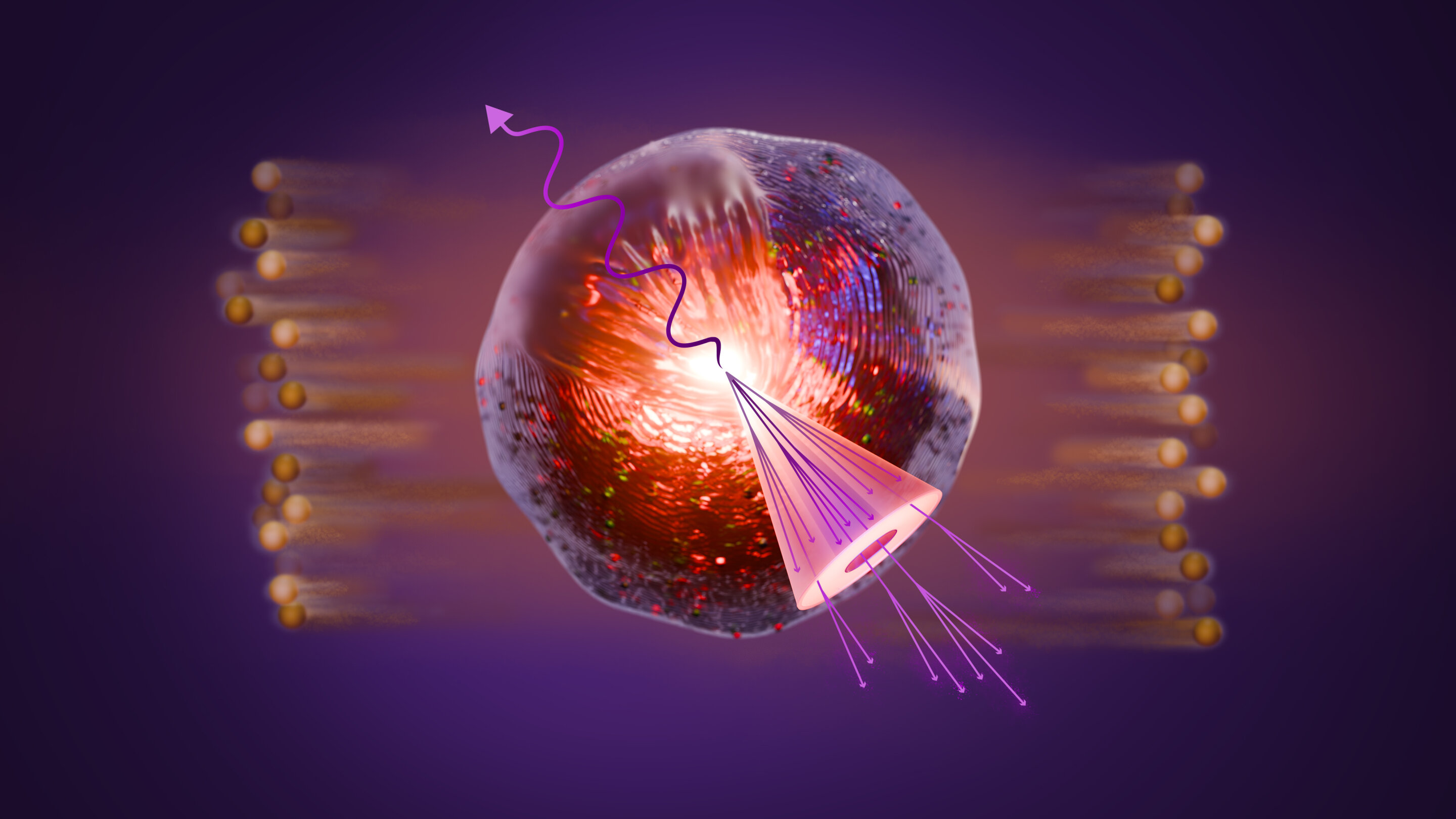
Research using quantum simulations has revealed that high-energy particle collisions produce quarks that retain quantum entanglement and modify the quantum vacuum as they propagate. This finding opens up the possibility of studying quantum entanglement in experiments and may advance quantum-inspired classical computing. The research, published in Physical Review Letters, addresses long-standing problems in nuclear physics and has implications for experimental work at facilities like Brookhaven National Laboratory.

physics2 years ago

"Protons Uncover Maximal Entanglement Phenomenon"

A recent study by an international team of physicists has demonstrated that maximum entanglement is present in protons, even in cases where pomerons are involved in collisions. This maximal entanglement is a universal phenomenon in processes involving collisions between photons and protons, and it has practical significance for interpreting results from future particle colliders. The study provides a deeper understanding of how a maximally entangled state is formed inside the proton, shedding light on the onset of maximal entanglement in diffractive deep inelastic scattering.

physics2 years ago

"Unveiling the Mystery: Exploring the Shape Dynamics of Small Quark-Gluon Plasma Drops with a Fresh Perspective"

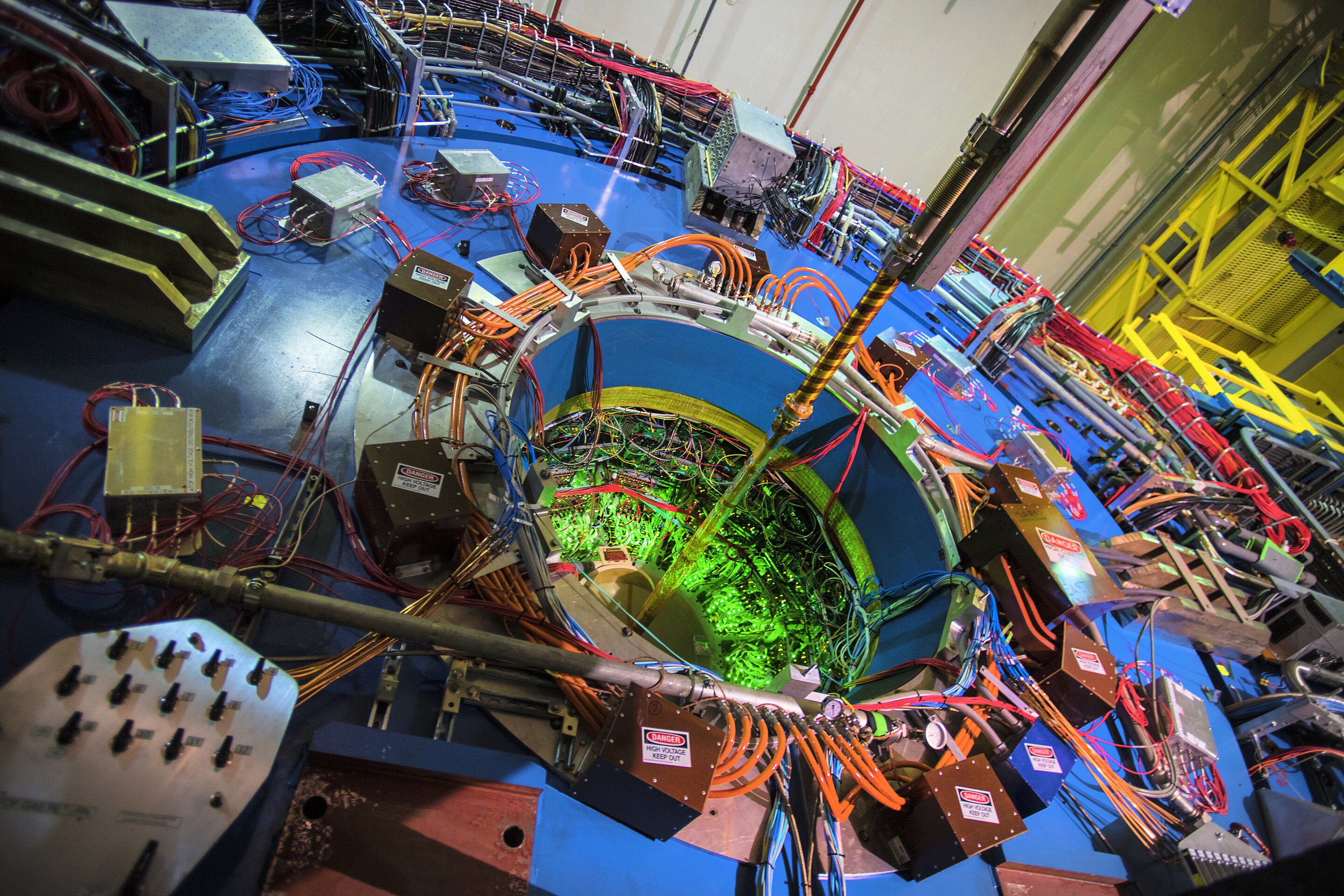
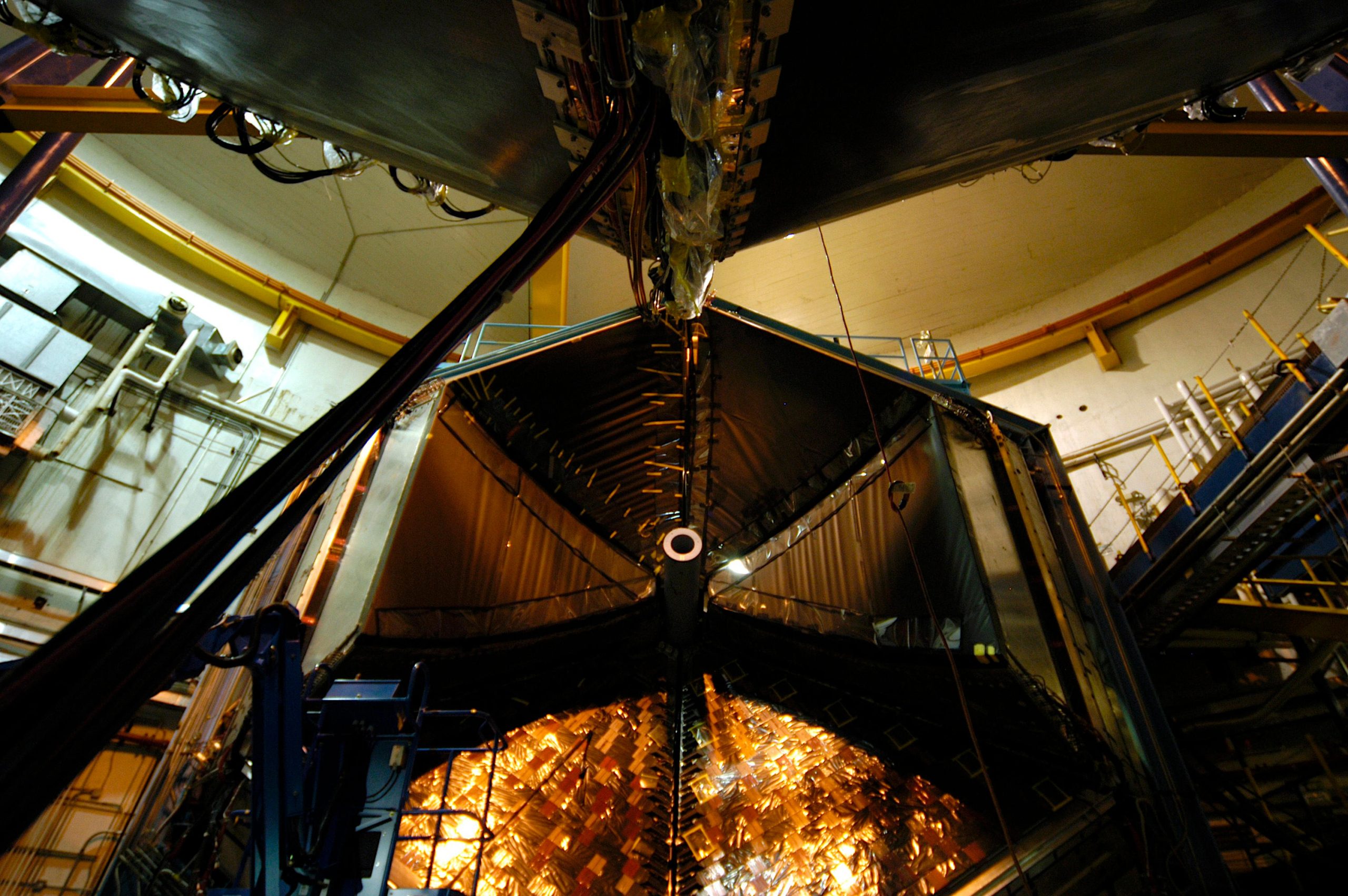
New measurements from the Relativistic Heavy Ion Collider (RHIC) shed light on the shape of quark-gluon plasma (QGP), a form of matter that existed just after the Big Bang. The analysis of data from RHIC's STAR detector suggests that the shape of QGP droplets created in collisions of small nuclei with large ones may be influenced by the internal arrangement of quarks and gluons inside the smaller nucleus. This finding contradicts previous results from RHIC's PHENIX detector, which suggested that the QGP shape was determined by the larger-scale positions of individual nucleons. The differences in results may be due to the different perspectives of the two detectors. Further analysis and experiments are planned to explore these findings and understand the role of subnucleon fluctuations and longitudinal variations in QGP shape.

physics2 years ago

Positive gluon polarization indicated by direct photons.

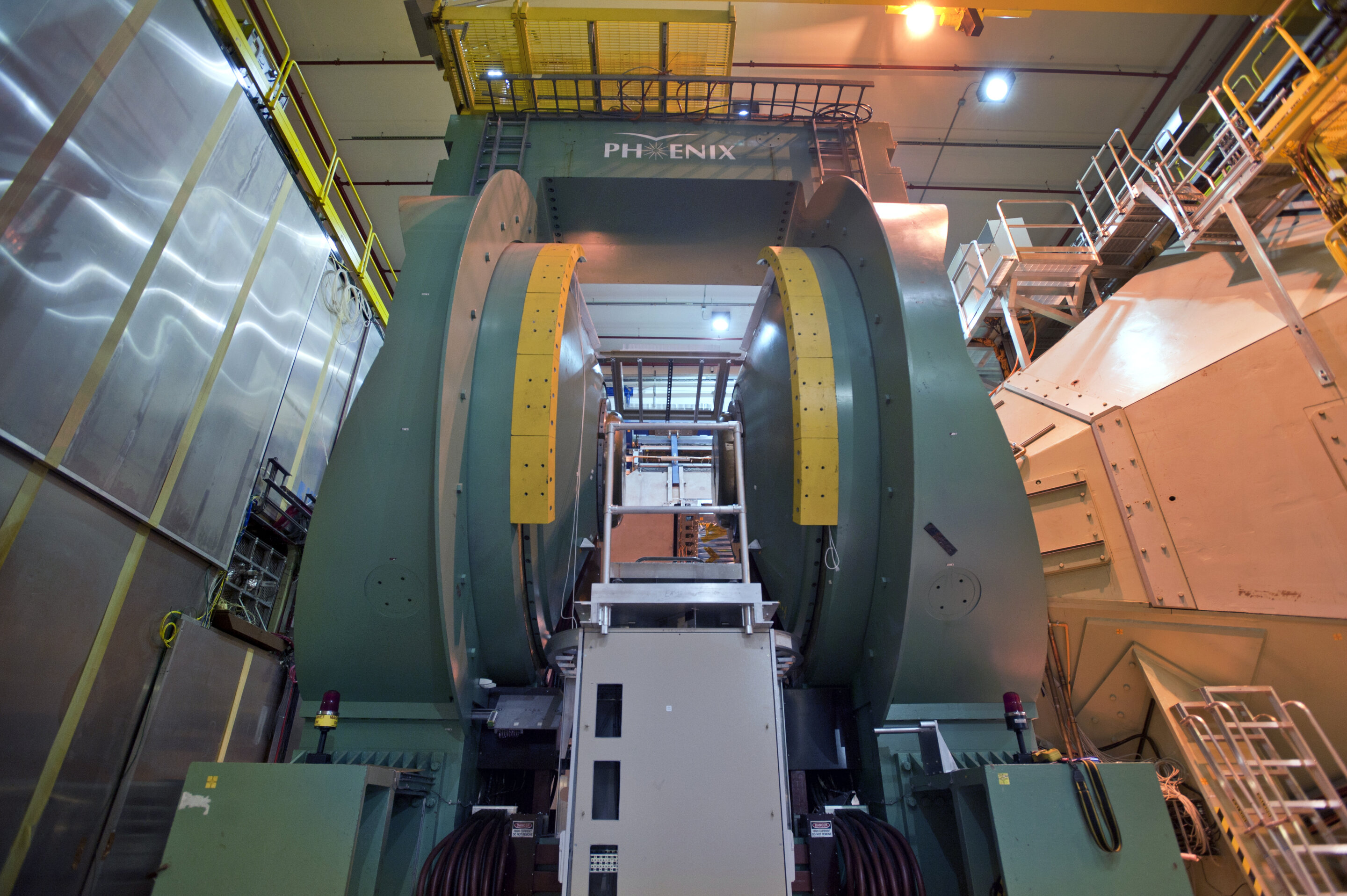
A new publication by the PHENIX Collaboration at the Relativistic Heavy Ion Collider (RHIC) provides definitive evidence that gluon "spins" are aligned in the same direction as the spin of the proton they're in. The result provides theorists with new input for calculating how much gluons contribute to a proton's spin. The new PHENIX result is one of the "golden" measurements proposed as a key motivator for the RHIC spin physics program. It's a comparison of the number of "direct photons" (particles of light) emitted when RHIC collides protons with their spins pointing in opposite directions with the number of direct photons produced when the protons in the two beams are pointing in the same direction.

science2 years ago

Insights into Primordial Matter Phase Changes through Hypernuclei Flow Observations

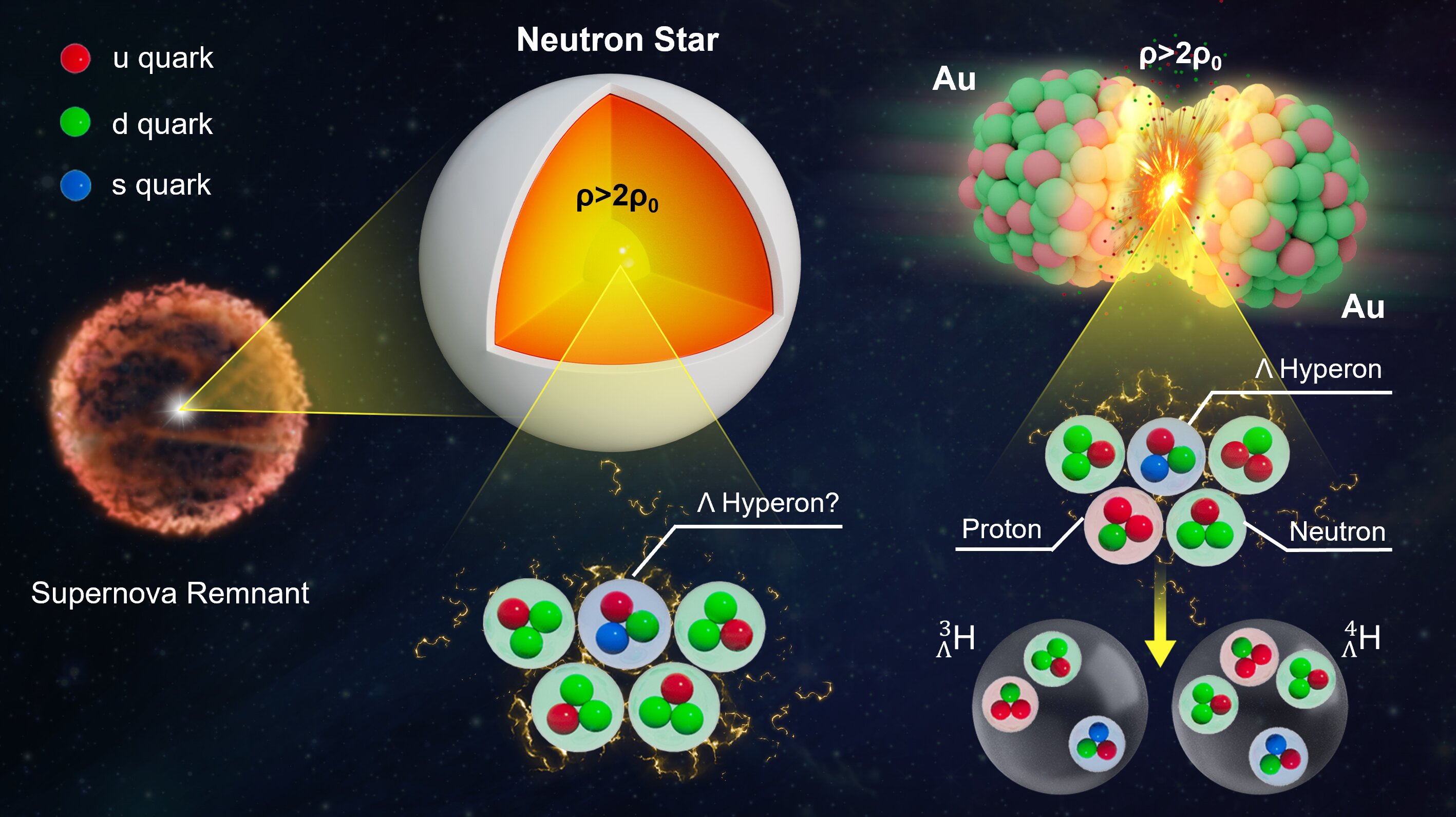
Physicists at the Relativistic Heavy Ion Collider (RHIC) have observed the directed flow of hypernuclei, rare nuclei containing at least one hyperon, in particle collisions. Hyperons, which contain a “strange” quark, are believed to be abundant in neutron stars. By simulating these conditions in the laboratory, researchers aim to understand the interactions between hyperons and nucleons. The observations, mirroring regular nuclei flow patterns, will help enhance theoretical models of neutron stars.

physics2 years ago

New insights into hypernuclei flow at RHIC from first measurements.

Physicists at the Relativistic Heavy Ion Collider (RHIC) have observed the directed flow of hypernuclei, which contain at least one "hyperon" in addition to ordinary protons and neutrons. These hyperons contain at least one "strange" quark and are thought to be abundant in the hearts of neutron stars. By comparing the flow of hypernuclei with that of similar ordinary nuclei made only of nucleons, scientists hope to gain insight into interactions between the hyperons and nucleons and understand the inner structure of neutron stars.

science-and-technology2 years ago

Unveiling the Mysteries of Strange Matter in Nuclear Physics

Nuclear physicists have observed the production of lambda particles, also known as “strange matter,” through a process called semi-inclusive deep inelastic scattering (SIDIS). The data obtained also suggests that the building blocks of protons, quarks, and gluons can sometimes march through the nucleus of an atom in pairs referred to as diquarks. The experiment was carried out at the Thomas Jefferson National Accelerator Facility, which is run by the U.S. Department of Energy.