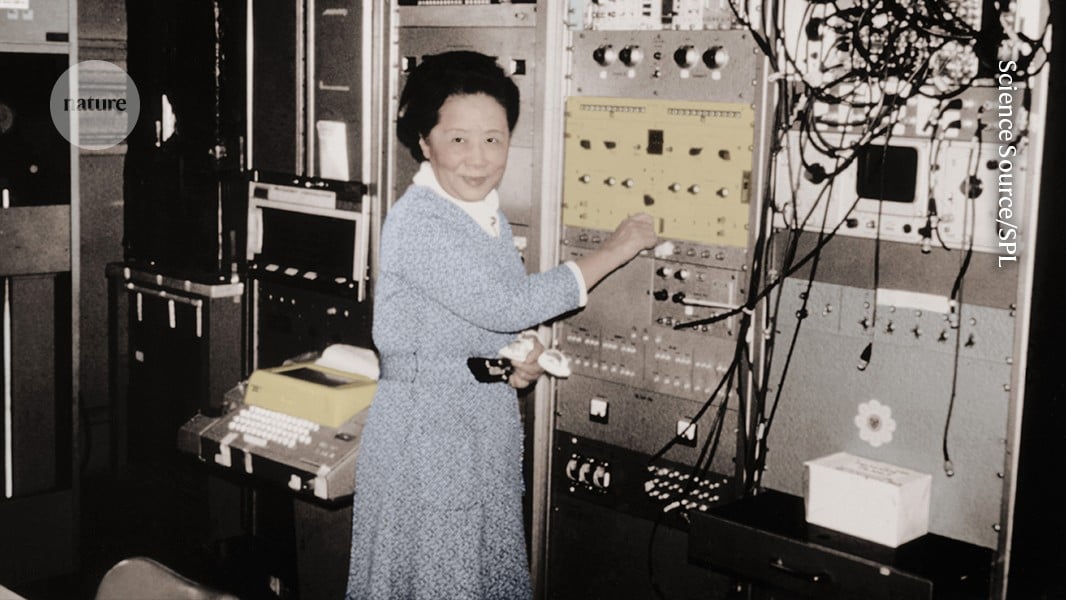
The article highlights the often-overlooked contributions of women in the history of quantum physics, emphasizing the importance of recognizing diverse scientists like Williamina Fleming and Chien-Shiung Wu, and challenges the traditional male-centric narrative of scientific discovery, advocating for a more inclusive and nuanced understanding of scientific history.
Physicists have demonstrated that the classical Carnot efficiency limit breaks down at the atomic scale when quantum correlations are involved, allowing microscopic heat engines to surpass traditional efficiency limits and paving the way for highly efficient quantum motors.
Scientists have created a long-lasting (two seconds) dipolar Bose-Einstein condensate of sodium-cesium molecules at near absolute zero using a novel dual-microwave technique, opening new avenues for exploring exotic quantum matter and phases.
Physicists have found a way to harness superradiance, a quantum phenomenon that usually causes instability, to generate powerful, long-lasting microwave signals, opening new possibilities for advancements in medicine, navigation, and quantum communication.
Scientists at Columbia University have successfully created a Bose-Einstein condensate from sodium-cesium molecules at ultra-cold temperatures using innovative microwave shielding techniques, marking a significant advancement in quantum physics and opening new avenues for research into quantum states and materials.
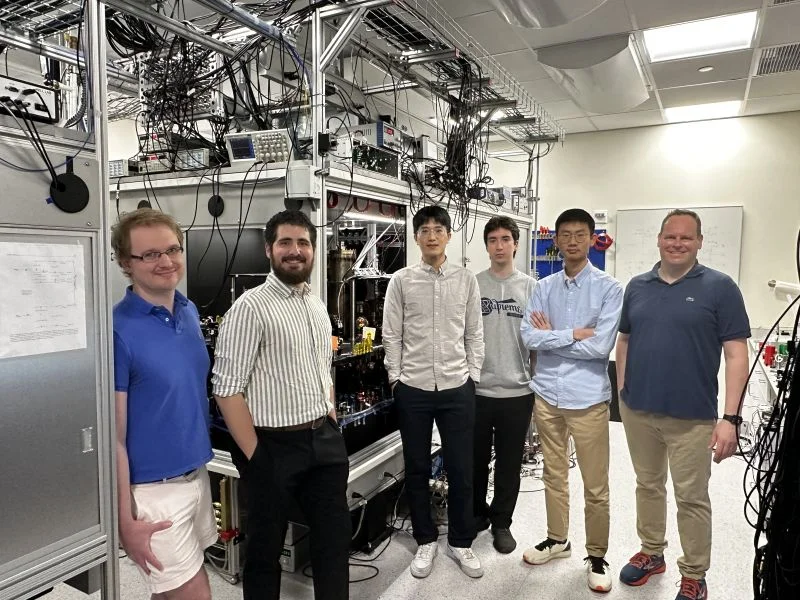
Scientists at Columbia University have created a molecular sodium-cesium Bose-Einstein condensate (BEC) that is dipolar and lasts for two seconds, opening new possibilities for exploring exotic states of matter and quantum physics applications. This breakthrough was achieved using microwave fields to control interactions at ultracold temperatures near absolute zero, potentially leading to advances in quantum chemistry and the study of novel quantum phases.
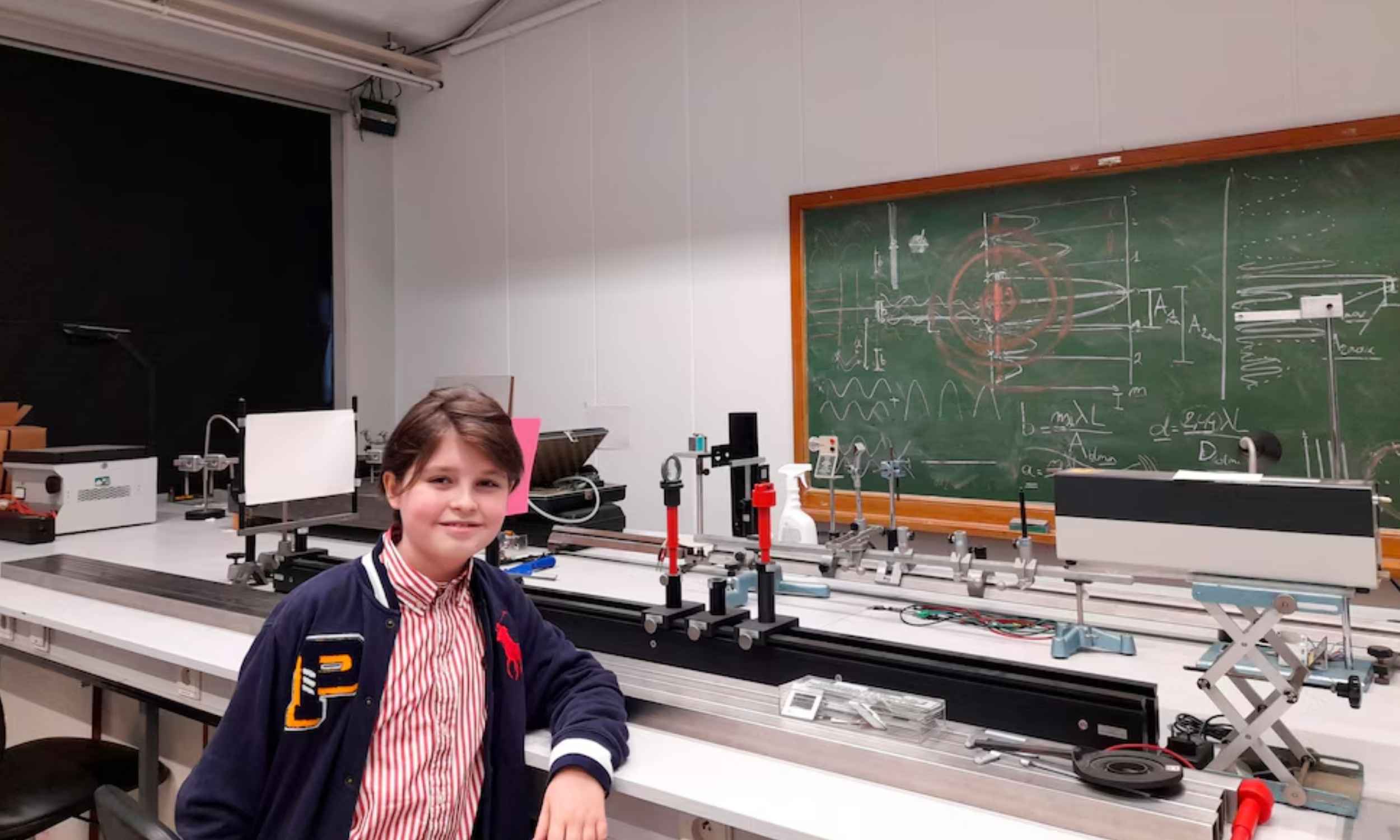
A 15-year-old Belgian researcher, Laurent Simons, has earned a PhD in quantum physics and is working towards creating superhumans, focusing on medical applications and longevity, while conducting advanced research in ultracold quantum systems. His work emphasizes careful experimentation, ethical considerations, and collaborative efforts to ensure meaningful progress in extending healthy lifespan.
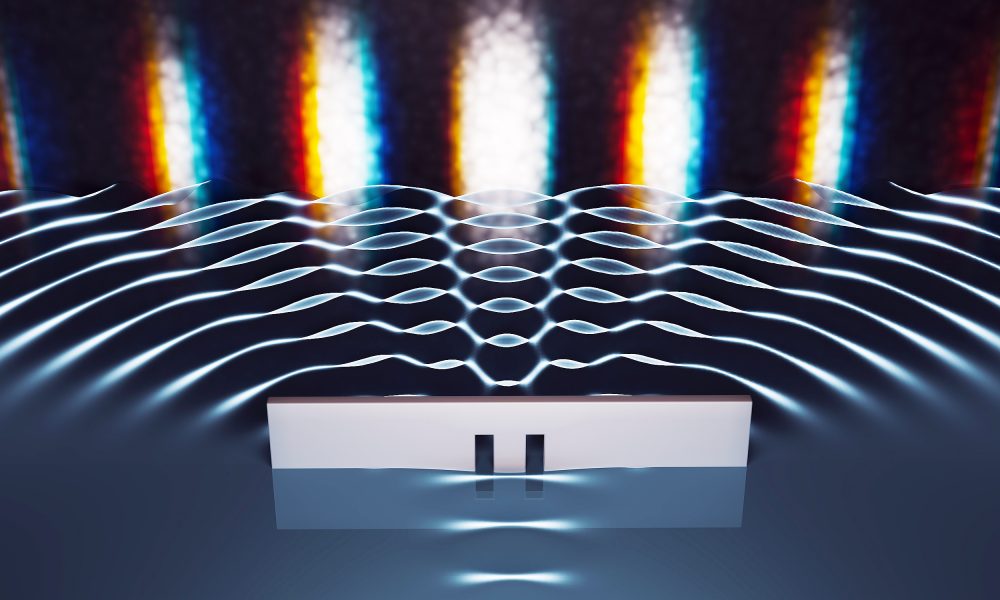
A new study challenges the long-held belief that light behaves as both a wave and a particle, proposing that interference patterns can be explained solely through quantum particles and dark photon states, potentially reshaping fundamental physics concepts.
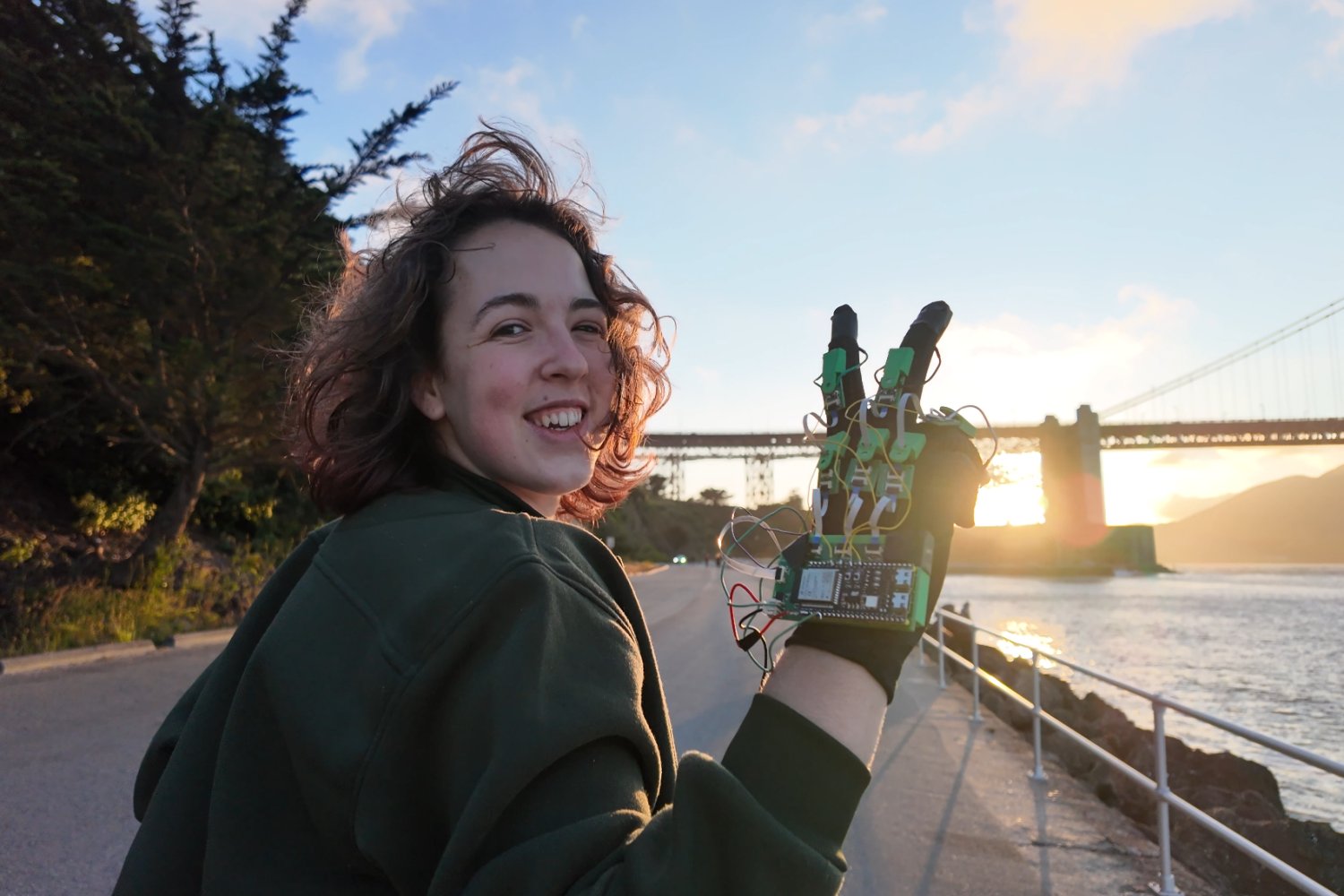
Freesia Gaul, a young innovator inspired by MIT's free online courses, developed an award-winning VR prototype and co-founded a tech startup, demonstrating how accessible education can empower youth to create groundbreaking technology.
Researchers propose a practical method to detect the Unruh effect, which predicts that an accelerating object perceives empty space as warm, by using synchronized atomic emissions and high-quality mirrors to amplify and time the faint signals, making this elusive quantum phenomenon observable in laboratory conditions.
Researchers have proposed a practical method to detect the elusive Unruh effect by using atoms between mirrors to produce a measurable, early flash of light, turning a faint quantum 'glow' into a clear signal, potentially enabling laboratory studies of gravity-related quantum phenomena.
Physicists have discovered that quantum oscillations, previously observed only on the surface of certain materials, actually originate from the bulk of these insulators, challenging existing understanding and opening new questions in quantum physics, though practical applications remain uncertain.
MIT researchers have discovered a new type of superconductivity in 'magic-angle' twisted tri-layer graphene, which could be a significant step toward developing room-temperature superconductors, potentially revolutionizing energy transmission and electronic devices.
Polish physicists have demonstrated that quantum nonlocality may be an inherent property of identical particles, arising from their fundamental indistinguishability, and can be observed experimentally even without direct interaction, suggesting that nonlocality is woven into the fabric of the universe.
Physicists have identified polarons—quasiparticles formed by electrons and atoms—as the cause behind the loss of electrical conductivity in certain quantum materials, specifically in a thulium-based compound. This discovery, made through detailed measurements and modeling, could advance the development of new materials like room-temperature superconductors.