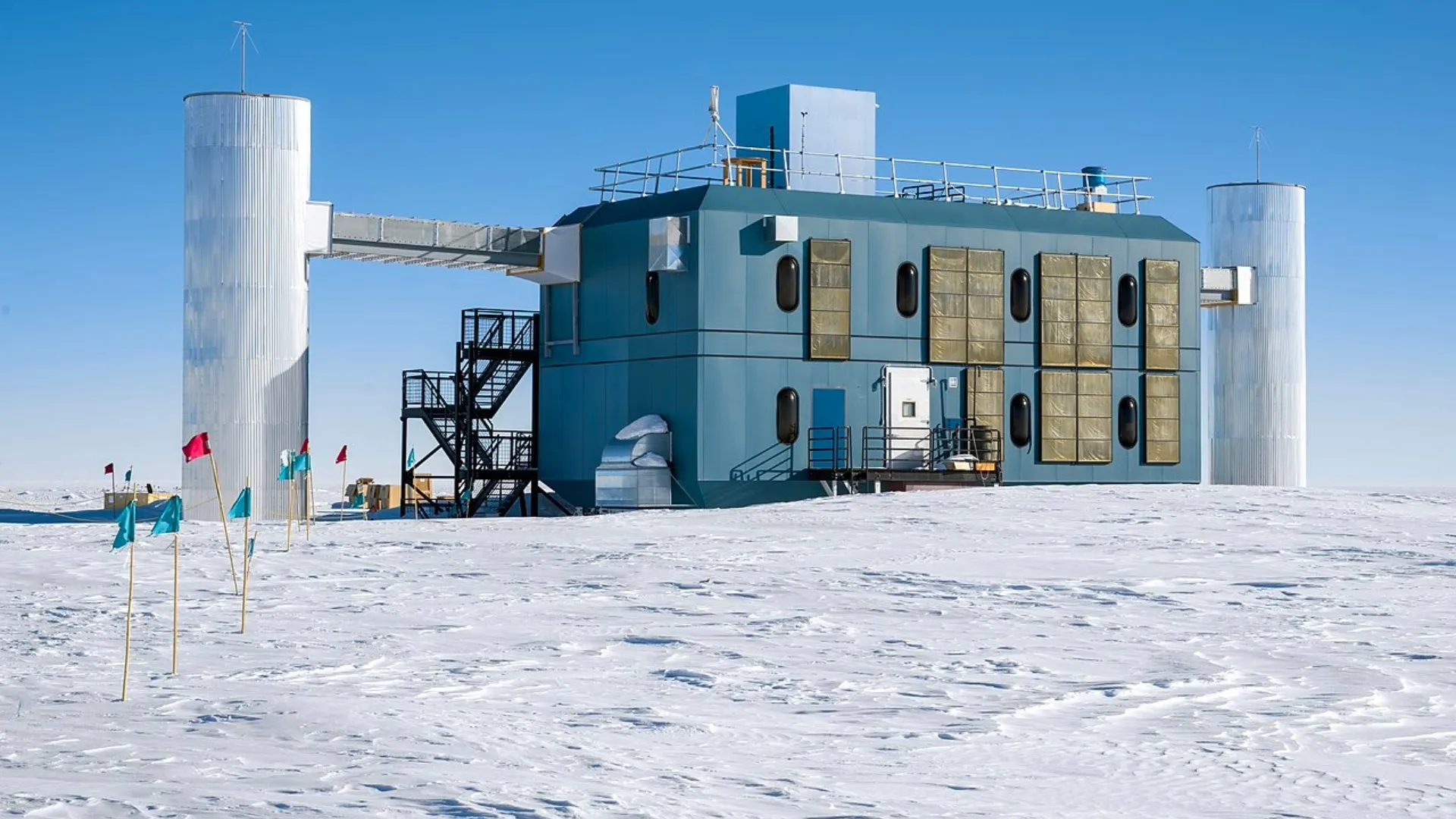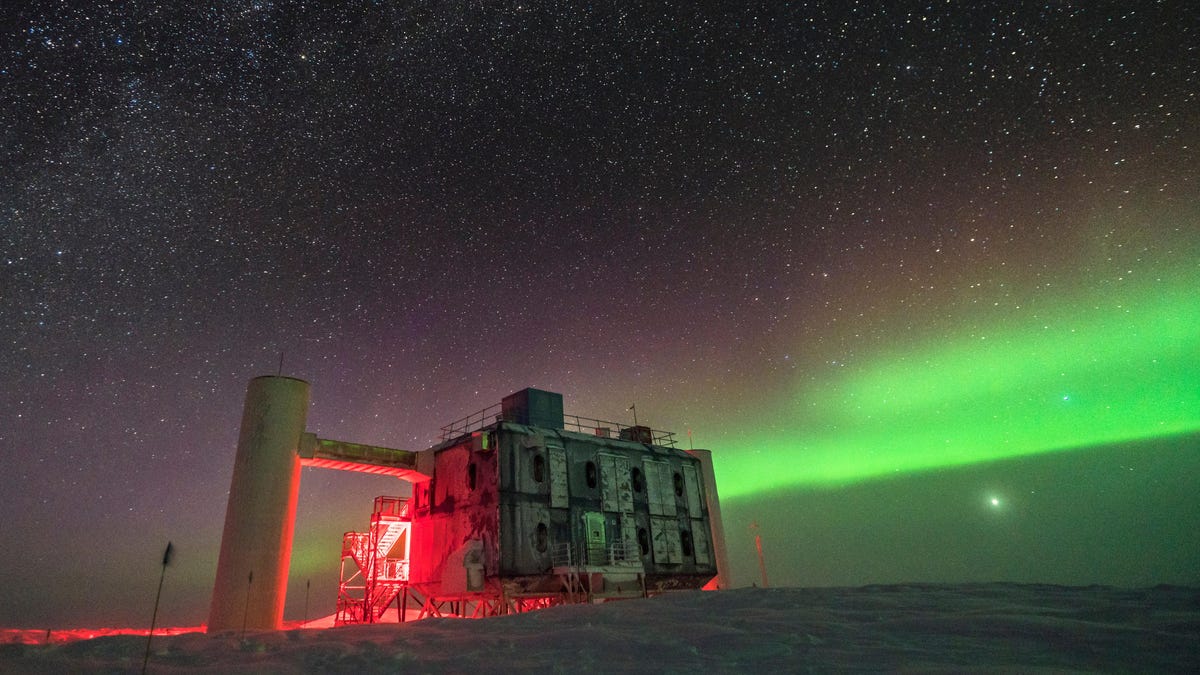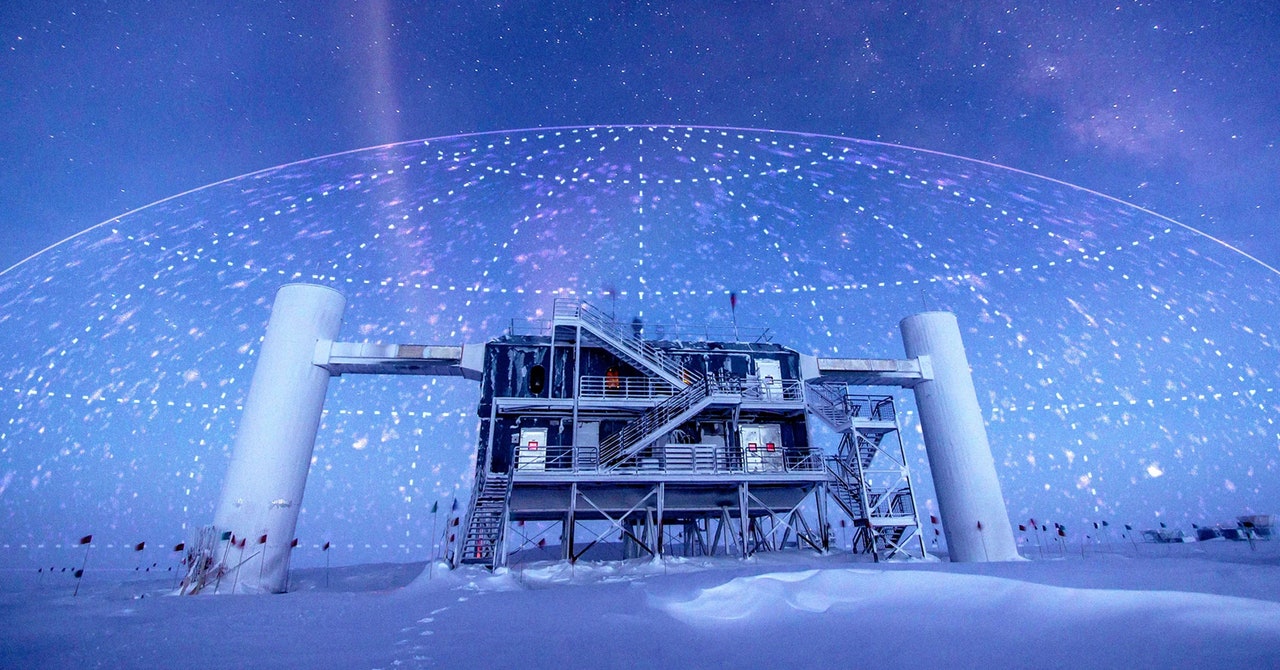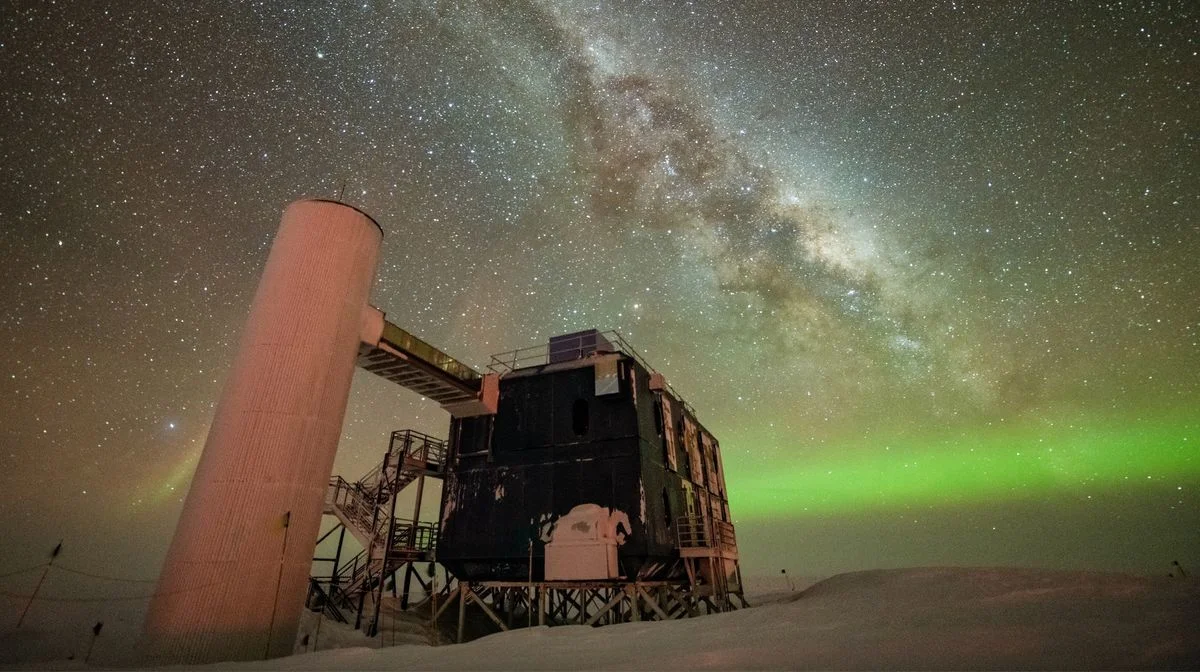
Thousands of sensors in Antarctica are being used in a large-scale experiment to detect and monitor neutrinos, with the aim of uncovering evidence of quantum gravity, a major mystery in physics. Researchers from the University of Copenhagen are involved in this scientific endeavor at the IceCube Neutrino Observatory near the South Pole.
Scientists at the South Pole are using thousands of sensors to study neutrinos from outer space in order to determine if quantum gravity exists. The IceCube Neutrino Observatory, operated by the University of Wisconsin-Madison, is playing a key role in this research. The study aims to detect subtle changes in neutrino properties over large distances, which could provide evidence of quantum gravity. While the initial study focused on neutrinos from Earth's atmosphere, future research will involve studying neutrinos from deep space to further explore this fundamental question in physics.
The IceCube Neutrino Observatory in Antarctica has potentially detected seven tau neutrinos, a type of subatomic particle from deep space, in its 9.7 years of data, providing strong evidence of their existence. These elusive particles, which are fundamental and incredibly light, are part of the dense stream of neutrinos from deep space, and their detection confirms the observatory's earlier discovery of the diffuse astrophysical neutrino flux. The findings, soon to be published, suggest that the chances of background noise mimicking a tau neutrino signal are extremely low, and the discovery paves the way for further exploration with the upcoming Deep Underground Neutrino Experiment in South Dakota.
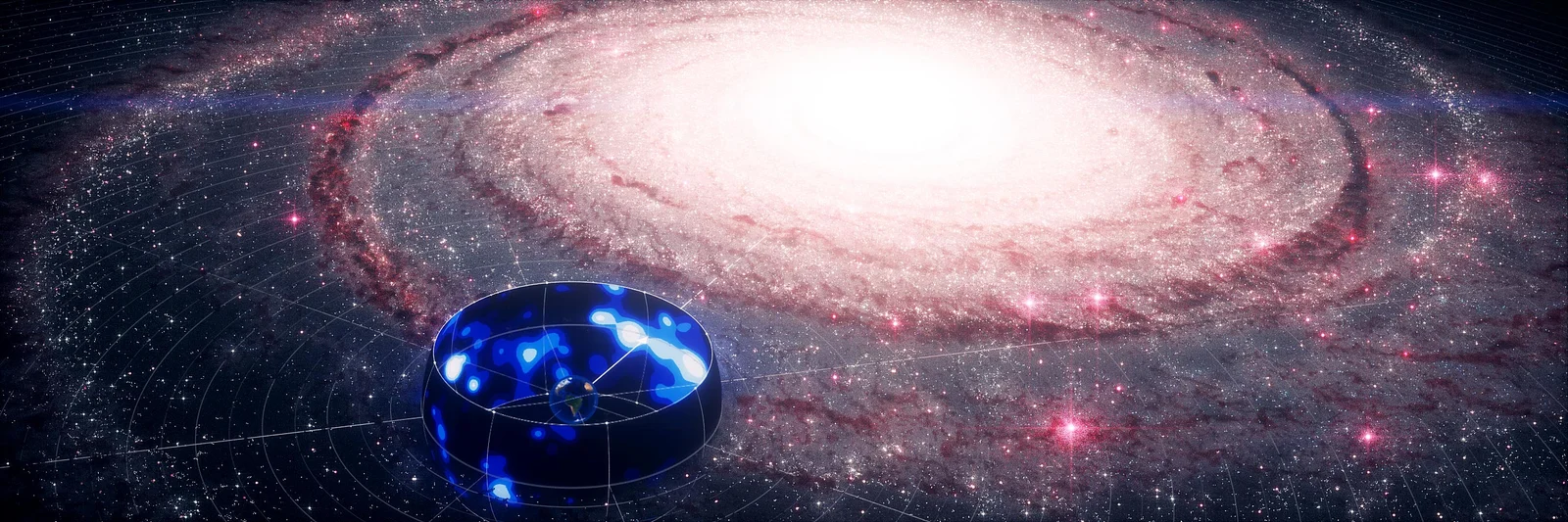
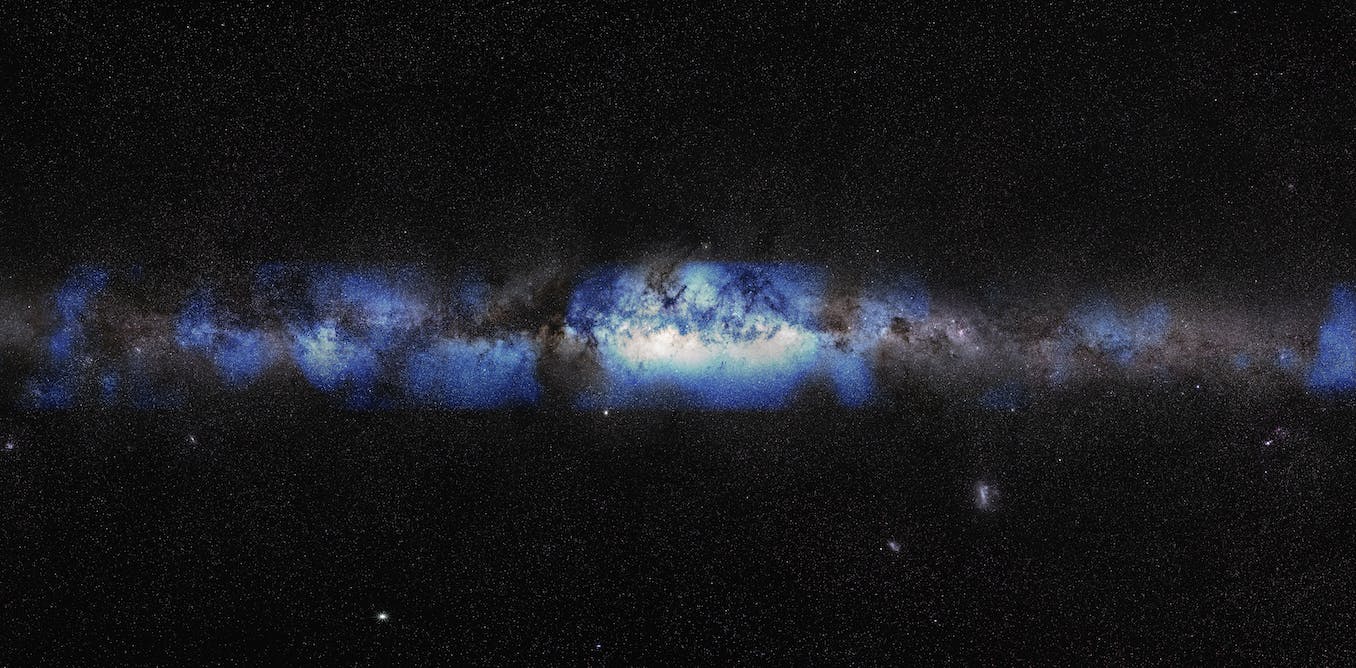
The IceCube Neutrino Observatory has collected enough cosmic neutrinos to create the first map of the Milky Way in neutrinos, revealing a diffuse haze of cosmic neutrinos emanating from throughout the galaxy. While the observatory has connected some cosmic neutrinos to individual sources, such as the heart of an active galaxy called NGC 1068, the origin of most cosmic neutrinos remains a mystery. Pinpointing these sources could provide insights into fundamental physics and help test quantum descriptions of gravity. Neutrinos offer clues to a more complete theory of particles beyond the standard model, and studying cosmic neutrinos could shed light on dark matter and the quantum structure of space-time. Upgrades and expansions to neutrino detectors like IceCube and KM3NeT are expected to provide more data on cosmic neutrinos in the future.
The IceCube Neutrino Observatory has released a new result in the search for dark matter. While unable to directly detect dark matter, IceCube can detect local effects that produce neutrinos. The study analyzed a decade's worth of data and found no evidence of excess neutrinos, effectively ruling out high-mass WIMPs as dark matter candidates. However, plans to upgrade IceCube's sensitivity may allow for further tests on lower mass WIMPs. The search for dark matter continues, with alternative theories such as modified gravity being considered.
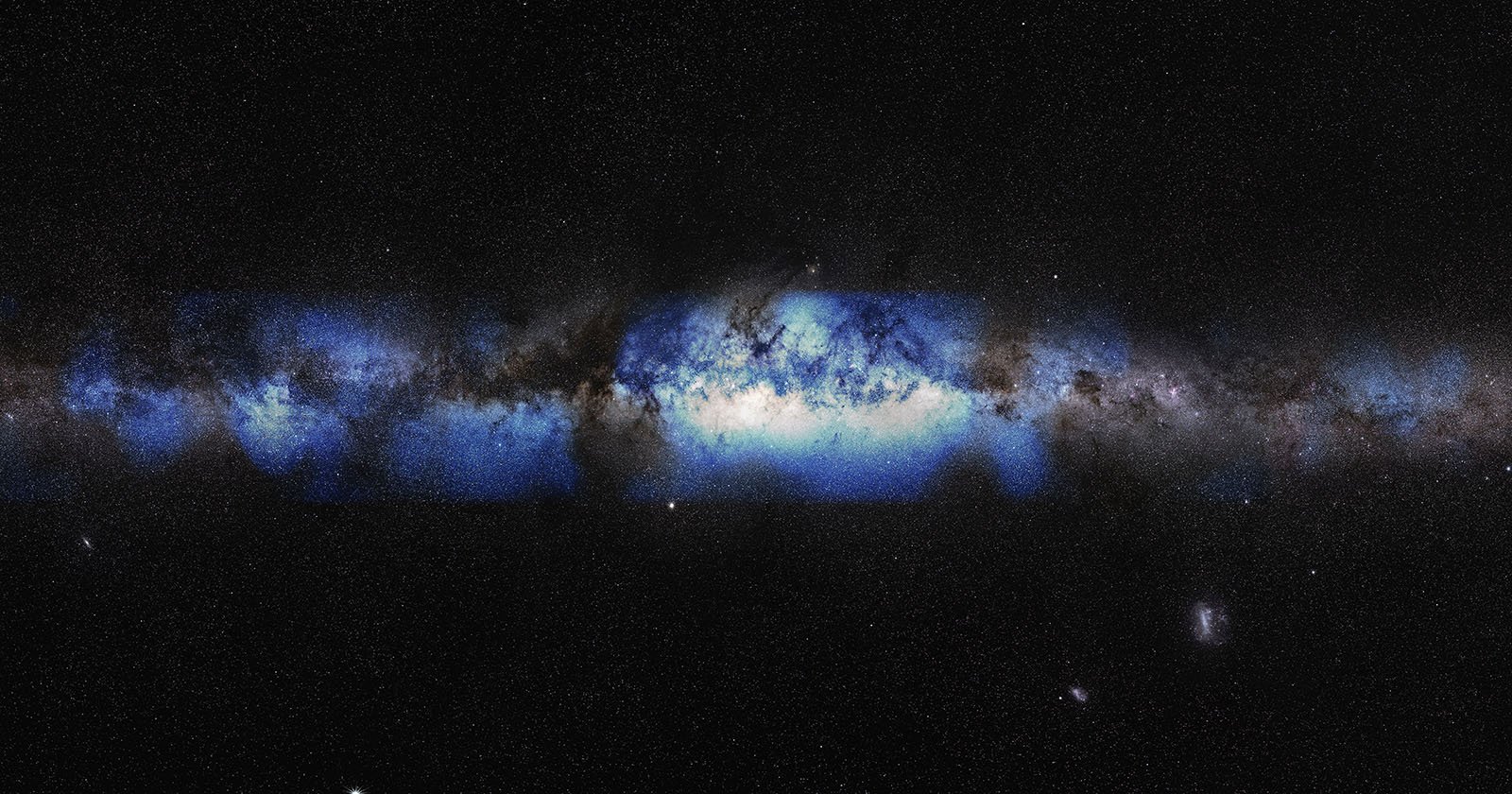
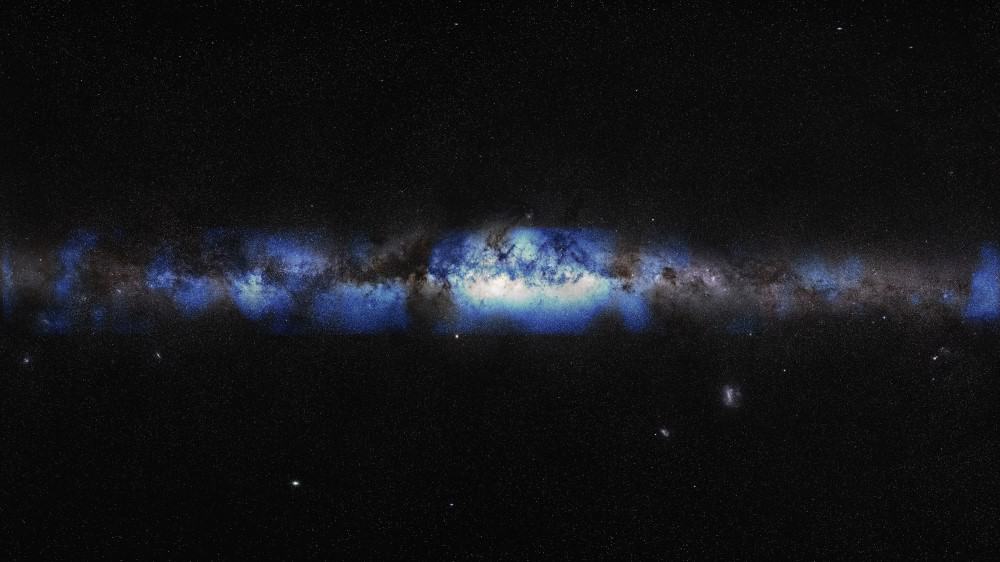
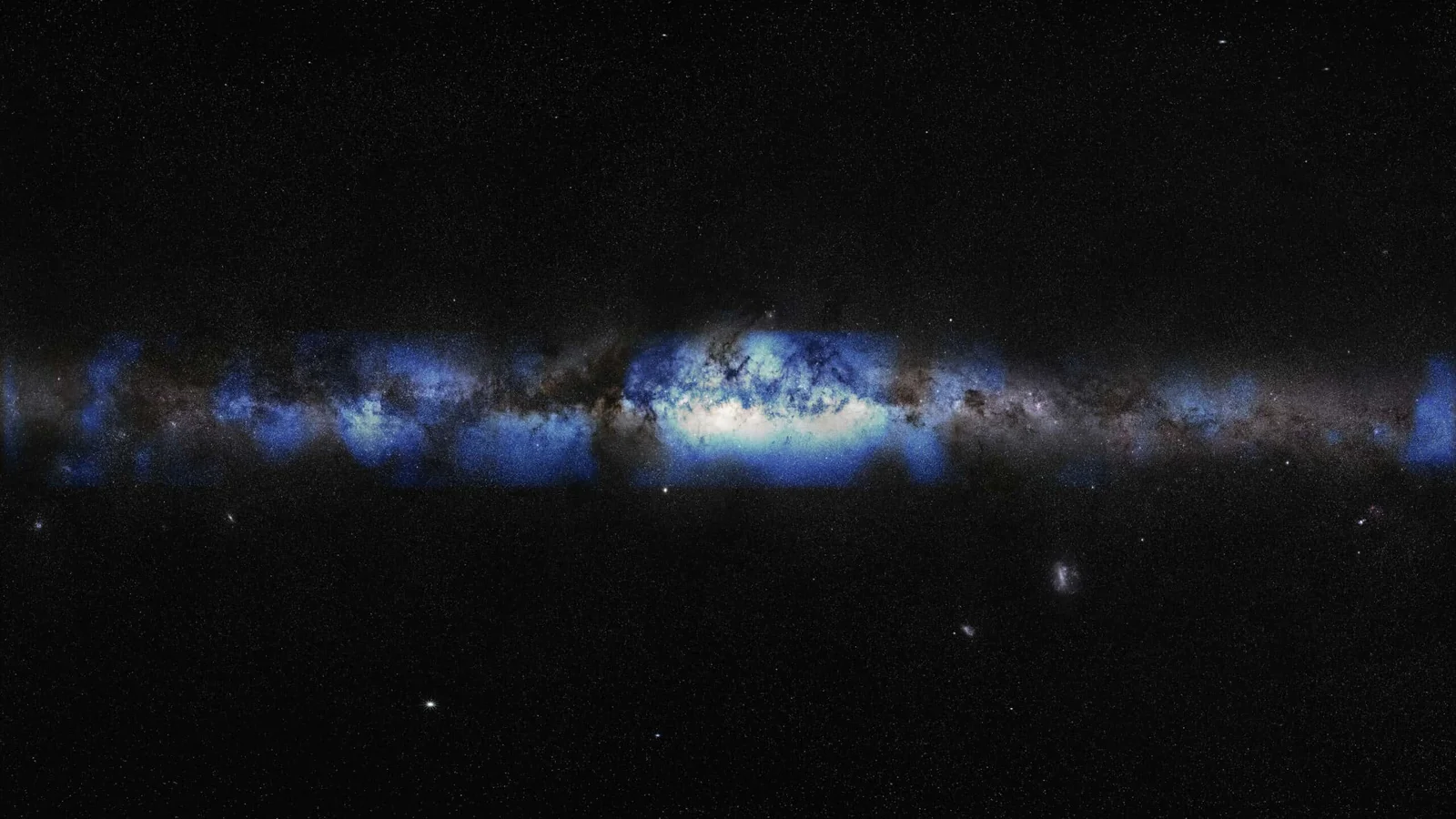
The IceCube Neutrino Observatory has captured a groundbreaking image of the Milky Way galaxy using neutrinos, providing evidence that the Milky Way is a source of high-energy neutrinos. Neutrinos are subatomic particles with no electrical charge and very little interaction with matter, making them difficult to detect. The observatory's sensors buried in Antarctic ice detected neutrinos generated by cosmic rays colliding with interstellar matter in the Milky Way. The discovery opens up new possibilities for studying the universe using neutrinos and paves the way for identifying specific sources within the galaxy.
The IceCube Neutrino Observatory at the South Pole has detected high-energy neutrinos originating from within the Milky Way galaxy, marking the first observation of such particles. Neutrinos are fundamental particles that interact minimally with matter, and their detection opens up a new avenue for studying the Milky Way in particles rather than light. By using machine-learning techniques to analyze a decade's worth of data, researchers were able to identify cascade events caused by high-energy neutrinos, which were previously obscured by background signals. The next step is to identify specific sources of neutrinos in the Milky Way using the upgraded IceCube detector.
The IceCube Neutrino Observatory has produced the first image of the Milky Way using neutrinos, providing a new perspective on our galaxy. The observatory, located at the South Pole, detected high-energy neutrinos originating from both within our galaxy and beyond. This breakthrough was made possible by over 5,000 light sensors and advanced data analysis techniques, including machine learning. The discovery confirms the presence of high-energy neutrinos from the Milky Way and opens the door to identifying specific sources within our galaxy.
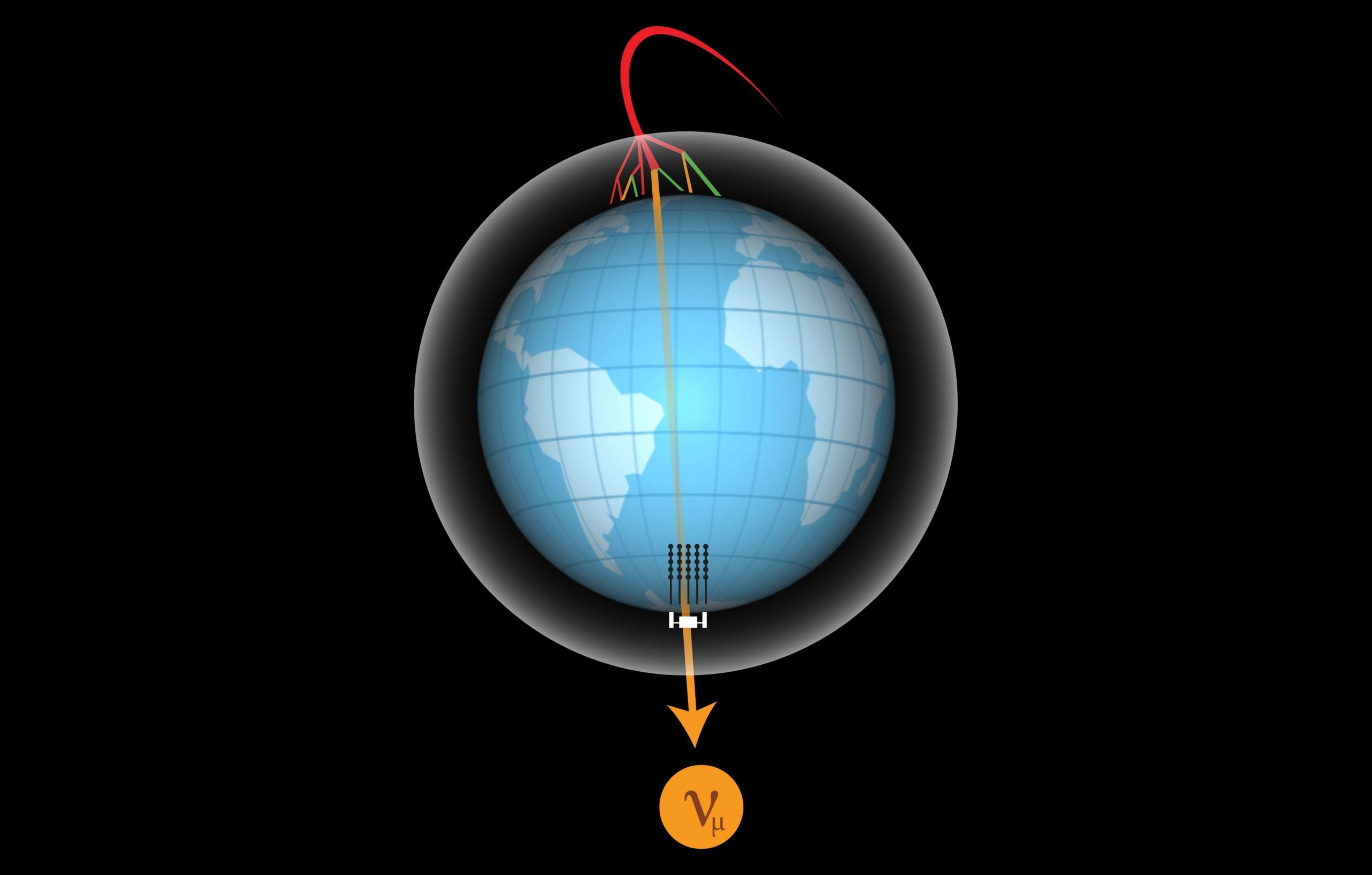
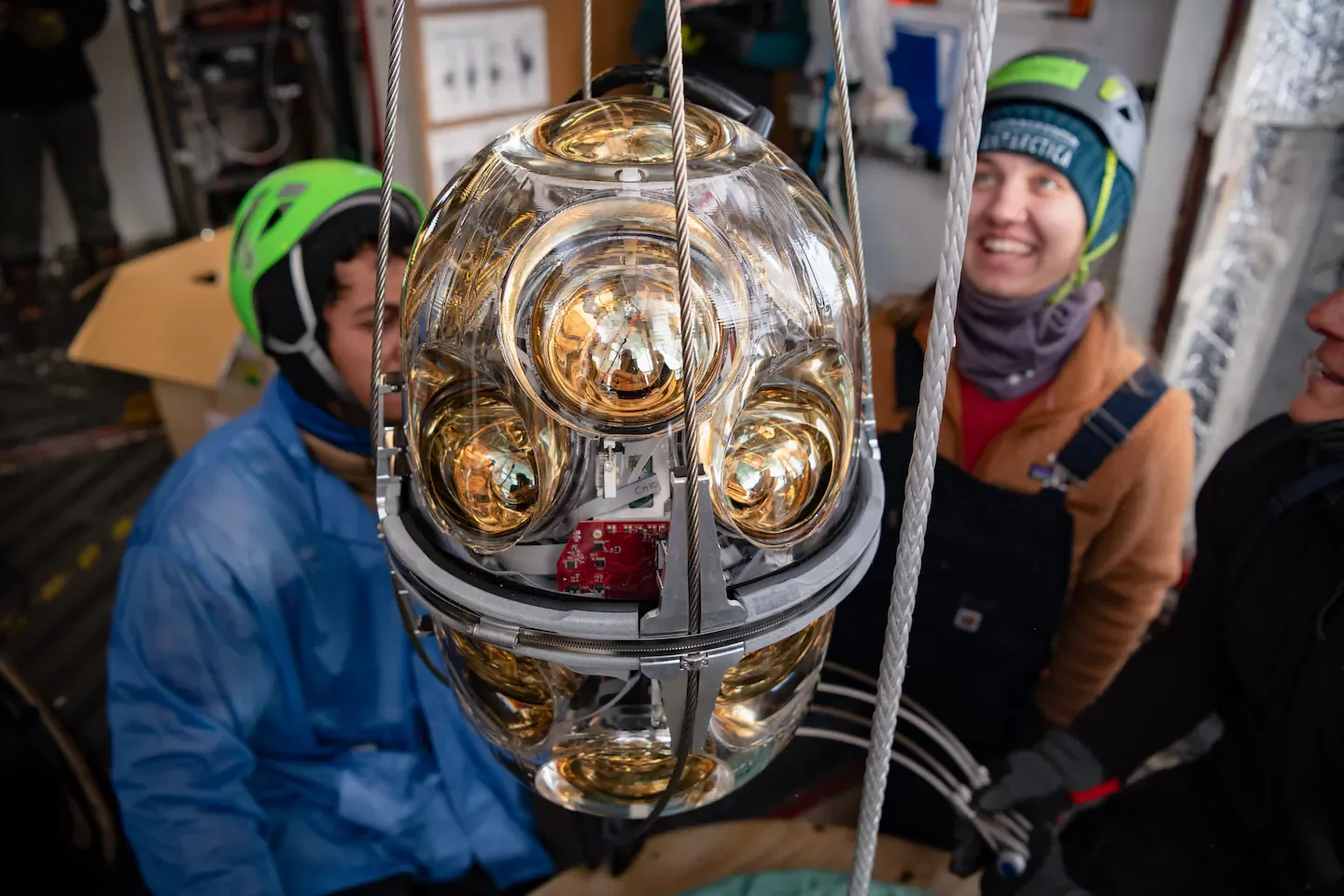
Scientists at the IceCube Neutrino Observatory have captured the first image of the Milky Way using neutrinos, ghostlike particles that interact weakly with matter. The IceCube Collaboration, comprising over 350 scientists, presents evidence of high-energy neutrino emissions originating from the core of our galaxy. The IceCube detector, located at the South Pole, is the largest neutrino detector in the world and operates by detecting faint flashes of light produced when a neutrino interacts with ice. By using advanced machine learning techniques, researchers were able to enhance the identification of neutrino-induced cascades, resulting in an analysis three times more sensitive than previous searches. This breakthrough opens up new possibilities for observing the universe through a different lens and unlocking the secrets of the Milky Way.
The IceCube Neutrino Observatory in Antarctica has detected the first neutrino emissions from within the Milky Way, providing valuable insights into our galaxy. Neutrinos are tiny particles that pass through matter undetected and are created in extreme environments like black holes. IceCube, made up of a billion tons of ice equipped with sensors, detects neutrinos by recording flashes of light. By analyzing the energy and direction of the neutrinos, researchers can determine their origin in the universe. The discovery of Milky Way neutrinos opens up new possibilities for studying galactic phenomena and understanding the cosmic quirks of our own galaxy. IceCube is planning a high-energy upgrade to further enhance its capabilities.
Scientists have detected high-energy neutrinos originating from within our Milky Way galaxy, a groundbreaking discovery that could open up new avenues of research. Neutrinos are extremely difficult to detect as they rarely interact with atoms. The study used the IceCube Neutrino Observatory, the first gigaton neutrino detector ever built, to analyze 10 years of data and identify high-energy neutrinos likely coming from the Milky Way's galactic plane. The findings suggest that IceCube will need upgrades to pinpoint the sources of these neutrinos and further enhance its sensitivity. This discovery could provide valuable insights into cosmic rays, their origin, and the properties of our host galaxy.
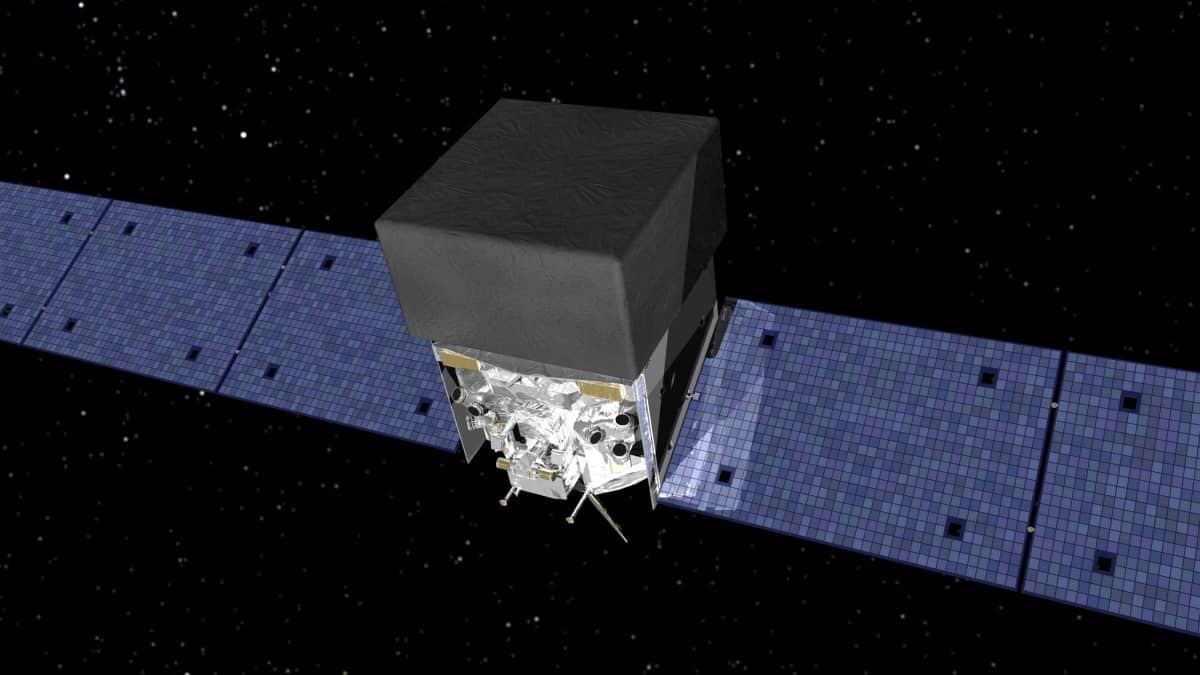
Physicists have identified seven neutrinos that arrived on Earth later than expected, compared to their companion gamma rays, suggesting that ultra-relativistic neutrinos blasted into space during gamma-ray bursts are slowed down by the effects of quantum gravity. While the effect is extremely small, if the particles are created in an astrophysical event billions of light–years away, the cumulative result would be a delay that could be measured when the particles arrive on Earth. The observation would be a major step forward in understanding quantum gravity and its role in the evolution of the universe.