Tag

Gravity

All articles tagged with #gravity

Dark Matter Follows Gravity, Challenging the 5th Fundamental Force

Originally Published 2 months ago — by Space

Featured image for Dark Matter Follows Gravity, Challenging the 5th Fundamental Force
Source: Space

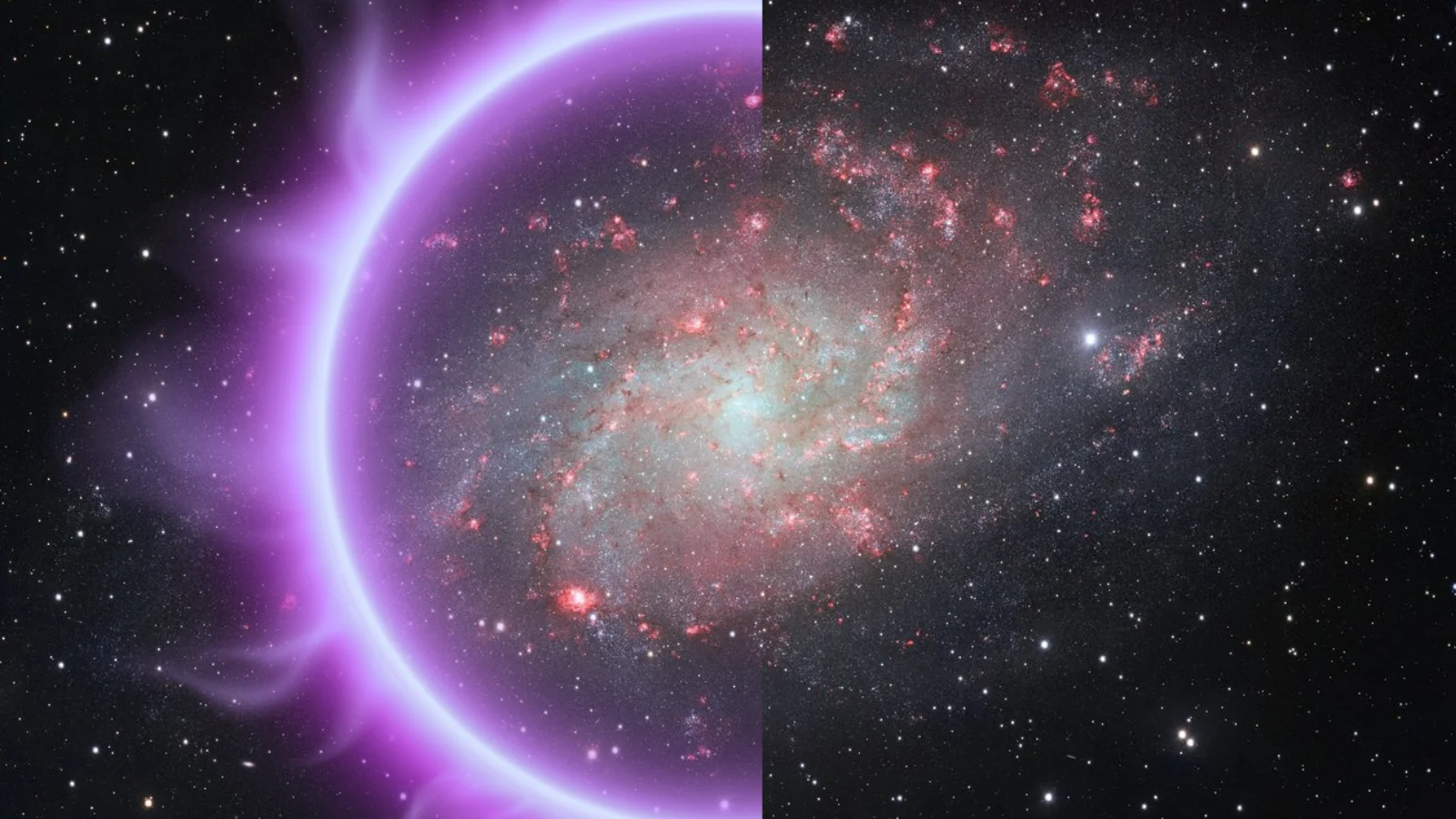
Scientists have confirmed that dark matter obeys gravity on large scales, which constrains the possibility of a fifth fundamental force in the universe, though it cannot be completely ruled out if it is weaker than 7% of gravity. This discovery helps refine our understanding of dark matter's behavior and limits the strength of any unknown forces acting upon it.

The Fate of Matter Inside a Black Hole

Originally Published 2 months ago — by Yahoo

Featured image for The Fate of Matter Inside a Black Hole
Source: Yahoo

Black holes are formed from collapsing massive stars, creating a region with an event horizon beyond which nothing can escape, and possibly a singularity where matter is compressed infinitely. They influence their surroundings through accretion disks and jets, distort time and space, and may eventually evaporate via Hawking radiation, playing a crucial role in understanding the universe's fundamental laws.

Can Classical Gravity Theories Explain Quantum Entanglement?

Originally Published 2 months ago — by Nature

Featured image for Can Classical Gravity Theories Explain Quantum Entanglement?
Source: Nature

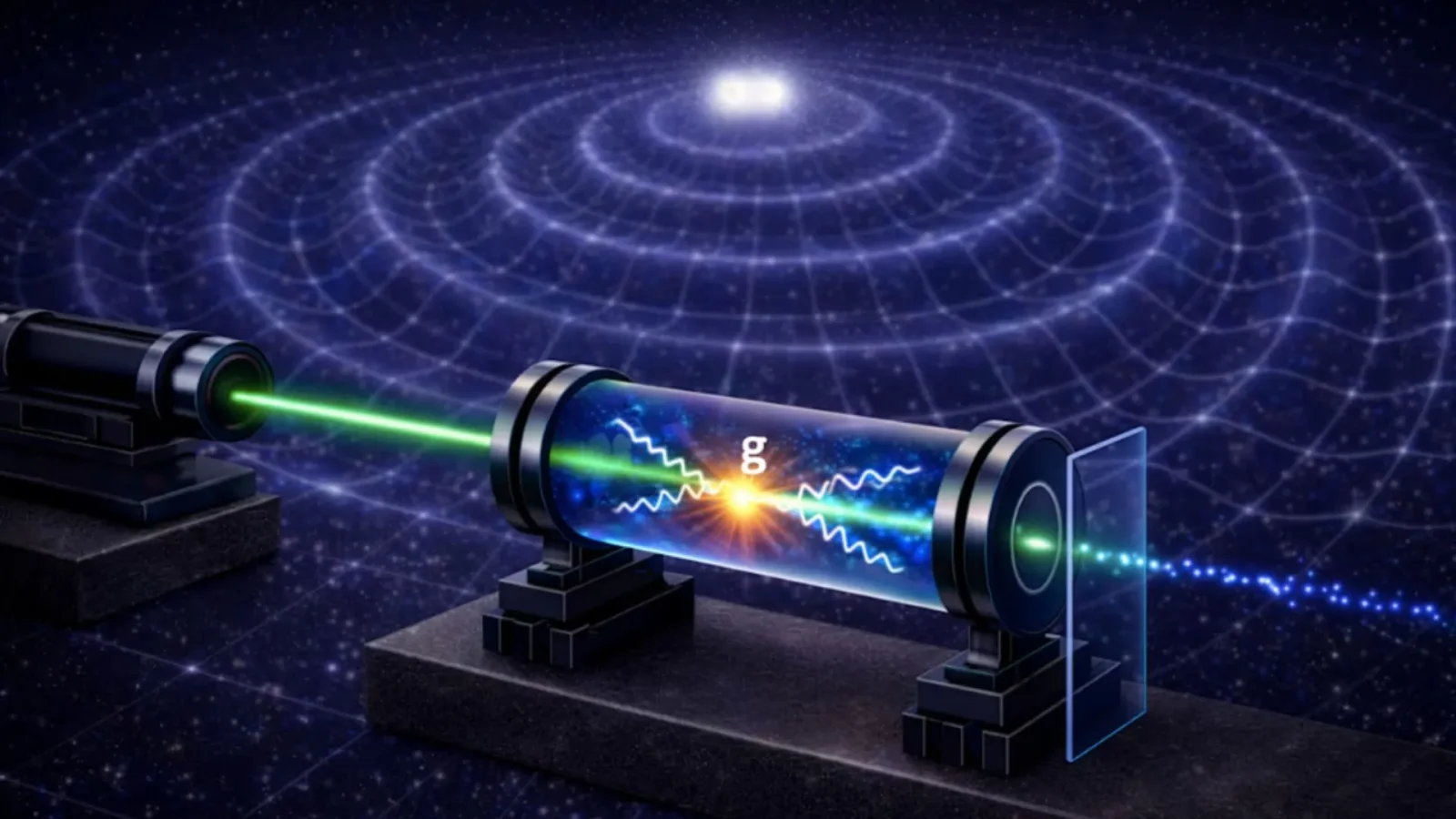
Physicists are debating whether gravity can produce quantum entanglement, with recent proposals suggesting that gravity might have quantum effects without being a quantum theory itself, challenging traditional views and opening new avenues for understanding the fundamental nature of gravity and quantum mechanics.

Exploring the Link Between Gravity and Quantum Entanglement

Originally Published 2 months ago — by Nature

Featured image for Exploring the Link Between Gravity and Quantum Entanglement
Source: Nature

Classical theories of gravity, when combined with quantum field theory, can generate entanglement through virtual matter propagators, challenging the notion that entanglement necessarily indicates quantum gravity. Experiments inspired by Feynman's thought experiment suggest that observing entanglement alone cannot definitively prove gravity's quantum nature, as classical gravity can also produce entanglement under certain conditions.

Outflow Causes Significant Mass Reduction in Brightest Quasar

Originally Published 3 months ago — by ScienceAlert

Featured image for Outflow Causes Significant Mass Reduction in Brightest Quasar
Source: ScienceAlert

A new study using the GRAVITY+ instrument on the VLT has revised the mass of the brightest known quasar, J0529, from 10 billion to 800 million solar masses by accounting for gas outflows that skewed previous measurements, providing new insights into black hole growth and galaxy formation in the early universe.

3I/ATLAS: A Cosmic Wake-Up Call for Global Defense and Collaboration

Originally Published 3 months ago — by Avi Loeb – Medium

Featured image for 3I/ATLAS: A Cosmic Wake-Up Call for Global Defense and Collaboration
Source: Avi Loeb – Medium

The article discusses the gravitational properties of the interstellar object 3I/ATLAS, estimating its size, rotation, and escape velocity, and comparing its gravity to familiar objects like the Moon and Earth, highlighting its relatively weak gravity despite its large mass, and exploring its physical characteristics and public interest.

Ancient Priest's Vision of Black Holes Predates Hawking

Originally Published 4 months ago — by Big Think

Featured image for Ancient Priest's Vision of Black Holes Predates Hawking
Source: Big Think

The article explores the historical and scientific development of the concept of black holes, starting with John Michell's 18th-century theoretical prediction of 'dark stars' with gravity so strong that light couldn't escape, leading up to modern discoveries of supermassive black holes at galaxy centers, confirmed by recent Nobel Prize-winning research.

Bridging Gravity and Quantum Theory Through Time

Originally Published 4 months ago — by Nature

Featured image for Bridging Gravity and Quantum Theory Through Time
Source: Nature

The article discusses the challenge of unifying gravity with quantum theory, highlighting the differences between how quantum mechanics and general relativity conceptualize space and time. It explains the limitations of the Copenhagen interpretation for quantum gravity and explores Richard Feynman's alternative approach, which focuses on events and histories in space-time rather than dualities of location, as a promising way forward in understanding quantum gravity.

Researchers Near Breakthrough in Unifying Gravity and Quantum Physics

Originally Published 5 months ago — by The Debrief

Featured image for Researchers Near Breakthrough in Unifying Gravity and Quantum Physics
Source: The Debrief

Researchers are making significant advances in quantum physics with the aim of reconciling it with gravity, a longstanding challenge in physics. New experiments and theories, including testing quantum entanglement via gravity and observing space-time wobble, are promising steps toward understanding whether gravity is quantum in nature. Although many experiments are still in development, the field is entering a new era of potential breakthroughs.

Exploring Black Holes: The Universe's Most Mysterious Monsters

Originally Published 5 months ago — by WION

Featured image for Exploring Black Holes: The Universe's Most Mysterious Monsters
Source: WION

Black holes form from collapsing massive stars and have a strong gravitational pull, but their influence is limited to nearby objects. They do not actively suck in matter from afar, and the universe's expansion and black hole evaporation prevent them from consuming the entire universe. Therefore, black holes are not a threat to the universe as a whole.

Scientists Introduce a Revolutionary Theory on the Universe's Origins

Originally Published 5 months ago — by SciTechDaily

Featured image for Scientists Introduce a Revolutionary Theory on the Universe's Origins
Source: SciTechDaily

A team of scientists proposes a new, minimalist theory of the Universe's origins that relies solely on gravity and quantum mechanics, avoiding speculative fields and adjustable parameters, and suggests that gravitational waves could have seeded cosmic structure, potentially reshaping our understanding of the Big Bang.