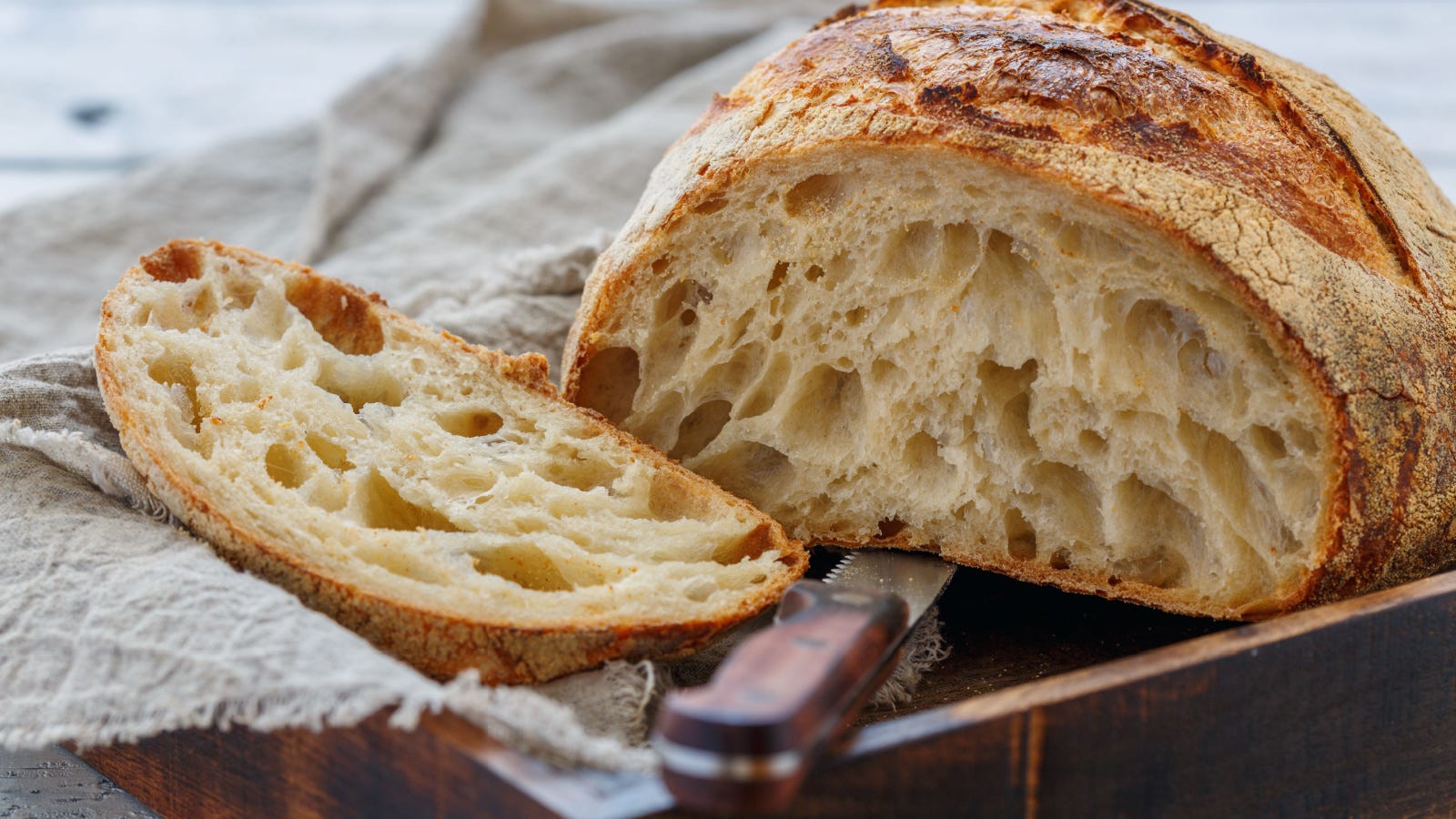
Contrary to common beliefs, sourdough bread and other fermented foods can promote longevity by supporting gut health, providing essential nutrients, and reducing inflammation, making them beneficial additions to a healthy diet.
For those with gluten sensitivity, sourdough bread may be easier to digest due to the fermentation process, which pre-digests the gluten. However, it's important to ensure that the sourdough is made with a traditional starter and not fast-rising baker's yeast, as the latter won't provide the same gut-friendly benefits. Making sourdough at home allows for experimentation with proofing times to find the most digestible option.
For those with gluten sensitivity, sourdough bread may be easier to digest due to the fermentation process, which pre-digests the gluten. However, it's important to ensure that the sourdough is made with a traditional starter and not fast-rising baker's yeast, as the latter won't provide the same gut-friendly benefits. Experimenting with different proofing times when making sourdough at home can help determine the bread's digestibility for individual sensitivities.
Dietitians recommend choosing sourdough bread loaves that are moderate to low in calories, a good source of fiber, and contain some protein. Some top choices include Izzio Lucky 7 Multigrain Sourdough, Inked Bread Co., Pepperidge Farm Farmhouse Sourdough Bread, Trader Joe's Sprouted Wheat Sourdough Bread, and La Brea Bakery Sourdough Loaf, all offering various nutritional benefits such as fiber, protein, and low sugar content. Additionally, gluten-free options like Rudi's Gluten-Free Sourdough Bread White and Simple Kneads Sourdough Gluten-Free Bread provide healthier alternatives for those with dietary restrictions.
Sourdough bread, made with naturally occurring yeasts and lactic acid bacteria, may have health benefits such as lower impact on blood sugar levels, improved digestibility, and enhanced nutrient bioavailability. Studies suggest that it has a lower glycemic index than other breads, is easier to digest, and contains fewer anti-nutrient compounds. Additionally, sourdough provides a good source of B vitamins and selenium. However, it's not suitable for those with celiac disease or gluten intolerance.
Sourdough bread, a staple in bakeries worldwide, is naturally leavened and made through a fermentation process involving flour and water. It offers numerous health benefits, including improved mineral bioavailability, lower glycemic index, and reduced gluten content, making it easier to digest for some individuals. However, it's not gluten-free and may contain artificial additives in commercial forms, so it's important to choose whole-grain options and be mindful of ingredients when making or buying sourdough bread.
Sourdough bread, with its unique fermentation process, offers several health benefits. It contains lactic acid bacteria that boost gut health by providing prebiotics and probiotics. Sourdough bread made from whole grain flour is rich in fiber, which lowers "bad" cholesterol levels and reduces the risk of chronic diseases like heart disease, diabetes, and cancer. It also helps with blood sugar control due to its lower glycemic index. Sourdough bread is a nutritious and delicious option to enjoy as part of a balanced diet.
Gastroenterologist and author of The Fiber Fueled Cookbook, Will Bulsiewicz, MD, recommends sourdough bread for gut health due to its natural probiotics and fermentation process. The lactic acid bacteria and yeast in sourdough starter release vitamins, nutrients, and new forms of fiber, making it more prebiotic and enhancing nutrient absorption compared to other breads. Sourdough bread also contains less gluten and fructans, making it easier to digest for those with food intolerances. Dr. Bulsiewicz shares his sourdough starter recipe and additional sourdough recipes in his book.
Sourdough bread is the best bread for gut health, according to gastroenterologist Will Bulsiewicz. The wild yeasts in sourdough starter ferment the flour, releasing vitamins, additional nutrients, and new forms of fiber. Sourdough is also low on the glycemic scale and contains prebiotics and probiotics. It is a gut-friendly product that can be used for everything from bread to pizza crust to pancakes. However, those with celiac disease or diagnosed gluten intolerance should talk to their doctor before trying sourdough.
Jamie Lee Curtis revealed in an interview with People that Jake Gyllenhaal, her godson, lived with her for almost a year during COVID lockdown. He and his partner lived in the house next door, and he made a lot of sourdough bread. Curtis also shared that Gyllenhaal did a handstand against the wall and took his shirt off and put it back on as a test.
Sourdough bread, a fermented food, has health benefits such as being friendlier on the digestive system for people with IBS due to lower levels of fructans, having less gluten than commercial yeast bread, and having a lower glycemic index. While it's not a probiotic substitute, there are still notable benefits to eating sourdough.