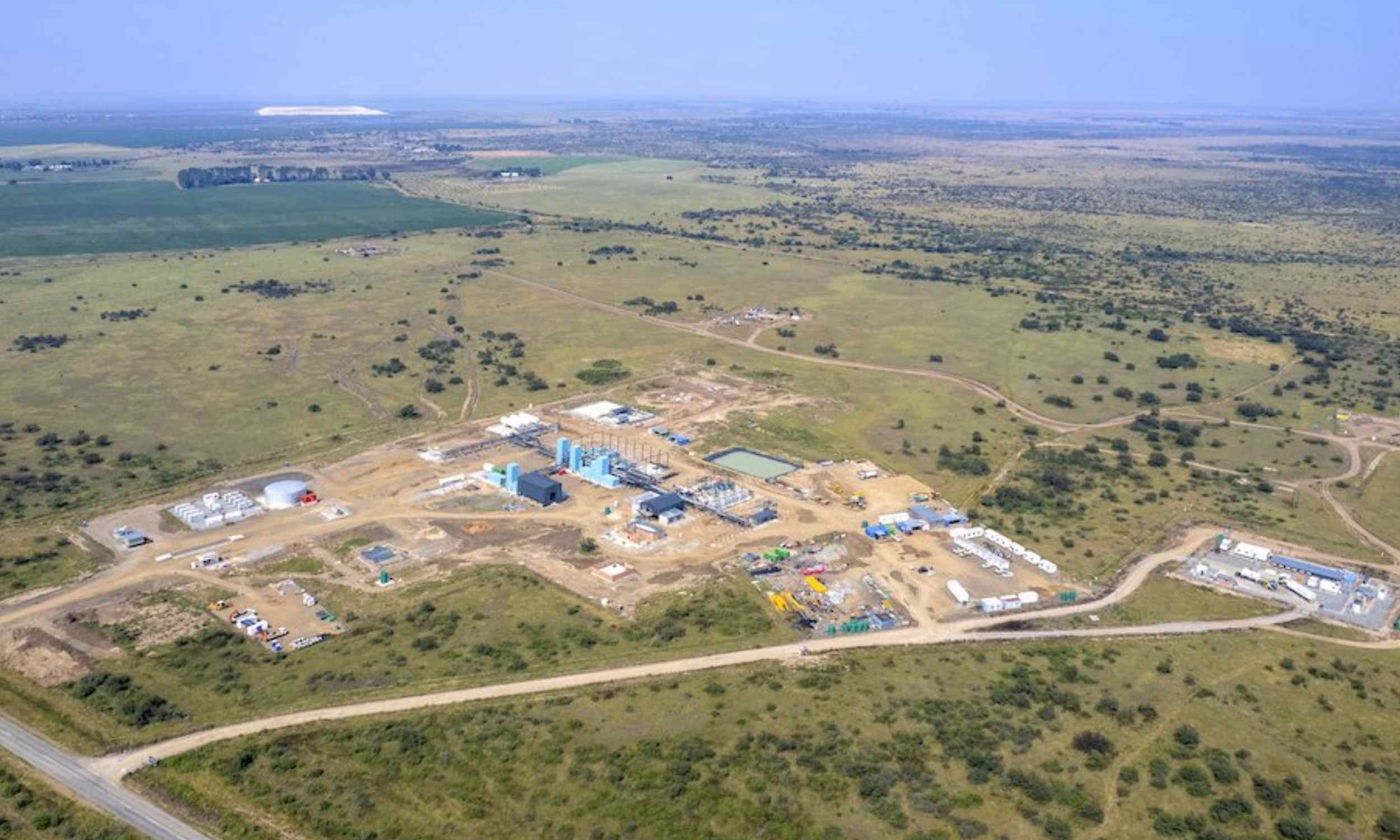
Scientists are studying a helium-rich gas trapped for over three billion years in South Africa's Witwatersrand Basin to understand its formation, migration, and potential for long-term supply, which is crucial for medical, industrial, and scientific applications.
New research reveals that Earth's stable continents were formed by extremely high temperatures deep within the crust, driven by radioactive decay of elements like uranium and thorium, which facilitated the cooling and solidification of the crust. These processes, akin to forging metal, shaped Earth's landmasses and created a stable foundation for life, offering insights into planetary habitability and guiding the search for life on other planets.
Magic numbers in nuclear physics are specific counts of protons and neutrons (2, 8, 20, 28, 50, 82, 126) that lead to especially stable atomic nuclei, explained by the nuclear shell model where complete shells confer stability, similar to electron shells in atoms.
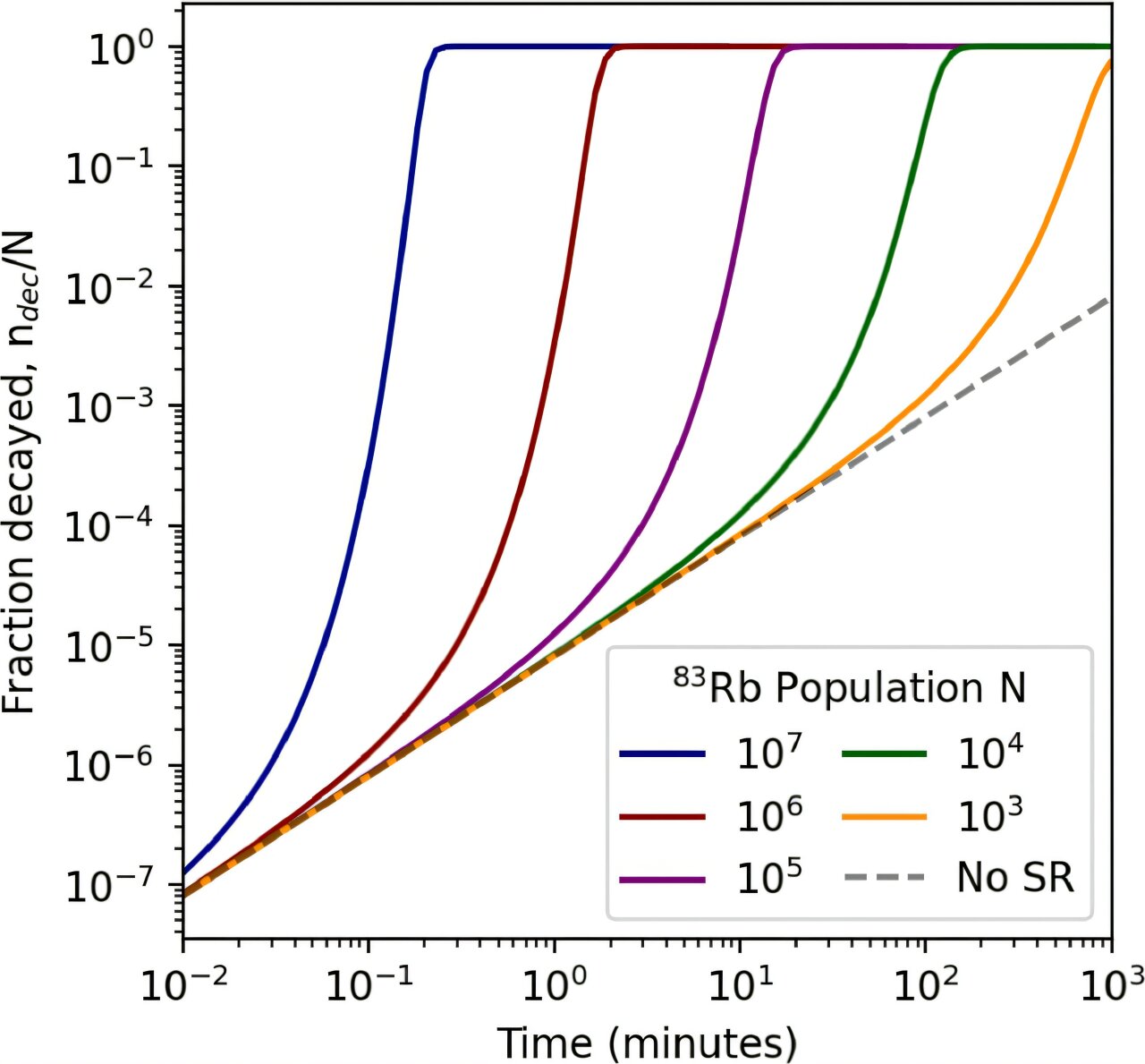
MIT physicists propose a novel concept for a 'neutrino laser' that uses super-cooled radioactive atoms in a Bose-Einstein condensate to produce a coherent, amplified burst of neutrinos, potentially revolutionizing communication and medical technology. They plan to test this idea with tabletop experiments, aiming to harness superradiance to accelerate neutrino production.
MIT physicists propose a novel concept for a neutrino laser that could be created by cooling radioactive atoms to a quantum state, potentially enabling faster neutrino production and new applications in communication and medical imaging.
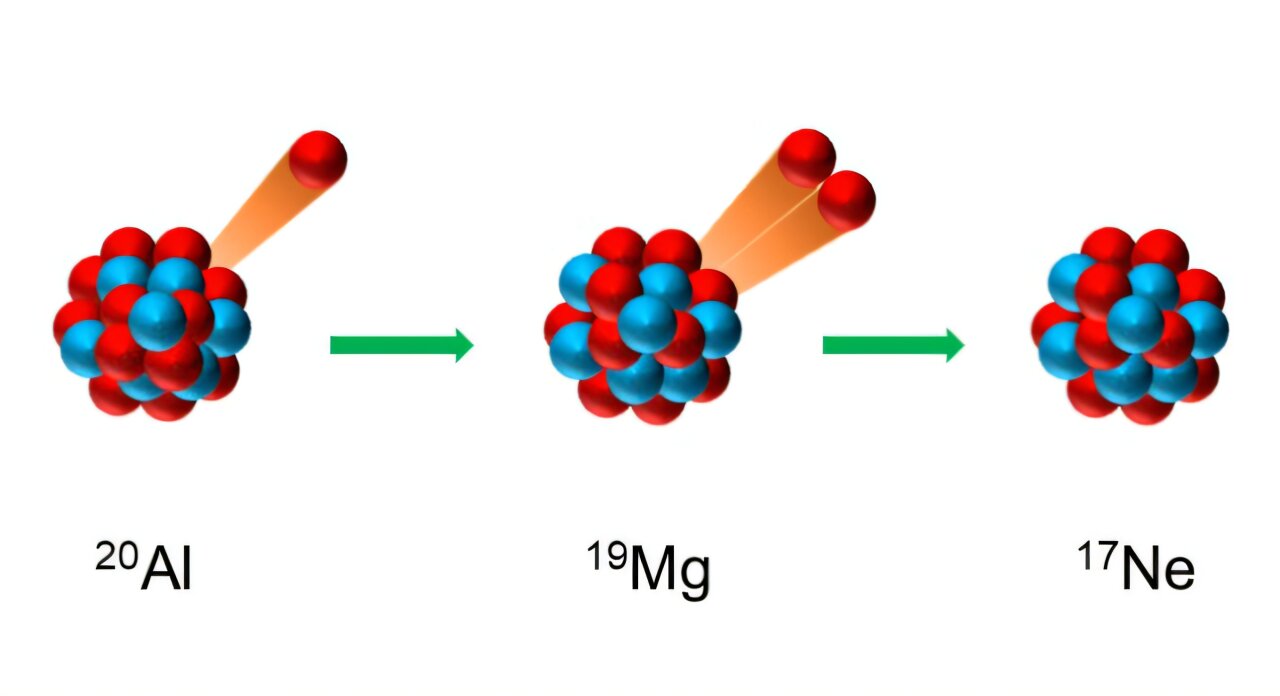
Physicists have discovered and characterized aluminum-20, a new isotope that decays via rare three-proton emission, providing new insights into nuclear structure and decay processes beyond the proton drip line.
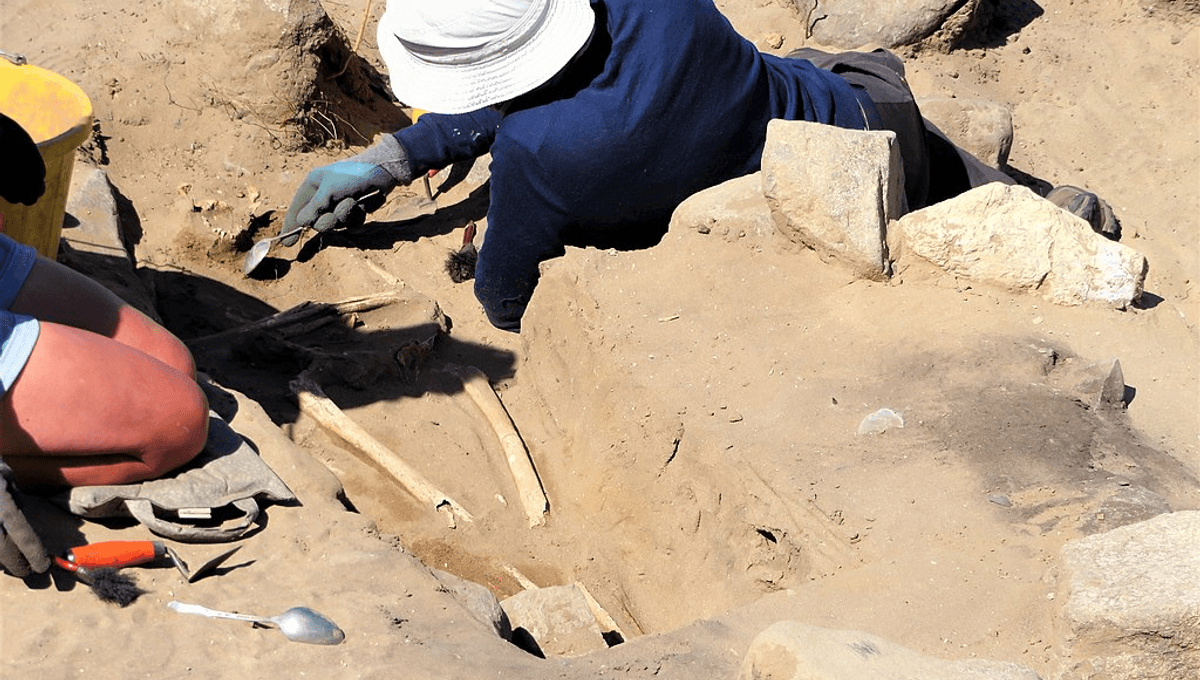
Isotopes have unique half-lives, which is the time it takes for half of the atoms in a radioactive isotope to decay. This concept has revolutionized our ability to measure ages and identify illnesses. Carbon-14, a commonly used isotope, has a half-life of 5,700 years and is used to date fossils and authenticate ancient relics. However, carbon dating has limitations for objects millions of years old, and changes in atmospheric carbon ratios due to human activities may affect its accuracy. Other isotopes with longer half-lives are used to estimate the age of older objects, while isotopes with shorter half-lives are used for medical imaging and scientific experiments.
Scientists have made the first observation of a nucleus decaying into four particles after beta decay. The decay mode involves a lighter form of oxygen breaking into three helium nuclei, a proton, and a positron. By studying the breakup products of a single nucleus, researchers gained insights into decay processes and nucleus properties. The experiment involved using a particle accelerator to produce a beam of radioactive nuclei and a detector to measure the emitted particles. This discovery expands our understanding of radioactive decay and the stability of isotopes.