MIT physicists propose a novel concept for a 'neutrino laser' that uses super-cooled radioactive atoms in a Bose-Einstein condensate to produce a coherent, amplified burst of neutrinos, potentially revolutionizing communication and medical technology. They plan to test this idea with tabletop experiments, aiming to harness superradiance to accelerate neutrino production.

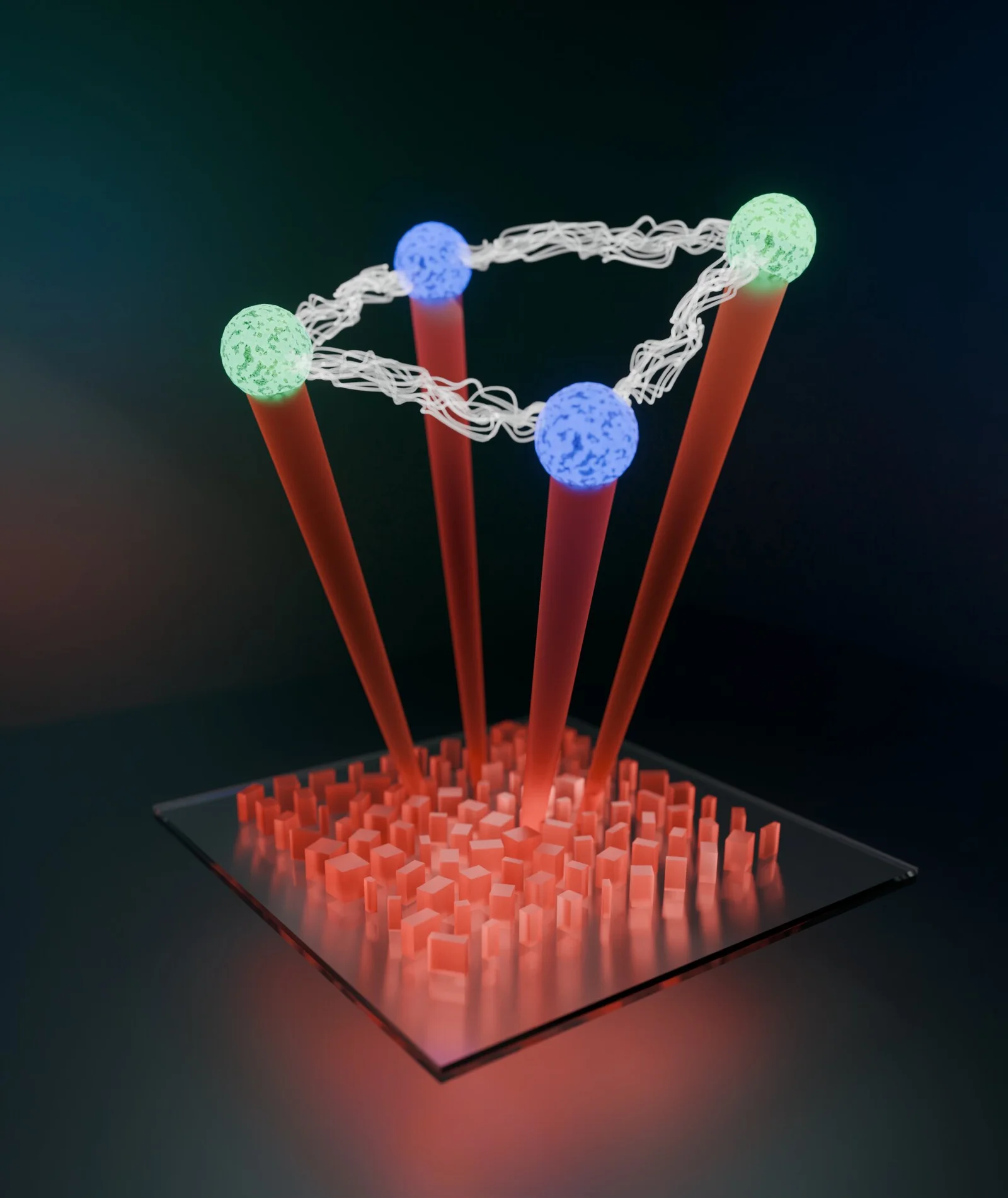
Harvard researchers have developed a novel ultra-thin metasurface that simplifies quantum operations by replacing multiple optical components, potentially revolutionizing quantum computing, sensing, and networking with more scalable, stable, and cost-effective devices.
Researchers at Harvard have developed ultra-thin metasurfaces that can manipulate and entangle photons for quantum information processing, potentially replacing bulky optical components and enabling scalable, robust quantum devices at room temperature.
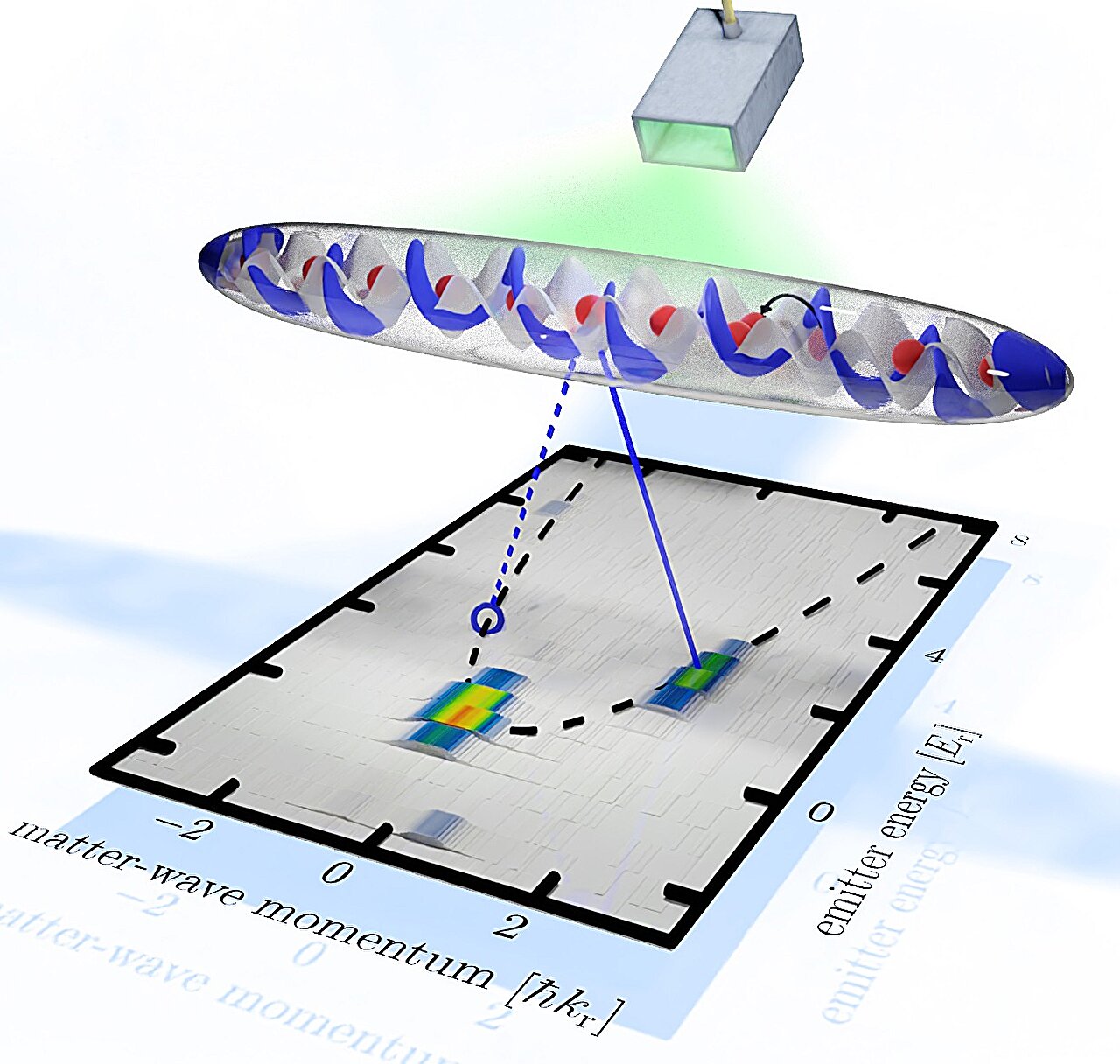
Researchers led by Dominik Schneble have discovered new collective behaviors in quantum optics using matter waves, revealing novel cooperative radiative phenomena in synthetic atom arrays. Their work, published in Nature Physics, explores super- and subradiant dynamics by manipulating ultracold atoms in an optical lattice, offering insights into quantum information science. This study challenges traditional assumptions about photon behavior in quantum systems, demonstrating unprecedented control over subradiant states and highlighting the potential of ultracold matter waves in quantum optics research.
Physicists at the University of Konstanz have discovered a method to imprint chirality onto electrons using laser light, creating chiral coils of mass and charge. This breakthrough has significant implications for quantum optics, particle physics, and electron microscopy, potentially leading to new scientific explorations and technological advancements.
Researchers at Paderborn University have developed a method using photon detectors for homodyne detection to accurately characterize optical quantum states, a crucial advancement for quantum information processing and computing. By utilizing superconducting nanowire single photon detectors, they have demonstrated a linear response to input photon flux, potentially leading to the development of highly efficient homodyne detectors with single-photon sensitive detectors, opening up new possibilities in quantum information processing beyond qubits.
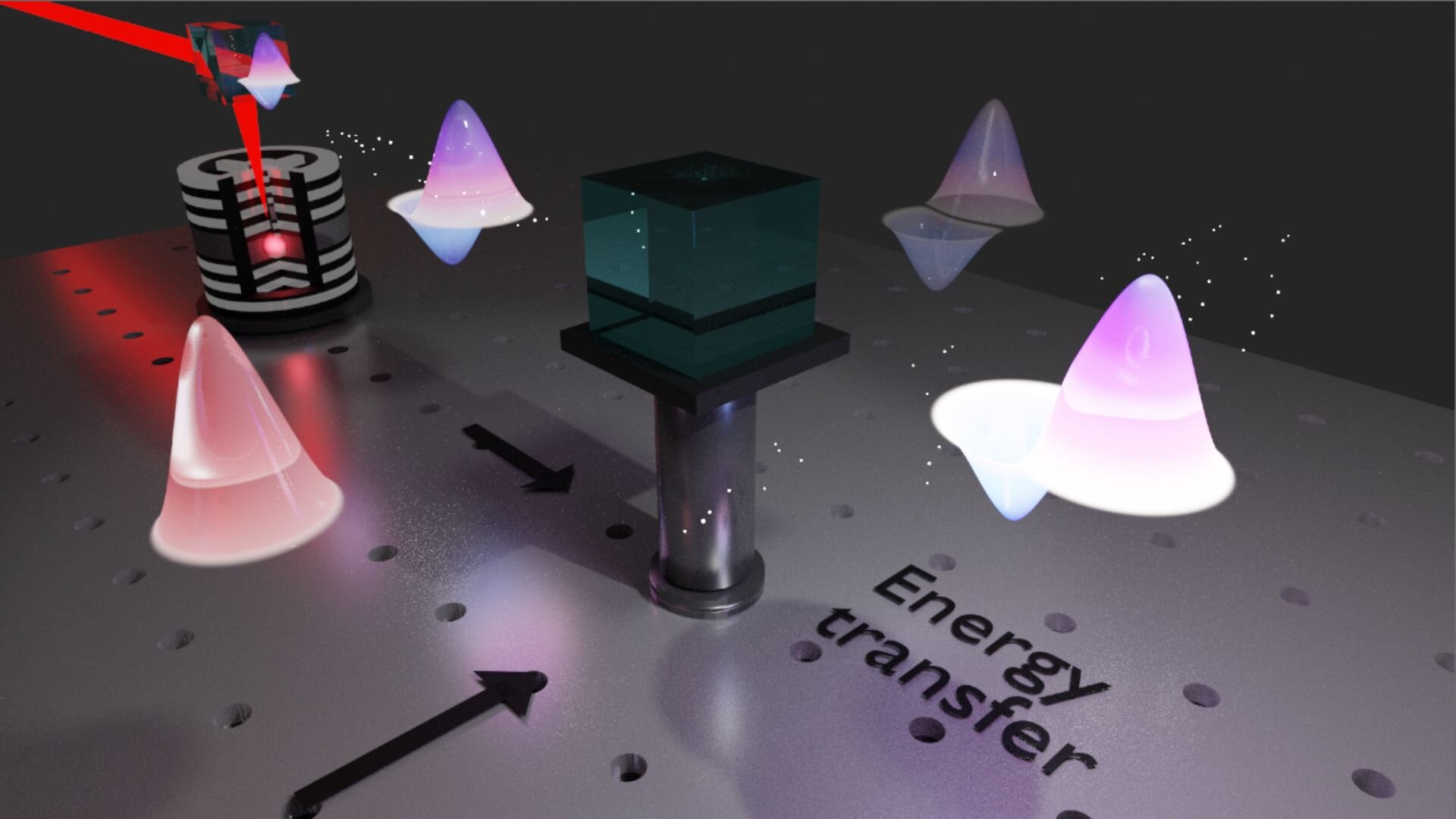
A study in Physical Review Letters delves into the complexities of energy exchanges within bipartite quantum systems, shedding light on quantum coherence, pure dephasing effects, and their implications for future quantum technologies. The research explores energy exchanges in quantum systems, focusing on unitary and correlation energy, and investigates the spontaneous emission of a qubit and the coupling of two light fields. The findings provide insights into quantum dynamics and have potential applications in quantum computing and quantum communication protocols. The study aims to bridge the gap between theoretical predictions and experimental observations in quantum optics and thermodynamics, offering a comprehensive framework for understanding the intricate dynamics at play.
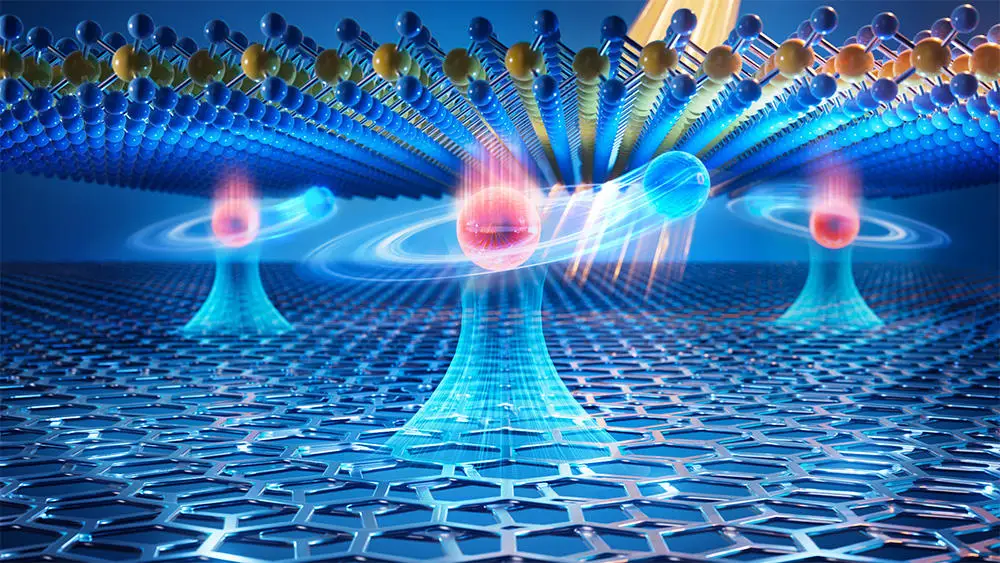
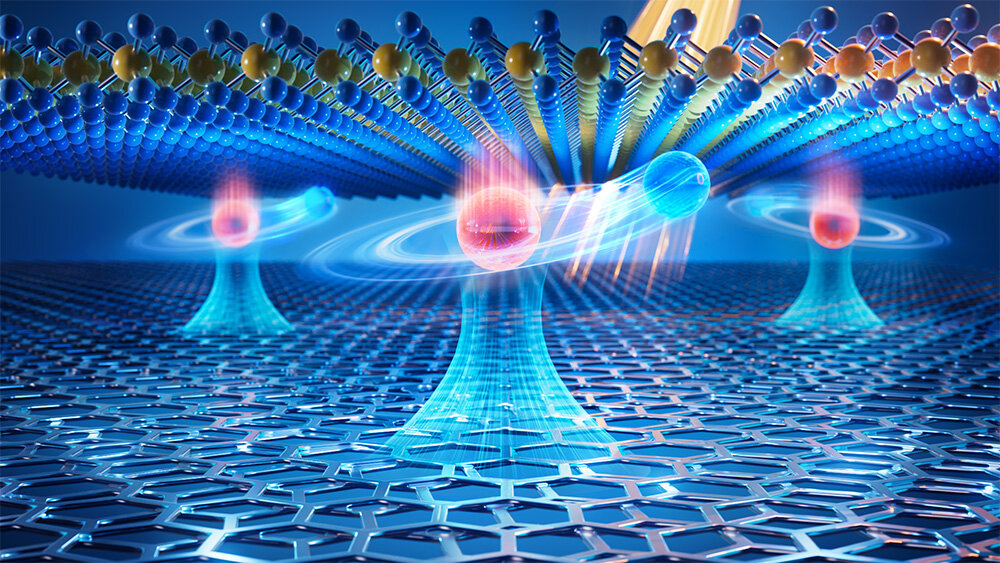
Scientists have made a breakthrough in physics by discovering Rydberg moiré excitons, which are highly energized electron-hole pair states trapped in a monolayer semiconductor adjacent to small-angle twisted bilayer graphene. This solid-state phenomenon holds promise for applications in sensing, quantum optics, and quantum simulation. The researchers demonstrated a novel method of manipulating Rydberg excitons using a moiré superlattice, providing opportunities for coherent control of Rydberg states and potential applications in quantum information processing and computation.
Petr Steindl, a Ph.D. candidate, has developed a method to create complex structures of light using single photons. By utilizing quantum dots in optical microcavities, Steindl can manipulate and control the production of single photons, which can be combined to form intricate structures. This research has potential applications in quantum communication and quantum computing, as well as providing insights into the physics of single photons.
Scientists have discovered Rydberg moiré excitons, which are highly excited Coulomb-bound states of electron-hole pairs trapped in a monolayer semiconductor adjacent to small-angle twisted bilayer graphene. The researchers used low-temperature optical spectroscopy measurements to observe the Rydberg moiré excitons and demonstrated a novel method of manipulating them. This discovery holds promise for applications in sensing, quantum optics, and quantum simulation, and may provide new opportunities for realizing Rydberg-Rydberg interactions and coherent control of Rydberg states in quantum information processing and quantum computation.
Researchers at the Institute for Quantum Optics and Quantum Information (IQOQI) in Vienna have developed a universal mechanism to invert the evolution of a qubit with a high probability of success. The protocol can propagate any target qubit back to the state it was in at a specific time in the past, and can be applied to any qubit, irrespective of its natural time evolution or what state it is when the protocol is used. The researchers found that their universal quantum rewinding mechanism has a high probability of success, namely of 1.