South Africa's hosting of military drills with China, Iran, and Russia amid geopolitical tensions could further strain its already fragile relationship with the US, highlighting the country's balancing act between major global powers and its economic and diplomatic interests.
Warships from China, Russia, Iran, and other countries participated in the weeklong naval drill 'Will For Peace 2026' off South Africa, focusing on maritime safety, counter-terrorism, and cooperation, amid geopolitical tensions and criticism from South African opposition parties.
Pope Leo XIV appointed Bishop Sithembele Sipuka as the Archbishop of Cape Town, recognizing his leadership and advocacy for justice, peace, and dialogue in South Africa and beyond. Sipuka, known for his international experience and commitment to social issues, is seen as a prominent figure likely to influence the Catholic community and social discourse in the region.
Chinese, Russian, and Iranian warships have arrived in South Africa for a week of naval exercises amid heightened geopolitical tensions following US military actions in Venezuela and sanctions on oil tankers, with the drills aimed at safeguarding shipping lanes and regional stability.
China, Russia, and Iran have sent ships to South Africa for naval exercises called Will for Peace 2026, involving Brics Plus nations, amid rising tensions over US military actions and expanding alliances. The exercises include joint maritime safety operations, but Iran's participation has raised concerns among Western critics, highlighting shifting geopolitical alliances and South Africa's balancing act in a complex international landscape.
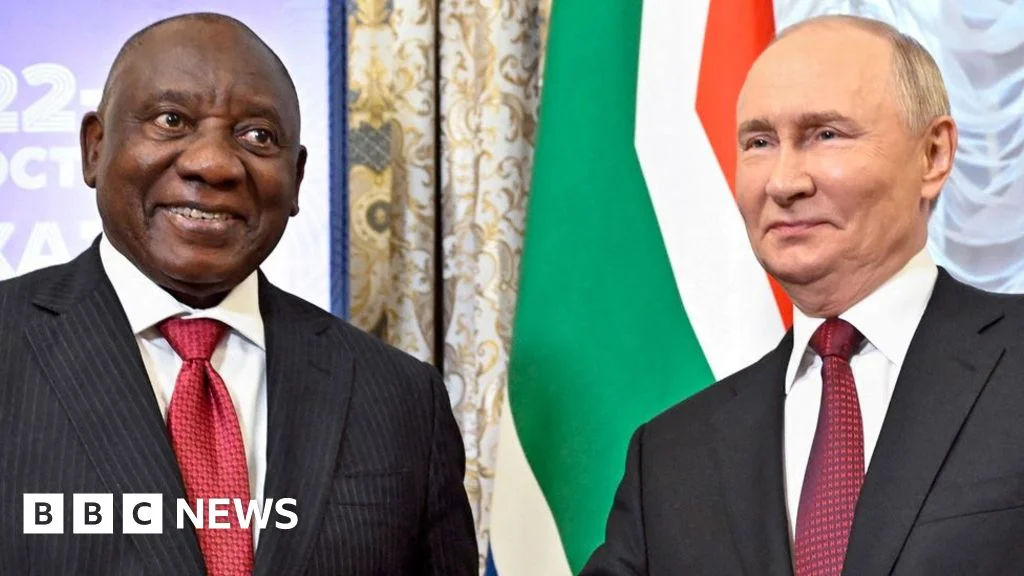
A Russian naval vessel joined Chinese and Iranian warships off South Africa for a week-long military exercise called 'Will for Peace 2026,' involving BRICS nations and aimed at enhancing regional maritime stability, amid tensions with the US over South Africa's diplomatic ties with Russia and Iran.
New archaeological evidence from South Africa shows that humans used poisoned arrows 60,000 years ago, making it the oldest direct evidence of poison use in hunting globally, and highlighting advanced cognitive skills and knowledge of toxic plants among ancient hunter-gatherers.
An ancient rock formation in South Africa's Witwatersrand Basin has been trapping helium for over 3 billion years, providing a valuable and rare resource crucial for medical and scientific applications. The study of this helium deposit offers insights into its formation, migration, and potential longevity, which could influence future helium exploration and supply management globally.
South Africa's overwhelmed legal system faces severe delays, with backlogs of up to 100,000 cases, causing emotional and financial distress for families like Jason Pretorius, whose mother was murdered in gender-based violence. The shortage of judges and administrative delays hinder timely justice, eroding public faith in the system and leaving victims in prolonged uncertainty.
Scientists are studying a helium-rich gas trapped for over three billion years in South Africa's Witwatersrand Basin to understand its formation, migration, and potential for long-term supply, which is crucial for medical, industrial, and scientific applications.
Lucy Campbell, a South African activist and historian, uses her tours of Cape Town's historic sites to highlight the ongoing impacts of colonialism, slavery, and dispossession, criticizing how these histories are memorialized and calling for more inclusive and truthful representations of the past.
Many people in South Africa, like Arnold Ncube and Christy Chitengu, are stateless due to lack of proper birth documentation, which prevents access to education, healthcare, and legal rights, highlighting a global issue of statelessness that affects millions worldwide.
Efforts to save South Africa's threatened albatrosses focus on reducing bycatch from long-line fishing through the use of bird scaring lines, which have significantly decreased seabird deaths and support both conservation and local community employment.
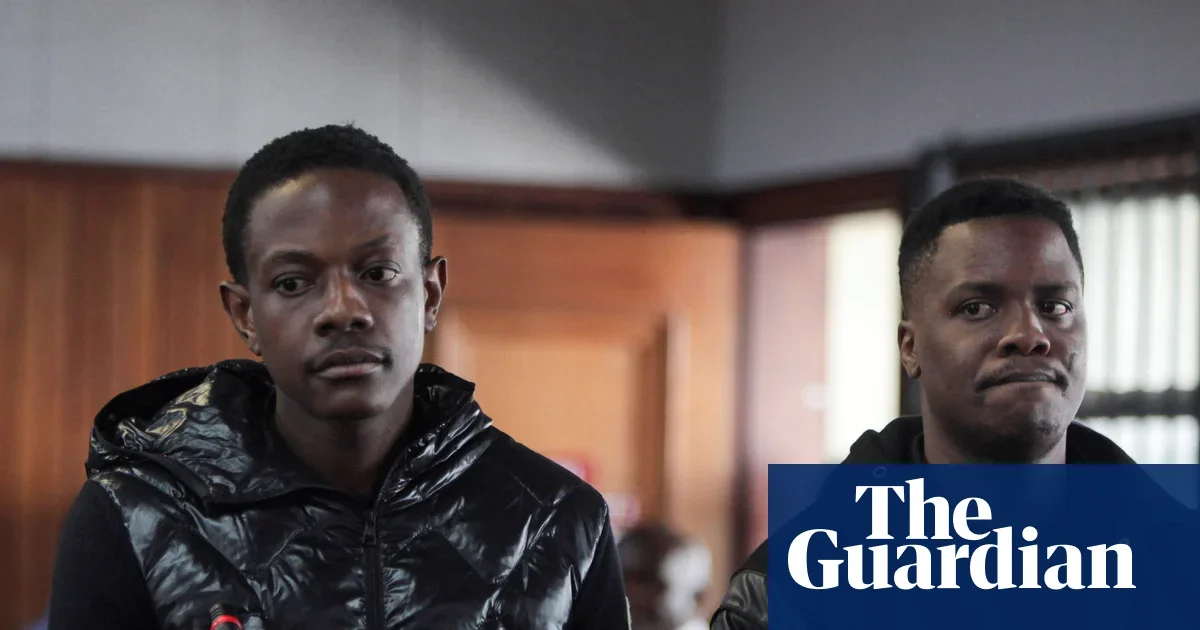
At least 41 young men have died during traditional circumcision initiation ceremonies in South Africa in late 2025, highlighting issues of negligence and illegal practices in initiation schools, with authorities intervening through arrests and legislation to improve safety standards.
At least 41 young men have died in South Africa during traditional initiation ceremonies involving circumcision, with many deaths linked to illegal initiation schools and negligence by both authorities and parents. The government has arrested several individuals, including parents, to curb unsafe practices, but illegal schools continue to pose a significant risk.