Astronomers from the Max Planck Institute have discovered a network of interstellar tunnels of hot plasma connecting our Solar System to other star systems, within the Local Hot Bubble formed by ancient supernovae, challenging the notion of space as a void and suggesting a complex, interconnected cosmic environment.
A new study reveals that powerful superflares, which are tens of thousands of times more intense than typical solar flares, erupt from sun-like stars approximately every 100 years, much more frequently than previously thought. These superflares could have significant impacts on Earth's technological systems and biosphere, though their exact effects remain uncertain. The research, conducted by the Max Planck Institute for Solar System Research, analyzed data from NASA's Kepler space telescope, suggesting that the mechanisms behind solar and stellar flares are consistent across sun-like stars.
Researchers at the Max Planck Institute have announced new findings on the Higgs boson, enhancing our understanding of its interactions with W and Z bosons, which are crucial to the Standard Model of particle physics. These discoveries, presented at the International Conference on High Energy Physics, confirm theoretical predictions and set the stage for future research at the High-Luminosity Large Hadron Collider. The findings not only validate existing theories but also open possibilities for discovering new particles or forces, potentially reshaping our understanding of the universe.
Researchers at the Max Planck Institute have made significant advancements in understanding the Higgs boson's interactions with other particles, particularly W and Z bosons, using data from the Large Hadron Collider. These findings, presented at the ICHEP 2024, confirm theoretical predictions of the standard model and enhance our understanding of particle mass acquisition. The results also set the stage for future research at the High-Luminosity LHC, potentially uncovering new physics beyond the standard model.
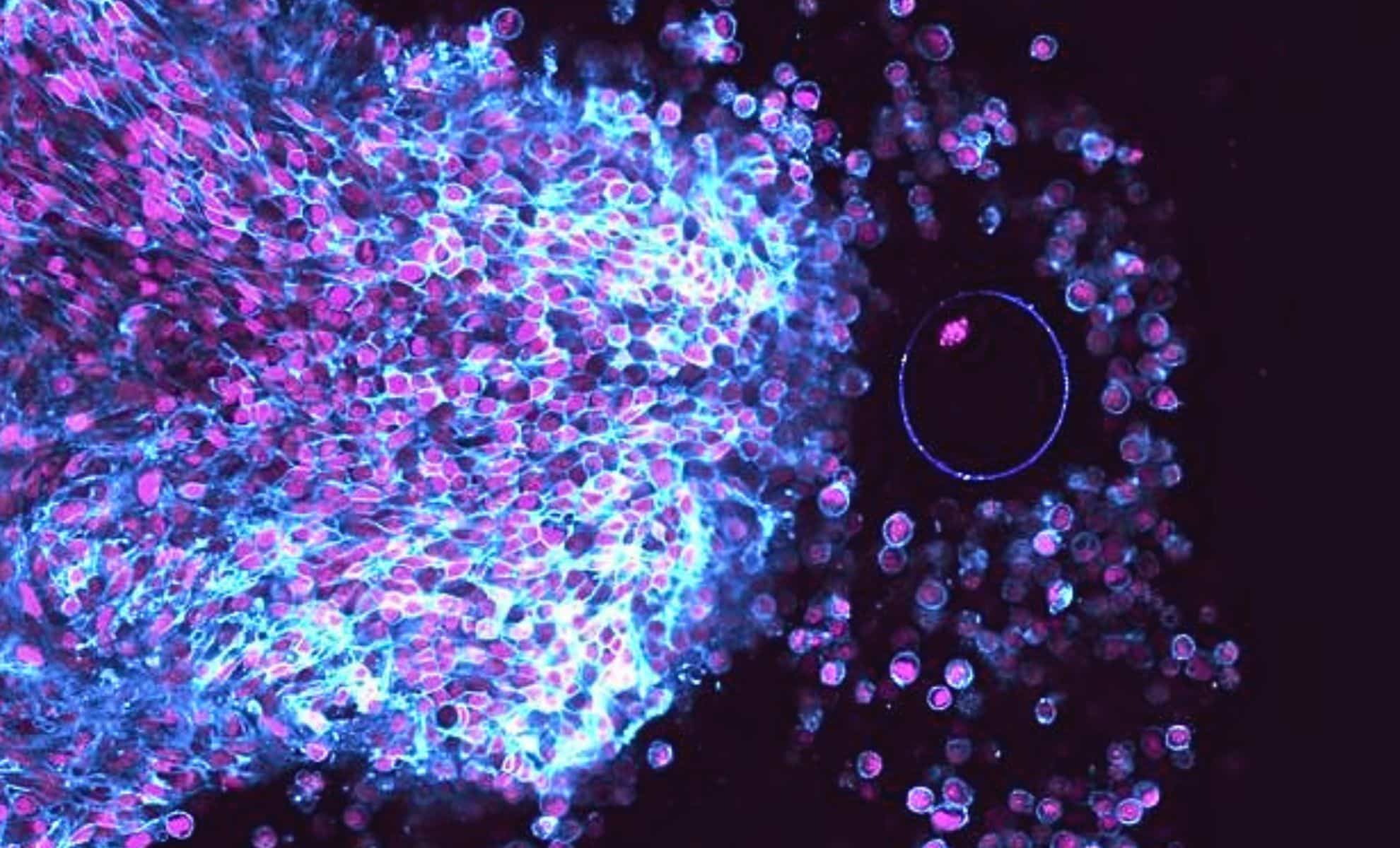
Researchers at the Max Planck Institute have captured the first real-time video of ovulation, revealing the process in unprecedented detail. This breakthrough, achieved through advanced microscopy and live tissue culture techniques, allows scientists to observe the three key phases of ovulation, potentially revolutionizing infertility treatments. By understanding ovulation more precisely, this discovery could lead to improved diagnostics and treatments for conditions like polycystic ovary syndrome (PCOS), marking a significant advancement in reproductive medicine.
Researchers at the Max-Planck-Institute for the Science of Light have developed a method to entangle optical photons with phonons, representing a significant advancement in quantum entanglement. This hybrid entanglement, achieved through Brillouin scattering, allows for stable connections between light and sound particles, even at higher temperatures, and could enhance quantum communication and computing. The study, published in Physical Review Letters, highlights the potential of this technique in various quantum applications.
Researchers at the Max Planck Institute have made significant advances in understanding the interactions of the Higgs boson with other particles, particularly W and Z bosons, using data from the Large Hadron Collider. These findings, presented at the ICHEP 2024, confirm theoretical predictions of the Standard Model and pave the way for future research at the High-Luminosity LHC. The results could potentially reveal new particles or forces, expanding our understanding of the universe.
Researchers at the Max Planck Institute have identified rare protein-altering genetic variants associated with left-handedness, shedding light on the inheritable nature of this trait. Using data from the UK Biobank, they found that microtubule-related genes, such as TUBB4B, may play a role in setting up brain asymmetries. Additionally, genes associated with autism, DSCAM and FOXP1, were linked to left-handedness, providing potential insights into conditions like autism and schizophrenia. The study highlights the complexity of handedness as a polygenic trait and paves the way for further exploration of brain asymmetry in embryonic development.
A new study analyzing the DNA of almost 10,000 people from ancient and pre-modern societies has identified 6 cases of Down syndrome in past human populations, with one specimen dating back 5,500 years. The research aims to trace the origins of these individuals and understand how prehistoric societies treated people with Down syndrome and other rare conditions. The study, led by researchers at the Max Planck Institute for Evolutionary Anthropology, utilized a new statistical model to identify these cases and shed light on the treatment and integration of individuals with genetic conditions in ancient communities.
Scientists have successfully revived tiny roundworms that were frozen for 46,000 years in the Siberian permafrost, marking a significant breakthrough in the study of ancient organisms and their potential for revival. The worms were brought back to life by researchers from the Max Planck Institute of Molecular Cell Biology and Genetics.
A study by the Max Planck Institute of Animal Behavior has found that the American mink, a species that has undergone domestication for the fur trade, is able to regrow almost the full ancestral brain size within 50 generations after escaping captivity. This rare reversal of the domestication effect challenges the notion that loss of brain size in domesticated animals is permanent. The study suggests that the mink's ability to seasonally change their brain size may contribute to this flexibility, allowing them to adapt to the challenges of living in the wild.
Google and Max Planck Institute have developed DragGAN, a point-based image manipulation tool that uses AI to incrementally move multiple points of an image along a target trajectory defined by the user. The AI keeps the output within the bounds of a realistic-looking image, allowing users to manipulate images without prior editing expertise. The tool is still in the research phase, but the code will be made available in June 2023.
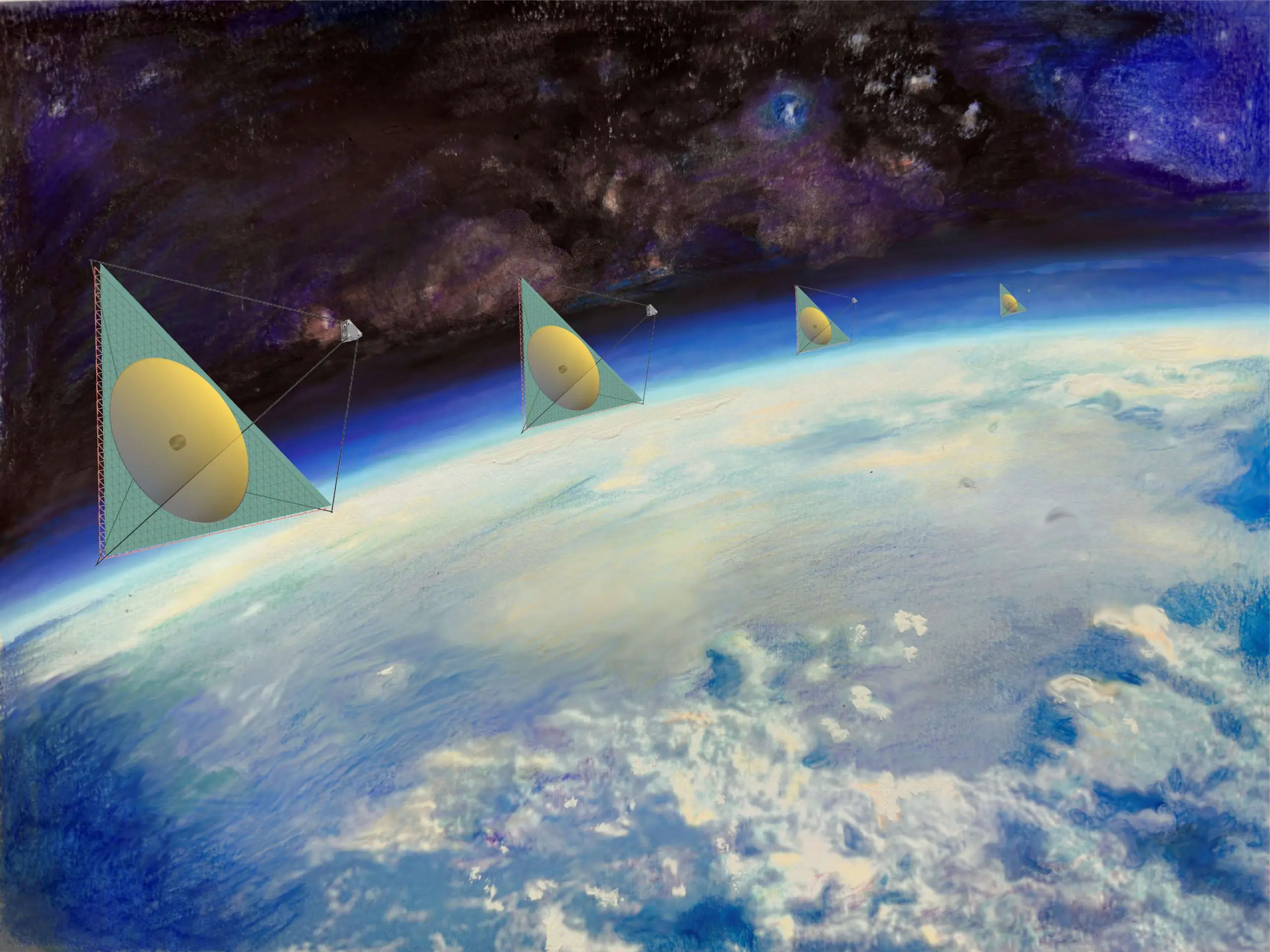
Researchers at Max Planck Institute for Extraterrestrial Physics have developed a new method to produce and shape large, high-quality mirrors that are significantly thinner than the primary mirrors traditionally employed in space telescopes. The mirrors are lightweight and flexible enough to be rolled up and packed efficiently within a spacecraft during launch. The researchers created the mirrors by using chemical vapor deposition to grow membrane mirrors on a rotating liquid inside a vacuum chamber. The new membrane-based mirrors could also be used in adaptive optics systems.
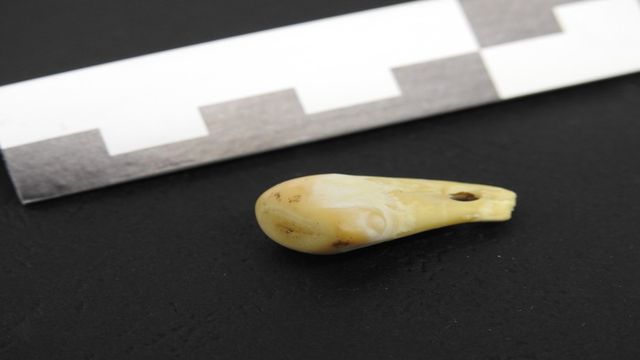
Scientists at the Max Planck Institute for Evolutionary Anthropology have developed a non-destructive method for extracting DNA from ancient bones and teeth, which has been successfully applied to recover a woman's DNA from a 20,000-year-old deer tooth pendant. The method involves gradually releasing DNA trapped in bones and teeth, preserving the integrity of the artifacts. The pendant was made or worn by a woman who was closely related to an ancient group of individuals located further east Siberia, known as the "Ancient North Eurasians". The researchers are now eager to apply their novel approach to other Stone Age artifacts made from bone and teeth.
A study by Yale University and the Max Planck Institute for Metabolism Research has found that eating fatty and sugary foods every day alters the reward circuits in human brains to create lasting preferences. Participants were given yogurt high in fat and sugar twice daily for eight weeks, while the other group received a low-fat, low-sugar version. At the end of the eight weeks, participants were offered puddings with varying fat contents and apple juice containing differing sugar levels and told to rate them for fattiness, creaminess, oiliness, sweetness, desire and satisfaction. The study found that those eating food higher in fat and sugar continued to crave it, and even small human dietary changes can rewire brain circuits and increase the long-term risk of overindulgence or weight gain.