Tag

Brain Size

All articles tagged with #brain size

Flores Hobbits' Small Size Resulted from Slowed Childhood Growth, Study Finds

Originally Published 3 months ago — by The Conversation

Featured image for Flores Hobbits' Small Size Resulted from Slowed Childhood Growth, Study Finds
Source: The Conversation

New research suggests that the small size of Homo floresiensis, or Hobbits, resulted from slowed growth during childhood rather than in utero development, challenging previous assumptions that brain size increase was the primary driver of human evolution. The study highlights how tooth and brain size relationships can provide insights into fossil species, and emphasizes that small body size on islands is an adaptive response, not a reflection of lower intelligence.


Study Challenges Gradual Evolution of Human Intelligence

Originally Published 1 year ago — by SciTechDaily

Featured image for Study Challenges Gradual Evolution of Human Intelligence
Source: SciTechDaily

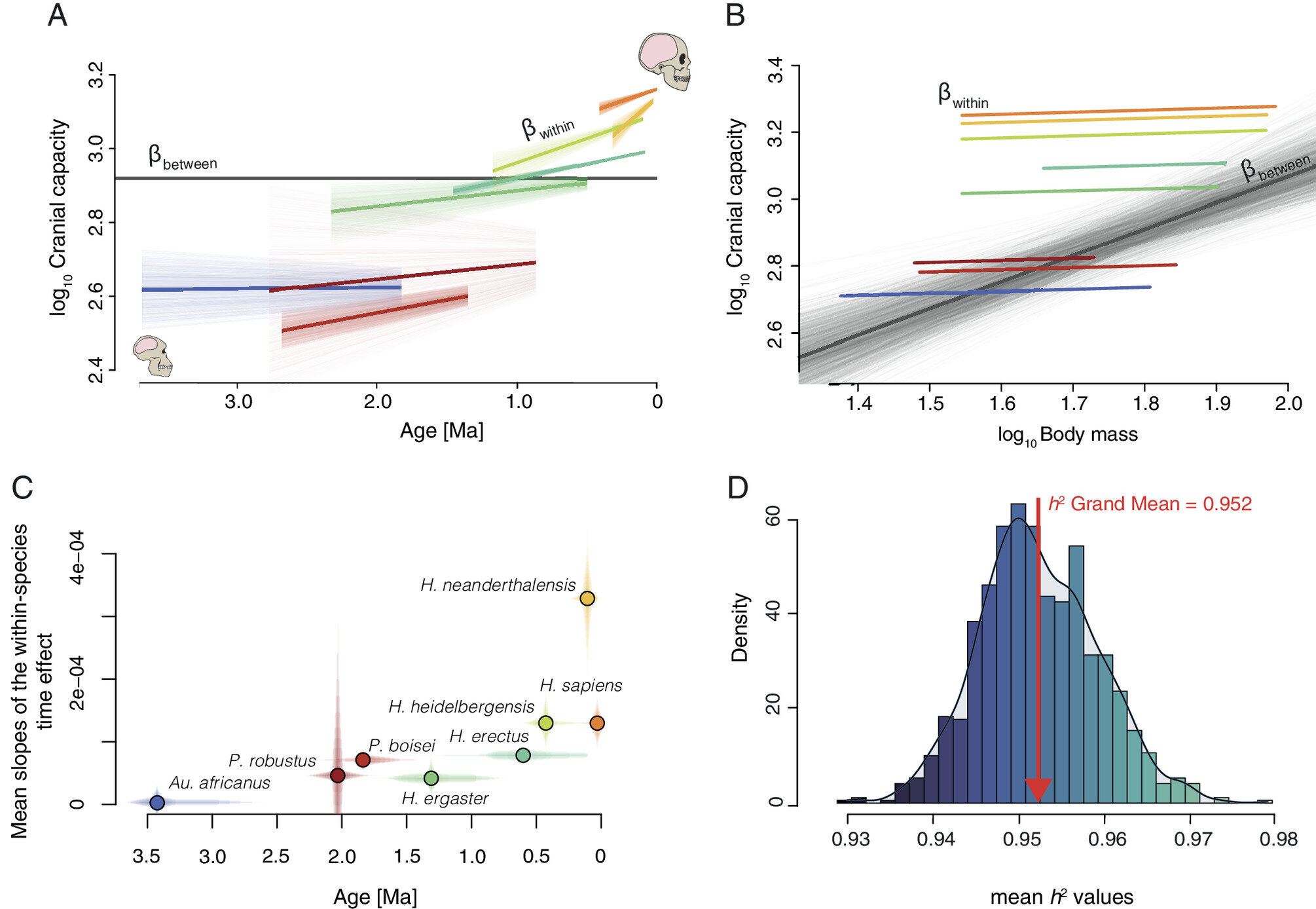
A new study published in PNAS reveals that the evolution of larger brains in modern humans, Neanderthals, and their relatives occurred gradually over millions of years, rather than through sudden leaps between species. Researchers from the University of Reading, Oxford, and Durham used a comprehensive fossil dataset and advanced methods to demonstrate steady brain size growth driven by gradual adaptation within species. This challenges previous theories of dramatic evolutionary changes and highlights the complexity of brain evolution.

The Evolutionary Surge: Unraveling the Growth of the Human Brain

Originally Published 1 year ago — by Phys.org

Featured image for The Evolutionary Surge: Unraveling the Growth of the Human Brain
Source: Phys.org

A new study reveals that human brain size increased gradually within species over millions of years, rather than through sudden leaps between species. This challenges previous beliefs about brain evolution, suggesting that gradual changes, rather than dramatic events, drove the development of larger brains in humans and their relatives. The research, involving a comprehensive dataset of ancient human fossils, highlights the complexity of evolutionary pressures on brain size, showing that larger brains evolved primarily from within-species changes.

"Growing Human Brain Size Linked to Reduced Dementia Risk"

Originally Published 1 year ago — by PsyPost

Featured image for "Growing Human Brain Size Linked to Reduced Dementia Risk"
Source: PsyPost

A study using data from the Framingham Heart Study reveals that human brains have been increasing in size over recent decades, with those born in the 1970s having larger brain volumes and surface areas compared to those born in the 1930s. This increase in brain size may potentially lower the risk of age-related dementias, suggesting the possibility of enhanced brain reserve. However, the study's cohort mainly consisted of non-Hispanic White, healthy, and well-educated individuals, so caution is advised in generalizing the findings to the broader U.S. population.

"Rising Brain Sizes in Younger Generations Linked to Lower Dementia Risk"

Originally Published 1 year ago — by Euronews

Featured image for "Rising Brain Sizes in Younger Generations Linked to Lower Dementia Risk"
Source: Euronews

A new study from the University of California analyzing data from the Framingham Heart Study suggests that human brains have been increasing in size between the 1930s and 1970s, potentially reducing dementia risk. The research found significant increases in various cerebral measures over time, with larger brain structures possibly reflecting improved brain development and health. While genetics play a major role in brain size, external influences such as health, social, cultural, and educational factors may also contribute. However, brain size is just one piece of the puzzle, and further research is needed to understand the impact on dementia risk, particularly in more diverse cohorts.

"Rapid Increase in Human Brain Size Over 75 Years"

Originally Published 1 year ago — by AOL

Featured image for "Rapid Increase in Human Brain Size Over 75 Years"
Source: AOL

A new study from the University of California Davis has found that the human brain has increased in size by 6.6 percent between the 1930s and the 1970s, with noticeable growth in volume, surface areas, and structures such as the hippocampus. This increase is attributed to improved health, social-cultural changes, and educational factors, and could potentially explain the decreasing incidence of brain diseases like Alzheimer’s. The research suggests that external influences, in addition to genetics, play a role in determining brain size and long-term brain health.

"Rising Brain Sizes: A Promising Defense Against Dementia and IQ Decline"

Originally Published 1 year ago — by Good News Network

Featured image for "Rising Brain Sizes: A Promising Defense Against Dementia and IQ Decline"
Source: Good News Network

A new study from UC Davis has found that the average human brain size has increased by 6.6% and the surface area by 15% compared to those born in the 1930s, suggesting potential resilience against neurodegenerative diseases like dementia. The research, based on brain MRIs from participants in the Framingham Heart Study, indicates that larger brain structures may reflect improved brain development and health, potentially buffering the effects of age-related brain diseases. The findings also suggest that factors such as lifestyle choices and the decade of birth may impact brain size and long-term brain health, offering hope for improved brain health and a potential decrease in the incidence of dementia.

"Study Shows Human Brains Growing Larger, Impact on Health and Intelligence Explored"

Originally Published 1 year ago — by NDTV

Featured image for "Study Shows Human Brains Growing Larger, Impact on Health and Intelligence Explored"
Source: NDTV

A study based on data from 3,000 participants has revealed that human brains, particularly those of Generation X, are increasing in size, which could potentially reduce the risk of dementia in younger generations. The research, led by the University of California Davis, found that factors such as health, social, cultural, and educational influences may contribute to this trend. The increased brain size is seen as a potential buffer against aging-related diseases, aligning with recent trends showing a decrease in dementia incidence in younger generations due to healthier lifestyles and upbringing.

"Growing Human Brains: A Promising Defense Against Dementia"

Originally Published 1 year ago — by UC Davis Health

Featured image for "Growing Human Brains: A Promising Defense Against Dementia"
Source: UC Davis Health

A study by UC Davis Health found that human brains are getting larger, with participants born in the 1970s having 6.6% larger brain volumes and almost 15% larger brain surface area than those born in the 1930s. This increase in brain size may lead to a larger brain reserve, potentially reducing the overall risk of age-related dementias. The study, published in JAMA Neurology, used brain MRIs from participants in the Framingham Heart Study and found gradual but consistent increases in several brain structures. The researchers suggest that improved brain health and size may be contributing to a reduction in the incidence of dementia per decade since the 1970s.

"Sexual Dimorphism: Female Animals Develop Larger Brains, Males Grow Larger Antlers"

Originally Published 1 year ago — by Newser

Featured image for "Sexual Dimorphism: Female Animals Develop Larger Brains, Males Grow Larger Antlers"
Source: Newser

A study on over 400 ungulate specimens found that as male animals grow larger antlers, females develop bigger brains, suggesting a correlation between the two traits. The research, published in Behavioral Ecology and Sociobiology, proposes that as males invest in weaponry, herd social structures become more complex, potentially requiring females to have larger brains to navigate these systems. While the link between brain size and intelligence is not definitive, evidence shows advantages for females with larger brains, such as longer lifespans and more offspring. The study prompts a reevaluation of the focus on male competition for mates, suggesting a need to consider the decision-making role of females with larger brains.