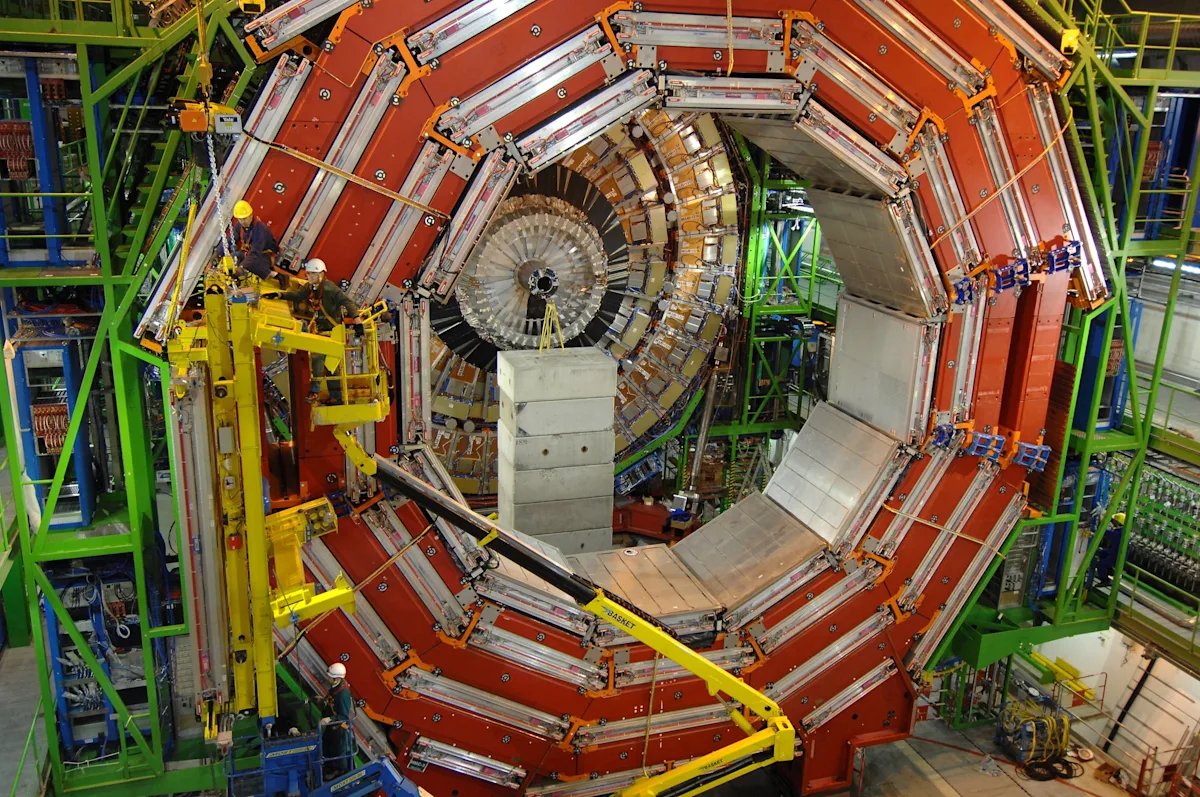
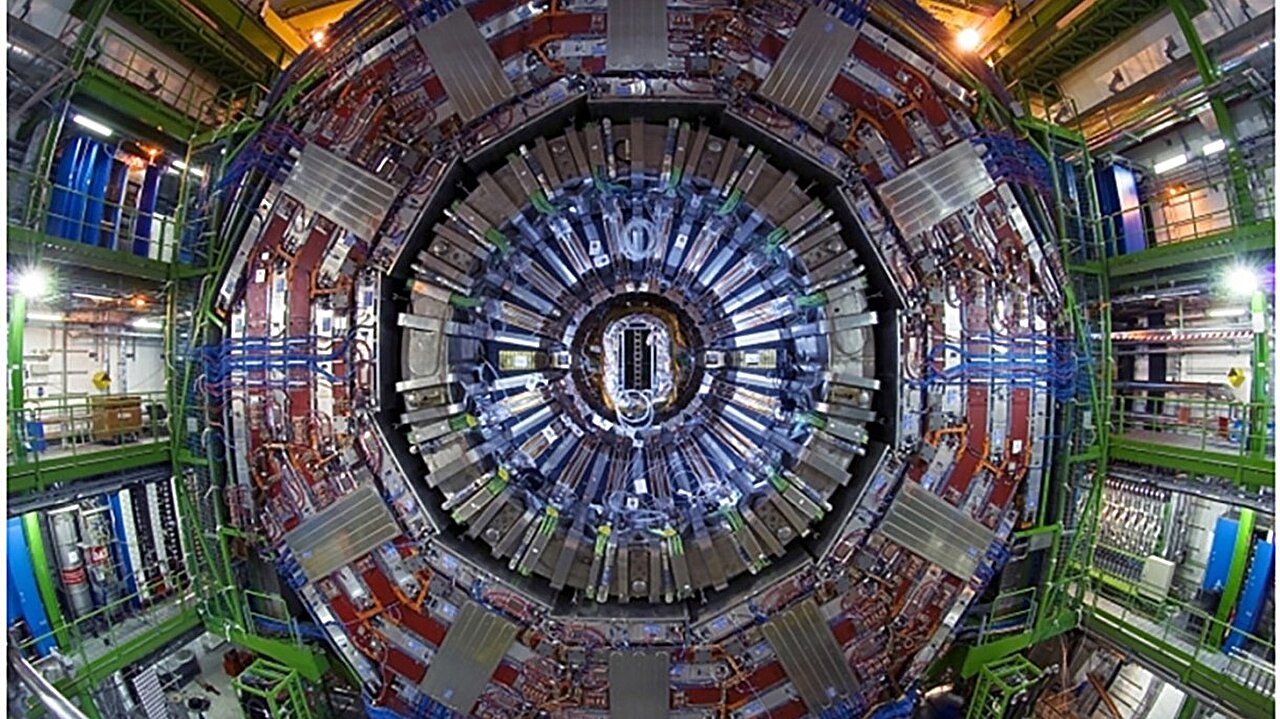
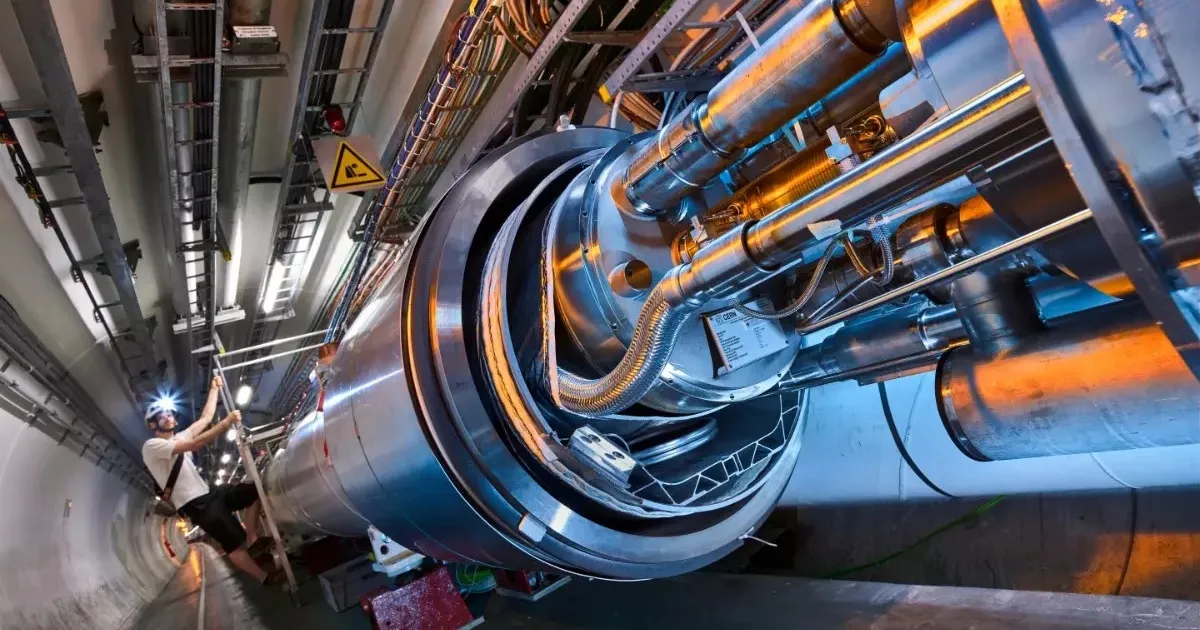
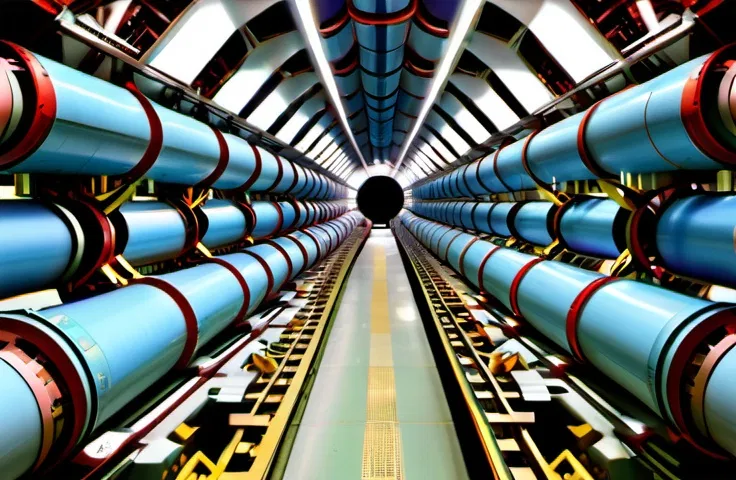
The Large Hadron Collider (LHC) is being shut down temporarily for upgrades to increase its collision capacity, with a long-term plan to replace it with the even larger Future Circular Collider, aiming to continue groundbreaking discoveries in fundamental physics despite high costs and scientific debates.
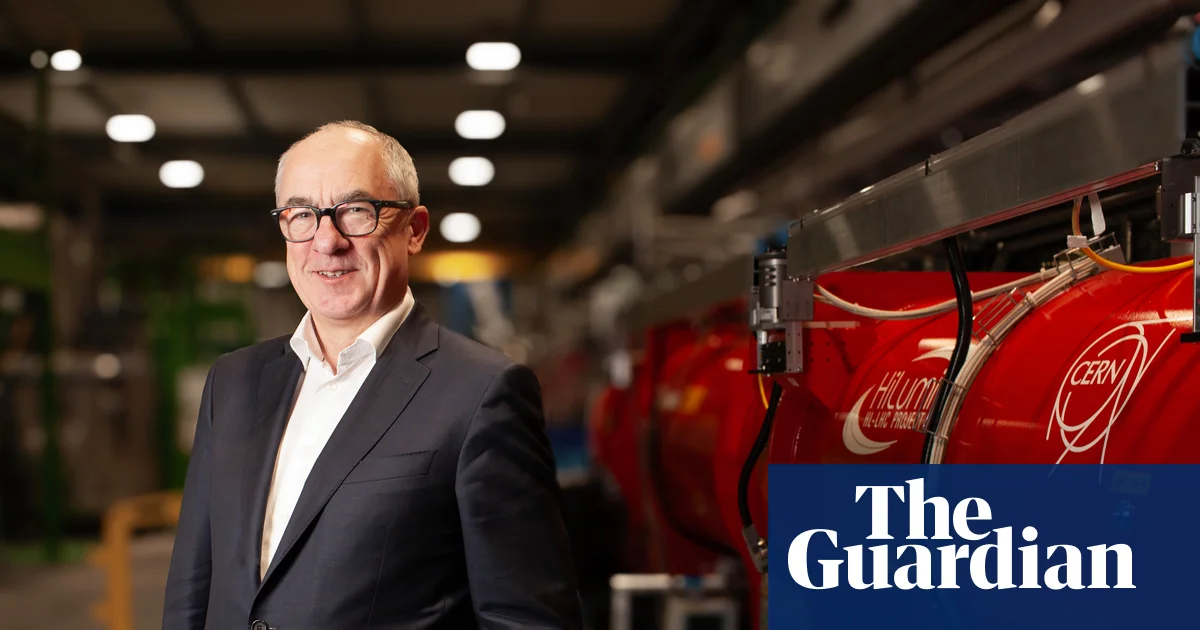
Mark Thomson, a renowned physicist, takes over as Cern's director general and plans to shut down the LHC for upgrades to enhance its capabilities, while also preparing for the ambitious Future Circular Collider project to continue exploring fundamental questions about the universe.
A new study proposes that particle mass and fundamental forces could originate from the geometry of hidden extra dimensions, specifically through evolving seven-dimensional shapes called G₂-manifolds, potentially eliminating the need for the Higgs boson in explaining mass.
Physicists at Brown University and the LHC continue to explore the Higgs boson, focusing on its interactions, potential implications for the universe's fate, and future collider projects, highlighting its fundamental role in understanding the universe and advancing particle physics.
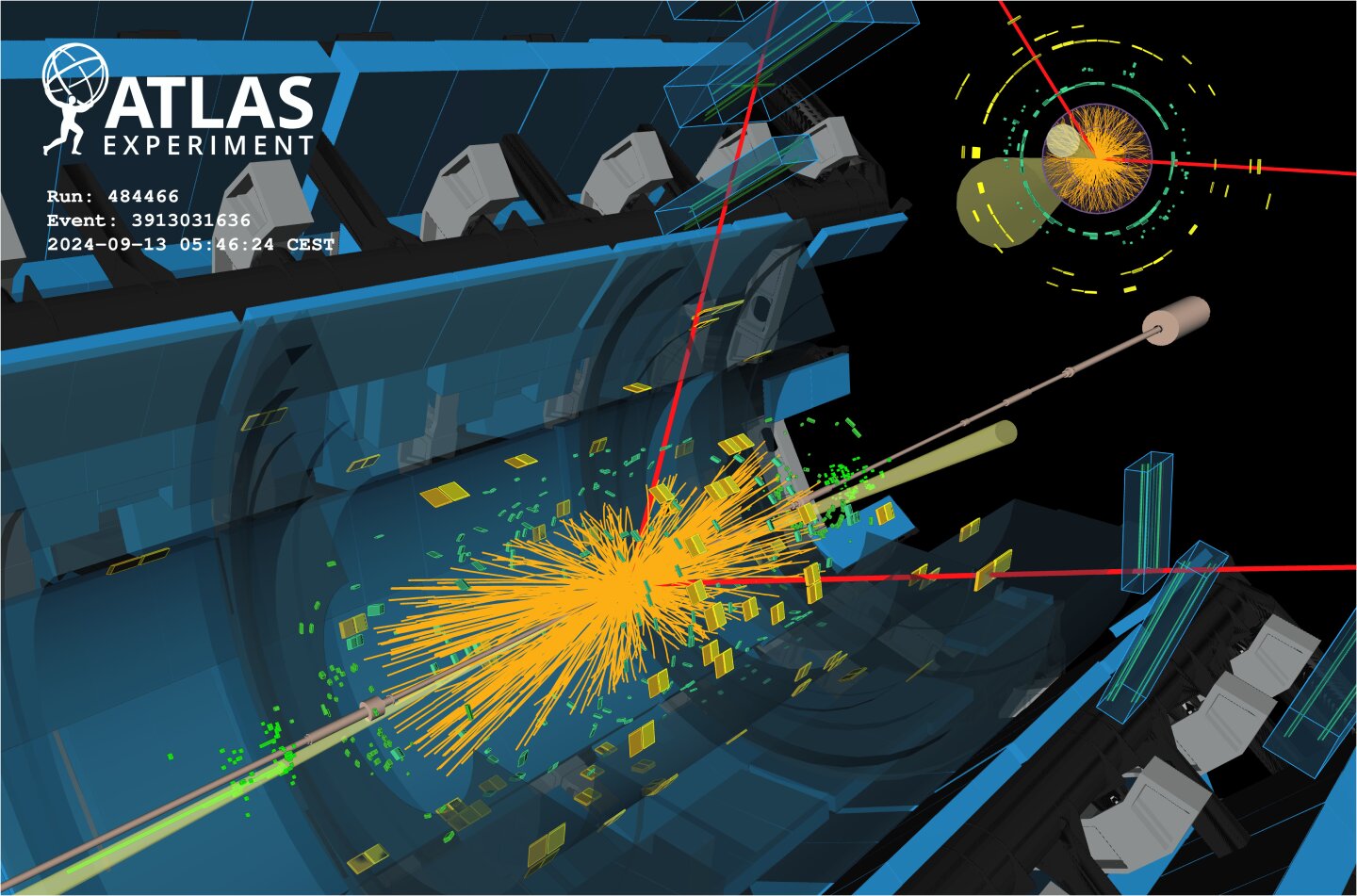
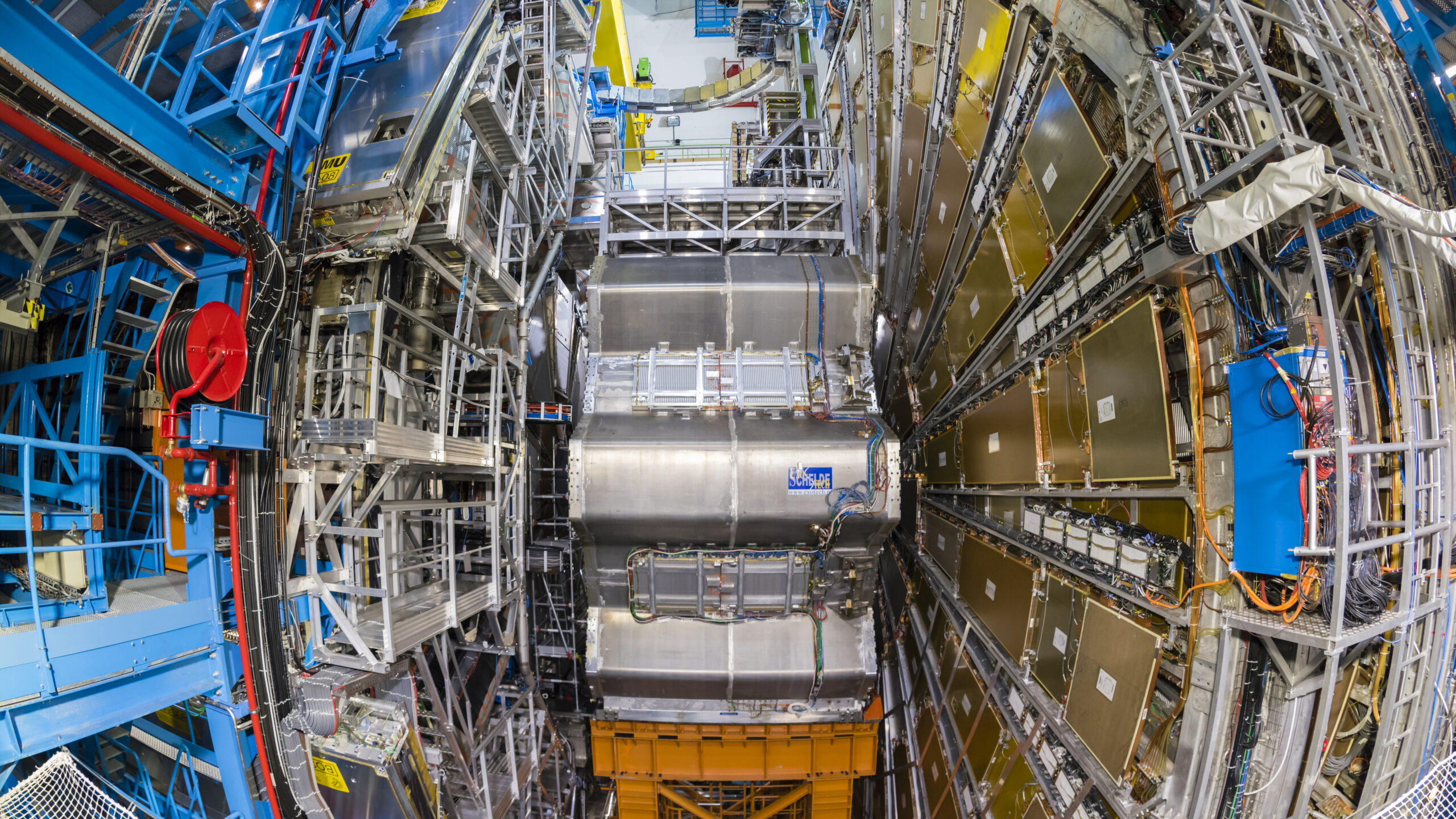
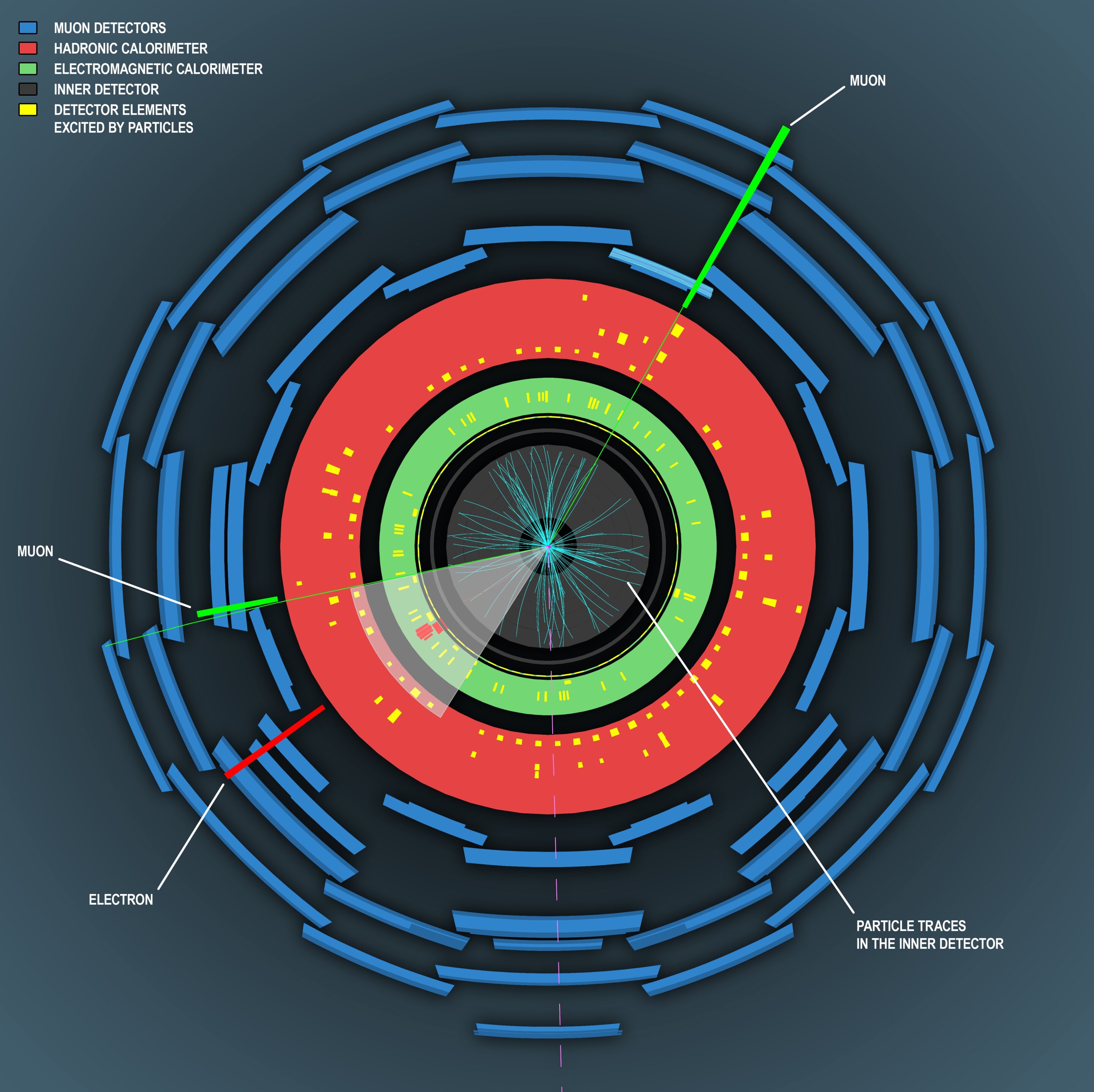
The ATLAS Collaboration at the LHC has found evidence of rare Higgs boson decays into muons and a Z boson with a photon, providing deeper insights into the Higgs properties and potential hints of physics beyond the Standard Model, using combined data from Run 2 and Run 3.
The article discusses the current state and future prospects of particle colliders for studying the Higgs boson, highlighting the potential of a cost-effective and faster option called LEP3, which would repurpose existing infrastructure to produce large numbers of Higgs particles for detailed study, as an alternative to more expensive and longer-term projects like the Future Circular Collider.
The ATLAS collaboration has found evidence of rare Higgs boson decays into muons and Z boson plus photon, enhancing understanding of Higgs interactions and potential new physics beyond the Standard Model, through combined data analysis from LHC Run 2 and 3.
A graduate student developed a new machine learning method called Neural Simulation-Based Inference to better analyze data from the Large Hadron Collider, overcoming challenges posed by quantum interference, leading to more precise measurements of the Higgs boson and impacting future research plans.
Researchers at the Max Planck Institute have announced new findings on the Higgs boson, enhancing our understanding of its interactions with W and Z bosons, which are crucial to the Standard Model of particle physics. These discoveries, presented at the International Conference on High Energy Physics, confirm theoretical predictions and set the stage for future research at the High-Luminosity Large Hadron Collider. The findings not only validate existing theories but also open possibilities for discovering new particles or forces, potentially reshaping our understanding of the universe.
Researchers at the Max Planck Institute have made significant advancements in understanding the Higgs boson's interactions with other particles, particularly W and Z bosons, using data from the Large Hadron Collider. These findings, presented at the ICHEP 2024, confirm theoretical predictions of the standard model and enhance our understanding of particle mass acquisition. The results also set the stage for future research at the High-Luminosity LHC, potentially uncovering new physics beyond the standard model.
Researchers at the Max Planck Institute have made significant advances in understanding the interactions of the Higgs boson with other particles, particularly W and Z bosons, using data from the Large Hadron Collider. These findings, presented at the ICHEP 2024, confirm theoretical predictions of the Standard Model and pave the way for future research at the High-Luminosity LHC. The results could potentially reveal new particles or forces, expanding our understanding of the universe.
CERN physicists have released results from their search for 'new physics' using the Large Hadron Collider, finding no evidence beyond the Standard Model but gaining valuable data for future experiments. Despite not detecting Higgs boson pair production, their work provides constraints for upcoming studies. The LHC is set for upgrades to increase collision rates, potentially aiding the discovery of rare events like Higgs boson pairs. The study was published in the Journal of High Energy Physics.
Scientists at CERN's ATLAS experiment are investigating the interactions between Higgs bosons to search for physics beyond the Standard Model. Despite the rarity of Higgs boson pair production, which has not yet been observed, researchers are using simulations and machine learning to analyze potential signals. While no discrepancies with the Standard Model have been found, the study sets stronger constraints on new physics phenomena. Future upgrades to the LHC may increase collision data, potentially revealing new insights into Higgs boson interactions.
Recent theoretical advancements have improved the understanding of the Higgs boson’s properties, particularly its cross-section during gluon-gluon collisions, confirming the Standard Model's predictions. This research, involving international physicists, highlights the importance of higher-order corrections and suggests that future data from the Large Hadron Collider may reveal new aspects of particle physics.
The CMS collaboration has released the combination of measurements that led to the discovery of the Higgs boson in 2012, along with the statistical analysis tool called Combine software, which was developed during the first run of the Large Hadron Collider (LHC). This release includes a likelihood function with nearly 700 parameters, allowing researchers outside the collaboration to incorporate the CMS Higgs boson discovery measurements into their studies. This move aligns with CMS's commitment to fully open science, which also includes open-access publications, the release of CMS data on the CERN open-data portal, and the publication of its software framework on GitHub.