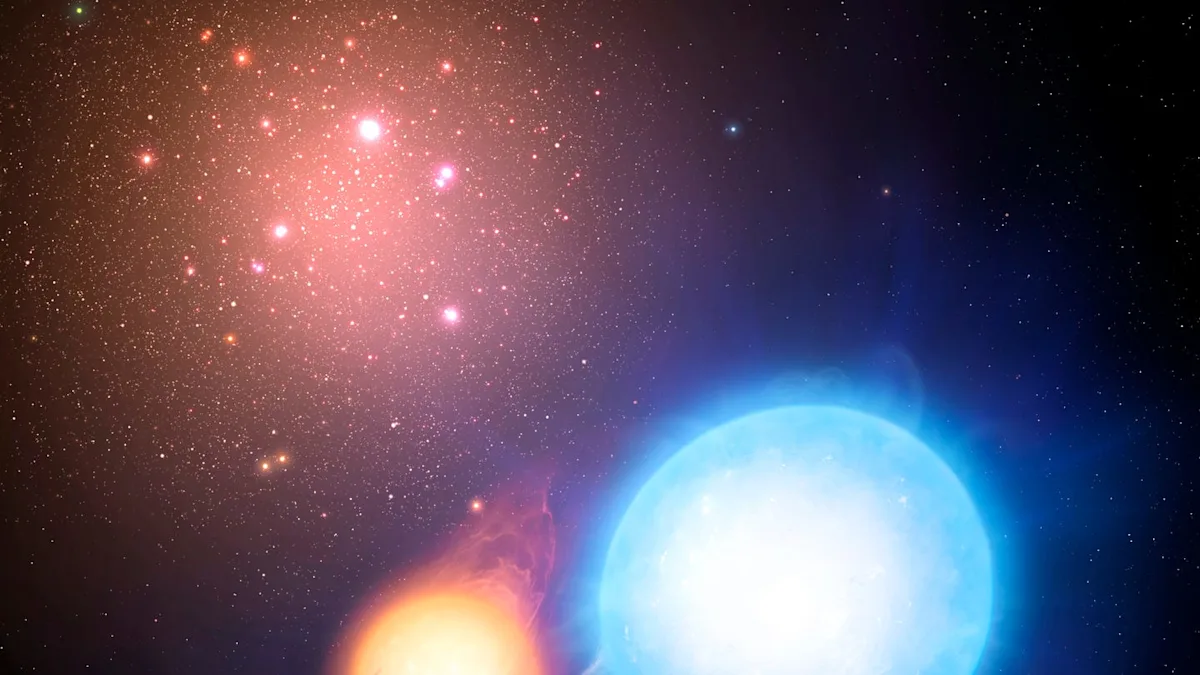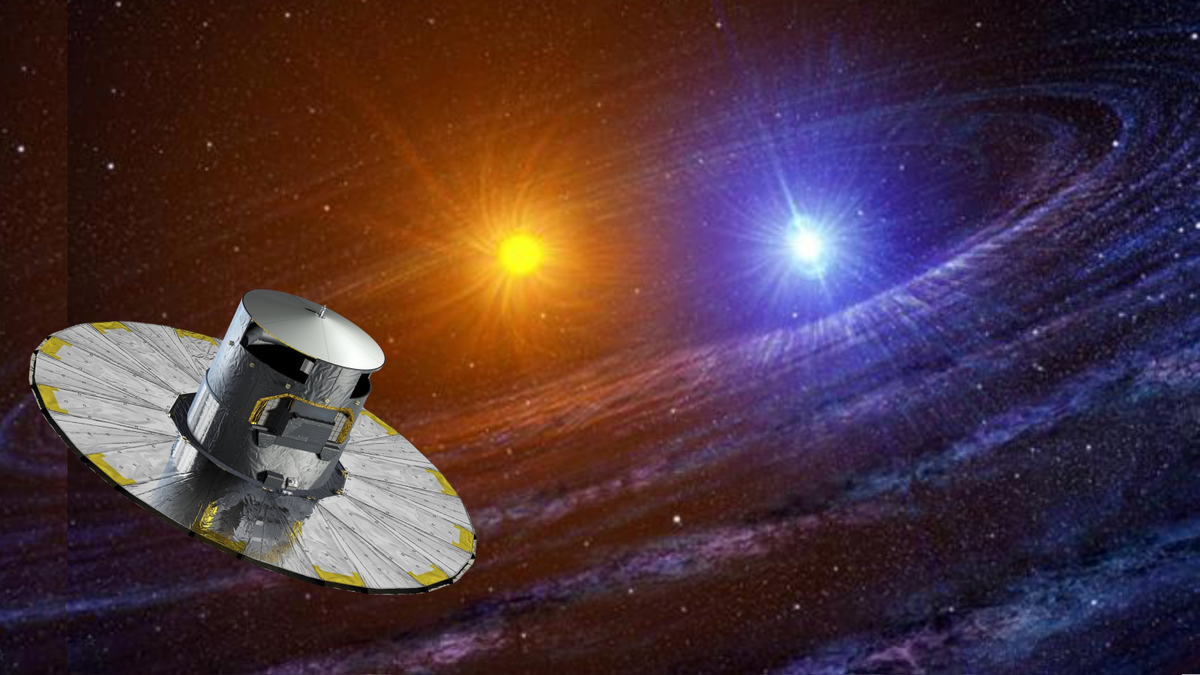
Scientists have discovered a tiny companion to the red supergiant star Betelgeuse, nicknamed Betelbuddy, which challenges current understanding of binary star systems due to its extreme mass ratio, and the discovery was made using multiple space telescopes.
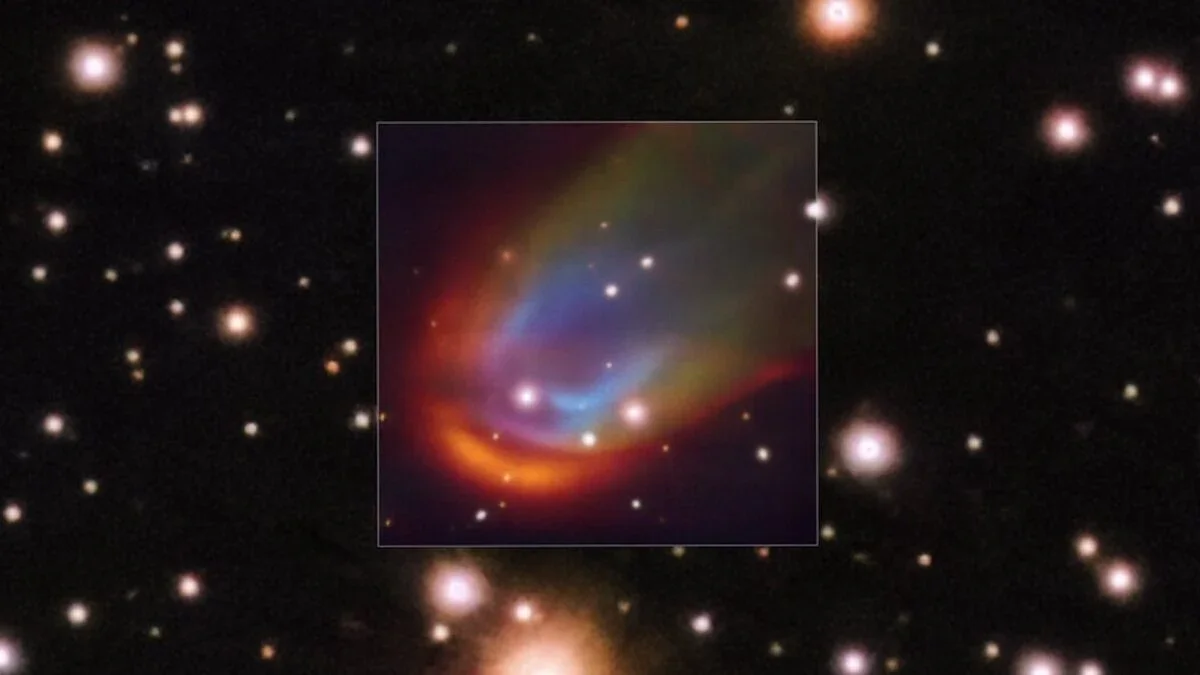
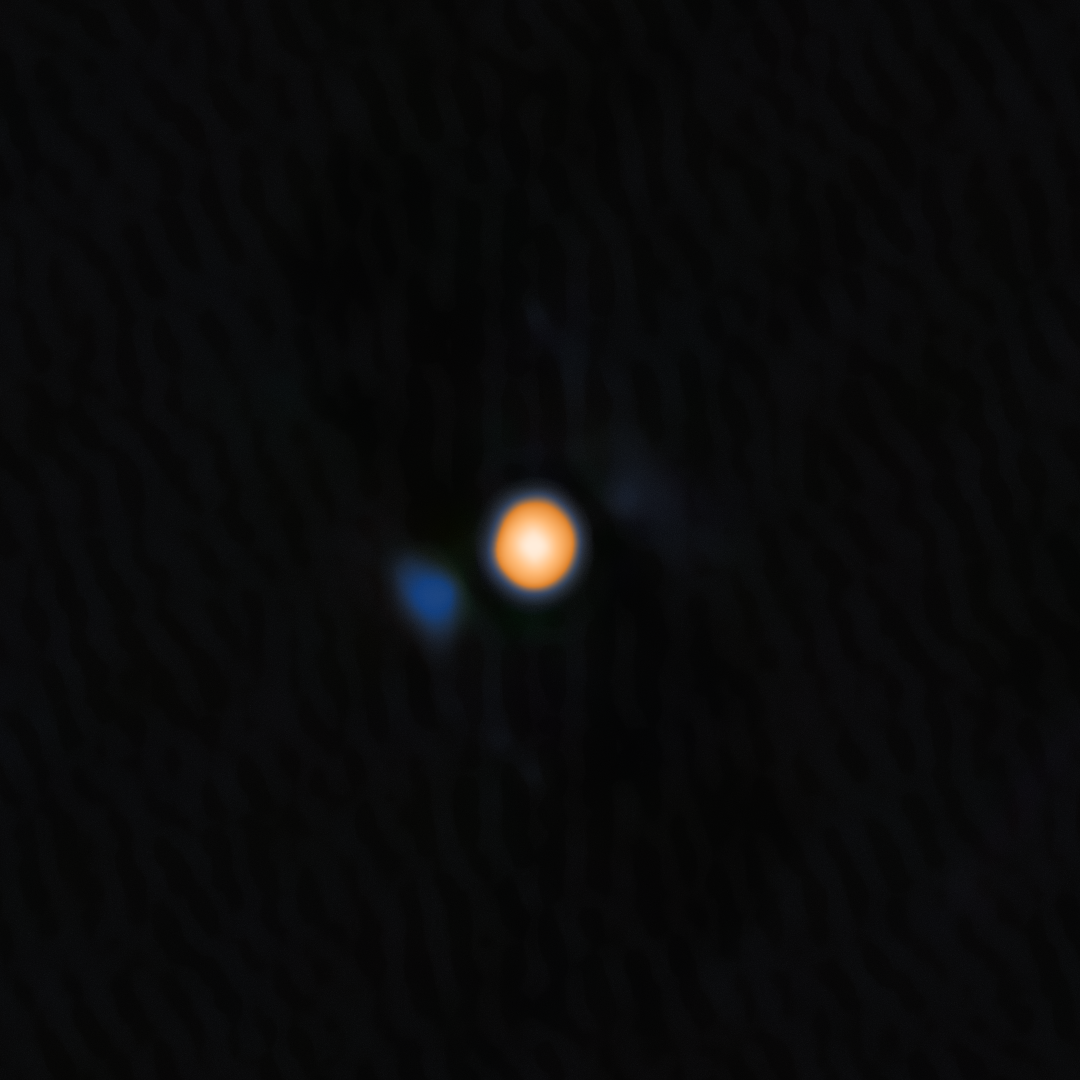
Astronomers from Carnegie Mellon University have confirmed that Betelgeuse has a hidden companion star, nicknamed 'Betelbuddy,' which is a young solar-sized star. This discovery, made using NASA's Chandra X-ray Observatory and the Hubble Space Telescope, helps explain Betelgeuse's six-year brightness cycle and challenges existing models of binary star formation due to the significant mass difference between the two stars.
A recent study suggests that the behavior of wide binary stars at very low accelerations cannot be fully explained by traditional Newton-Einstein gravity, potentially supporting Modified Newtonian Dynamics (MOND) as an alternative explanation, challenging current understanding of gravity and dark matter.
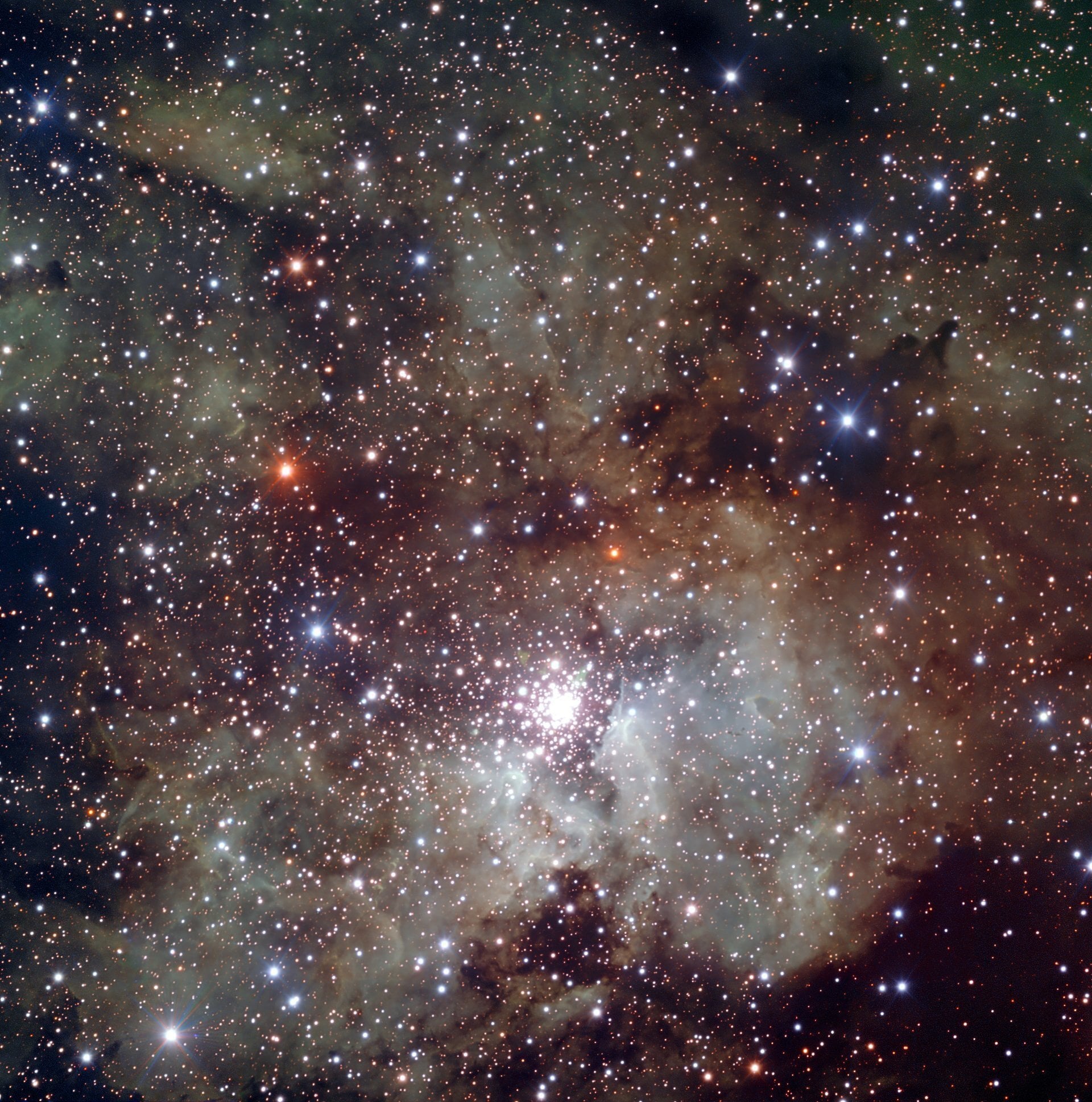
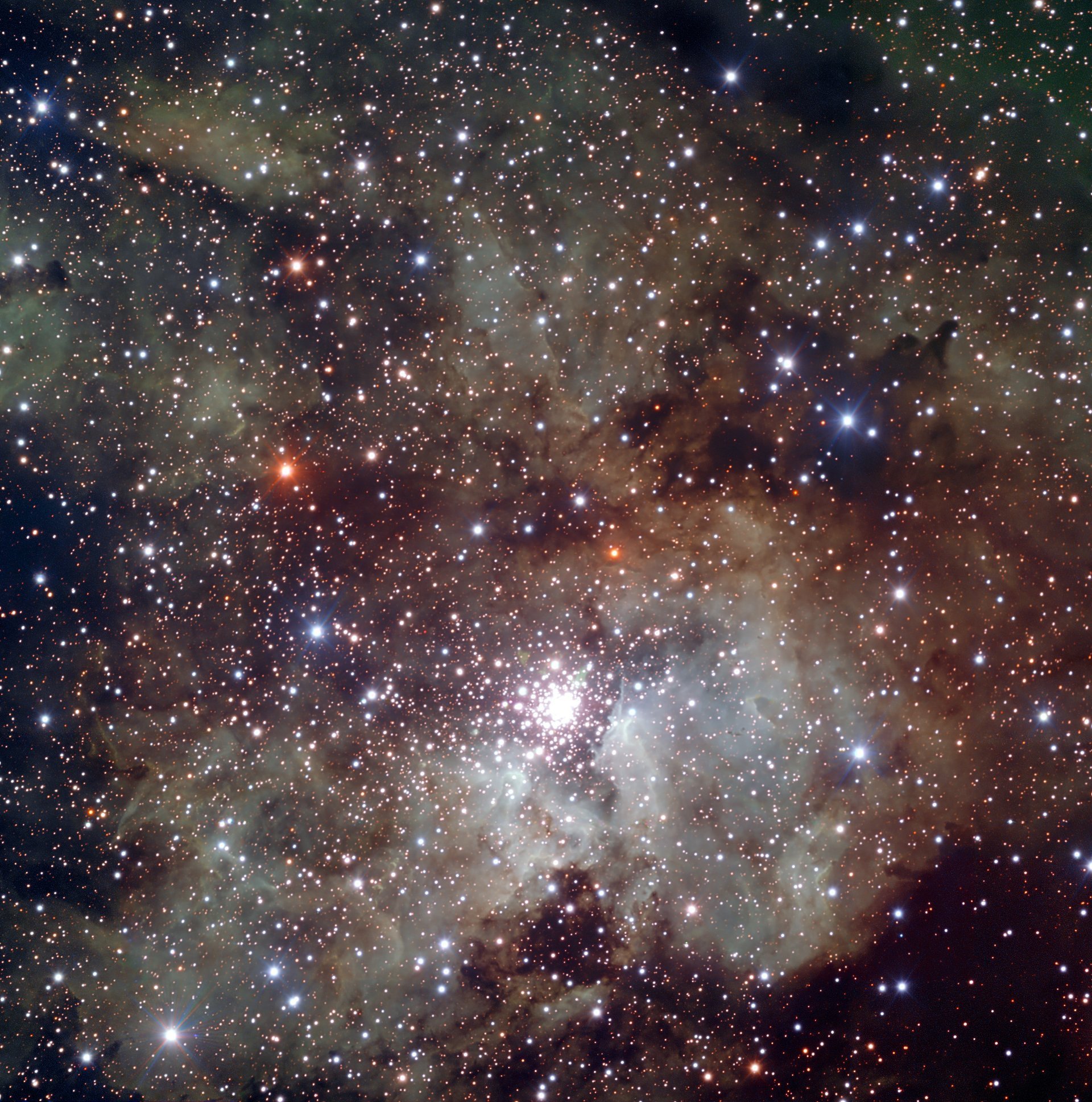
Astronomers have discovered one of the most massive binary star systems in our galaxy, NGC 3603-A1, with two stars weighing 93 and 70 times the Sun's mass, orbiting each other every 3.8 days. This discovery, aided by archival Hubble data and new observations, provides valuable insights into stellar evolution and the origins of binary black holes, highlighting the dynamic and extreme conditions in star-forming regions like NGC 3603.
Astronomers have discovered one of the most massive binary star systems in our galaxy, NGC 3603-A1, with stars weighing 93 and 70 times the Sun's mass, orbiting each other every 3.8 days, providing valuable insights into stellar evolution and the origins of binary black holes.
A new AI system called PHOEBAI can analyze binary star systems in minutes instead of weeks, greatly accelerating the study of these systems and their properties, which is crucial for understanding stellar populations and dynamics.
The discovery of white dwarf-main sequence binary star systems offers new insights into stellar evolution, star formation, and galactic processes. These systems help bridge the gap between early and late stages of binary evolution, shedding light on phenomena like supernovae and gravitational waves. Researchers used machine learning to analyze data from the Gaia mission, 2MASS, and Pan-STARRS1 surveys, identifying these binaries in star clusters. This breakthrough has significant implications for understanding cosmic events and the universe's fundamental processes.
Astronomers at the University of Toronto have discovered the first pairs of white dwarf and main sequence stars in young star clusters, providing new insights into stellar evolution. This breakthrough helps bridge the gap between the early and final stages of binary star systems, potentially explaining phenomena like supernovae and gravitational waves. Using machine learning, researchers identified 52 such binaries across 38 clusters, offering a unique opportunity to study the common envelope phase, a critical yet mysterious stage in stellar evolution.
Binary stars, once neglected in astrophysics, are experiencing a renaissance in research thanks to the Gaia space telescope's decade of cosmic data, which has revealed a wealth of new information about these systems. Around 50% of stars like the sun exist with a binary partner, offering insights into stellar evolution and exotic astrophysical phenomena. Gaia's data has also improved estimations of binary star distances and revealed previously unseen phenomena, sparking renewed interest in understanding how these systems form and evolve.
Astronomers at Georgia State University's CHARA Array have discovered the faint glow of cannibalized stars near their predatory stellar companions, shedding light on the mysterious life trajectories of close binary stars. The research focuses on B-emission line stars, rapidly spinning stars born from intense interactions between close pairs, some of which engage in cannibalism.
Scientists have identified a population of hydrogen-poor stars that are the progenitors of stripped-envelope supernovas. These stars, known as intermediate-mass helium stars, have been elusive to find due to their stripped outer material and the presence of a brighter companion star. However, a dedicated survey using ultraviolet light has successfully identified 25 of these stars, confirming their existence. The discovery has important implications for our understanding of supernovas, gravitational waves, and the light from distant galaxies. Further research is underway to study these stars in more detail and expand the search for more helium stars.
Astronomers at the University of Toronto have discovered a population of massive stars in binary systems that have been stripped of their hydrogen envelopes by their companions. This finding sheds light on the origins of hydrogen-poor core-collapse supernovae and neutron star mergers. The researchers used ultraviolet data from the Swift-UVOT telescope to identify these stripped stars, which are believed to be rare and have important implications for our understanding of supernovae, gravitational waves, and the properties of distant galaxies. The discovery also provides opportunities for more detailed physics studies and measurements of stellar winds.
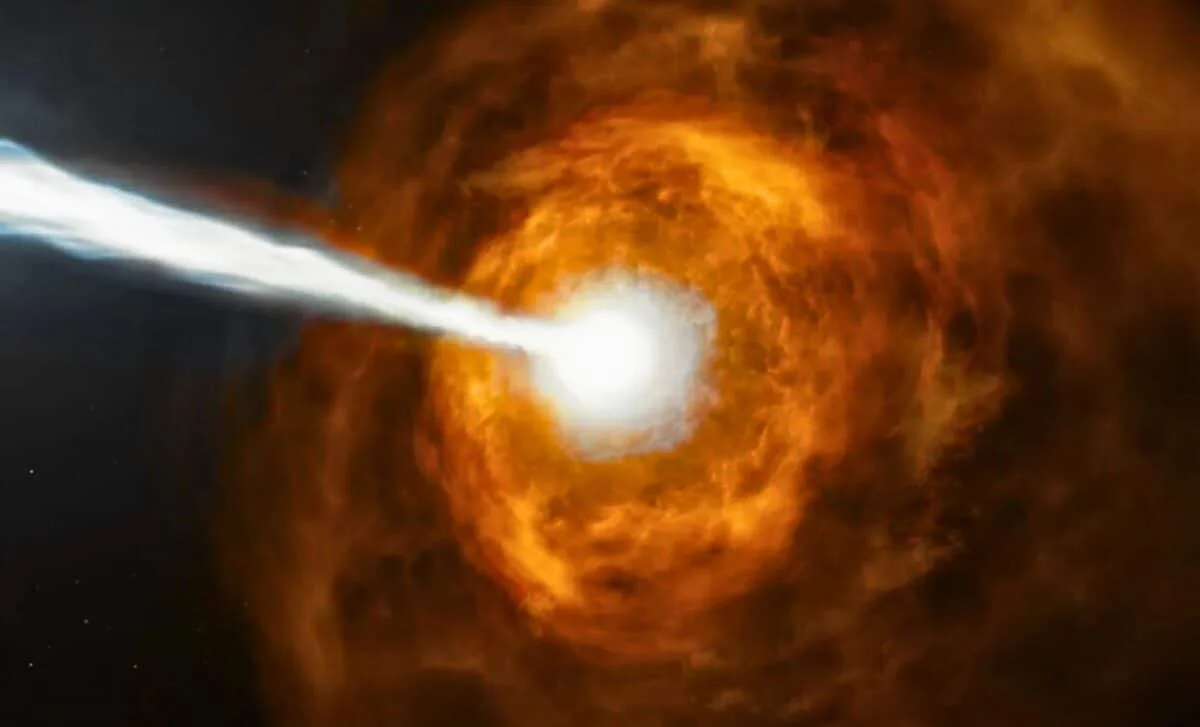
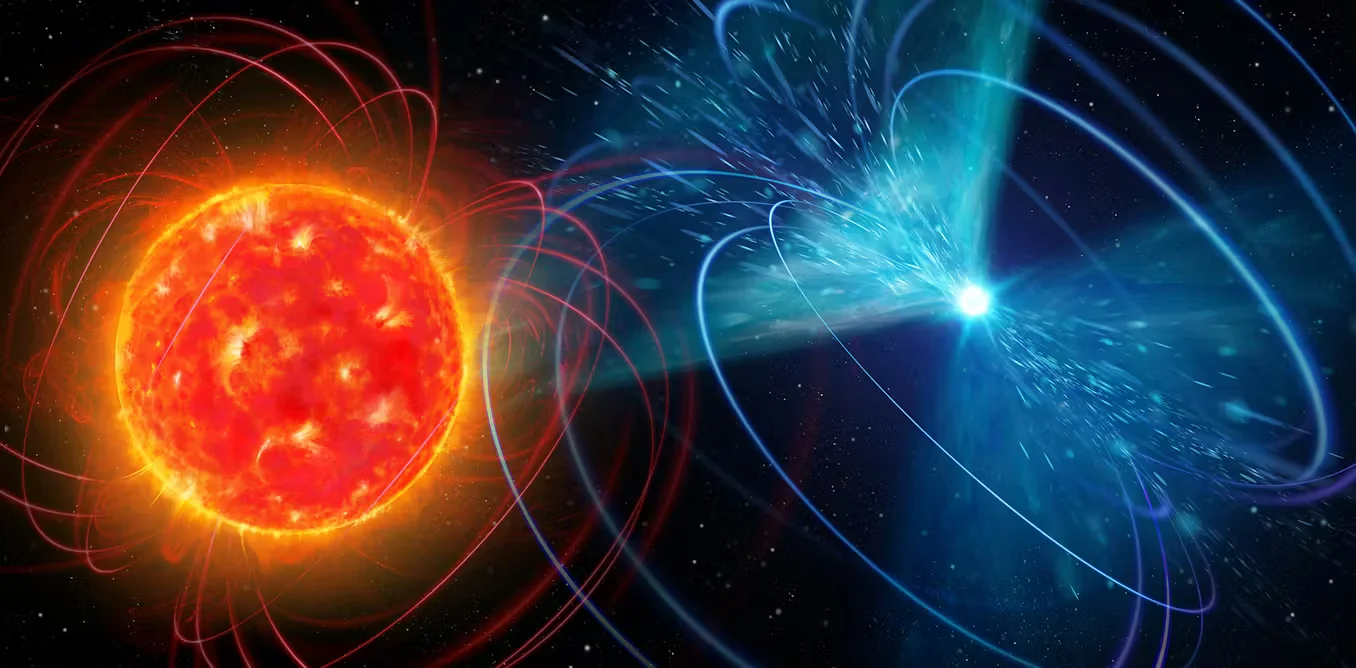
Researchers propose a new theory that binary systems composed of a Carbon-oxygen star and a neutron star could be responsible for the creation of long gamma-ray bursts (GRBs). When the core of the Carbon-oxygen star collapses, it triggers a hypernova and the formation of a newborn neutron star. Material ejected from the neutron star during the hypernova is captured by its companion, causing it to collapse and transform into a black hole, emitting the radiation observed as a GRB. The theory is supported by observations of two GRBs that exhibited characteristics of binary star systems. Understanding the mechanisms behind GRBs is crucial for predicting and potentially mitigating the threat they pose to life on Earth.
Scientists from The University of Manchester and the University of Hong Kong have discovered the source of the mysterious alignment of stars near the Galactic Center. The alignment, initially discovered a decade ago, has been confirmed to be caused by a particular group of stars known as close binary stars. These stars have a companion that orbits the main star within the planetary nebulae, and the alignment is observed only in nebulae with close companions. The findings provide important evidence for a constant and controlled process that has influenced star formation over billions of years and vast distances in the Milky Way.
Recent papers have claimed to challenge the theories of gravity proposed by Einstein and Newton, suggesting that dark matter may not exist and that our laws of gravity need modification. The existence of dark matter is favored due to its predictive power and ability to explain various features of the universe. However, the recent papers testing Newtonian acceleration in binary star systems have yielded conflicting results, making it difficult to draw definitive conclusions. Further studies and more precise observations are needed to determine the validity of these claims.