Researchers propose an extended gravity theory called Finsler gravity that broadens spacetime geometry; when applied to the Friedmann equations, it naturally yields cosmic acceleration without a dark energy term, suggesting geometry could drive the universe’s speeding expansion.
A new study suggests that the accelerated expansion of the universe might be explained by an extension of general relativity called Finsler gravity, potentially eliminating the need for dark energy as the cause.
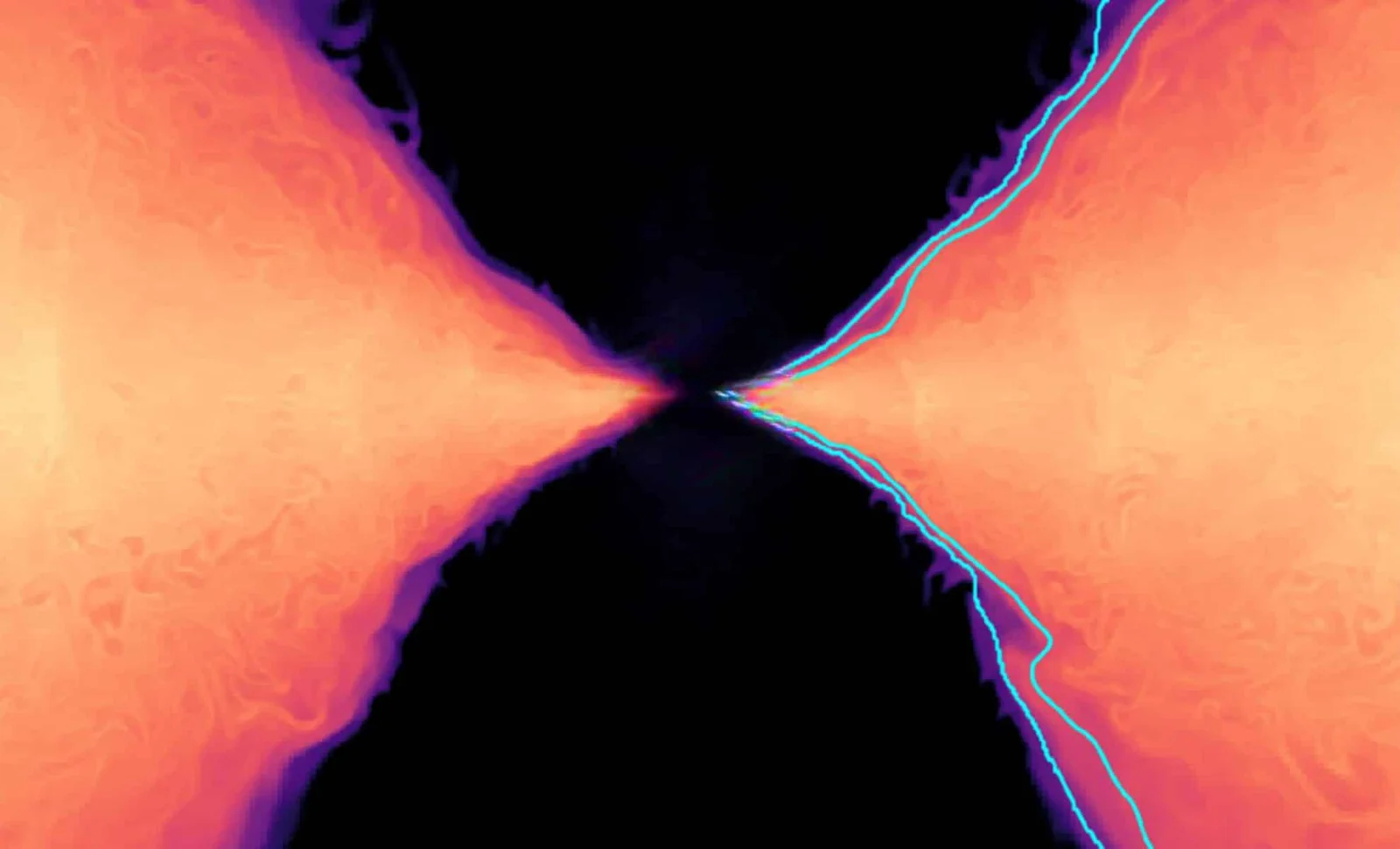
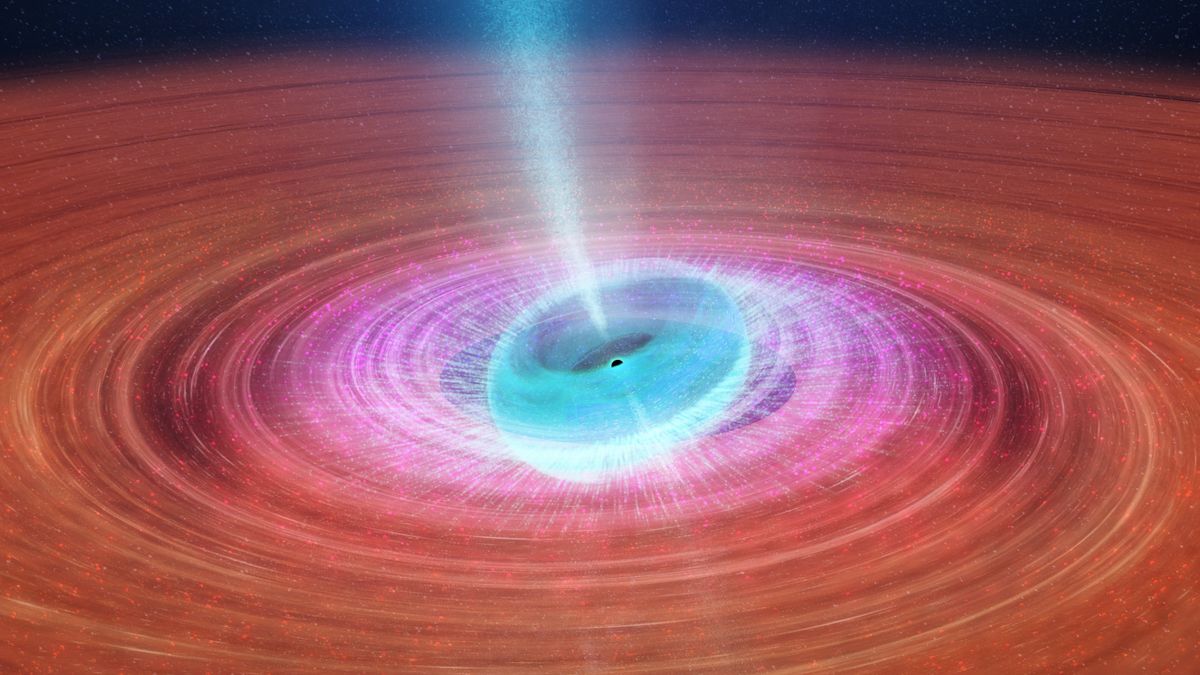
Scientists have used the world's most powerful supercomputers to simulate the most powerful black hole ever modeled, revealing new insights into black hole behavior, including super-Eddington accretion, magnetic field effects, and radiation dynamics, challenging previous assumptions and aligning closely with observational data.
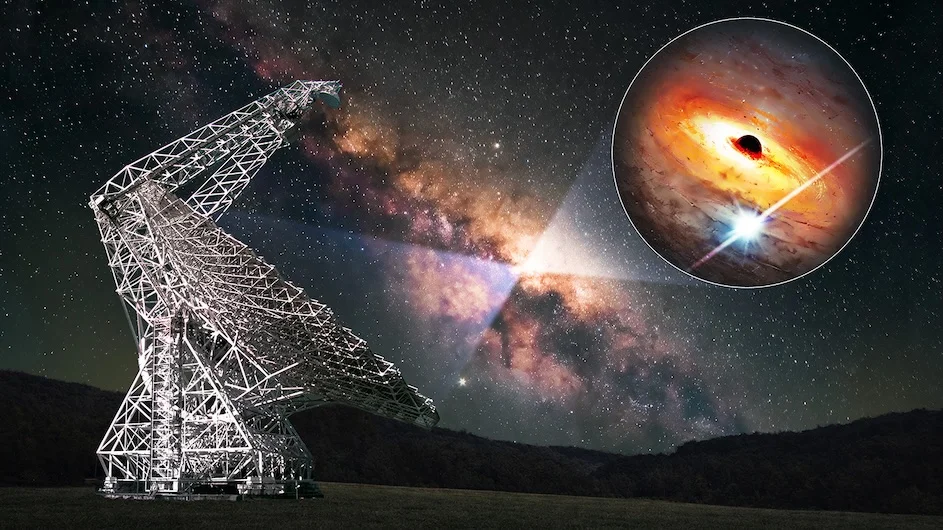
Astronomers observed a star being torn apart by a supermassive black hole in galaxy LEDA 145386, providing the most detailed evidence yet of frame-dragging, a prediction of general relativity, as the black hole's rotation twists spacetime around it.
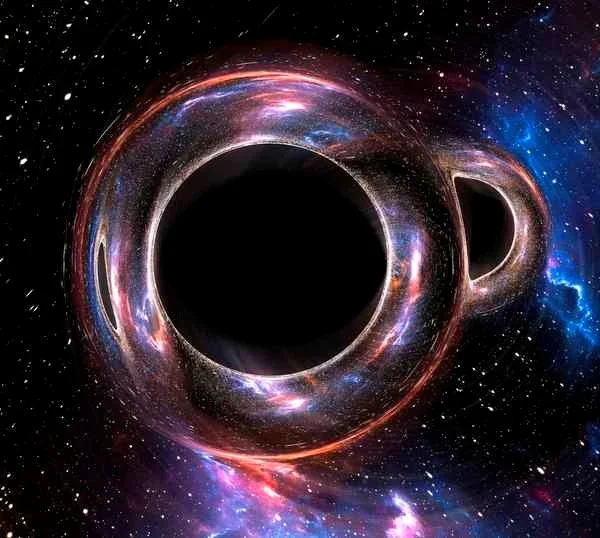
A new theory questions the traditional view of black holes, suggesting they may never fully form but only approach their event horizons asymptotically, which resolves longstanding paradoxes and emphasizes the importance of causal structure in observations.
Recent research by Aziz and Howl suggests that matter can become quantum entangled through gravitational fields even if gravity is not quantum, challenging traditional views on quantum gravity and proposing new ways to test its existence in future experiments.
Physicist Daniel Carney discusses how attempting to measure an object's position too precisely can cause it to collapse into a black hole, highlighting fundamental limits in measurement imposed by the interplay of quantum mechanics and gravity, which may suggest that ultimate reality is forever beyond observation.
Physicists are debating whether gravity can produce quantum entanglement, with recent proposals suggesting that gravity might have quantum effects without being a quantum theory itself, challenging traditional views and opening new avenues for understanding the fundamental nature of gravity and quantum mechanics.
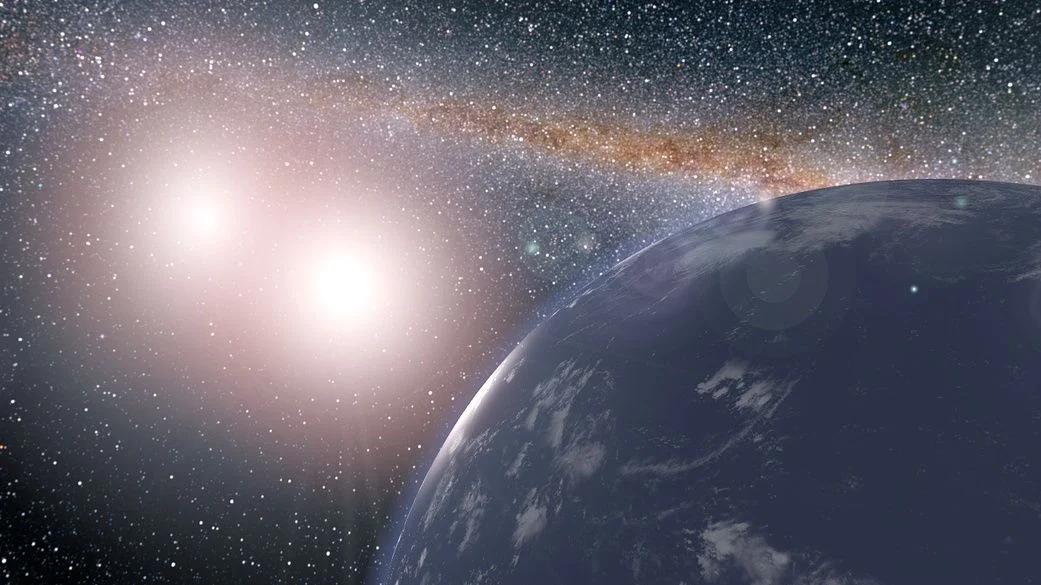
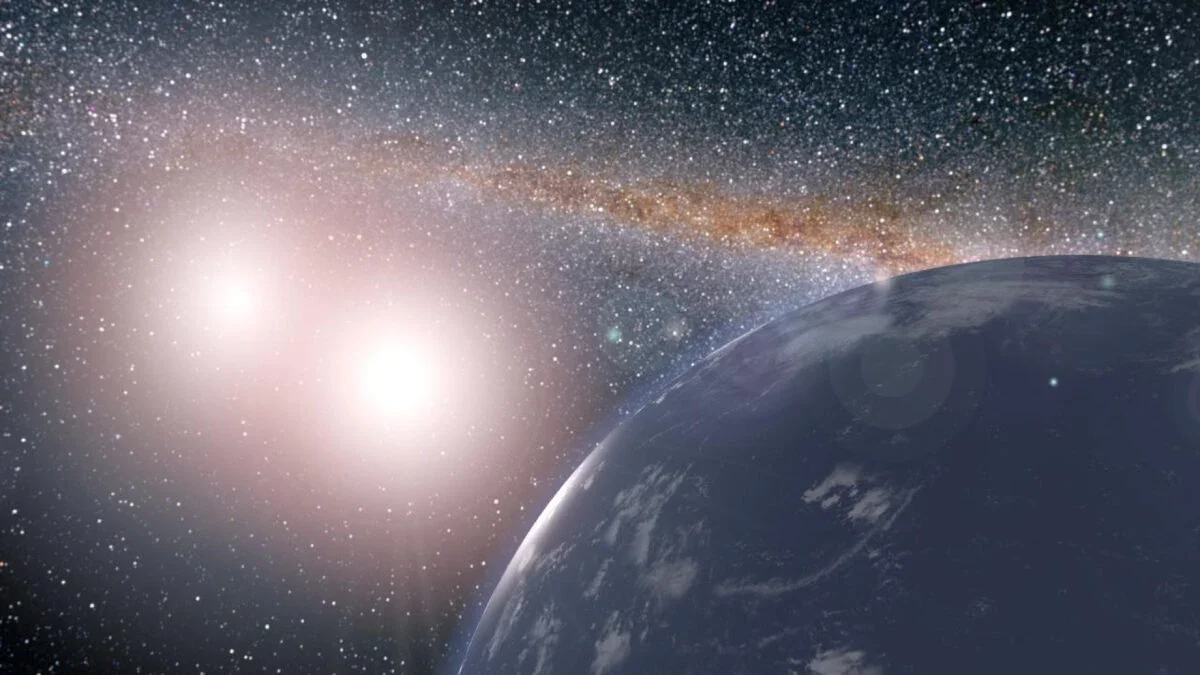
New research suggests that planets orbiting white dwarf stars may be more habitable than previously thought due to the effects of Einstein's general relativity, which stabilizes their orbits and prevents excessive tidal heating that would otherwise render them uninhabitable.
Scientists detected a brief gravitational wave signal, GW190521, which may have originated from a collapsing wormhole, challenging current understanding of space-time and potentially confirming the existence of wormholes, with profound implications for cosmology and physics.
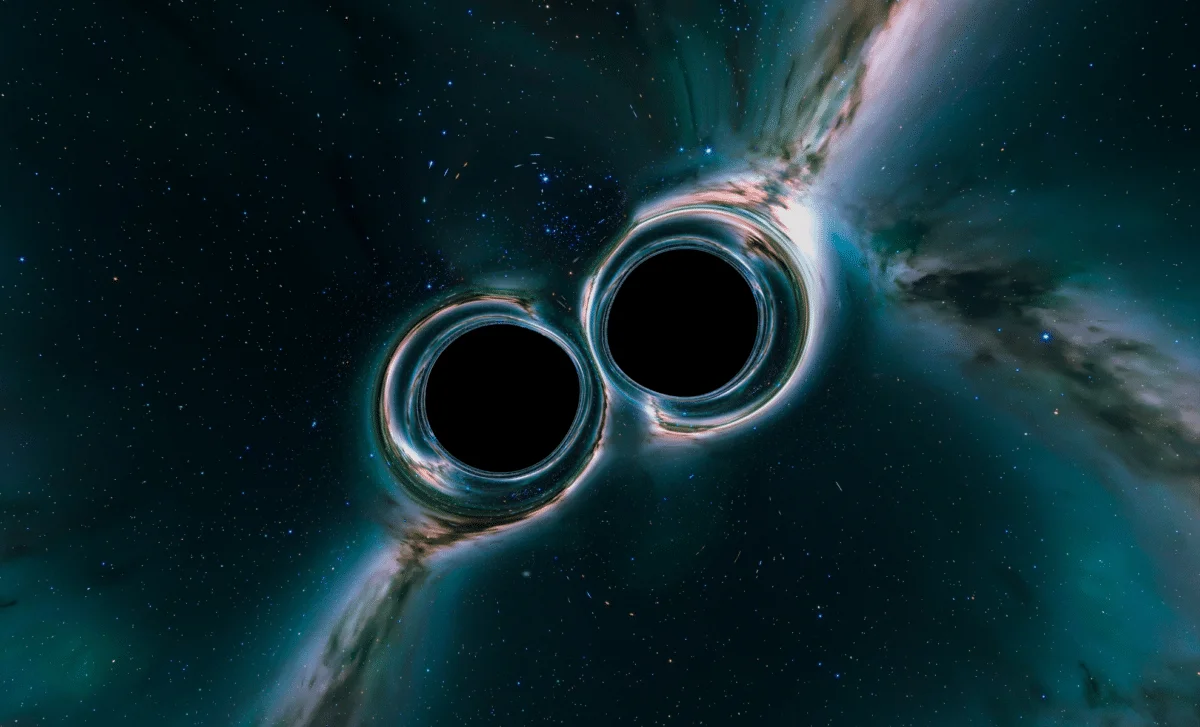
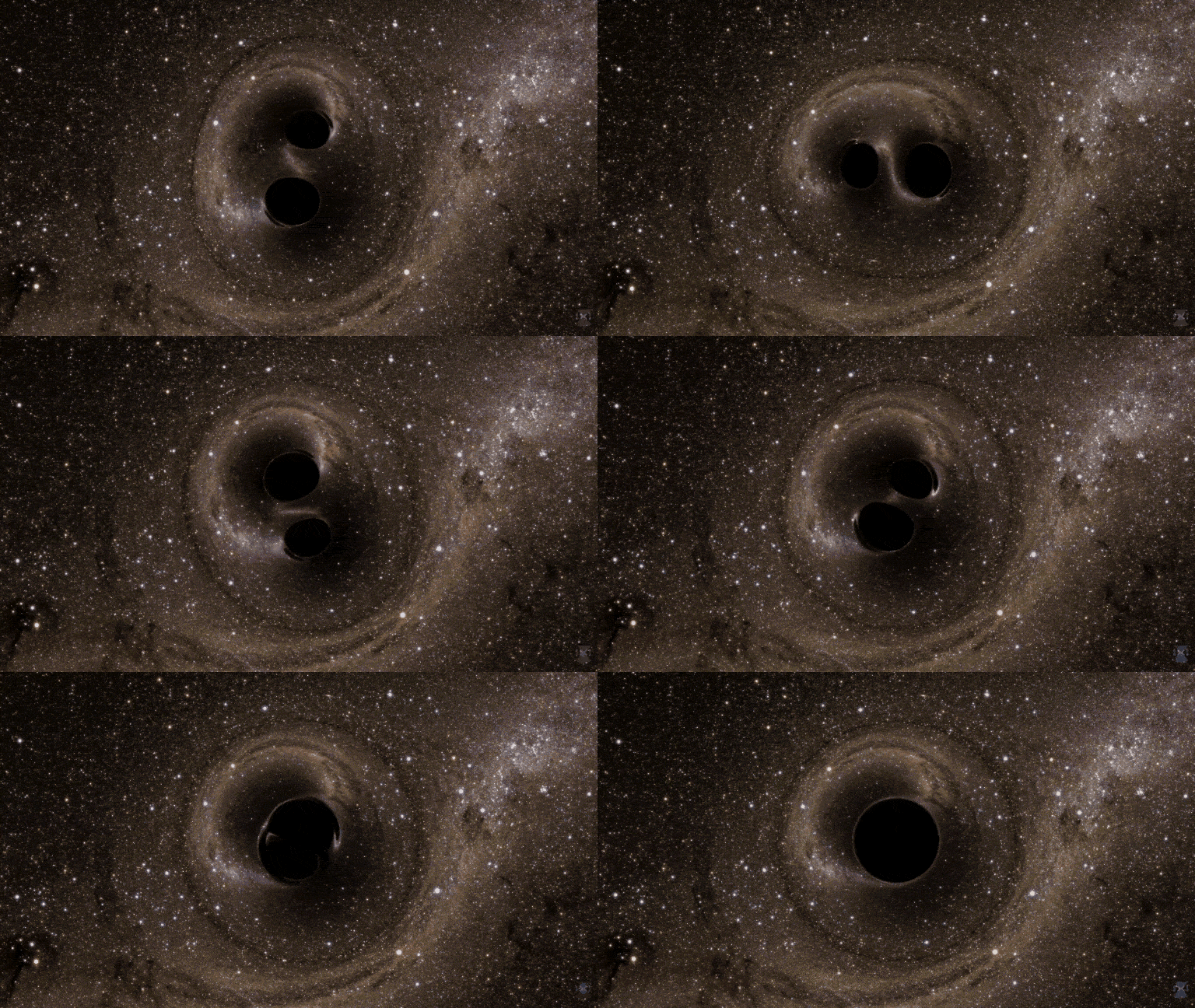
LIGO's 10th anniversary marks a decade of groundbreaking gravitational wave detections, including the recent GW250114 event, which provides strong confirmation of Hawking's area theorem and the Kerr nature of black holes, showcasing significant advancements in detector sensitivity and our understanding of the universe.
Recent gravitational wave data from black hole collisions supports Einstein's no-hair theory, indicating any additional 'hair' must be confined within 40 kilometers of the black hole, thus showing no significant deviations from current models and providing constraints on theories involving quantum effects near black holes.
The article discusses recent scientific developments including a new black hole origin theory involving gas giants and dark matter, efforts to understand singularities beyond general relativity using numerical relativity, and a study showing effortful hobbies are perceived as more meaningful, alongside other scientific updates.
Physicist Cosimo Bambi proposes a century-long mission to send a gram-scale laser-driven probe to a black hole 20 light-years away to test Einstein's theory, facing technological and financial challenges but promising groundbreaking insights into black holes and fundamental physics.
Astrophysicist Cosimo Bambi proposes sending a spacecraft to study a nearby black hole, potentially within 20 light-years, to test general relativity and explore the black hole's interior, despite significant technological and distance challenges. The mission would involve high-speed travel, multiple probes, and could take around 100 years, but promises groundbreaking insights into these mysterious cosmic objects.