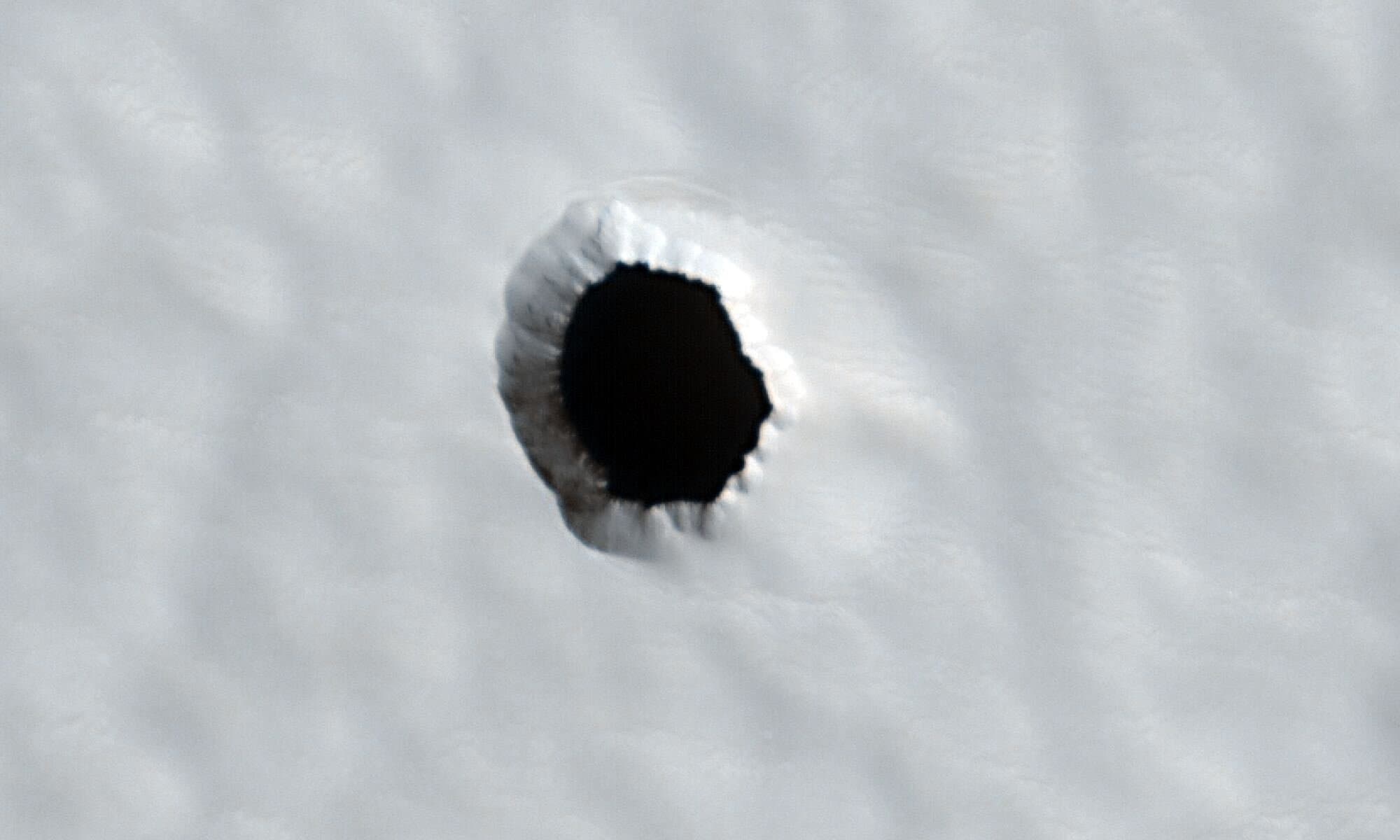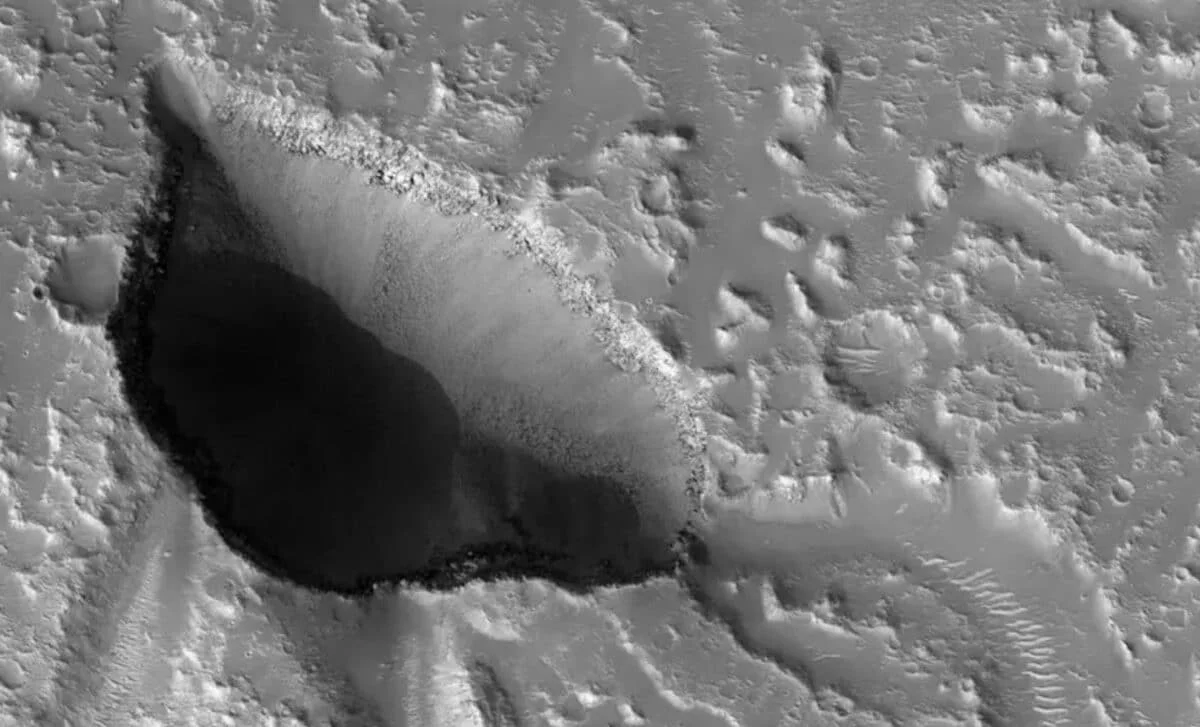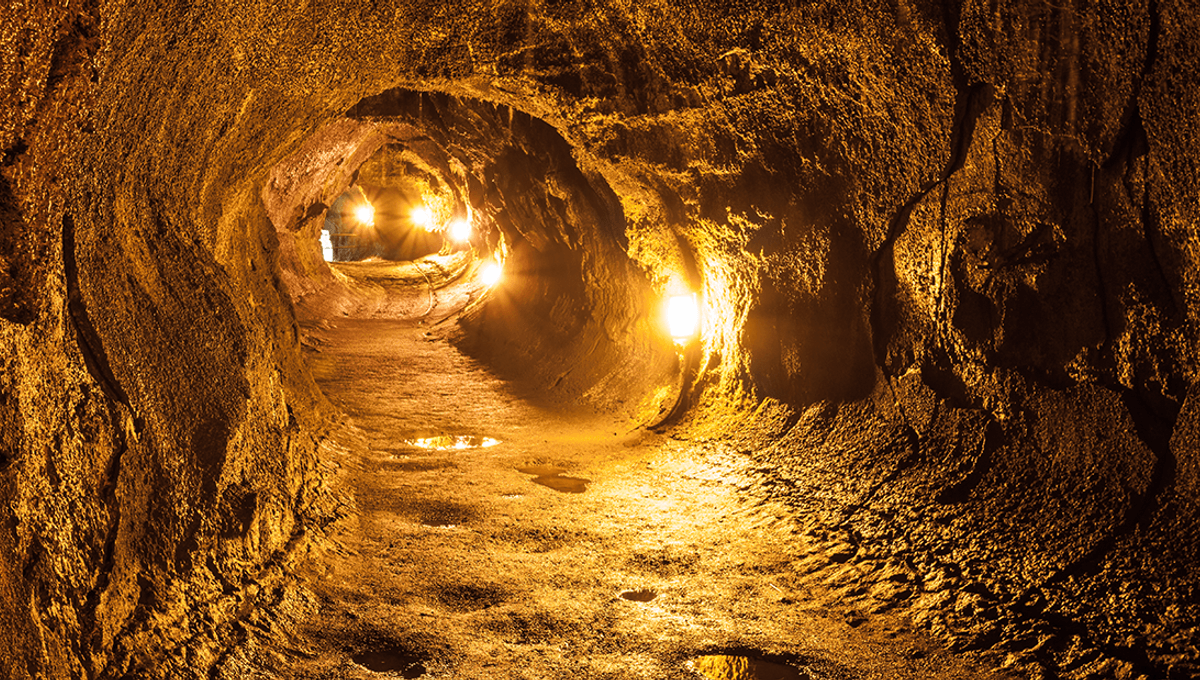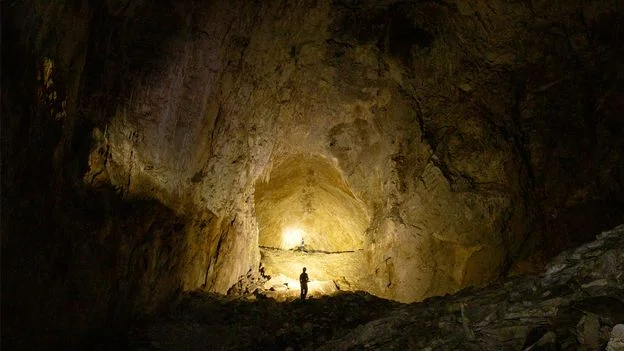
Scientists have discovered a mysterious hole on Mars that could be a skylight leading to lava tubes, which may serve as protective habitats for future human explorers by shielding them from radiation and harsh environmental conditions. The hole's exact nature is still under investigation, but it represents a promising avenue for exploring underground refuges on Mars, similar to lunar lava tubes, and could be crucial for sustainable colonization.
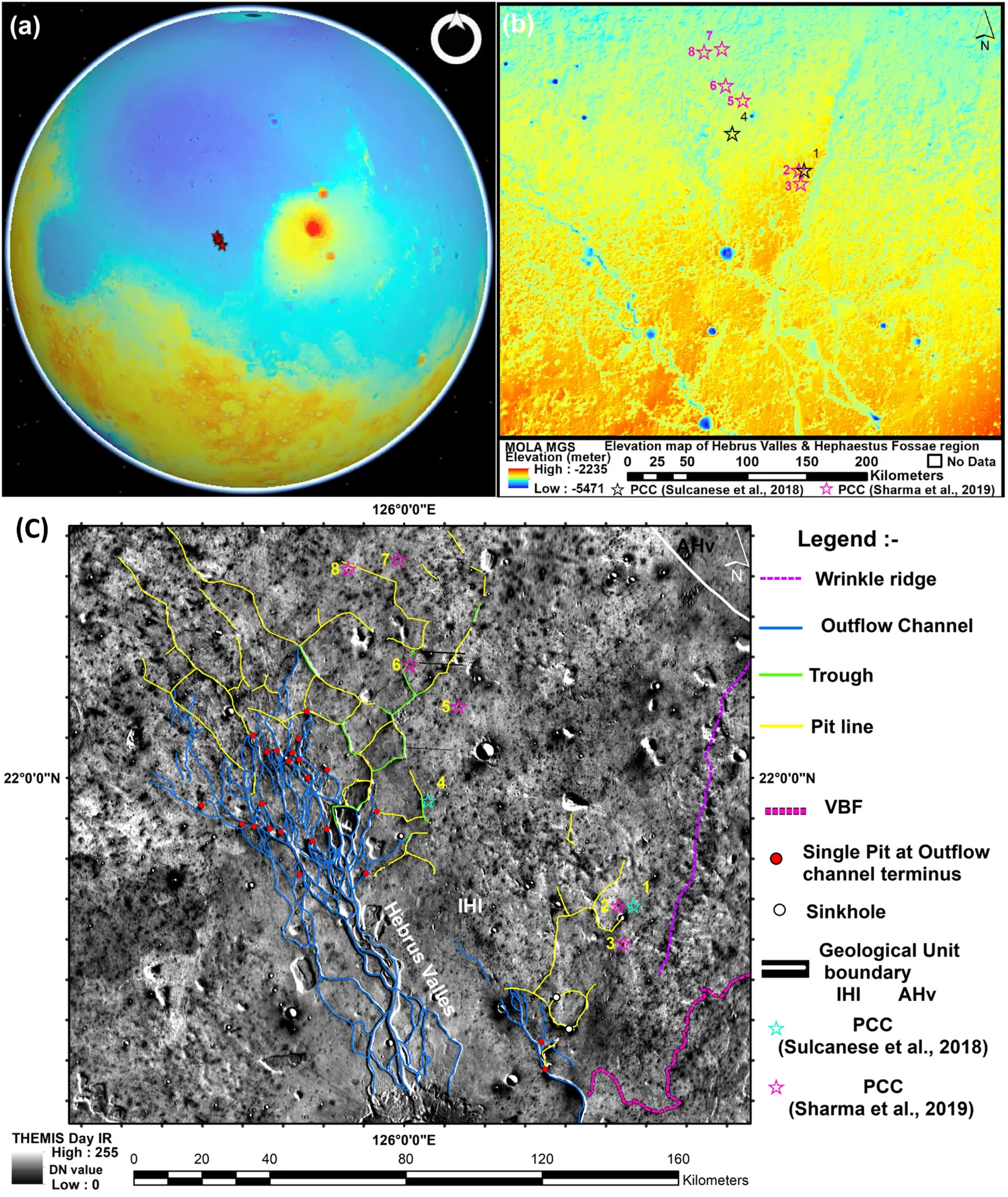
Chinese researchers discovered eight potential water-formed caves in Mars' Hebrus Valles, representing a new class of karst caves that could have sheltered microbial life and are prime targets for future exploration missions.
Scientists have identified potential water-formed karstic caves in Hebrus Valles on Mars, which could have protected past life and serve as future exploration sites, marking a new type of cave formation on the planet.
Scientists discovered ancient geological deposits in Greenland's caves indicating the Arctic was once much warmer and wetter, with climate shifts occurring rapidly in response to COâ‚‚ levels, serving as a warning for current climate change impacts.
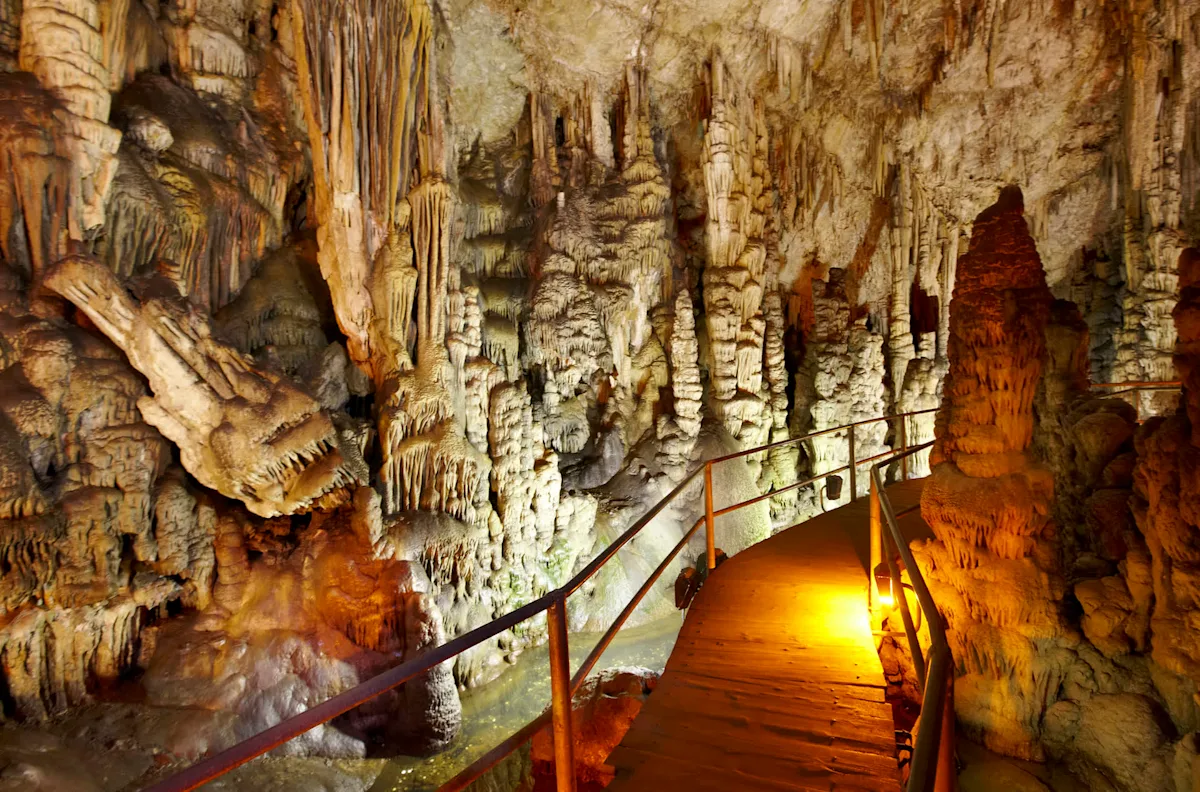
Researchers discovered significant microplastic pollution in remote caves in Greece, indicating that plastic particles can reach even the most isolated environments, raising concerns about widespread environmental and health impacts.
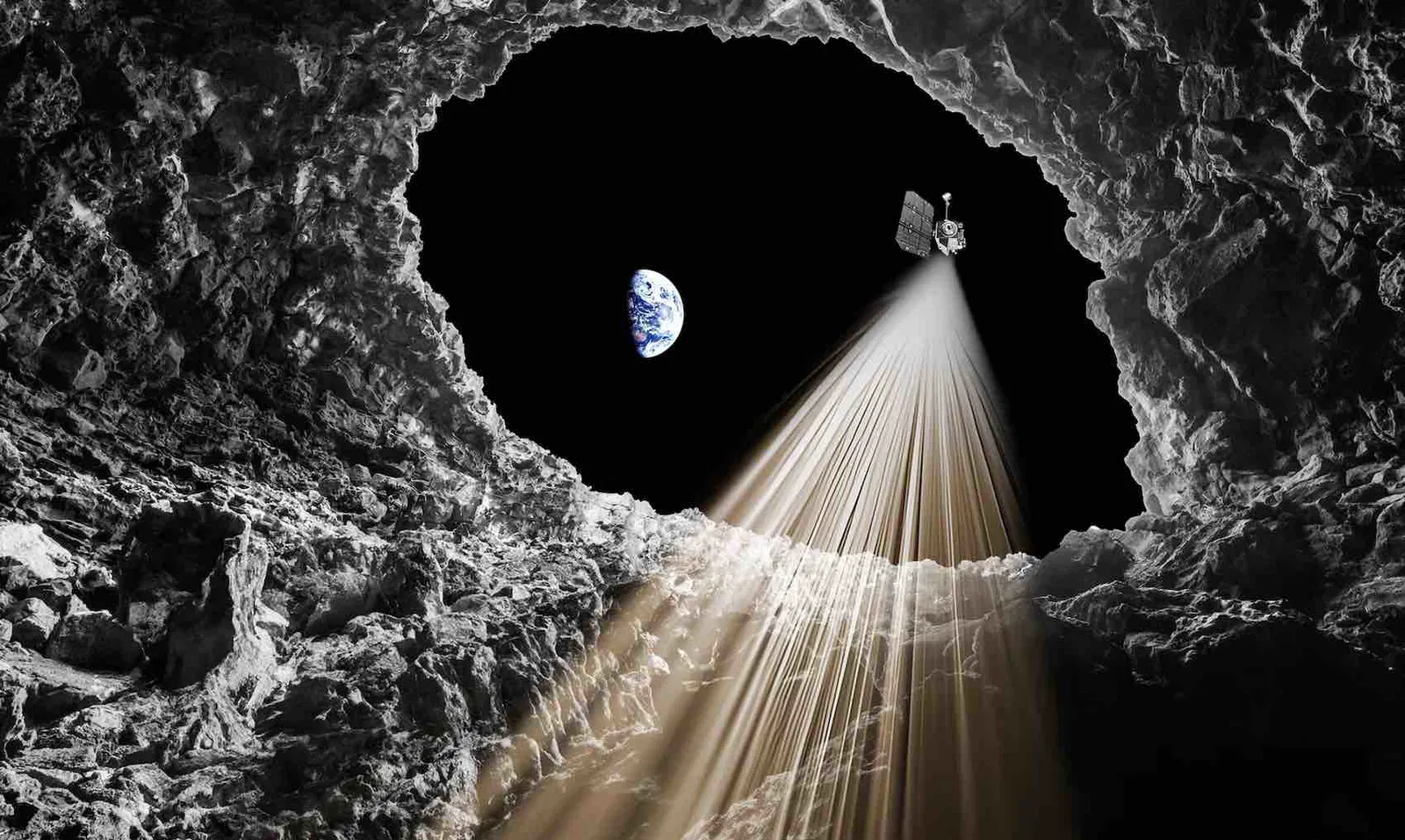
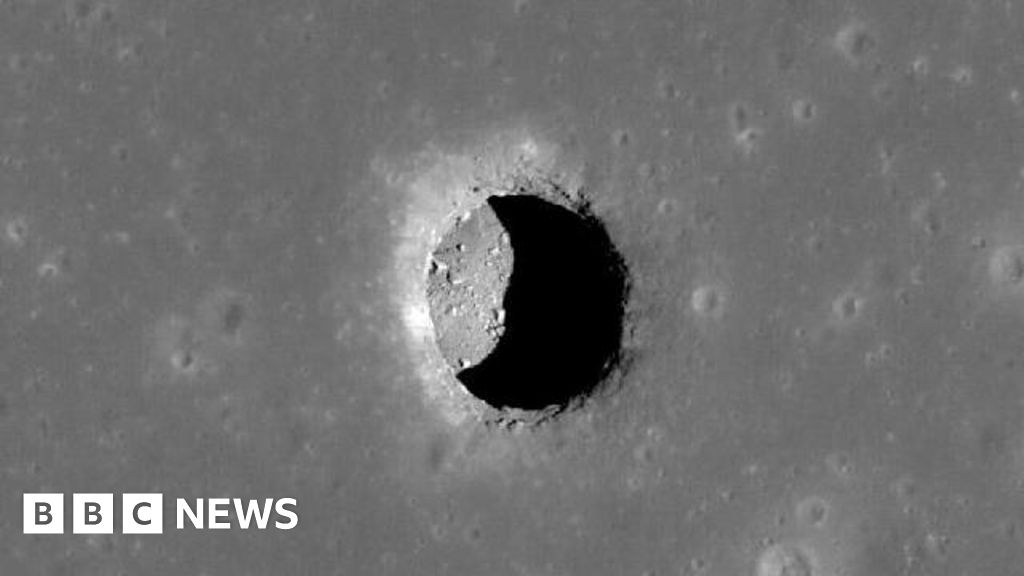
NASA's Lunar Reconnaissance Orbiter has identified over a dozen new pit craters on the Moon that could serve as natural entrances to underground environments, potentially useful for future astronaut shelters and scientific research, marking a significant step toward lunar exploration and habitation.
Grant Hardin, a convicted murderer and rapist, escaped from a prison in Arkansas and has been on the run for five days, with challenging weather and terrain complicating the manhunt. His knowledge of law enforcement and possible access to tools from the prison kitchen make him a dangerous and clever escapee, with sightings reported in Missouri, but he remains at large.
Scientists have discovered a 100m deep cave on the Moon, which could potentially serve as a site for a permanent human base. The cave, located in the Mare Tranquillitatis, was identified using radar and offers protection from radiation, extreme temperatures, and space weather. Researchers believe this discovery could also aid in exploring caves on Mars and provide insights into the Moon's geological history.
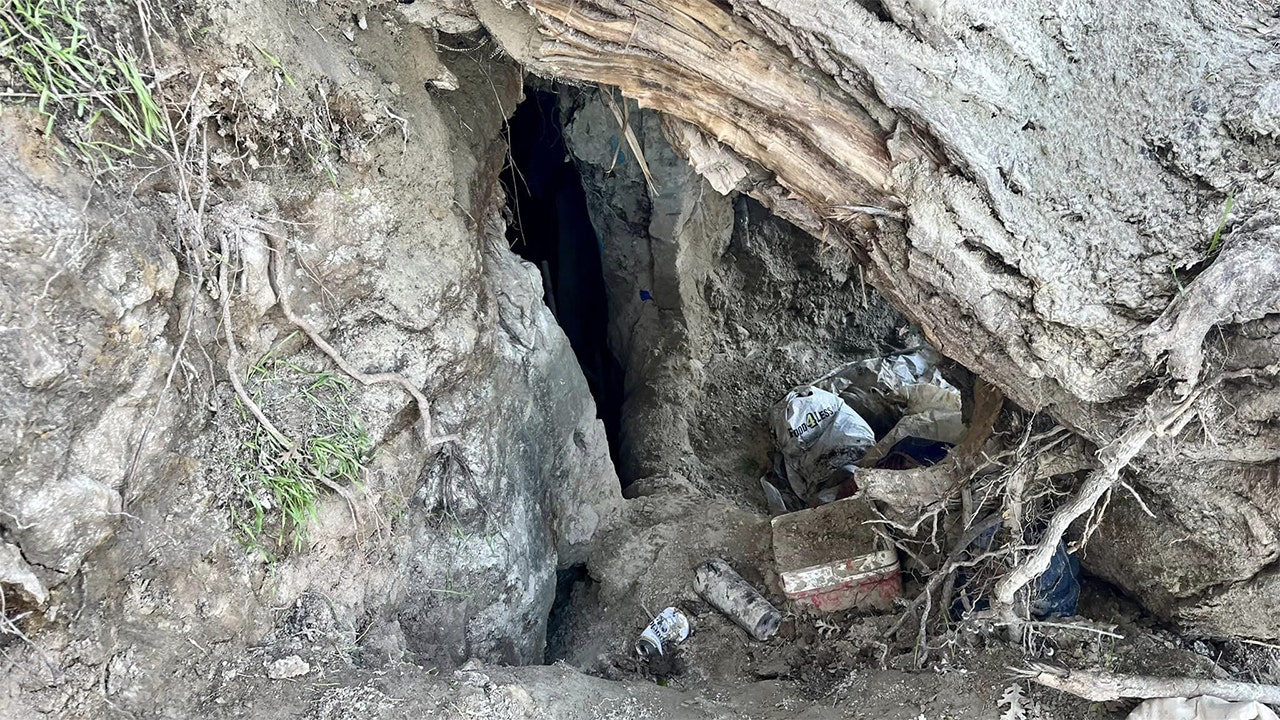
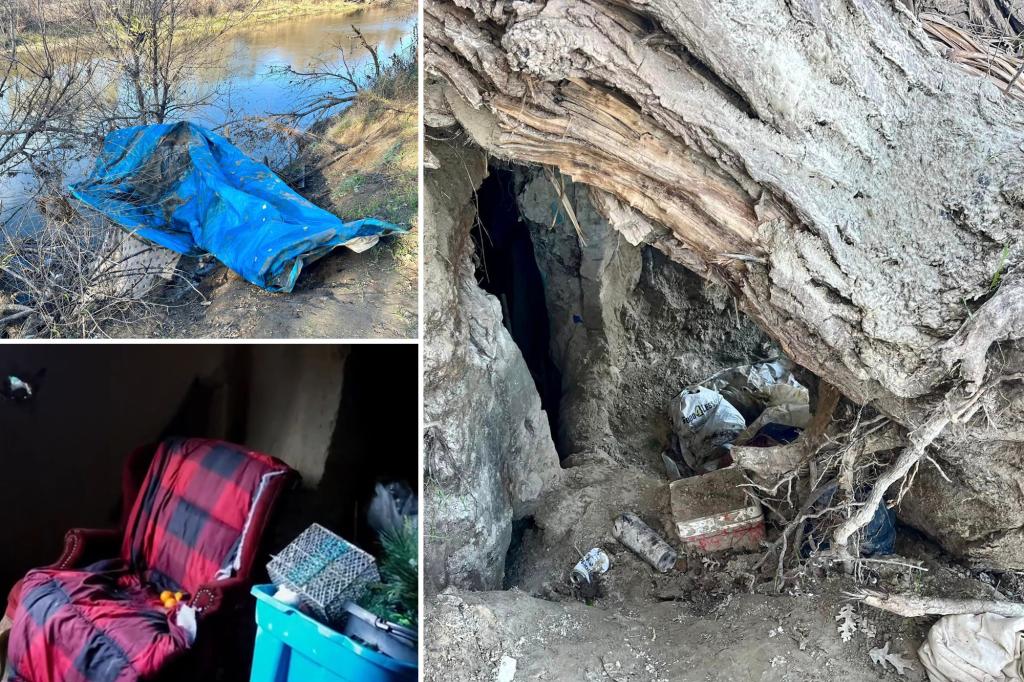
Homeless individuals in California were discovered living in furnished caves along the Tuolumne River, prompting a joint cleanup effort by the Modesto Police Department, volunteers, and local organizations. The caves, located 20 feet below street level, were found to be fully furnished and contained significant amounts of garbage, drugs, and weapons. This discovery highlights the growing homelessness crisis in California, with Los Angeles also mobilizing thousands of volunteers to conduct a street tally to address the surging homeless population.
Homeless individuals in California were discovered living in 20-foot-deep caves along the Tuolumne River in Modesto, furnished with furniture and supplies. Police and volunteers removed 7,600 pounds of trash from the makeshift dwellings, which were accessed by makeshift stairs carved into the hillside. Concerns have been raised about the safety of the residents, and efforts are being made to relocate them to proper housing.
Finding caves in Lego Fortnite can be challenging but rewarding. Caves offer resources and can be accessed early in the game. They are not marked on the map, so players must look for cave outcroppings with a mass of rocks. Interacting with the cave entrance loads players into the cave. Once discovered, caves are marked on the map. Specific seed codes can be used to access worlds with identifiable caves. Caves function as dungeons with resources to farm, but also enemies to fight. Players should craft a shortsword and can bring a villager ally for support. Caves contain chests with various resources, but these do not respawn.
Scientists from the Natural History Museum of Utah collaborated with Utah's caving community to explore caves and uncover skeletal remains of mammals, providing insights into the recent past. The research, published in the Journal of Mammalogy, utilized caves as research archives to understand mammalian diversity and changes in alpine ecosystems. The discovery of fossils spanning the past 3,000 years, including previously unknown species, highlights the value of collecting skeletal remains from caves for zoological census and long-term records. This collaborative effort demonstrates the importance of citizen science in scientific research.
Scientists are exploring the possibility of finding life on Mars in ancient caves and lava tubes. These underground structures could have provided a more hospitable environment for life when Mars had flowing water, a warmer climate, and an atmosphere. By studying extreme conditions in caves on Earth, researchers hope to gain insights into what life may look like in similar conditions elsewhere in the solar system. Microbes found in lava tubes in Hawaii have shown the ability to thrive by drawing nutrients from rocks, suggesting that similar microbes could have existed or may still exist on Mars. The search for life in Martian caves continues, with plans to explore lava tubes on the Moon as well.
A guide to the best caves in The Legend of Zelda: Tears of the Kingdom has been released, covering every cave that’s relevant to Skyview Towers, armor sets, and shrines. The guide also highlights 11 additional caves that don’t fit into those categories but are still worth exploring. The article also provides tips on how to find caves, including offering fruit to Satori cherry blossom trees, following blupees, using the Purah Pad’s Sensor+ feature, and chatting with traveling NPCs.
Researchers at the University of Arizona have developed a concept for a flock of robots that can explore subsurface regions on Mars, including caves and lava vents, by following "breadcrumbs" inspired by the fairy tale Hansel and Gretel. The robots would be linked by a communications network allowing them to work independently or as a team, all without direction from humans. The system, fittingly named the Breadcrumb-Style Dynamically Deployed Communication Network paradigm (DDCN), enables constant data transmission as each robot in the flock stays in touch with "mother" even in convoluted and complex environments.