Tag

Caltech

All articles tagged with #caltech

Astrophysicist Ray Jayawardhana Named Caltech's 10th President

Originally Published 5 days ago — by Caltech

Featured image for Astrophysicist Ray Jayawardhana Named Caltech's 10th President
Source: Caltech

Dr. Ray Jayawardhana, a renowned astrophysicist and academic leader, has been appointed as Caltech's tenth president, starting July 1, 2026, bringing a strong background in research, administration, and public engagement to advance the institute's mission of fundamental research and exploration.

Record-Breaking Black Hole Flare Outshines 10 Trillion Suns

Originally Published 2 months ago — by Engadget

Featured image for Record-Breaking Black Hole Flare Outshines 10 Trillion Suns
Source: Engadget

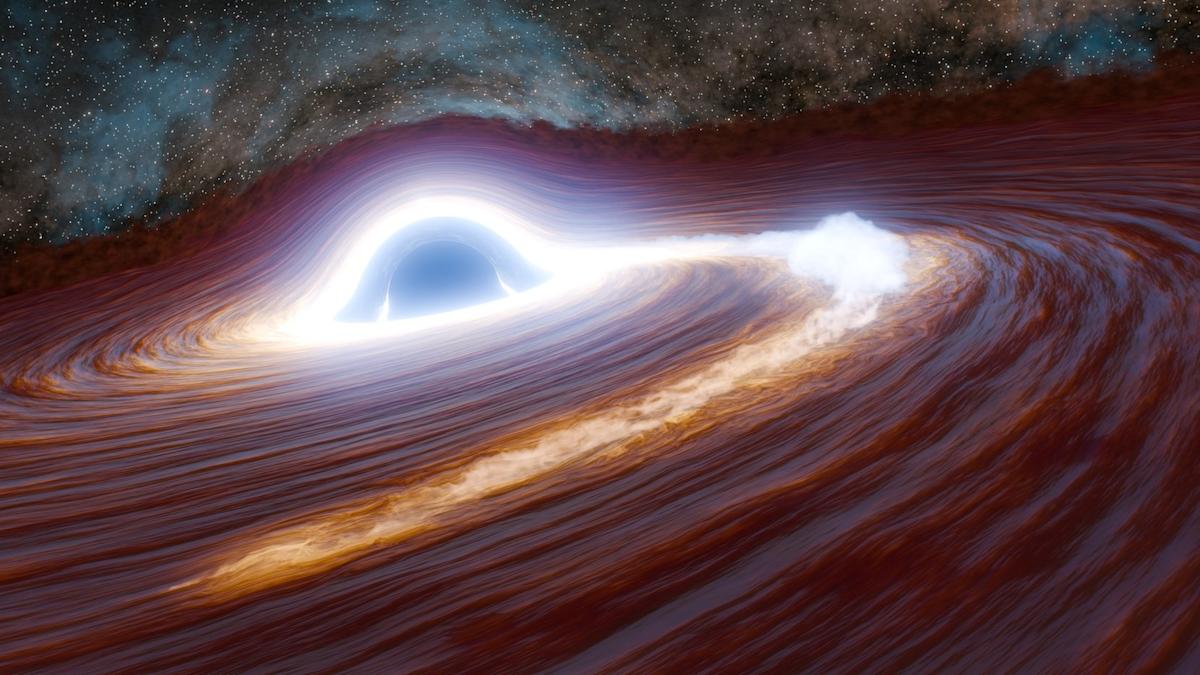
Scientists observed the largest and most distant black hole flare to date, occurring in a galaxy 10 billion light years away, where a black hole about 500 million times the mass of the sun consumed a star 30 times the sun's mass, resulting in a flare shining with the light of 10 trillion suns.

Caltech Achieves Record 6,100-Qubit Quantum Array

Originally Published 3 months ago — by Rude Baguette

Featured image for Caltech Achieves Record 6,100-Qubit Quantum Array
Source: Rude Baguette

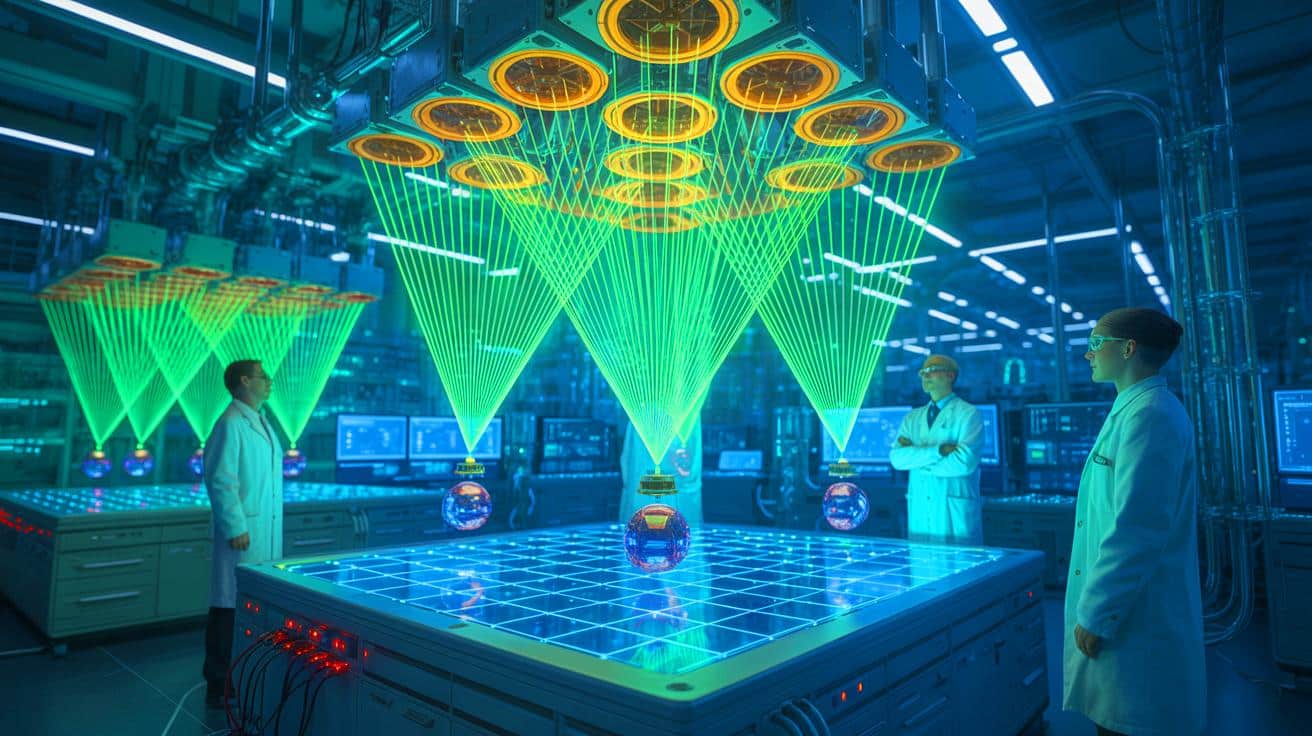
Caltech physicists have created the largest array of neutral-atom qubits, consisting of 6,100 qubits with high accuracy and the ability to move atoms while preserving superposition, marking a significant step toward scalable quantum computers capable of complex computations and simulations.

Caltech and Salk Institute Mourn the Loss of Nobel Laureate David Baltimore

Originally Published 4 months ago — by Caltech

Featured image for Caltech and Salk Institute Mourn the Loss of Nobel Laureate David Baltimore
Source: Caltech

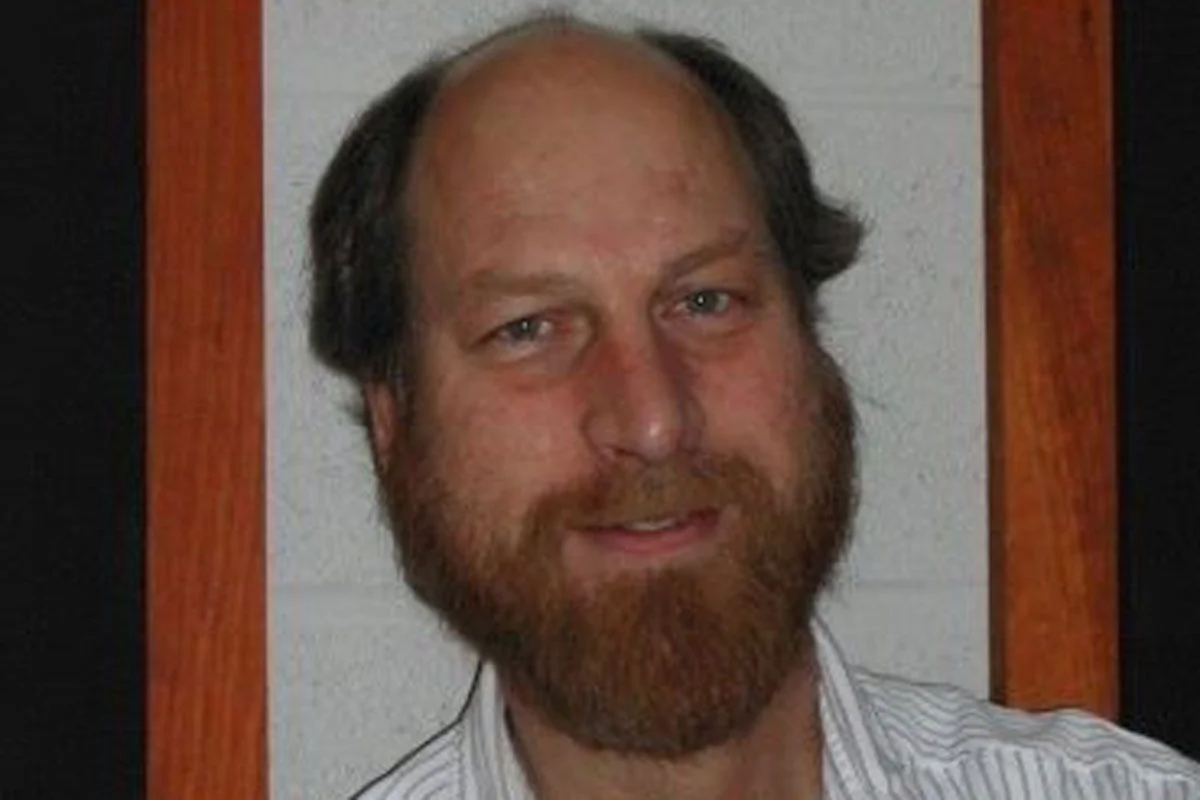
David Baltimore, a Nobel Prize-winning virologist, former Caltech president, and influential scientist known for discovering reverse transcriptase, passed away at age 87. His groundbreaking work in molecular biology, immunology, and science policy significantly advanced medicine and biotechnology. Baltimore's leadership at Caltech and contributions to global health and science policy left a lasting legacy. He is survived by his wife Alice Huang and daughter TK Baltimore.

Nobel Laureate and Former Caltech President David Baltimore Passes Away at 87

Originally Published 4 months ago — by Los Angeles Times

Featured image for Nobel Laureate and Former Caltech President David Baltimore Passes Away at 87
Source: Los Angeles Times

David Baltimore, a Nobel laureate and former Caltech president renowned for his groundbreaking work in virology and genetic engineering, passed away at 87. His career was marked by significant scientific discoveries, leadership in bioethics, and influential roles in academia and industry, leaving a lasting legacy in biology and medicine.

Caltech Resolves Lawsuit Over Student Misleading Claims

Originally Published 6 months ago — by The New York Times

Featured image for Caltech Resolves Lawsuit Over Student Misleading Claims
Source: The New York Times

Caltech has settled a class-action lawsuit over a cybersecurity boot camp that falsely advertised its connection to the university, agreeing to improve transparency and end its partnership with Simplilearn, amid concerns about misleading marketing practices in higher education.

Microrobots Revolutionize Targeted Drug Delivery in Cancer Treatment

Originally Published 1 year ago — by Caltech

Featured image for Microrobots Revolutionize Targeted Drug Delivery in Cancer Treatment
Source: Caltech

A Caltech-led team has developed bioresorbable acoustic microrobots (BAM) capable of targeted drug delivery within the body. These microrobots, made from a hydrogel, can navigate complex biofluids and release drugs precisely at tumor sites, as demonstrated in mice with bladder tumors. The microrobots incorporate magnetic nanoparticles for navigation and ultrasound imaging for real-time tracking. This innovation could revolutionize precision medicine by delivering therapeutic agents directly to specific sites, minimizing side effects and improving treatment efficacy.

Zwicky Transient Facility Catalogues 10,000+ Exploding Stars

Originally Published 1 year ago — by Space.com

Featured image for Zwicky Transient Facility Catalogues 10,000+ Exploding Stars
Source: Space.com

The Zwicky Transient Facility (ZTF) has classified over 10,000 supernovas, marking a significant achievement in the study of cosmic explosions. Operating since 2017, ZTF has become the largest supernova surveyor, responsible for nearly two-thirds of the supernovas discovered since 2012. The facility not only detects supernovas but also classifies them, providing valuable data for understanding stellar life cycles and phenomena like dark energy. Named after astronomer Fritz Zwicky, the ZTF continues his legacy of advancing supernova science.

Fast Radio Bursts Traced to Massive Galaxies, Unraveling Cosmic Mystery

Originally Published 1 year ago — by Caltech

Featured image for Fast Radio Bursts Traced to Massive Galaxies, Unraveling Cosmic Mystery
Source: Caltech

Caltech-led researchers have discovered that fast radio bursts (FRBs) are more likely to occur in massive, metal-rich star-forming galaxies, suggesting that magnetars, which are believed to trigger FRBs, often form from the merger of two stars in such environments. This finding, published in Nature, enhances understanding of magnetar formation and FRB origins, with the Deep Synoptic Array-110 playing a key role in localizing FRBs to their host galaxies.

"21 Neutron Stars Discovered Orbiting Sun-like Stars"

Originally Published 1 year ago — by Phys.org

Featured image for "21 Neutron Stars Discovered Orbiting Sun-like Stars"
Source: Phys.org

Astronomers using data from the European Space Agency's Gaia mission have discovered 21 neutron stars orbiting sun-like stars. These neutron stars, found by detecting the gravitational wobble they cause in their companion stars, are the first to be identified purely through their gravitational effects. The discovery challenges existing models of binary star formation and suggests that such pairings, though rare, can survive the cataclysmic processes of stellar evolution.

"Space-Based Solar Power: The Next Renewable Energy Revolution"

Originally Published 1 year ago — by Space.com

Featured image for "Space-Based Solar Power: The Next Renewable Energy Revolution"
Source: Space.com

The SOLARIS initiative and Caltech's Space Solar Power Project (SSPP) are advancing the concept of space-based solar power, a technology first imagined in science fiction. Despite recent successful tests, including beaming energy to Earth, significant challenges remain, such as scaling up, autonomous deployment, and cost. Advocates argue that with continued innovation and investment, space solar power could become a viable, scalable solution for global energy needs.

Indian-Origin Scientist Shrinivas Kulkarni Wins Shaw Prize in Astronomy

Originally Published 1 year ago — by NDTV

Featured image for Indian-Origin Scientist Shrinivas Kulkarni Wins Shaw Prize in Astronomy
Source: NDTV

Indian-origin US scientist Shrinivas R Kulkarni has been awarded the prestigious Shaw Prize in Astronomy for his significant contributions to the study of millisecond pulsars, gamma-ray bursts, supernovae, and other transient astronomical objects. Kulkarni, a professor at Caltech, has played a pivotal role in time-domain astronomy through projects like the Palomar Transient Factory and the Zwicky Transient Facility. The Shaw Prize, which includes a monetary award of USD 1.2 million, will be presented in Hong Kong on November 12, 2024.

"First Detection of Quantum-Triggered Magnetic Avalanche: Barkhausen Noise"

Originally Published 1 year ago — by Phys.org

Featured image for "First Detection of Quantum-Triggered Magnetic Avalanche: Barkhausen Noise"
Source: Phys.org

Caltech researchers have detected "Barkhausen noise" for the first time through quantum mechanical effects, representing an advance in fundamental physics. By studying a pink crystalline material called lithium holmium yttrium fluoride cooled to near absolute zero, the team observed that quantum tunneling and co-tunneling effects can lead to macroscopic changes in the magnetic orientations of electron spins, causing a magnetic avalanche. This discovery could have potential applications in creating quantum sensors and other electronic devices.