Tag

Astrometry

All articles tagged with #astrometry

astronomy1 year ago

"Gaia Discovers New Tidal Stellar Stream"

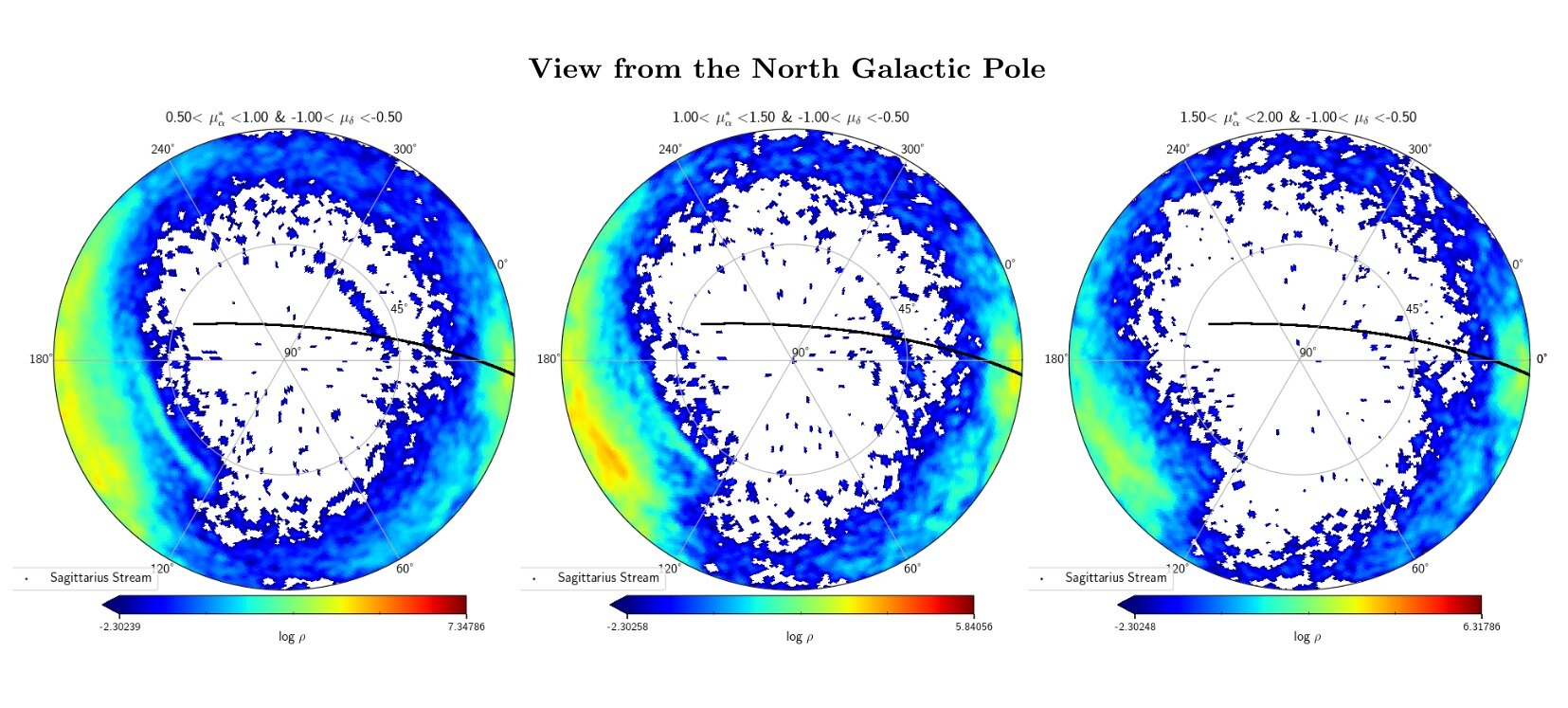
Chinese astronomers have used data from ESA's Gaia satellite to discover a new tidal stellar stream in the northern hemisphere of the Milky Way, characterized by low metallicity and high energy. The stream, approximately 80 degrees long and 1.7 degrees wide, was found at a high Galactic latitude and is associated with the merging event Sequoia. Further studies, particularly spectroscopic observations, are needed to better understand this newly detected stellar stream and its properties, with implications for the potential discovery of more such structures in the galaxy.

space-science2 years ago

Gaia's Quest: Searching for Another Earth

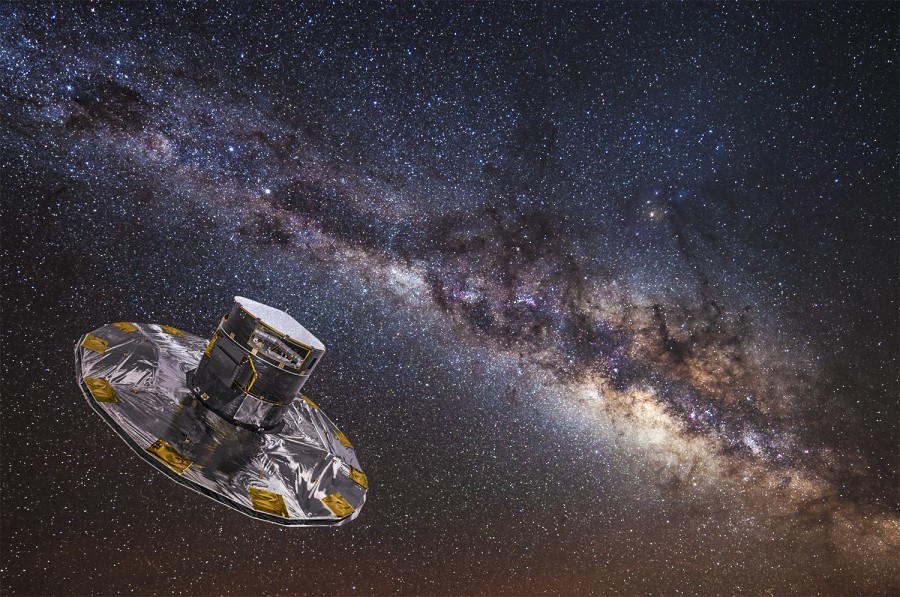
The European Space Agency's Gaia mission, which aims to map over one billion stars in the Milky Way, has the potential to detect Earth-like planets up to 30 light-years away using astrometry. Gaia's astrometry method allows for more accurate determination of an exoplanet's orbital parameters and can detect planets far away from their host stars. If advanced astrometry precision is achieved, Gaia could detect the four giant planets in our solar system within 100 years. Additionally, over 300 stars within ten parsecs from our solar system could potentially detect Earth if they achieve microarcsecond accuracy. The possibility of extraterrestrial intelligences (ETIs) using similar technology to Gaia raises the question of whether they could discover planets in our solar system, including Earth.

astronomy2 years ago

"Newly Discovered Exoplanet Resembles a Younger Version of Jupiter"

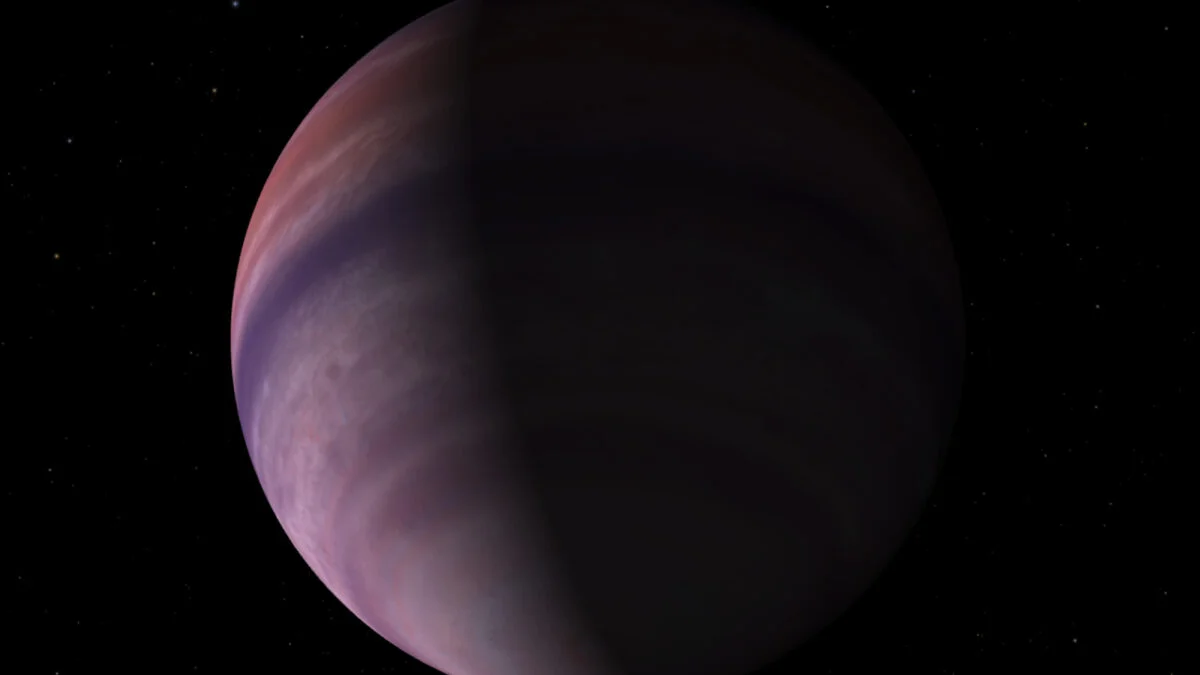
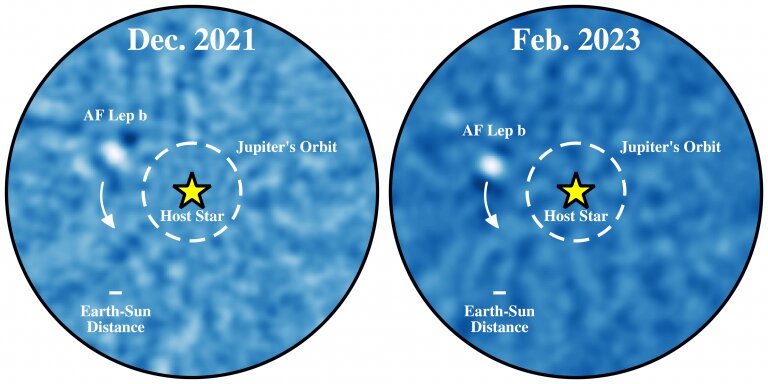
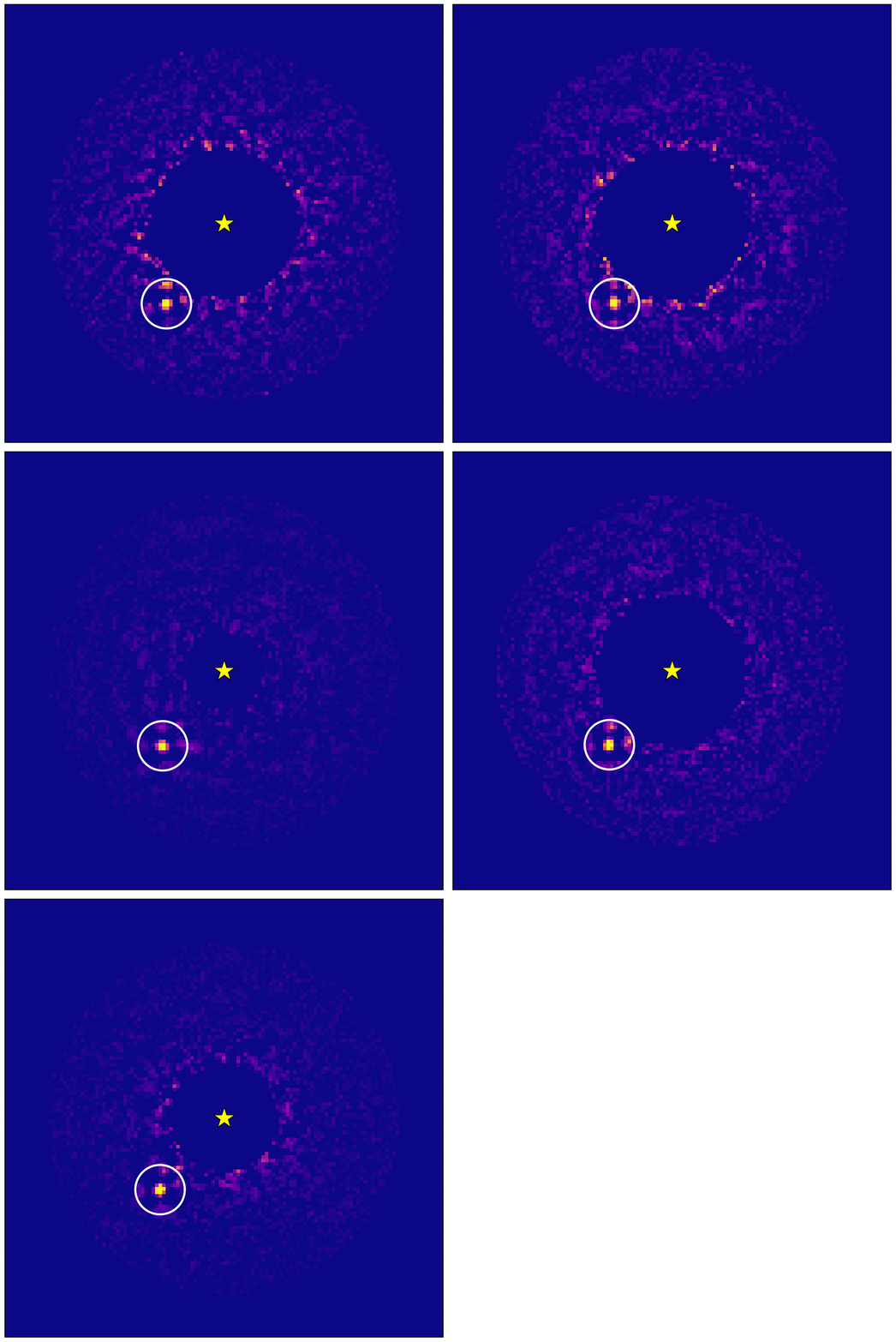
Scientists at the University of Texas at Austin have used astrometry to directly capture images of AF Lep b, one of the lowest-mass planets ever observed. This groundbreaking technique could revolutionize the discovery of extrasolar planets that are challenging to detect due to their distance, mass, or orientation relative to Earth. AF Lep b is approximately three times the mass of Jupiter and orbits a young Sun-like star about 87.5 light-years away. The combination of direct imaging and astrometry allows for the identification of previously difficult-to-detect extrasolar planets and enables the direct measurement of a planet's mass. The researchers plan to further study AF Lep b using advanced telescopes.

astronomy2 years ago

"Revolutionary Exoplanet Discoveries: Young Jupiter's Sibling and Eclipsing Cataclysmic Variable System Unveiled"

Astronomers using the W. M. Keck Observatory have successfully captured direct images of AF Lep b, one of the lowest-mass planets, using the astrometry technique. This marks the first time astrometry has been used to detect a giant planet orbiting a young Sun-like star. AF Lep b is approximately three times the mass of Jupiter and orbits a young star about 87.5 light-years away. This breakthrough could revolutionize the discovery of extrasolar planets that are challenging to detect due to their distance, mass, or orientation relative to Earth.

astronomy2 years ago

"Stunning Discovery: Young Planet Mirrors Jupiter's Features"

Astronomers have discovered a young exoplanet, AF Lep b, using the astrometry method, which involves measuring tiny changes in a star's position caused by the gravitational tugs of an orbiting planet. This is the first time astrometry has been used to find a giant planet orbiting a young star similar to the Sun. The team also used direct imaging to confirm the planet's existence and determine its mass, distance from its star, and orbital eccentricity. Further observations and studies of AF Lep b will be conducted using advanced telescopes like the James Webb Space Telescope.

astronomy2 years ago

'Jupiter's Younger Sibling' Marks Start of Exoplanet Discovery Era

Astronomers using the W. M. Keck Observatory in Hawaii have directly captured images of AF Lep b, one of the lowest-mass planets ever discovered. The planet is about three times the mass of Jupiter and orbits a young sun-like star about 87.5 light-years away. The discovery was made using a technique called astrometry, which measures the subtle movements of a host star over many years to help astronomers determine whether hard-to-see orbiting companions, including planets, are gravitationally tugging at it. This new method of combining direct imaging with astrometry could help astronomers find extrasolar planets that were hard to find before with other methods.

science-and-exploration2 years ago

New exoplanet discovered using precision astrometry.

Data from ESA's Gaia spacecraft has allowed astronomers to image a massive exoplanet using Japan's Subaru Telescope, marking the first confirmed exoplanet found by Gaia's ability to sense the gravitational tug or 'wobble' a planet induces on its star. This technique points the way to the future of direct exoplanet imaging, and the success of finding this planet provides a new path forward to discovering more exoplanets and characterizing them in a more holistic way than before.