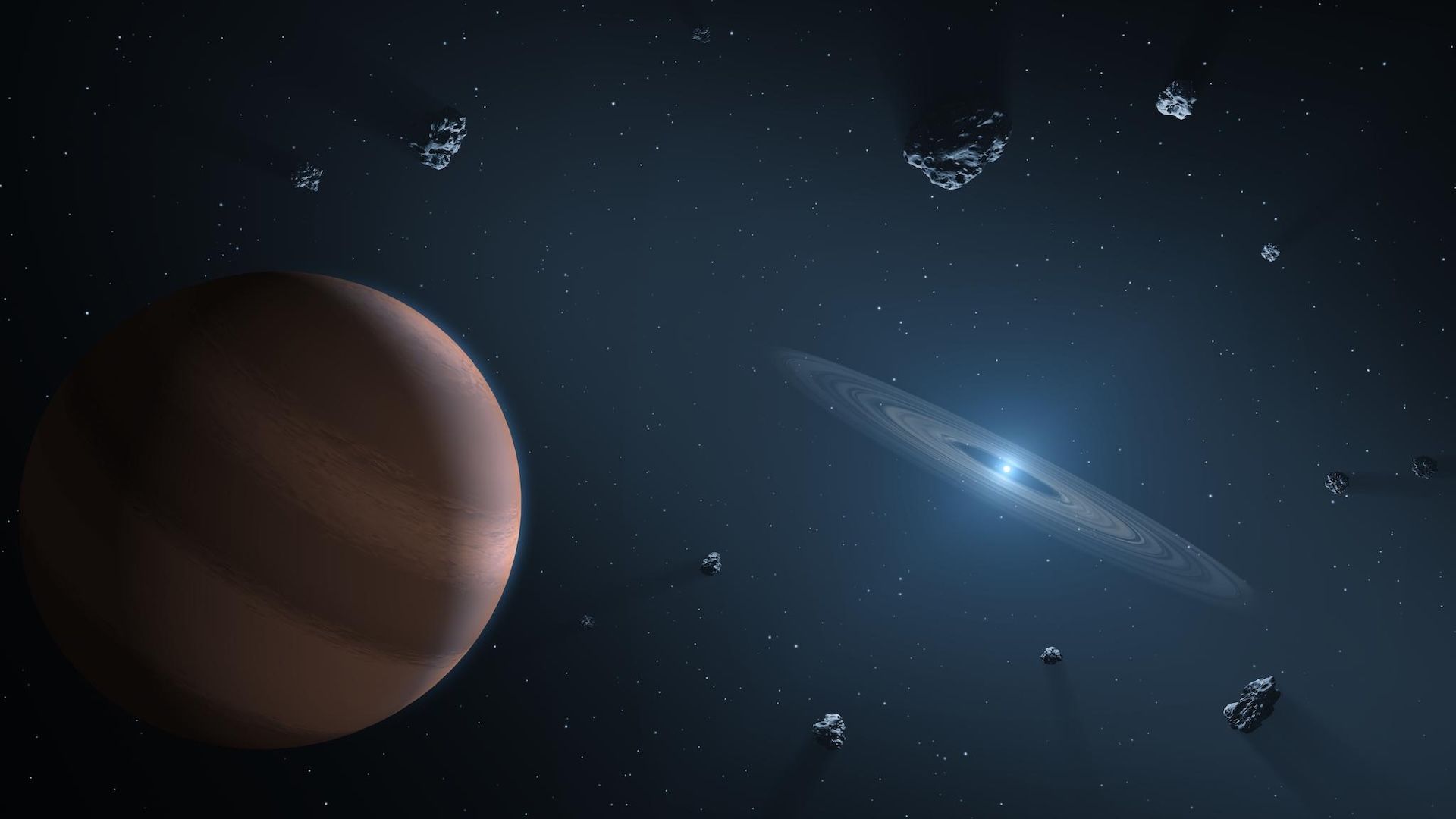
New research suggests that planets orbiting white dwarf stars may be more habitable than previously thought due to the effects of Einstein's general relativity, which stabilizes their orbits and prevents excessive tidal heating that would otherwise render them uninhabitable.
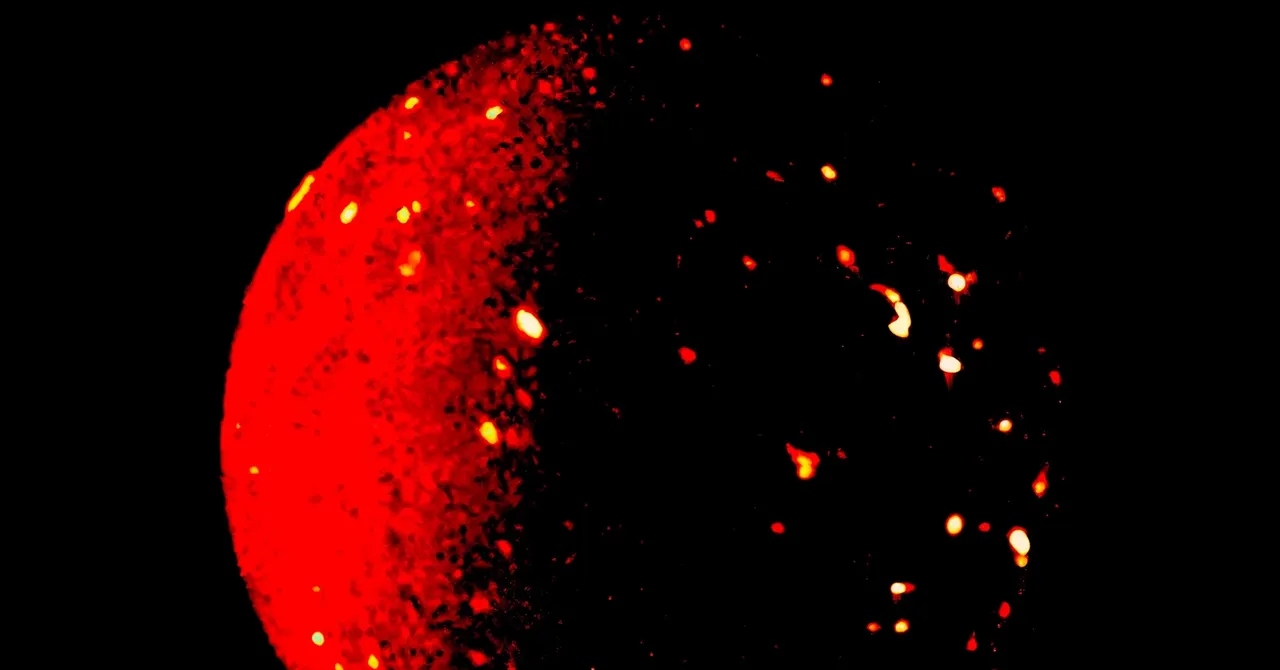
Recent NASA Juno spacecraft data suggest that Io, Jupiter's volcanic moon, does not have a shallow magma ocean as previously thought, challenging existing theories about its intense volcanism driven by tidal heating, and raising questions about the internal structures of other tidally heated moons like Europa and Enceladus.
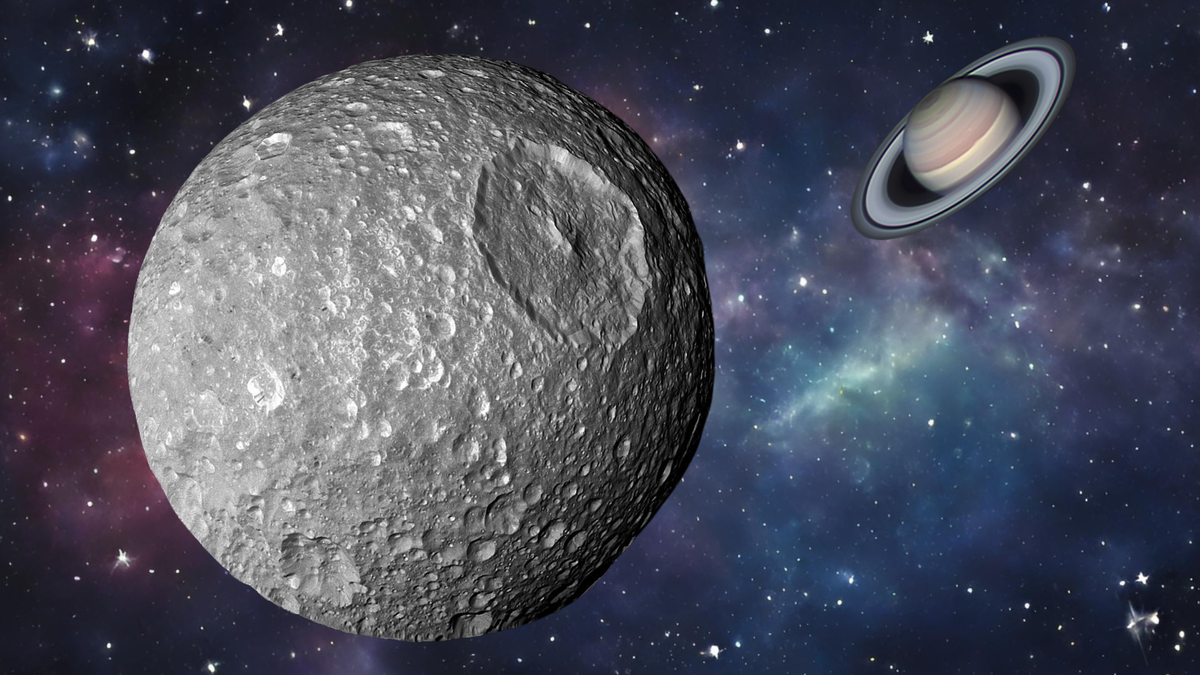
Researchers have proposed that Saturn's moon Mimas may have developed a vast buried ocean due to the planet's gravitational pull, causing the moon's icy shell to melt and thin. This discovery challenges previous assumptions about the potential for subsurface oceans on small moons and could impact the search for life in the solar system. The ocean is estimated to be relatively young, between 2 million and 25 million years old, and accounts for a significant portion of Mimas' volume. The process of tidal heating, driven by the moon's elliptical orbit, is believed to be responsible for the current thinning of the icy shell. This research sheds new light on the formation of subsurface seas and suggests that Mimas may be in a particularly interesting phase of its evolution.
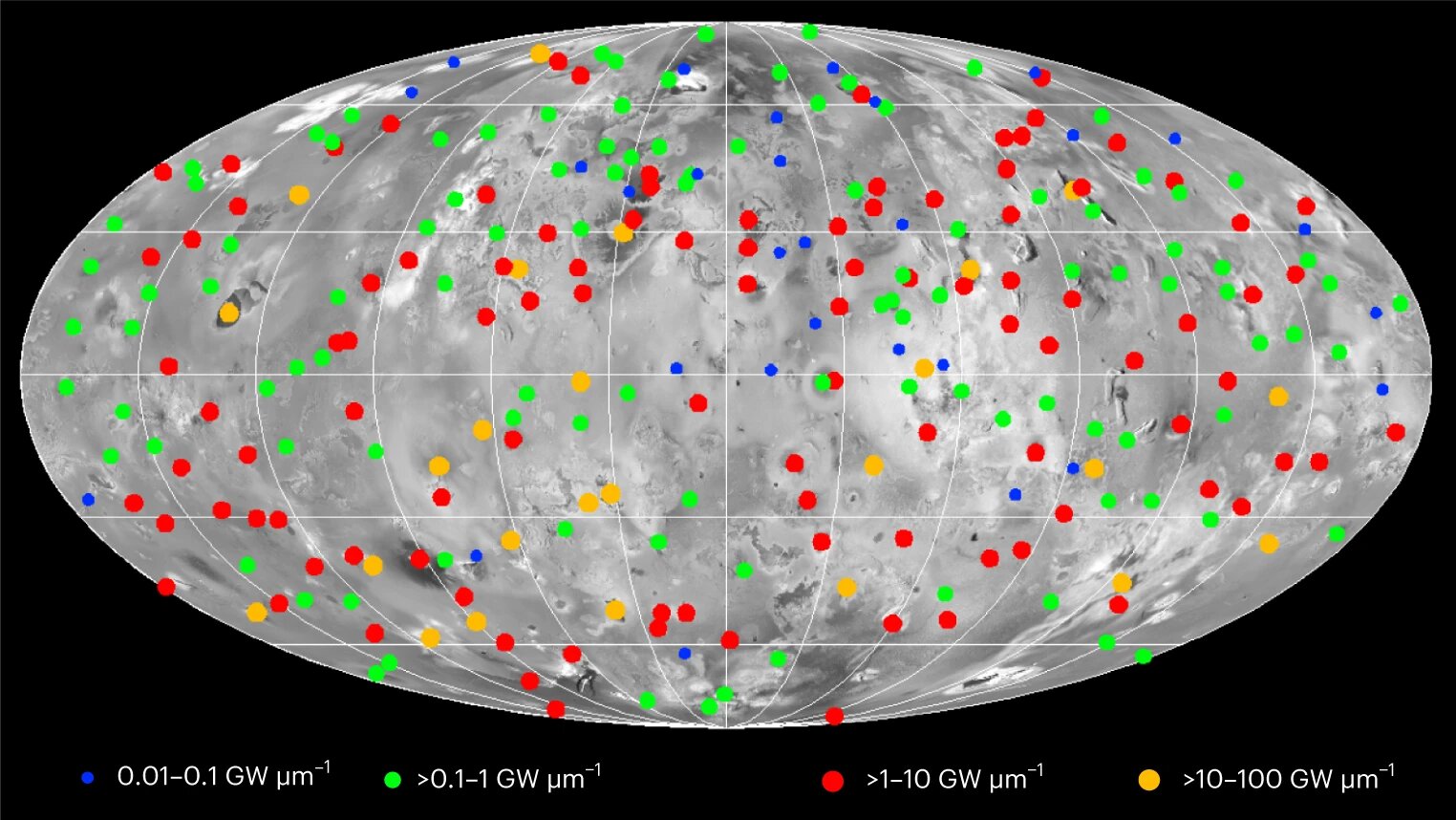
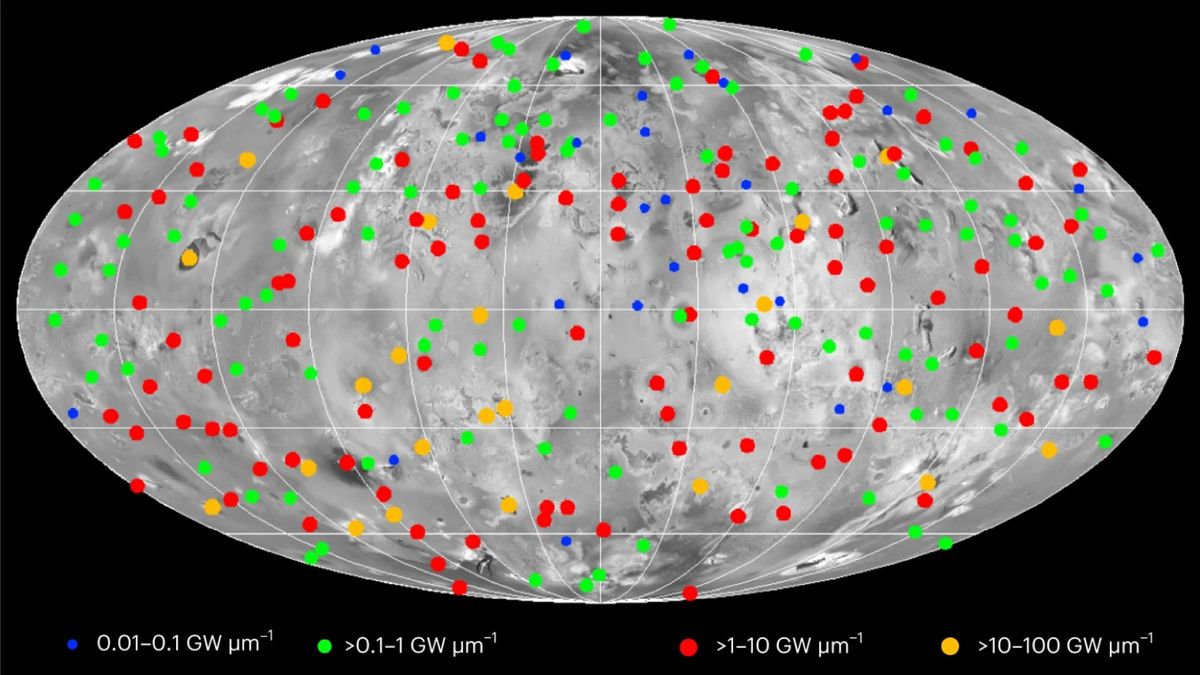
NASA's Juno probe has provided the first charted map of Jupiter's moon Io, revealing over 200 active volcanoes on its surface. The data suggests that Io may have a global ocean of magma underneath its surface and mysteriously warm poles. The extreme volcanic activity is believed to be caused by tidal heating generated by Jupiter's gravitational forces. The concentration of volcanoes on the moon's poles is roughly the same as elsewhere, but they emit less energy. The north pole volcanoes are more than twice as energetic as those in the south, possibly due to differences in crust thickness.
A global study of Io's volcanic activity suggests that the moon's tidal heating is concentrated within its upper mantle. By analyzing data from sensors measuring heat emission, researchers found that the moon emits 60% more heat along its lower latitudes, indicating that the heat responsible for volcanic activity is located just below the surface. This suggests the possibility of a soft upper mantle or even a molten ocean beneath Io's crust.
Scientists have created the first global map of volcanic activity on Jupiter's moon Io using data from NASA's Juno probe. The map reveals 266 active volcanic hotspots, shedding light on the moon's inner mechanics and suggesting the presence of a global magma ocean beneath its surface. The study also found that Io's poles are unusually warm and that the volcanoes at the north pole are more energetic than those at the south pole. The findings provide valuable insights into the extreme volcanic activity on Io, which is primarily caused by tidal heating from Jupiter.
Moons orbiting Jupiter and Saturn, such as Europa and Enceladus, have subsurface oceans that defy expectations of being frozen solid. Scientists are still trying to understand why these oceans exist, as the residual heat from their creation should have dissipated long ago. Possible explanations include tidal heating caused by gravitational interactions with neighboring moons, radioactive decay of elements within the moons, and the presence of certain chemicals that act as antifreeze. The upcoming missions of the European Space Agency's Jupiter Icy Moons Explorer and NASA's Europa Clipper aim to gather more data and confirm the existence of these oceans, potentially shedding light on the possibility of life beyond Earth.
A recent study by the University of Florida examined the orbital eccentricities of exoplanets orbiting red dwarf stars and found that one-third of them could exist within their star’s habitable zone, which could encompass hundreds of millions of potentially habitable exoplanets throughout the Milky Way. The researchers also discovered that red dwarfs with multiple exoplanets held the highest promise of exhibiting more circular orbits, meaning they could house liquid water on their surfaces. The study used data from NASA’s Kepler mission, which confirmed the existence of almost 2,800 exoplanets during its 9-year mission.
A new study suggests that one-third of planets around M dwarfs, the most common type of star in the Milky Way, may be suitable for life, meaning there are likely hundreds of millions of habitable planets in the galaxy alone. The study used data from the Kepler mission and the European Space Agency's Gaia satellite to fine-tune measurements of exoplanets' orbits and determine which planets were at risk of tidal heating, a process that can burn away a planet's chances for habitability. The results were published in the journal PNAS.
A recent study by the University of Florida found that one-third of exoplanets orbiting red dwarf stars could exist within their star’s habitable zone, which is the approximate distance from their star where liquid water can exist on the surface. The researchers analyzed the orbital eccentricities of 163 exoplanets orbiting red dwarf stars across 101 systems using data from NASA’s Kepler mission. Red dwarfs give off far less energy and heat than our Sun, meaning the habitable zone exists much closer to the star, resulting in shorter orbital periods for planets that orbit within the HZ.
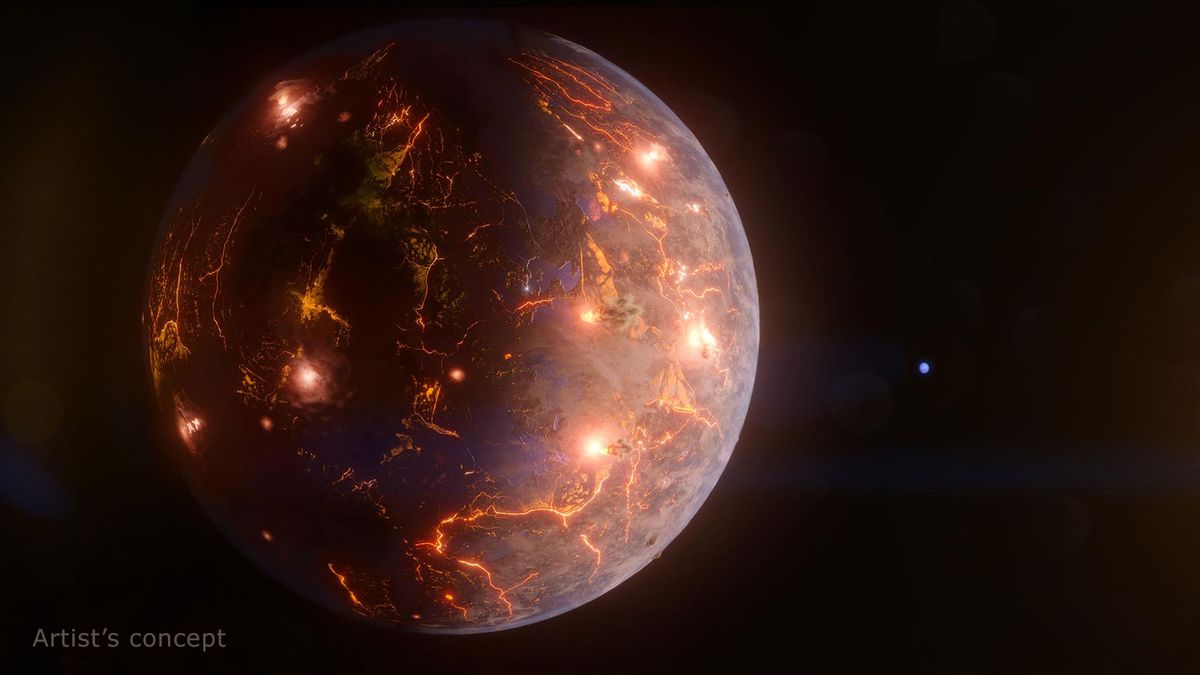
LP 791-18 d, a newfound exoplanet about the size of Earth, may be covered in active volcanoes that could sustain an atmosphere, according to a new study. The planet is tidally locked, meaning the same side always faces its star, but the amount of volcanic activity occurring all over the planet could allow water to condense on the night side. LP 791-18 d is likely too volcanically active to host life as we know it, but it is an inviting target for astrobiologists and researchers interested in exoplanet atmospheres.
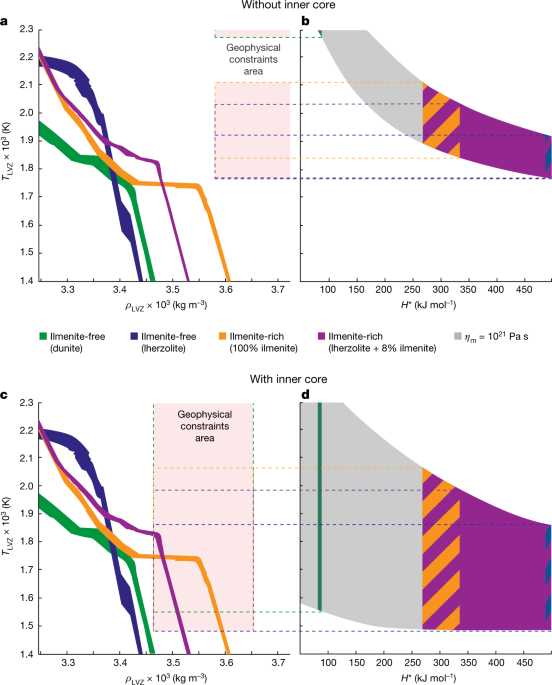
Recent studies on the Moon's interior suggest the presence of a solid inner core and a mantle overturn caused by the rheology of ilmenite. Seismic detection and tidal constraints have provided evidence for a low-viscosity zone at the core-mantle boundary, which may be responsible for strong tidal heating. The Moon's interior structure has implications for its thermal and chemical evolution, as well as the preservation of its magnetic dynamo.