Tag

Mantle Overturn

All articles tagged with #mantle overturn

science1 year ago

"The Moon's Ancient Transformation: Unveiling the Inside-Out Mystery"

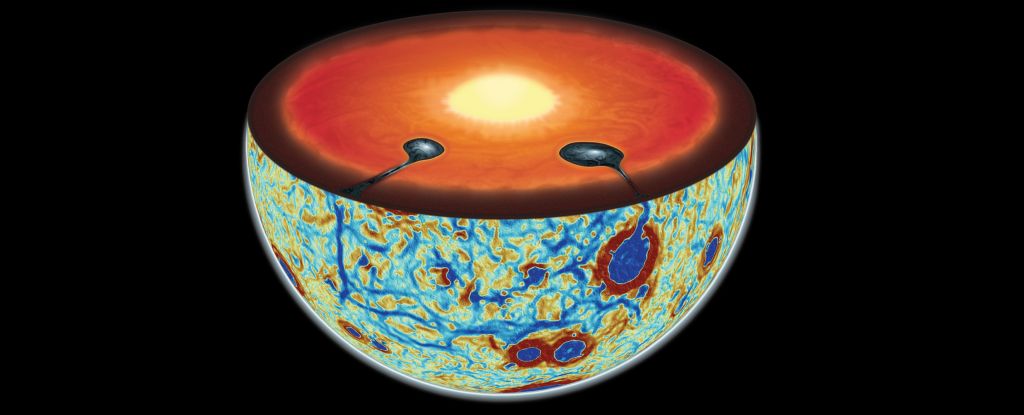
Scientists have discovered evidence suggesting that the Moon's mantle underwent a dramatic overturn billions of years ago, causing its surface to become chemically asymmetrical. This overturn, which occurred around 4.22 billion years ago, is believed to have resulted in the concentration of dense minerals like ilmenite on the near side of the Moon, leading to distinct gravitational anomalies. The findings, based on geodynamic models and gravity data from NASA's GRAIL mission, shed light on a defining event in the early history of the Moon and have been published in Nature Geoscience.
science2 years ago

Moon's Solid Iron 'Heart' Confirmed by Scientists.

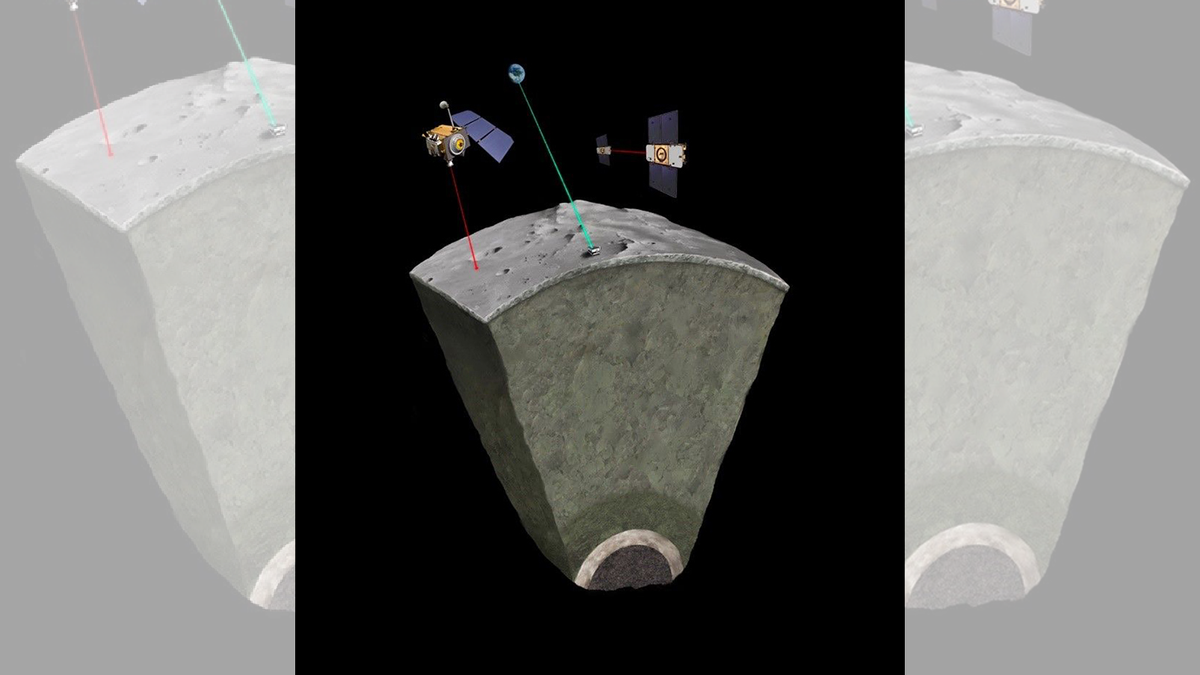
Scientists have confirmed that the moon has a fluid outer core and a solid inner core, similar to Earth's, after more than 50 years of research. The study also found the first evidence of mantle overturn on the moon, which may explain the presence of iron on its surface. Understanding the moon's inner workings can help scientists unravel its geologic mysteries and prepare for new lunar missions this decade.

science2 years ago

Moon's Core and Massive Metal Structure Discovered by Scientists

Scientists from Côte d’Azur University and the Institute of Celestial Mechanics and Ephemeris Calculations in France have found evidence to suggest that the Moon’s inner core is solid, like Earth’s, and made up of a metal with a density close to that of iron. They also found that the core is about 310 miles (500 kilometers) in diameter—about 15% of the Moon’s total width. The new analysis also yielded evidence of lunar mantle overturn, or movement of material in the Moon’s mantle prior to this layer cooling into a mainly solid mass.

astronomy2 years ago

Moon's Core Similar to Earth's, Study Reveals

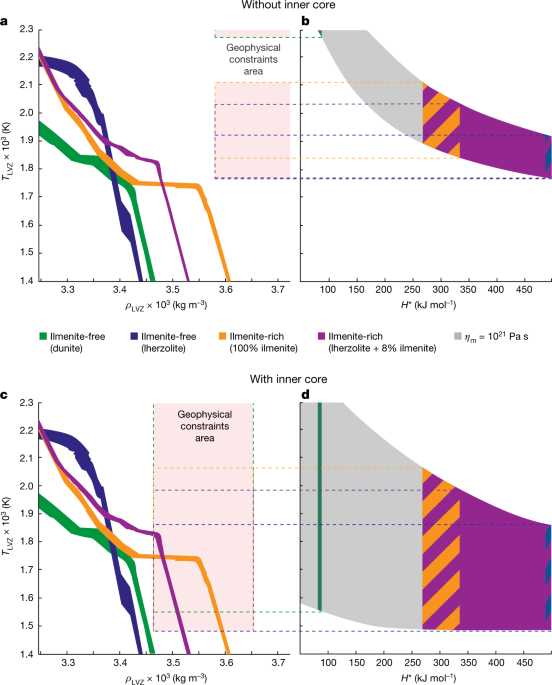
Recent studies on the Moon's interior suggest the presence of a solid inner core and a mantle overturn caused by the rheology of ilmenite. Seismic detection and tidal constraints have provided evidence for a low-viscosity zone at the core-mantle boundary, which may be responsible for strong tidal heating. The Moon's interior structure has implications for its thermal and chemical evolution, as well as the preservation of its magnetic dynamo.