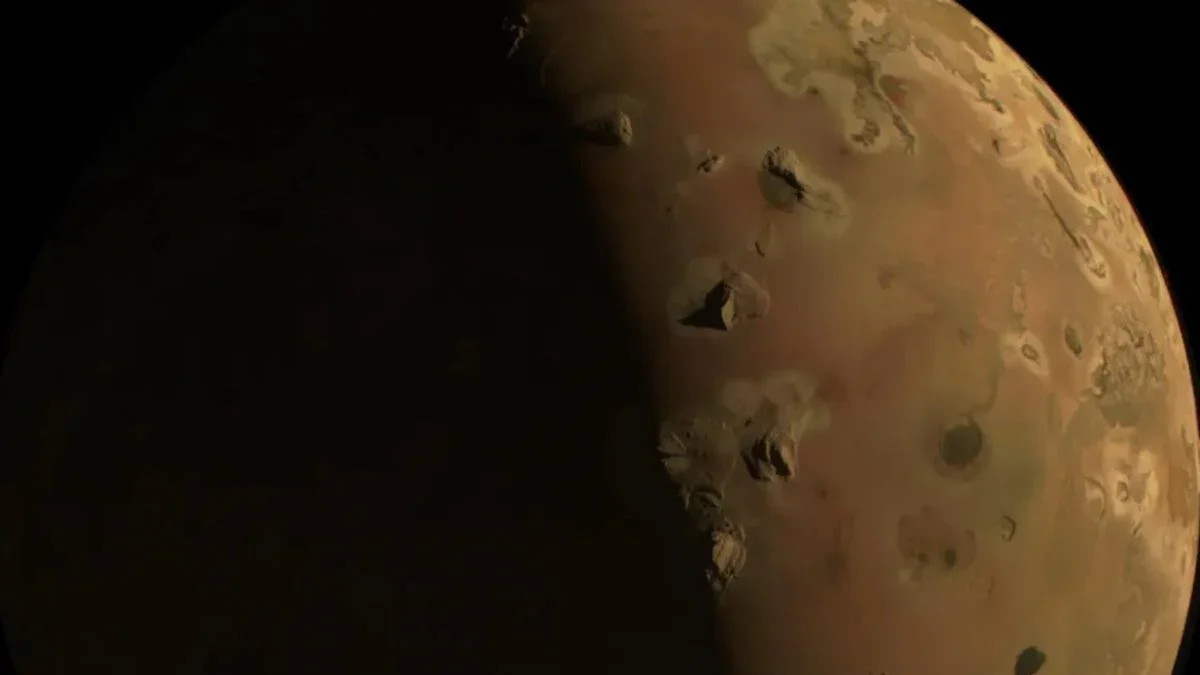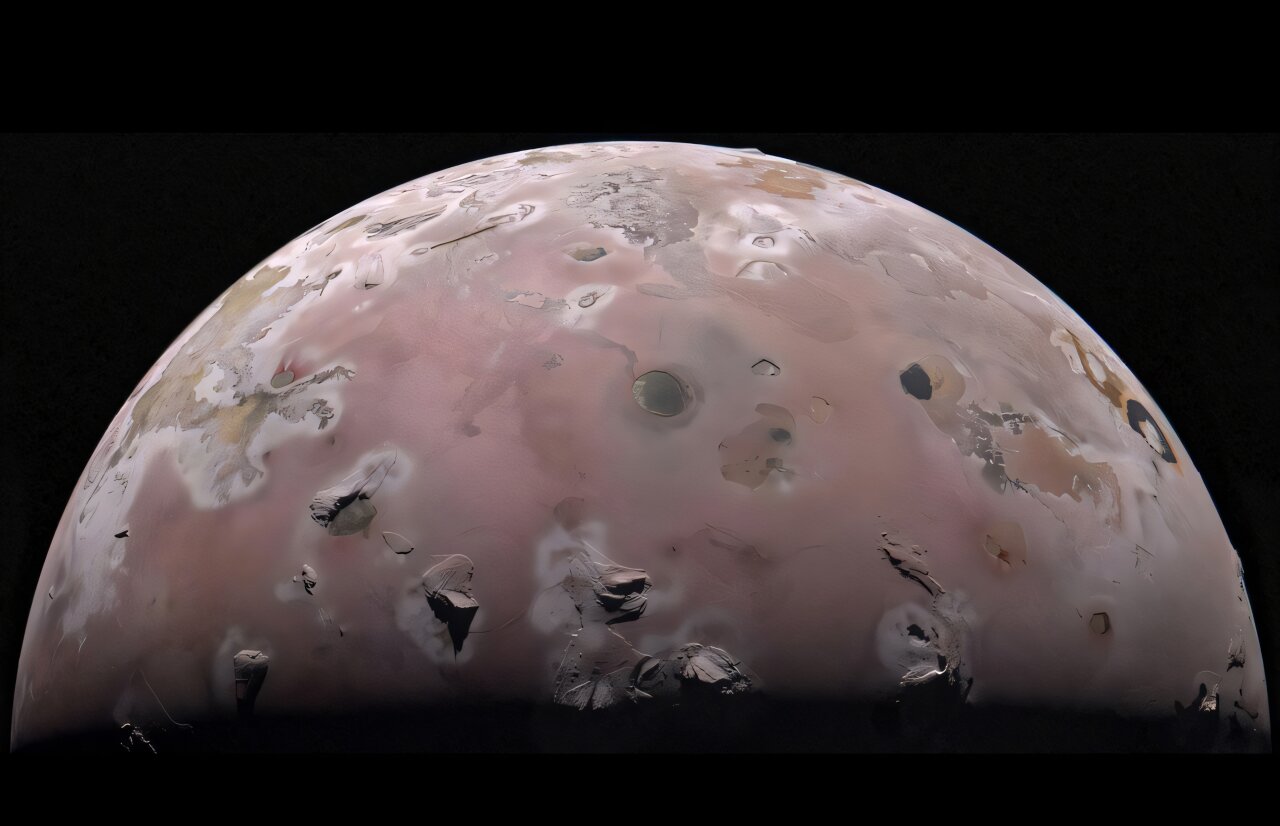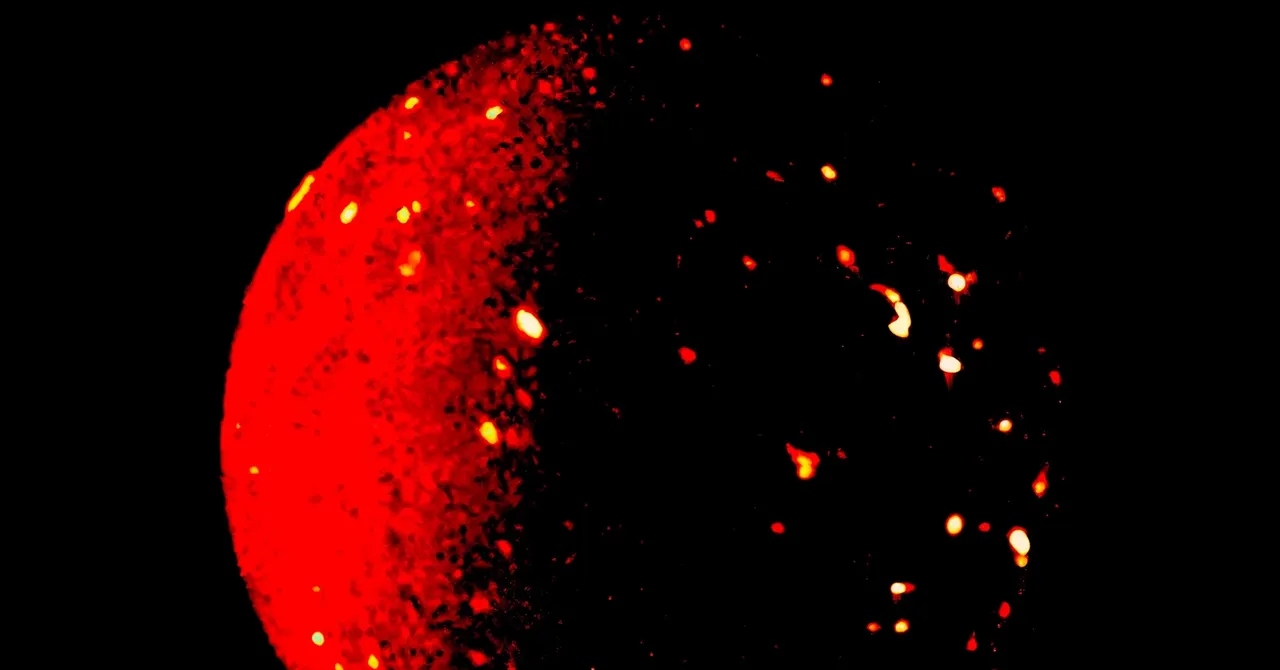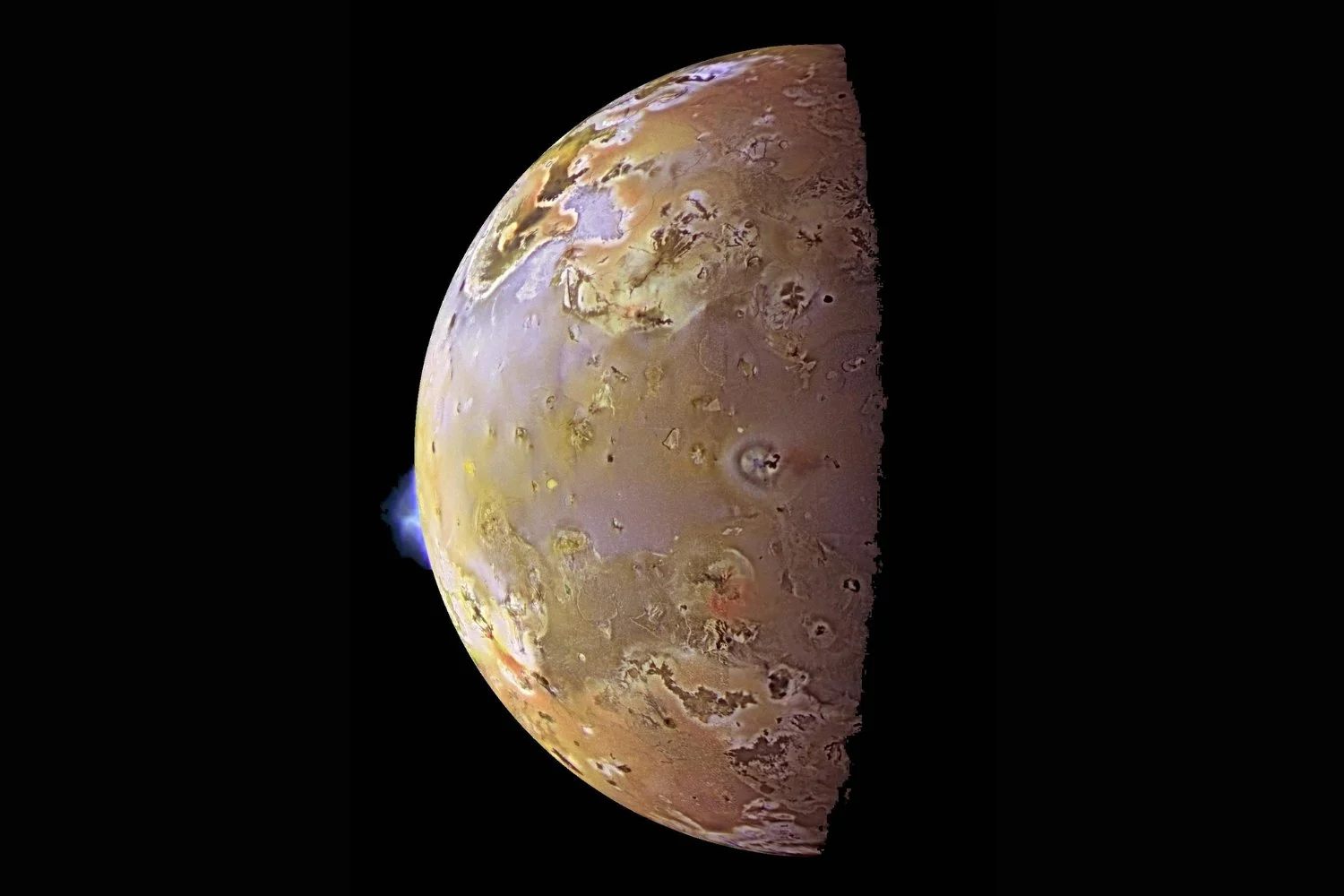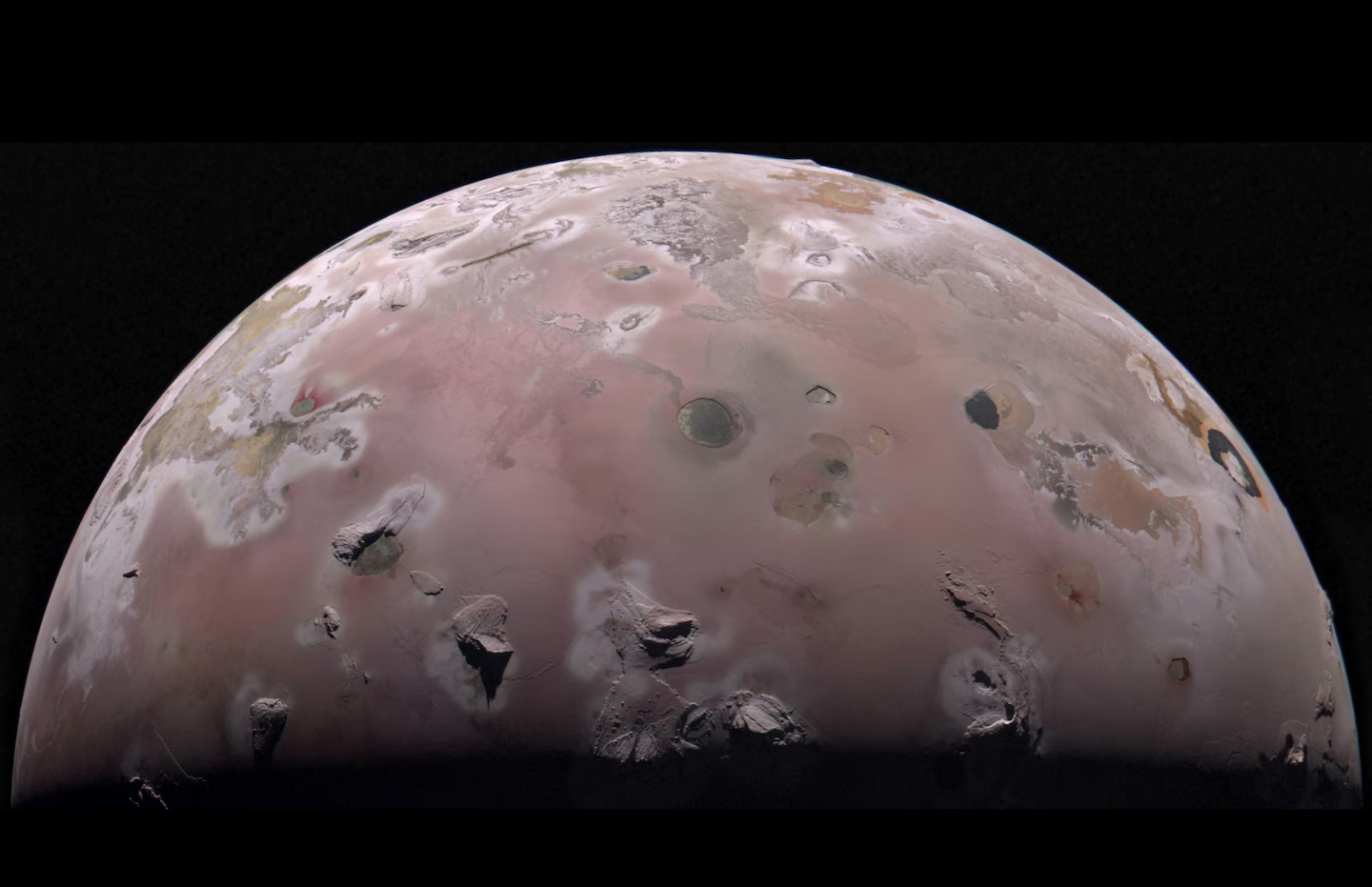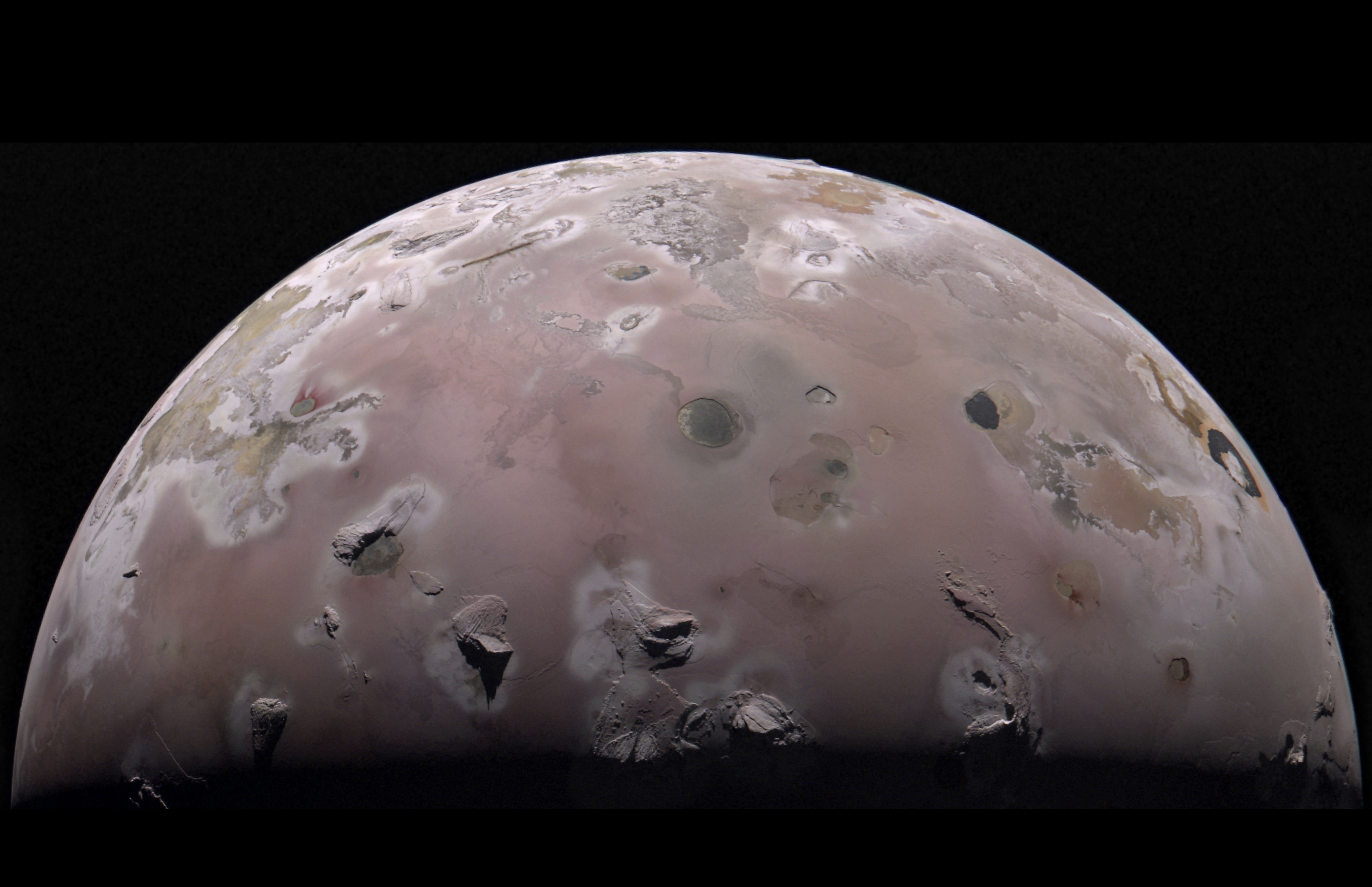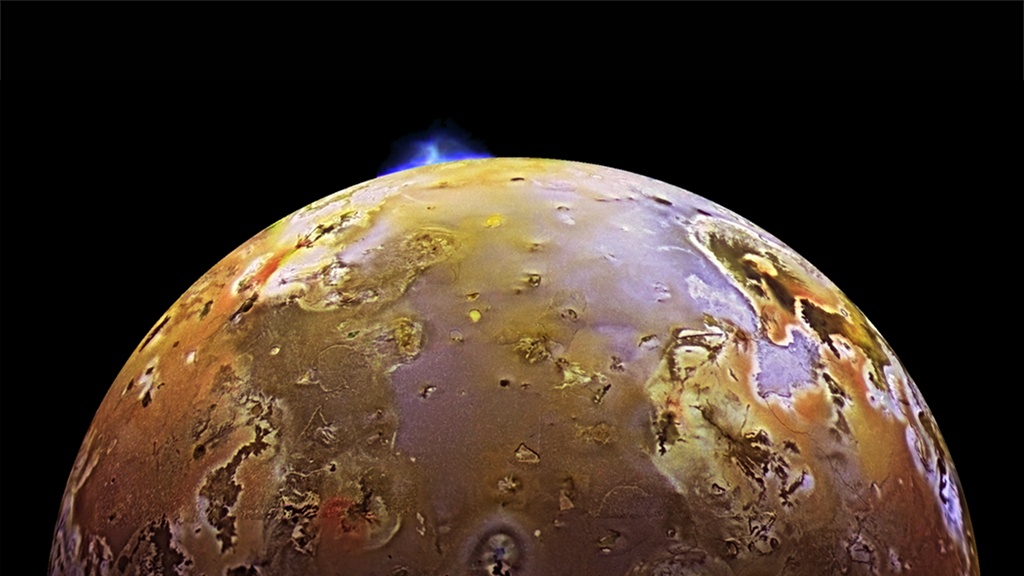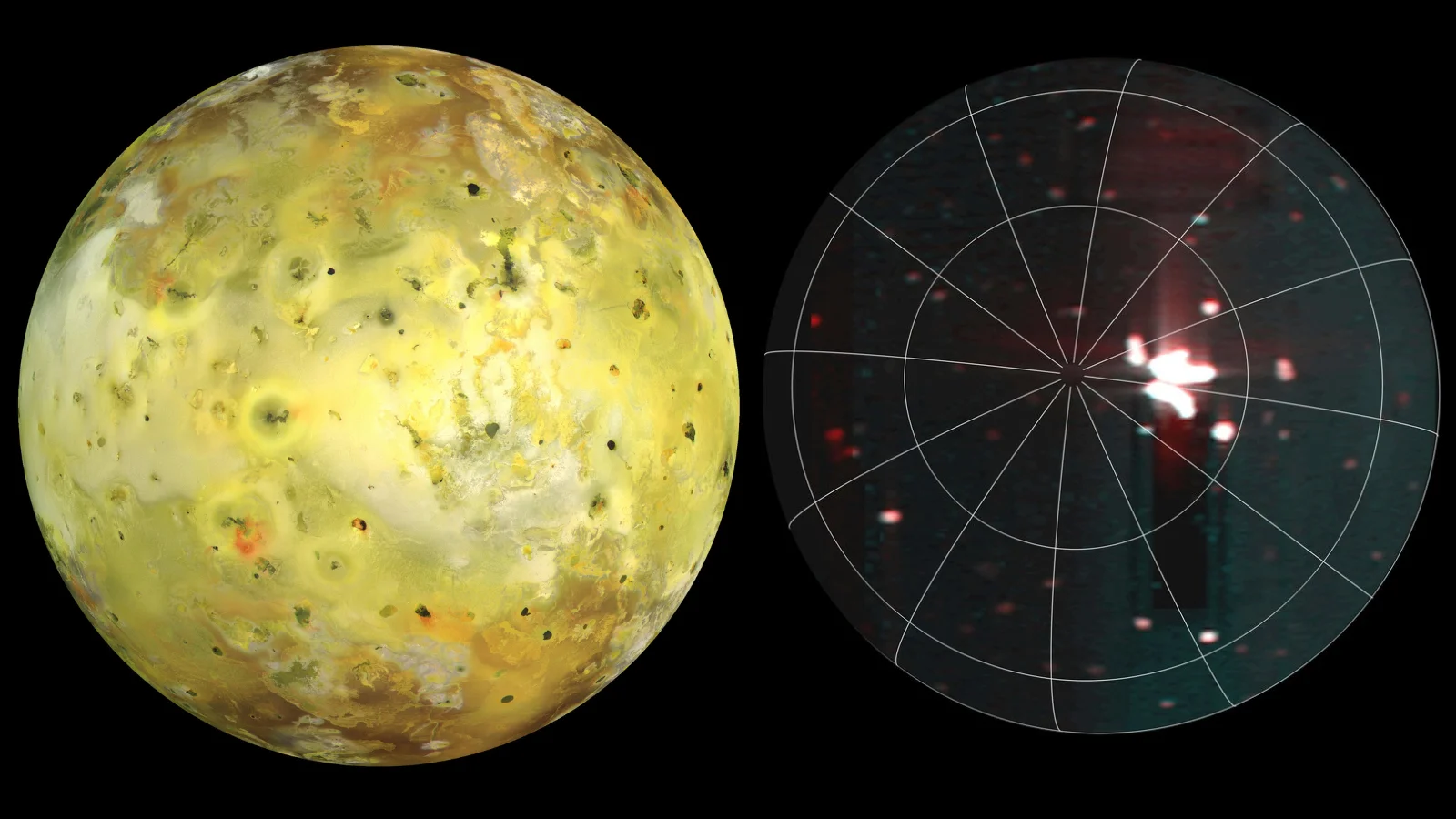
Scientists using NASA's Juno data have found that Jupiter's moon Io is emitting hundreds of times more heat than previously estimated, mainly from localized volcanic sources, challenging the idea of a global magma ocean beneath its surface. This new understanding results from analyzing different infrared spectral data, revealing that Io's volcanoes have hot outer rings and cooler centers, which significantly increases the estimated heat flux. The findings suggest that previous models based solely on certain infrared bands may have underestimated Io's thermal output, but do not definitively rule out the existence of a magma ocean. Future missions may provide more detailed insights into Io's intense volcanism.
NASA's Juno spacecraft used a novel annealing technique to repair its JunoCam camera from radiation damage during its mission around Jupiter, allowing it to capture detailed images of Io's volcanic surface despite the harsh radiation environment, demonstrating innovative methods for spacecraft maintenance in deep space.
OpenAI has removed references to the hardware startup io, co-founded by Jony Ive, from its website and social media following a trademark lawsuit from the startup Iyo. Despite this, OpenAI confirms the deal with io is still ongoing, but the public announcement and related content have been temporarily taken down due to legal issues.
Recent NASA Juno spacecraft data suggest that Io, Jupiter's volcanic moon, does not have a shallow magma ocean as previously thought, challenging existing theories about its intense volcanism driven by tidal heating, and raising questions about the internal structures of other tidally heated moons like Europa and Enceladus.
NASA scientists have discovered that Io, Jupiter's most volcanically active moon, is fueled by individual magma chambers rather than a single massive magma ocean. This finding, based on data from the Juno spacecraft's close flybys, challenges previous assumptions about Io's volcanic activity and has implications for understanding other celestial bodies. The study highlights the role of tidal flexing, caused by Jupiter's gravitational pull, in generating heat and volcanic activity on Io.
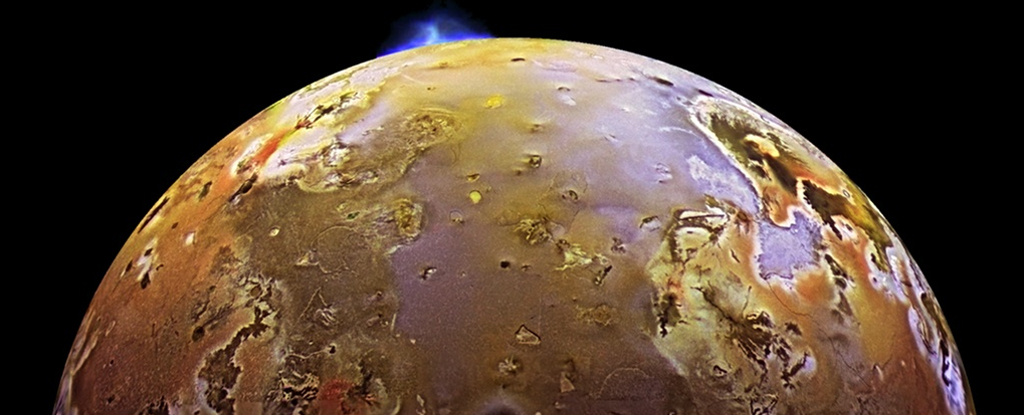
Io, Jupiter's third largest moon, is the most volcanically active body in our solar system, with constant eruptions that alter its surface and fill the atmosphere with sulfur dioxide. Scientists are beginning to understand the reasons behind this intense volcanic activity.
NASA's Juno mission has revealed that the volcanoes on Jupiter's moon Io are powered by individual magma chambers rather than a global magma ocean, solving a long-standing mystery about Io's volcanic activity. This discovery, based on data from Juno's close flybys, suggests that tidal flexing from Jupiter's gravitational pull generates internal heat, melting parts of Io's interior. The findings have broader implications for understanding other celestial bodies, including moons like Enceladus and Europa, as well as exoplanets.
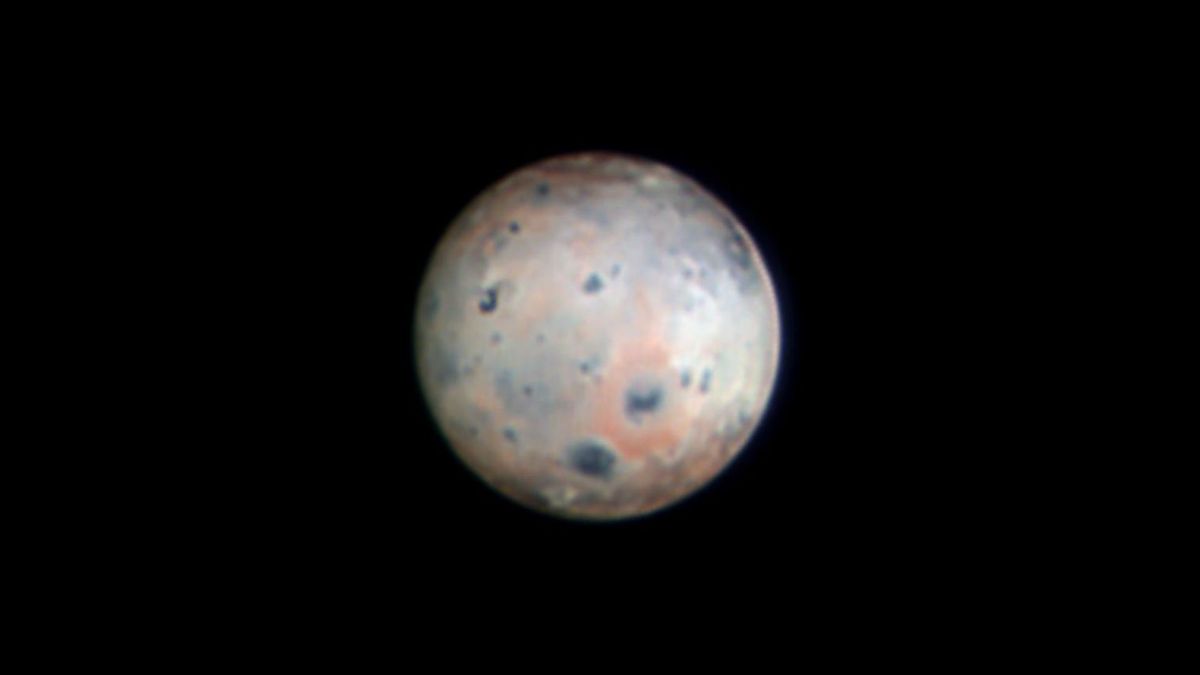
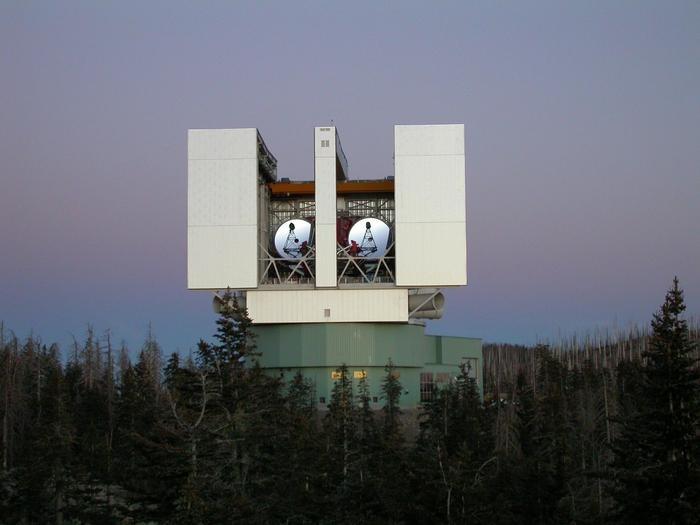
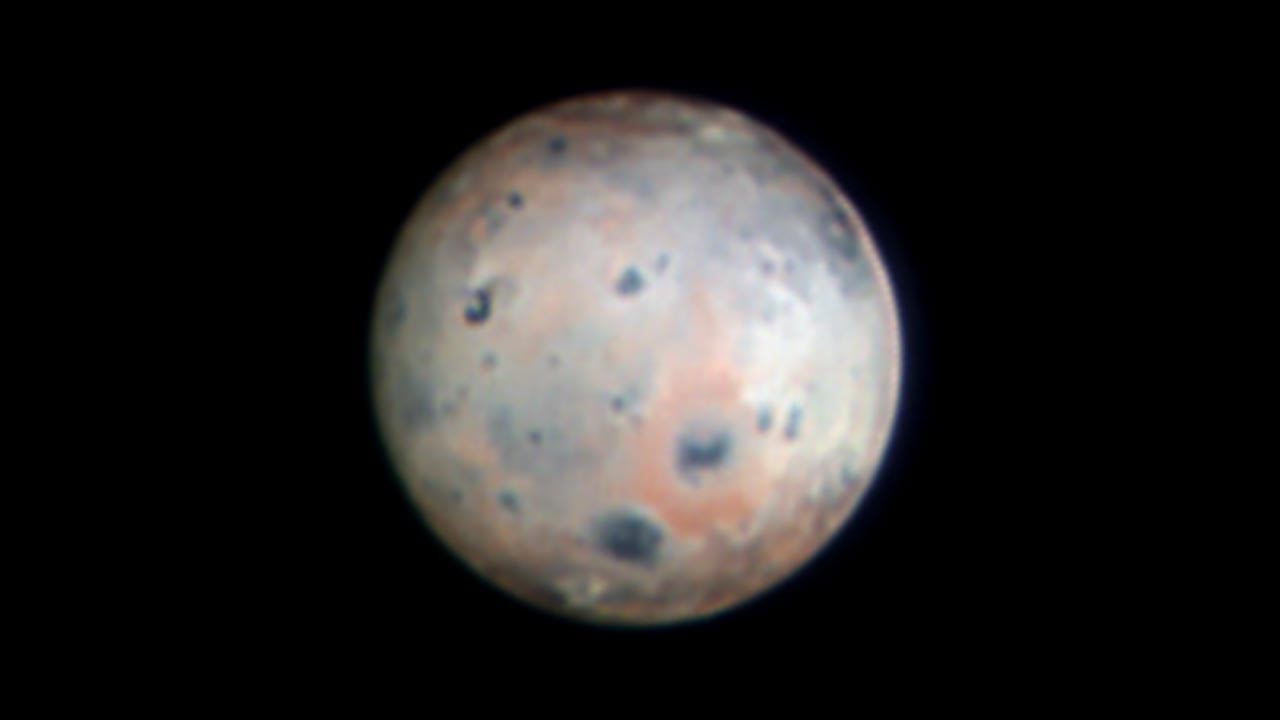
An international team led by the University of Arizona has captured the highest-resolution images of Jupiter's moon Io ever taken from Earth using the Large Binocular Telescope's new SHARK-VIS instrument. These images, revealing surface features as small as 80 km, provide unprecedented detail of Io's volcanic activity, including a major resurfacing event around the volcano Pele. This achievement demonstrates the potential of ground-based telescopes to observe solar system bodies with clarity previously reserved for spacecraft.
Scientists using the Large Binocular Telescope in Arizona have captured highly detailed images of Jupiter's volcanic moon Io, revealing intricate lava trails and surface changes. The new SHARK-VIS camera allows Earth-based telescopes to achieve a resolution previously possible only with spacecraft, highlighting features as small as 50 miles wide. The images show overlapping lava deposits from the active volcanoes Pele and Pillan Patera, providing insights into Io's volcanic activity and surface evolution.
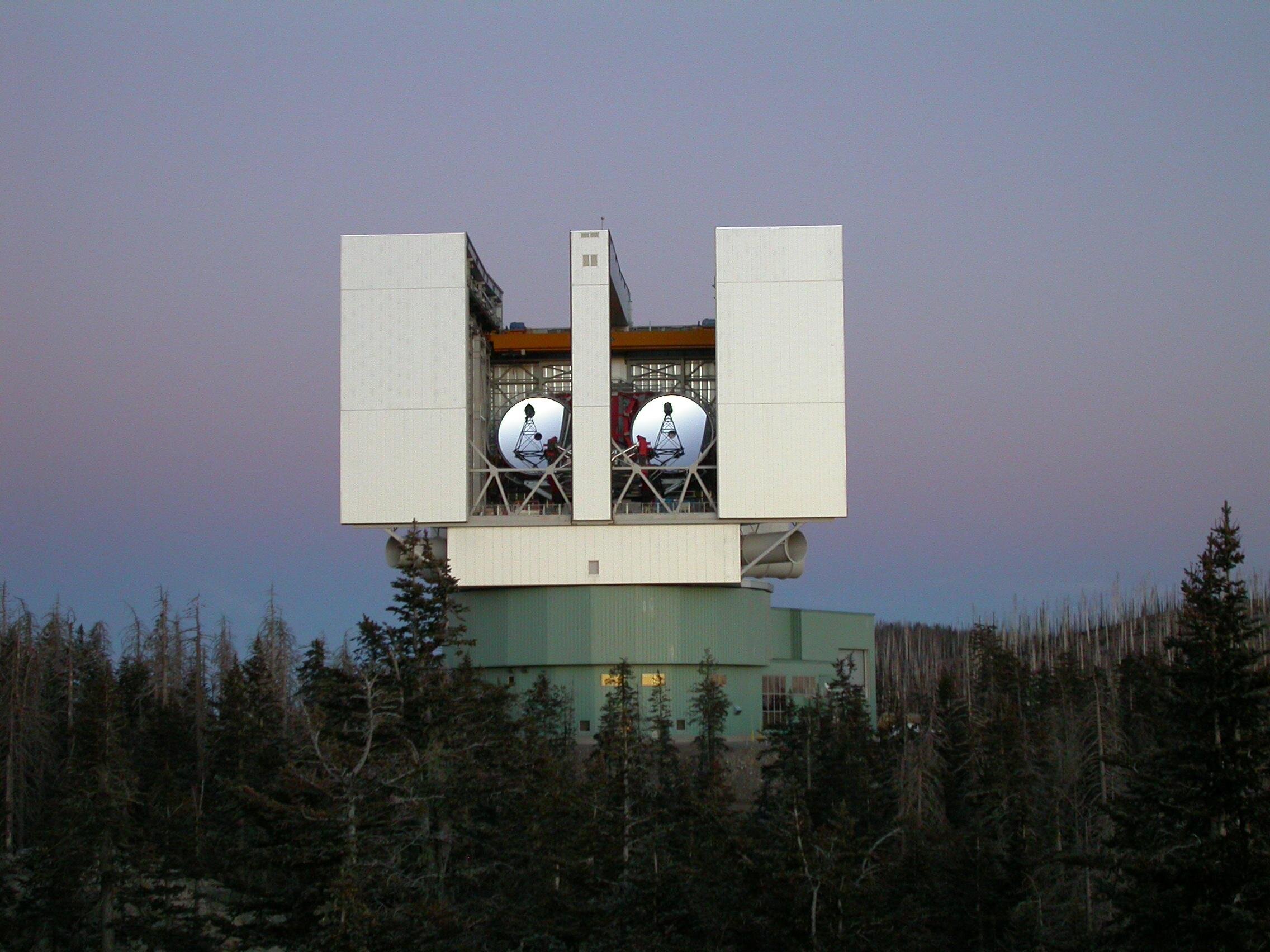
The Large Binocular Telescope on Mount Graham, Arizona, has captured the highest resolution Earth-based image of Io, Jupiter's most volcanic moon. The image, taken with the SHARK-VIS instrument, reveals detailed features such as the volcano Pele and changes in the surface due to lava deposits. This breakthrough in Earth-based imaging was made possible by the telescope's advanced adaptive optics system.
Astronomers have captured the highest resolution images of Jupiter's moon Io using the SHARK-VIS instrument on the Large Binocular Telescope in Arizona. These images reveal unprecedented details of Io's volcanic activity, including a major resurfacing event around the volcano Pele. This technological advancement allows Earth-based telescopes to achieve spatial resolutions previously possible only with spacecraft, enhancing our understanding of volcanic processes in the solar system.
The Large Binocular Telescope (LBT) in Arizona has captured the highest-resolution images of Jupiter's moon Io ever taken by a ground-based telescope, revealing surface features as small as 80 km. These images, made possible by the LBT's new SHARK-VIS instrument and adaptive optics, show detailed volcanic activity and resurfacing events, providing insights into Io's intense volcanism and tidal heating mechanisms. This breakthrough allows Earth-based observatories to observe planetary surfaces with unprecedented clarity, previously achievable only by spacecraft.
The Large Binocular Telescope in Arizona has captured the highest resolution Earth-based images of Jupiter's moon Io, revealing surface features as small as 50 miles across. Using the SHARK-VIS instrument and adaptive optics, researchers identified a major resurfacing event around the volcano Pele. These observations provide new insights into Io's intense volcanic activity and may help understand volcanic processes on other celestial bodies.
NASA's Juno probe recently conducted two close flybys of Jupiter's volcanic moon Io, capturing amazing views and data that wowed scientists. The spacecraft came within about 930 miles of Io's surface, revealing active volcanoes and a 127-mile-long lava lake called Loki Patera. Juno also collected intriguing information about Jupiter's poles and water abundance, providing valuable insights into the gas giant's composition. The probe's next close flyby of Jupiter will be on May 12.
New images from the Juno orbiter reveal a lake of lava on Jupiter's moon Io, with an island within it, indicating signs of permanent volcanism. The volcanic activity has reshaped Io's surface, erasing impact craters, and the Juno team found smooth areas within the lava lake, possibly indicating the formation of obsidian glass. Additionally, research using the Atacama Large Millimeter Array (ALMA) suggests that volcanic emissions have been reshaping Io since its formation, providing insights into the moon's history of volcanism through the analysis of sulfur and chlorine isotopes in its atmosphere.