Tag

Kepler Mission

All articles tagged with #kepler mission

astronomy2 years ago

"Astronomers Discover Ultra-Hot Earth-Sized Exoplanet with Lava Hemisphere"

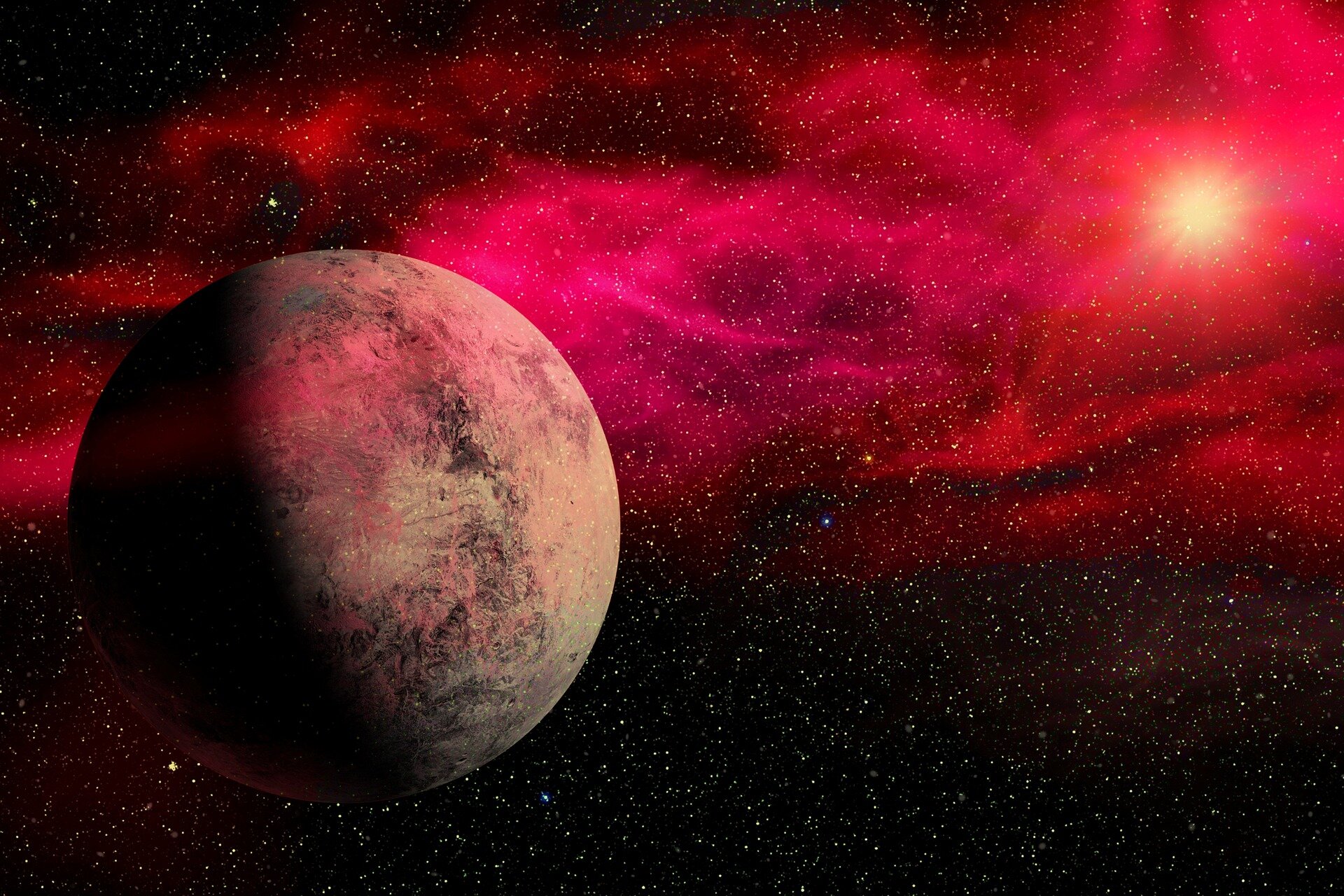
Astronomers have discovered an Earth-sized exoplanet with a hemisphere of molten lava and another hemisphere tidally locked in perpetual darkness. The discovery was presented at a meeting of the American Astronomical Society and detailed in The Astronomical Journal. Another paper in Astronomy and Astrophysics described the finding of a rare small, cold exoplanet with a massive outer companion. The Transiting Exoplanet Survey Satellite (TESS) aims to identify planets orbiting bright stars close to Earth, allowing follow-up observations to determine their compositions and atmospheres. This discovery sheds light on the diverse conditions of exoplanets and the potential for supporting life.
astronomy2 years ago

Kepler Telescope Uncovers 7 Superhot Exoplanets Orbiting a Single Star

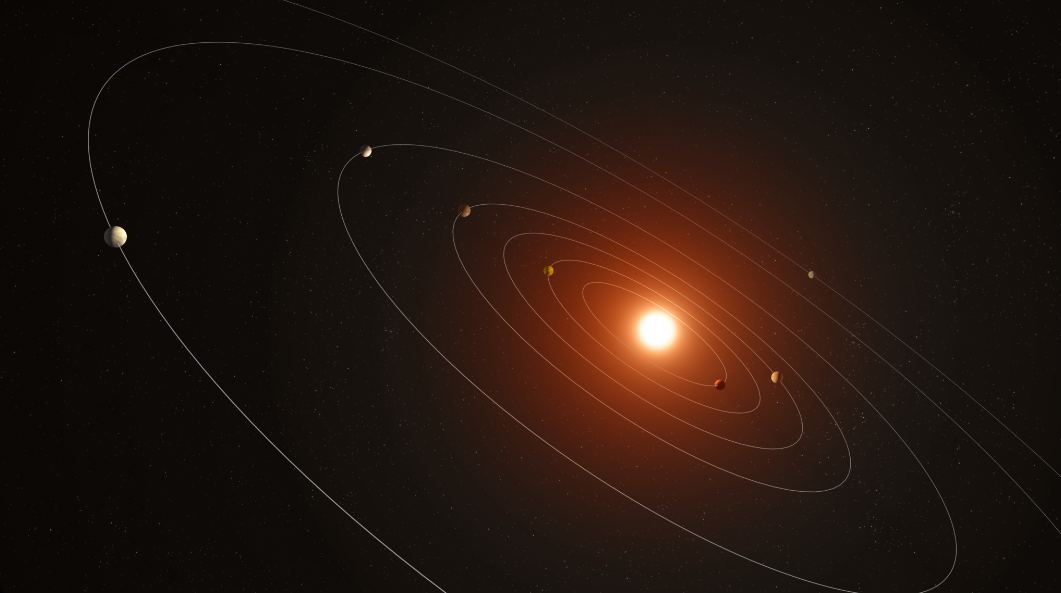
Researchers have analyzed old data from NASA's Kepler mission and discovered new details about a seven-planet system called Kepler 385. The updated catalogue provides accurate information on Kepler planet candidates and their properties, allowing astronomers to learn more about exoplanets. The system consists of seven planets, all larger than Earth but smaller than Neptune, and they orbit very close to their star. The new analysis also reveals that systems with more transiting planets tend to have more circular orbits. While the Kepler 385 system is not habitable, the research highlights the importance of the Kepler catalogue in understanding exoplanetary systems.

astronomy2 years ago

Kepler's Old Data Uncovers Alien Solar System with Seven Planets

Researchers have released an updated catalogue of Kepler planet candidates, shedding new light on a seven-planet system called Kepler 385. The system, located 4,670 light-years away, consists of seven planets larger than Earth but smaller than Neptune. The catalogue provides improved measurements of stars hosting these planets and allows for an in-depth study of exoplanetary systems. The researchers also found that systems with more transiting planets tend to have more circular orbits. While the Kepler 385 system is not habitable, the new catalogue provides valuable insights into exoplanets and their characteristics.

astronomy2 years ago

New Technique Discovers Planet Orbiting Twin Suns

Astronomers have discovered a new circumbinary planet, which orbits two stars, using the radial velocities method, an old technique that measures the gravitational shifts planets exert on their host stars over time. The newly discovered system, called TOI-1338/BEBOP-1, is only the second confirmed multi-planet circumbinary system to date. The inner planet already found in this binary system would be a prime candidate for atmospheric study by the James Webb Space Telescope, which could help scientists in their search for life on other planets.

astronomy2 years ago

Newly Discovered 'Warm Jupiter' Challenges Previous Understanding of Planetary Orbits

Research led by an Indiana University astronomer challenges the belief that hot Jupiters, gas giant planets that closely orbit stars outside our solar system, rarely have any nearby companion planets. The study analyzed the full, four-year data set for hot and warm Jupiters from NASA's Kepler Mission and found that at least 12% of hot Jupiters and 70% of warm Jupiters have a nearby planetary companion orbiting their host stars. The findings provide a new framework for explaining the evolution of hot and warm Jupiters and why some have companion planets.

astronomy2 years ago

"Potential for Habitable Exoplanets in the Billions, Study Finds"

A recent study by the University of Florida examined the orbital eccentricities of exoplanets orbiting red dwarf stars and found that one-third of them could exist within their star’s habitable zone, which could encompass hundreds of millions of potentially habitable exoplanets throughout the Milky Way. The researchers also discovered that red dwarfs with multiple exoplanets held the highest promise of exhibiting more circular orbits, meaning they could house liquid water on their surfaces. The study used data from NASA’s Kepler mission, which confirmed the existence of almost 2,800 exoplanets during its 9-year mission.

science2 years ago

New Study Reveals Potential for Hundreds of Millions of Habitable Planets in the Milky Way.

A new study suggests that one-third of planets around M dwarfs, the most common type of star in the Milky Way, may be suitable for life, meaning there are likely hundreds of millions of habitable planets in the galaxy alone. The study used data from the Kepler mission and the European Space Agency's Gaia satellite to fine-tune measurements of exoplanets' orbits and determine which planets were at risk of tidal heating, a process that can burn away a planet's chances for habitability. The results were published in the journal PNAS.

astronomy2 years ago

"Galactic Goldilocks: Habitable Planets Abound in Milky Way"

A recent study by the University of Florida found that one-third of exoplanets orbiting red dwarf stars could exist within their star’s habitable zone, which is the approximate distance from their star where liquid water can exist on the surface. The researchers analyzed the orbital eccentricities of 163 exoplanets orbiting red dwarf stars across 101 systems using data from NASA’s Kepler mission. Red dwarfs give off far less energy and heat than our Sun, meaning the habitable zone exists much closer to the star, resulting in shorter orbital periods for planets that orbit within the HZ.

science2 years ago

Astronomer Targeted by Campus Puritans.

Astronomer Geoff Marcy, who played a key role in discovering exoplanets, has been targeted by colleagues who are more focused on leading terrestrial outrage mobs than finding new discoveries in the heavens. Marcy was investigated by his then-employer, the University of California, for behaviour that was described as sexual harassment. Following the investigation, U.C. Berkeley recommended that Marcy should continue as a full professor, but the online pressure against him became intolerable, and so Marcy eventually chose to leave his position voluntarily. Recently, Marcy's name was included in a paper on exoplanets, but it was withdrawn after a wave of outrage manifested itself on social media.