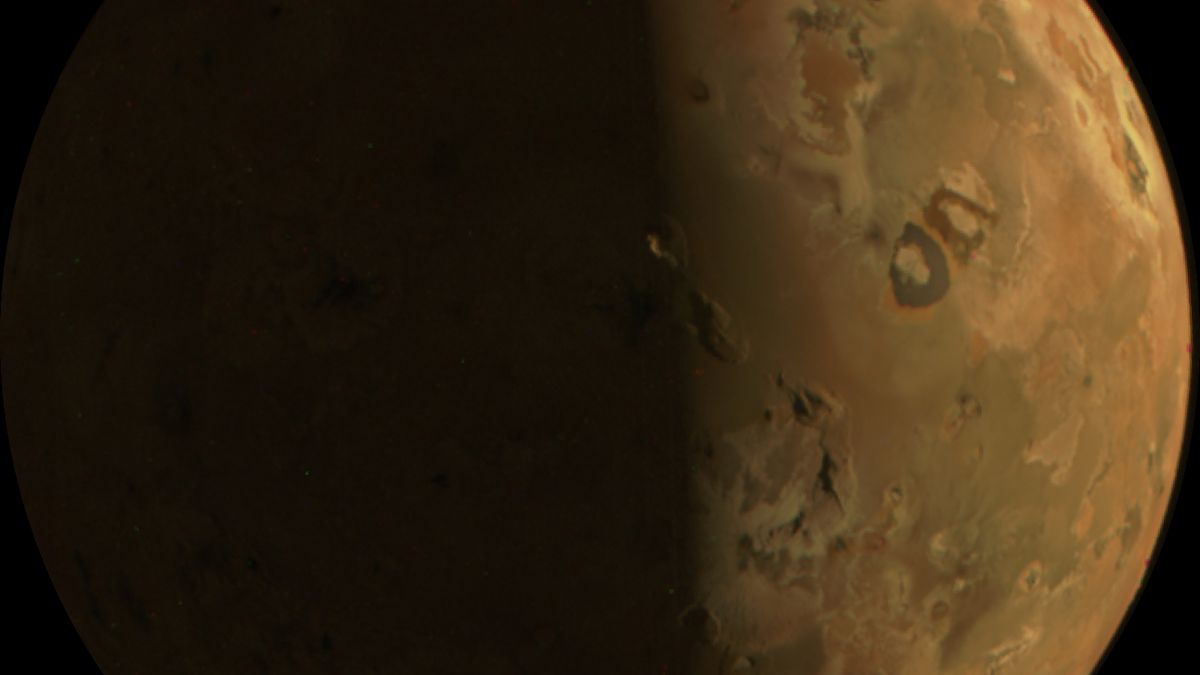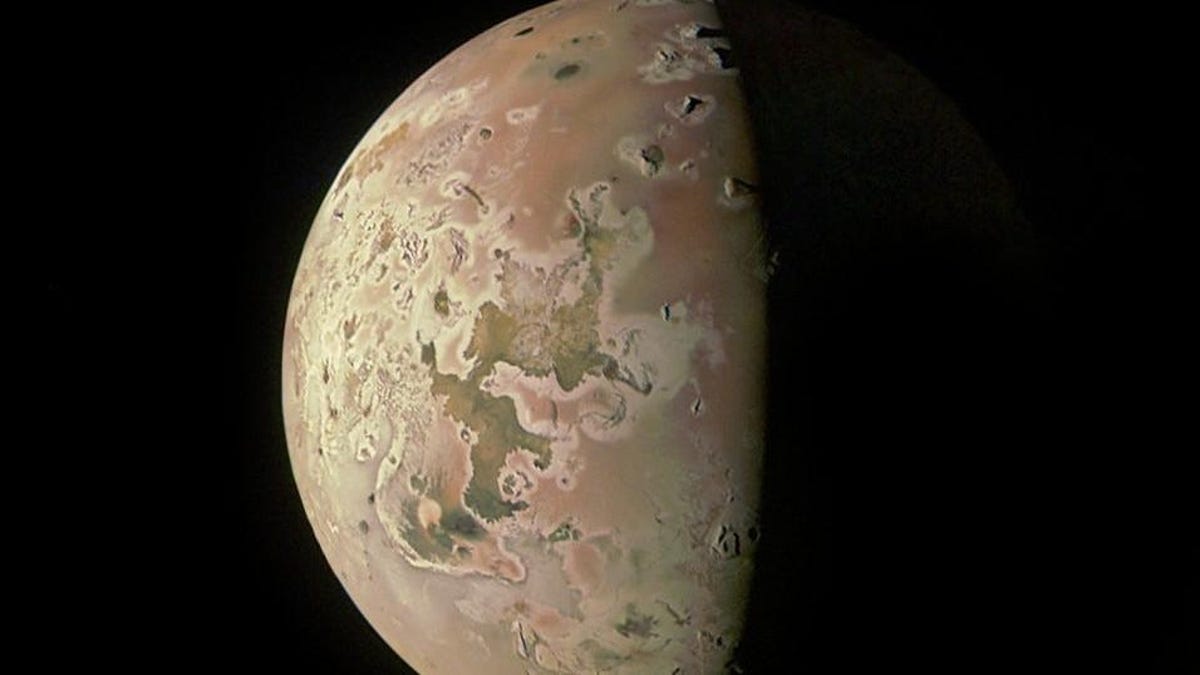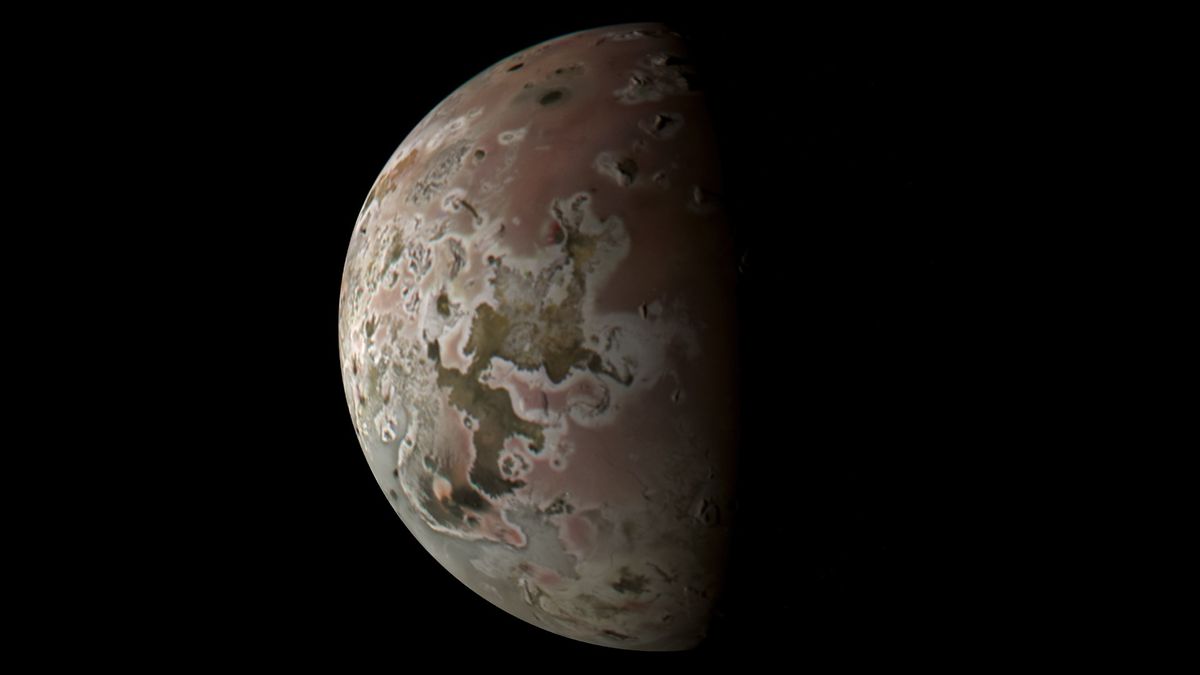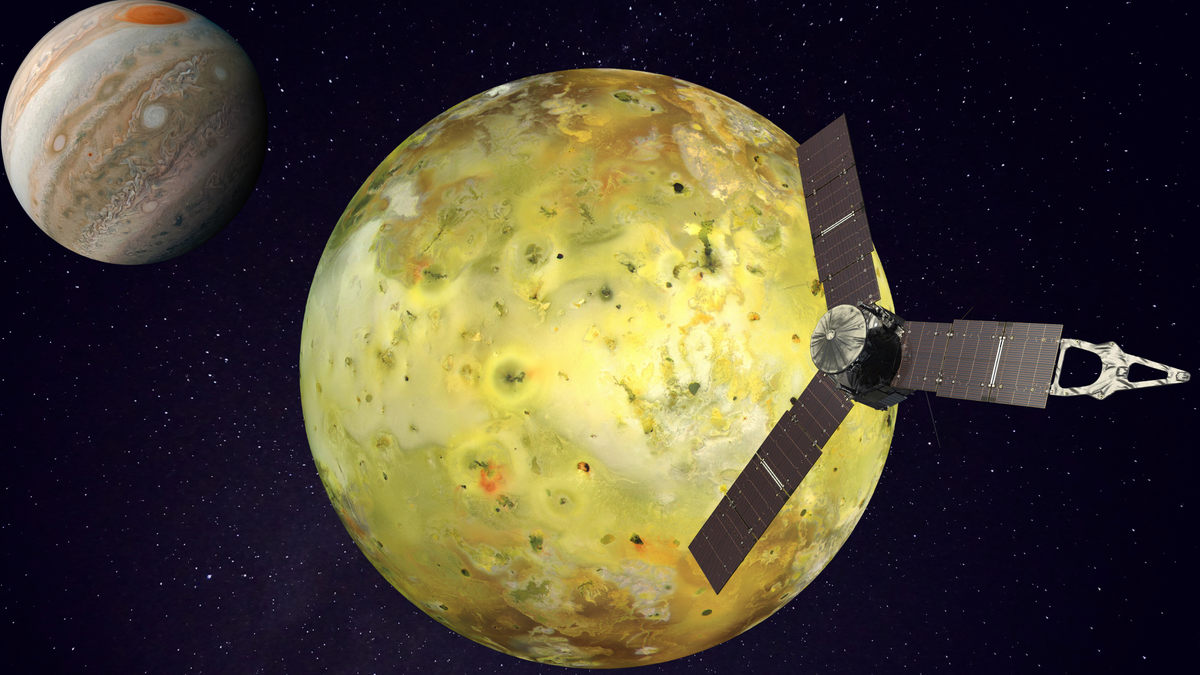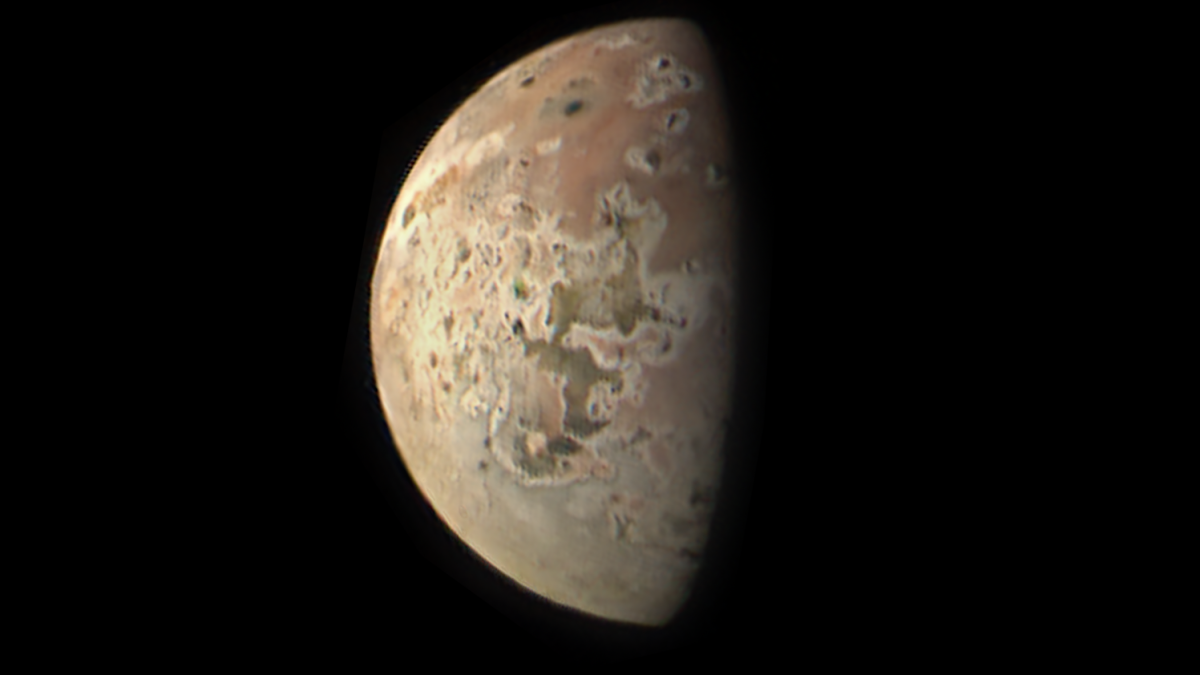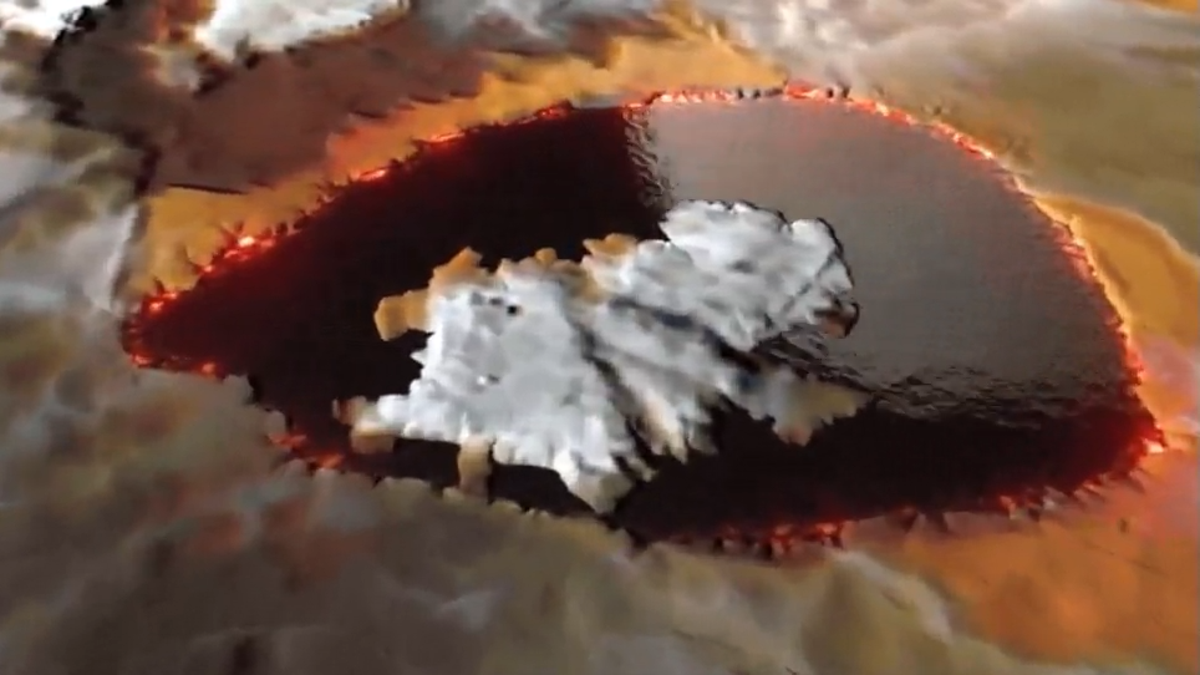
NASA's Juno spacecraft made two recent flybys of Jupiter's moon Io, revealing a steep mountain and islands in a lava lake. The images captured by Juno's instruments show the moon's volcanic activity in action, with smooth, glass-like surfaces and towering structures. Io's hellish environment and constant volcanism make it an unlikely place for life, but it provides valuable insights into solar system evolution. Juno's ongoing mission aims to study Jupiter's moons and could help reveal the abundance of water on the planet and the nature of its core.

NASA scientist Alan Cummings recalls the "chills" he felt when he first saw images of Jupiter's moon Io from the Voyager spacecraft in 1979, marking a pivotal moment in space exploration. Despite being billions of miles away, the Voyager missions have provided groundbreaking insights into our solar system, capturing images of volcanic activity on Io, Jupiter's atmosphere, Saturn's rings, and more. Now, almost 50 years later, the aging spacecraft are still sending back valuable data from interstellar space, with hopes of keeping the instruments operational for a few more years.
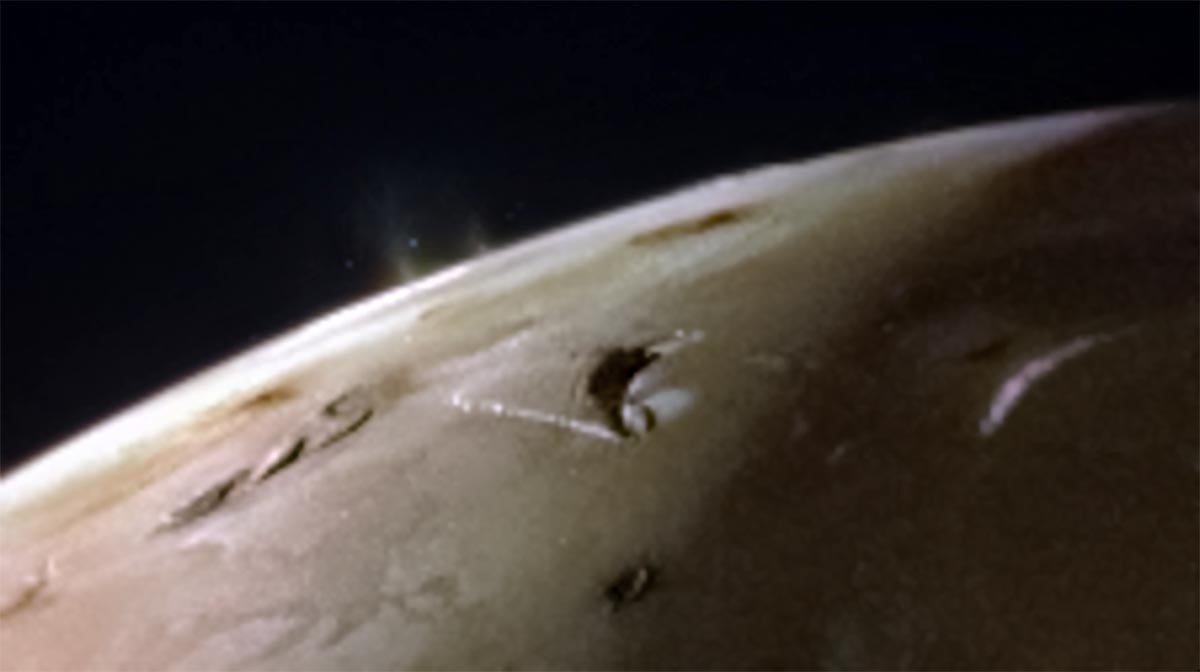
NASA's Juno spacecraft captured images of two volcanic plumes on Jupiter's moon Io, potentially indicating activity from either two vents of a single volcano or two separate volcanoes. This discovery provides new insights into Io's volcanic dynamics and highlights the importance of continuous exploration and study of our solar system's celestial bodies. The analysis of these plumes, in conjunction with other data collected by Juno and previous missions, has the potential to reveal new insights into the mechanisms driving Io's volcanism, the composition of its interior, and how its activity influences the Jovian system.
NASA's Juno spacecraft made a close flyby of Jupiter's moon Io, capturing images of its chaotic terrain and revealing what appears to be a pair of plumes erupting from the surface. The spacecraft's observations will help scientists understand Io's volcanic activity and its potential magma ocean. The close encounter, the second in less than two months, provides valuable data for studying the moon's geology and its connection to Jupiter's magnetosphere.
NASA's Juno spacecraft captured detailed images of volcanic activity on Jupiter's moon Io during a recent close fly-by, providing new insight into the moon's fiery phenomena. Io, the most volcanically active world in our Solar System, has about 400 active volcanoes and can spew fountains of boiling-hot lava dozens of miles into the air. The spacecraft's close encounters with Io aim to uncover the driving forces behind its explosive activity, with scientists currently considering theories involving a global magma ocean or a hot metal core beneath the surface.
NASA's Juno spacecraft has made its second close-up visit to Jupiter's moon Io, capturing new images and a video of the volcanic moon. Juno's extended mission will continue until September 2025, during which it will explore Io to understand its volcanic activity and internal processes. The spacecraft's operators may deorbit it into Jupiter's atmosphere if no further extension is granted.
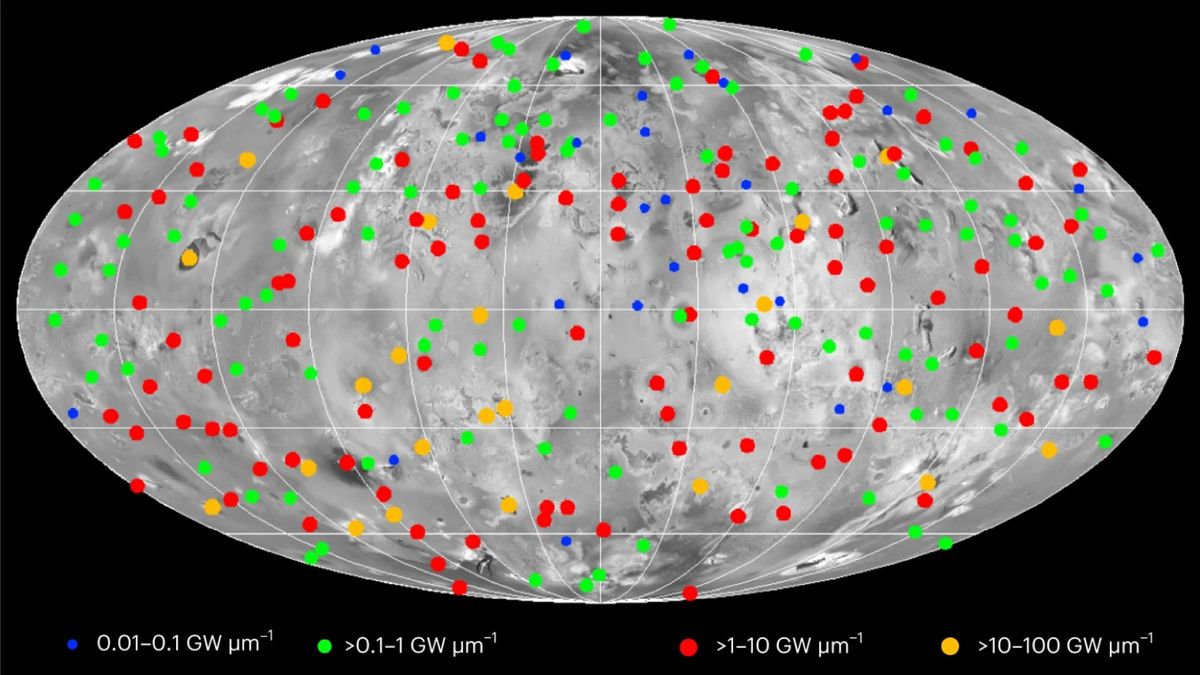
NASA's Juno probe has provided the first charted map of Jupiter's moon Io, revealing over 200 active volcanoes on its surface. The data suggests that Io may have a global ocean of magma underneath its surface and mysteriously warm poles. The extreme volcanic activity is believed to be caused by tidal heating generated by Jupiter's gravitational forces. The concentration of volcanoes on the moon's poles is roughly the same as elsewhere, but they emit less energy. The north pole volcanoes are more than twice as energetic as those in the south, possibly due to differences in crust thickness.
Scientists have created the first global map of volcanic activity on Jupiter's moon Io using data from NASA's Juno probe. The map reveals 266 active volcanic hotspots, shedding light on the moon's inner mechanics and suggesting the presence of a global magma ocean beneath its surface. The study also found that Io's poles are unusually warm and that the volcanoes at the north pole are more energetic than those at the south pole. The findings provide valuable insights into the extreme volcanic activity on Io, which is primarily caused by tidal heating from Jupiter.
NASA's Juno spacecraft has captured new images of Jupiter's moon Io during a recent flyby, revealing a charred and volcanic landscape. Io, the most volcanically active world in the solar system, is constantly being stretched and squeezed by Jupiter's immense gravitational force and the gravitational tug of its sister moons Europa and Ganymede. The upcoming flybys in December 2021 and 2024 will provide scientists with more data on Io's volcanic activity, while telescopes like Hubble and James Webb will observe the moon from a distance.
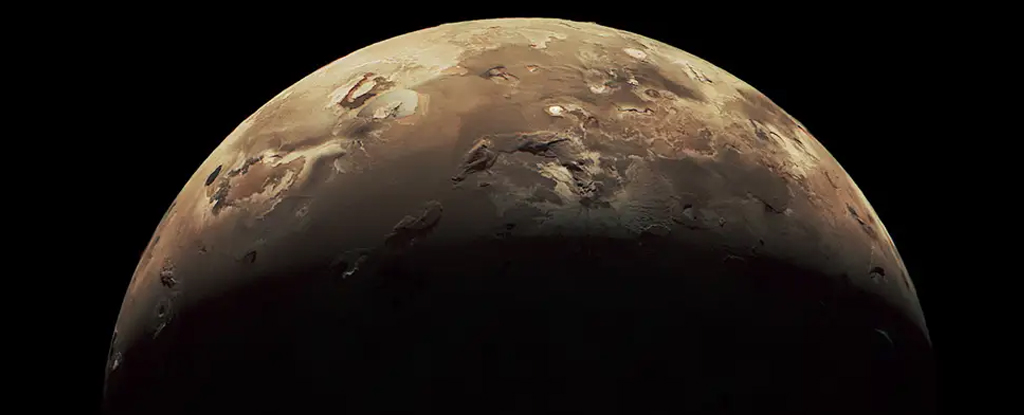
NASA's Juno mission has captured stunning new images of Jupiter's moon Io, showcasing its lava-scarred surface and volcanic activity. Io, the most volcanically active body in the solar system, features a tie-dyed appearance with light and dark spots, as well as large patches of molten-red lava. The detailed images, processed by citizen scientists using Juno's raw data, reveal the moon's tortured surface. Io is home to hundreds of volcanoes that regularly erupt with molten lava and sulfurous gas plumes. Juno's images are available for public download and processing, contributing to the study of Jupiter and its moons.
The James Webb Space Telescope (JWST) and the Hubble Space Telescope will collaborate to observe Jupiter's volcanic moon Io and collect data that will aid NASA's Juno spacecraft in future flybys. The Southwest Research Institute (SwRI) will lead the investigation, using Hubble to collect data during its orbits around Earth and supplementing it with JWST observing time. The data will help researchers understand Io's volcanism, plasma-moon interactions, and their impact on Jupiter's magnetosphere and auroral emissions. The observations will provide a holistic view of the Jovian system and its connections, as future missions to Jupiter won't fly by Io until at least the 2030s.
NASA's Juno spacecraft has captured stunning imagery of Jupiter's moon Io, which is known for its volcanoes and lava. Juno made a close pass of just 22,060 miles from Io, with plans to get even closer over the coming year. Io is the most volcanic celestial body in our solar system, and observing it over time can help scientists understand how the volcanoes vary. The intense heat on Io is caused by a "tug-of-war" between Jupiter and two of its other moons, Ganymede and Europa.
NASA's Juno spacecraft has captured stunning images of Jupiter's moon Io, which is known for its volcanoes and lava. Juno made a close pass of just 22,060 miles from Io, with plans to get even closer in the coming year. Io is the most volcanic celestial body in our solar system, and observing it over time can help scientists understand how the volcanoes vary. The intense heat on Io is caused by a "tug-of-war" between Jupiter and two of its other moons, Ganymede and Europa.