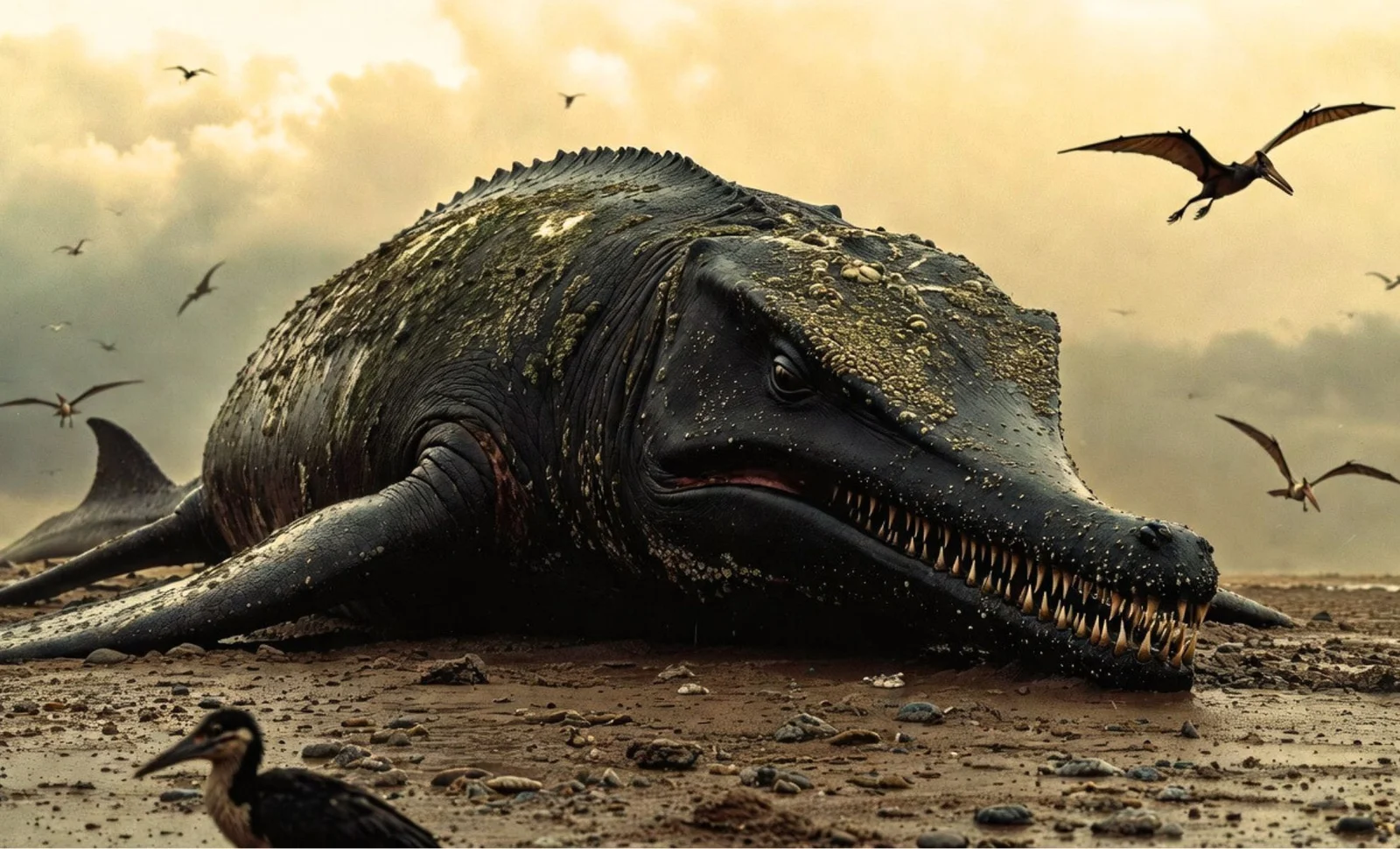
An 11-year-old girl discovered a fossil in England that led scientists to identify a new giant ichthyosaur species, Ichthyotitan severnensis, potentially the largest marine reptile ever, measuring up to 25 meters long and dating back to the late Triassic period.
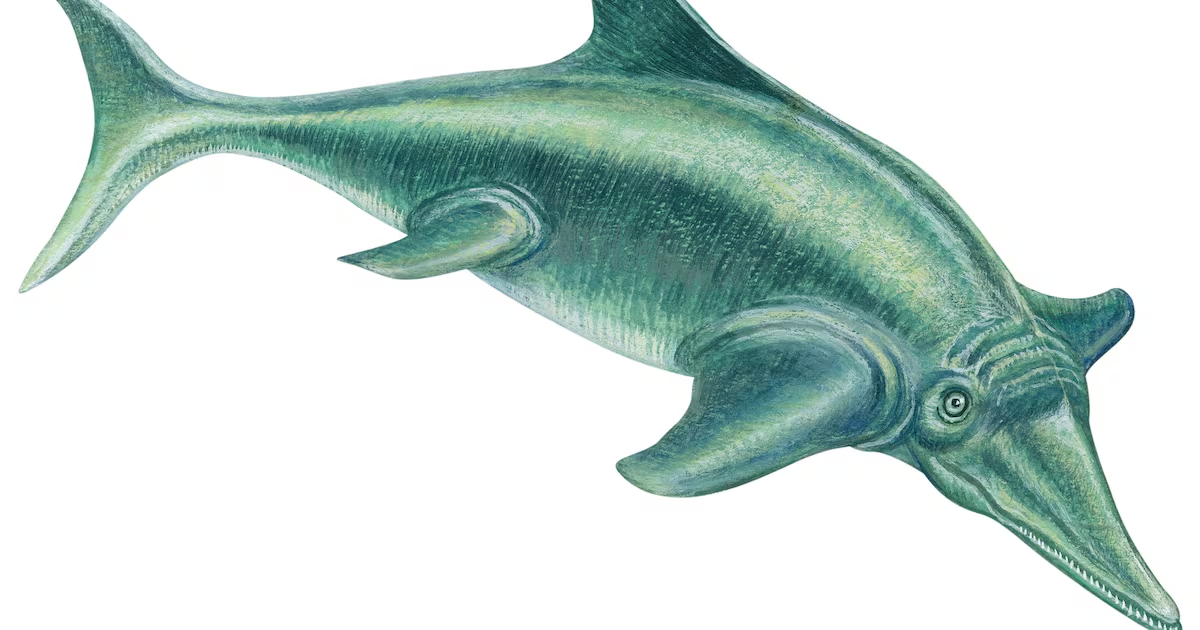
A new species of marine reptile called Xiphodracon goldencapensis, or 'sword dragon,' was discovered along England's Jurassic Coast, providing valuable insights into ichthyosaur evolution and Jurassic marine ecosystems during the Early Jurassic period.
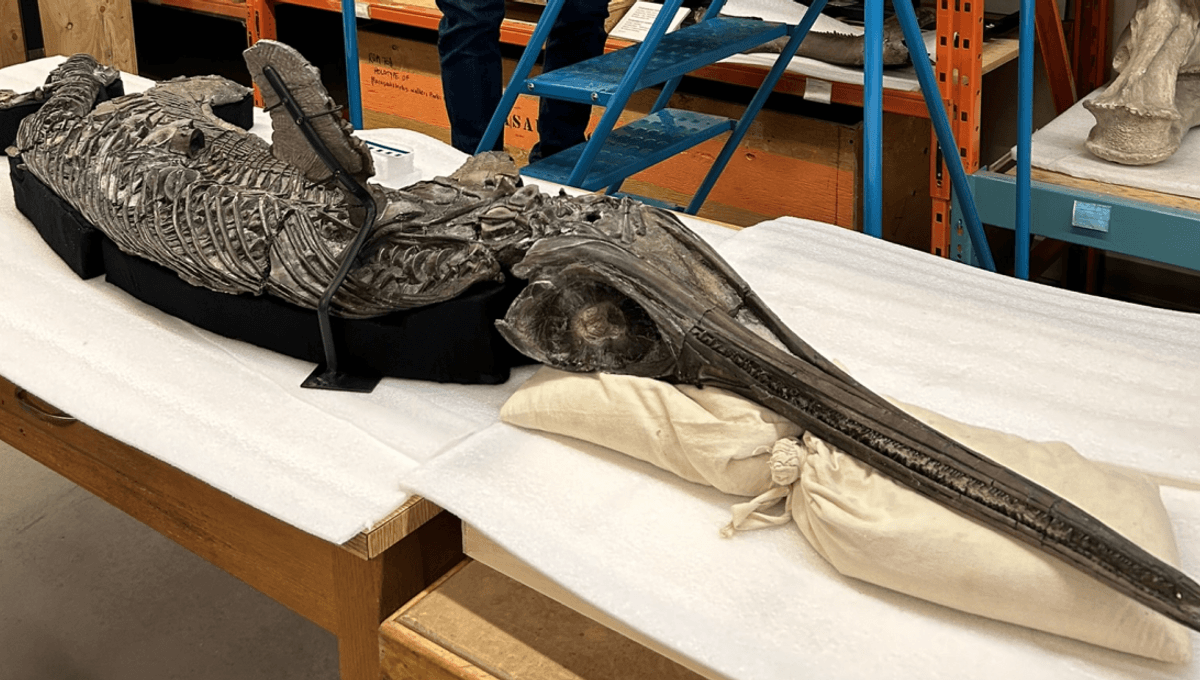
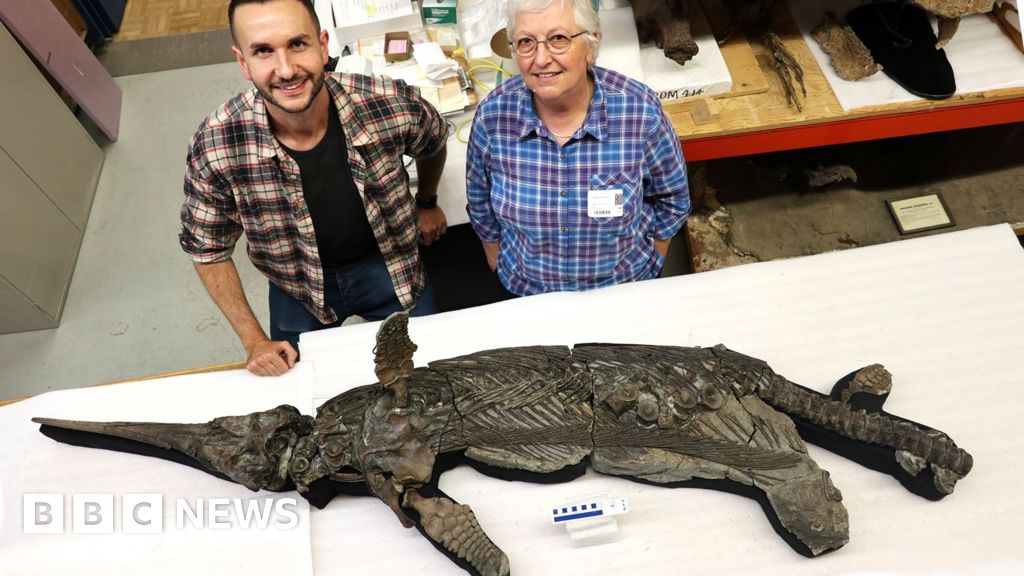
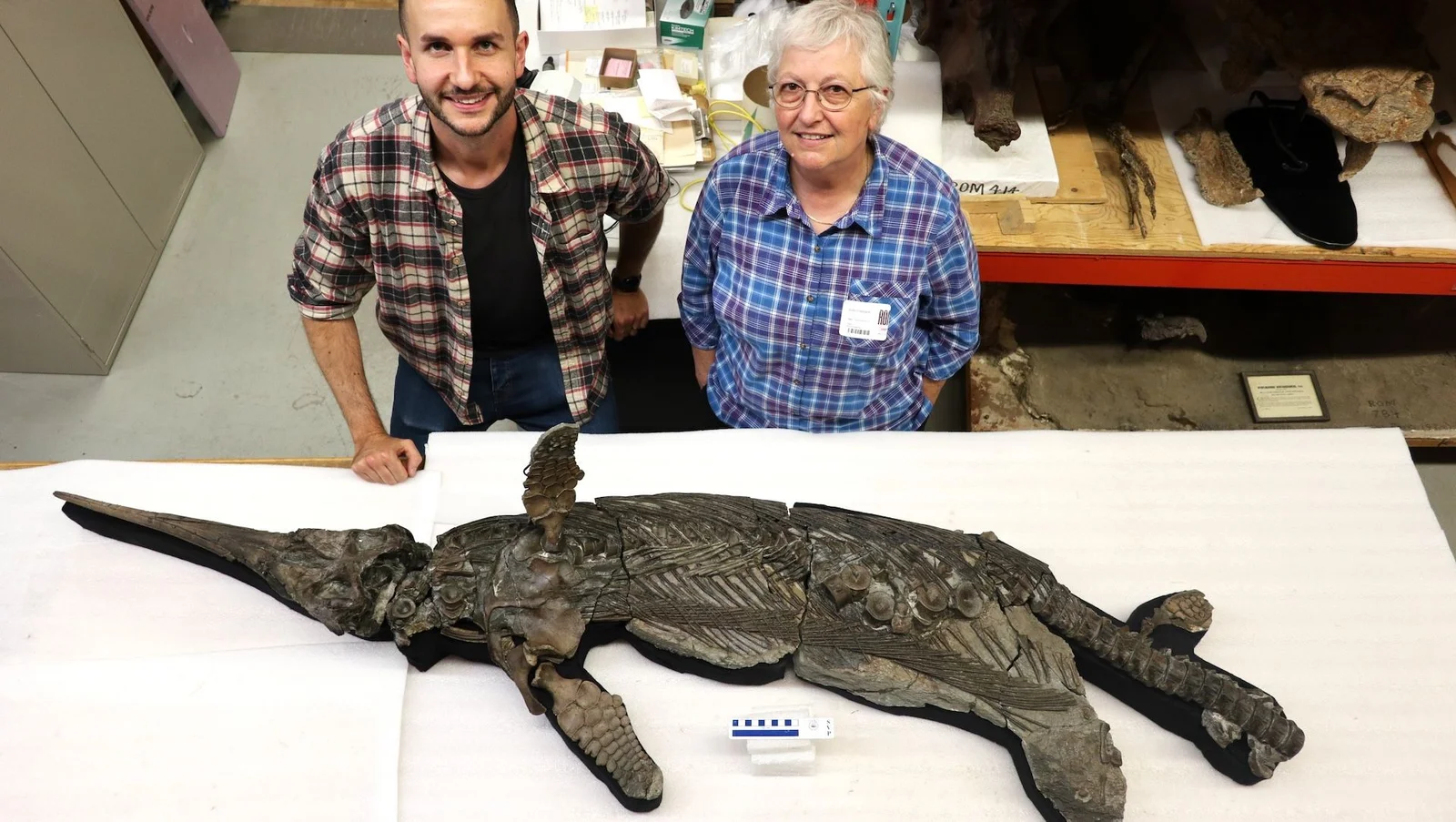
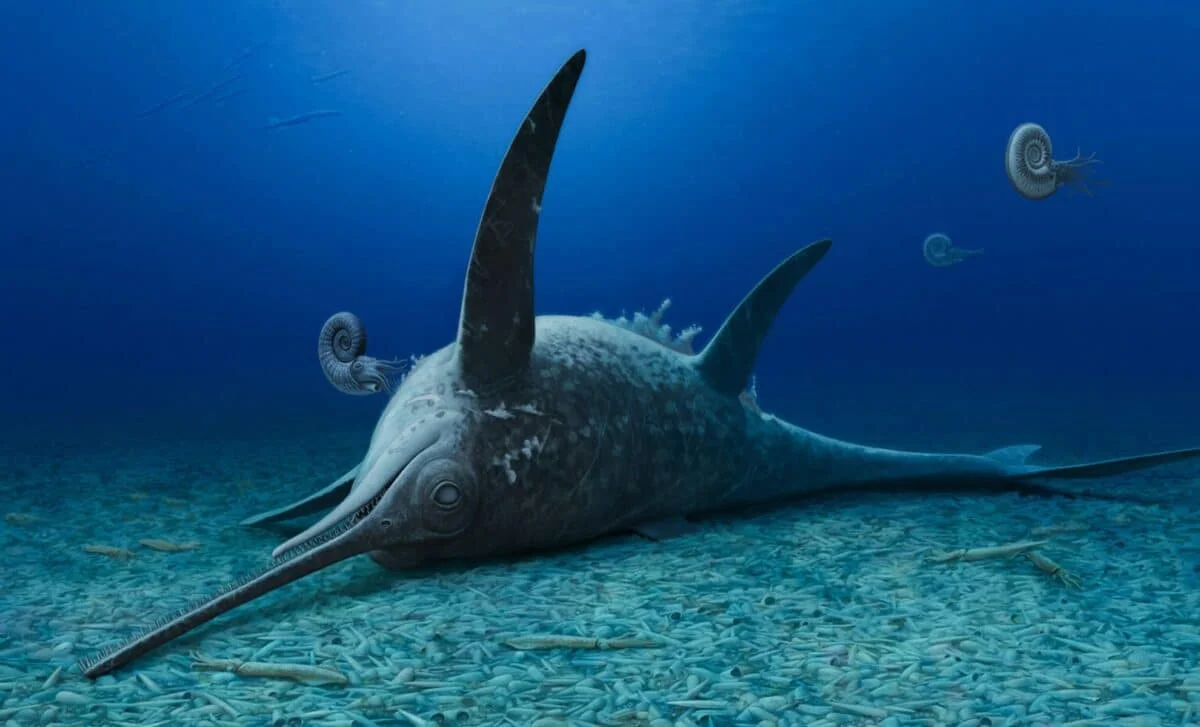
A nearly complete 190-million-year-old ichthyosaur fossil, dubbed the 'Sword Dragon of Dorset,' was discovered along the UK's Jurassic Coast, filling a crucial gap in our understanding of marine reptile evolution during the Jurassic period. The fossil's exceptional preservation offers insights into the fauna turnover at the time and features unique traits like a long, sword-like snout and massive eyes, aiding scientists in understanding this pivotal era.
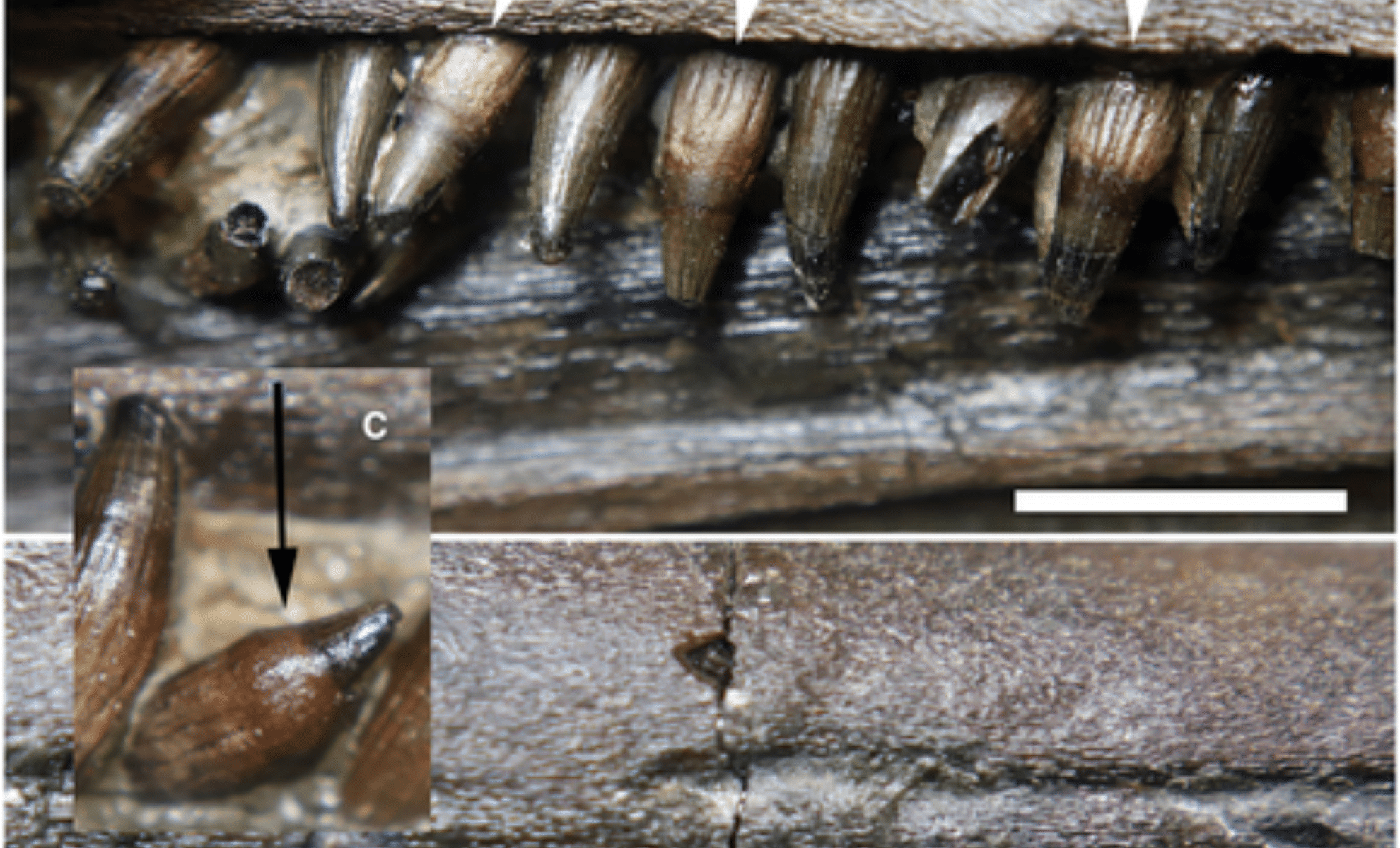
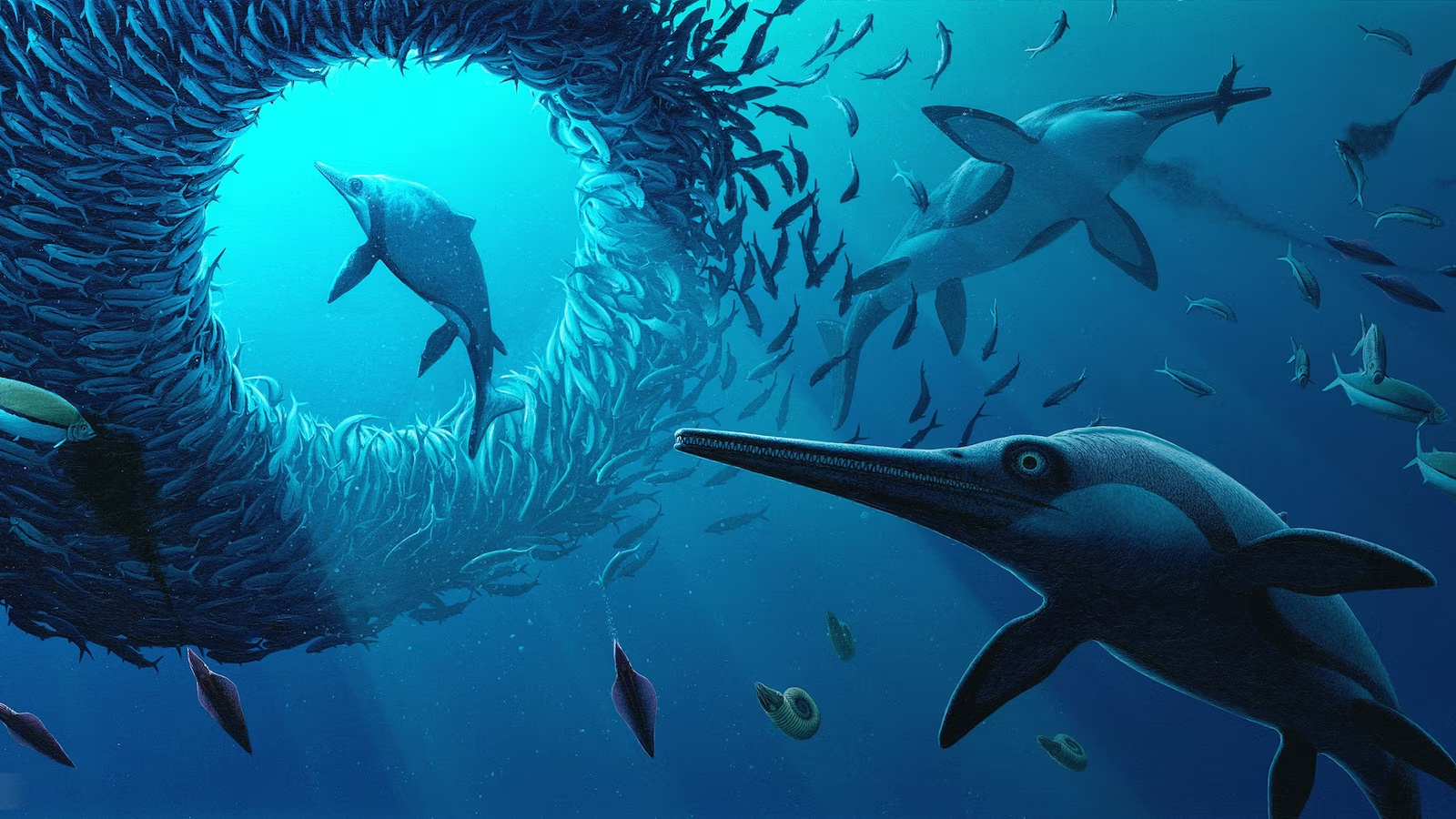
A new species of Jurassic-era marine reptile, Xiphodracon goldencapsis, was discovered in England, characterized by a long snout and narrow teeth, indicating a diet of soft prey like squid, and is considered one of the most complete fossils from its period.
Scientists have identified a new species of marine reptile called Xiphodracon goldencapensis, a dolphin-sized ichthyosaur from 185 million years ago, discovered in the UK. The fossil shows signs of a fatal attack by a larger predator and injuries suggesting a tough life, providing new insights into ichthyosaur evolution.
A near-complete skeleton found on Dorset's Jurassic coast has been identified as a new species of ichthyosaur, named Xiphodracon goldencapensis or the 'sword dragon of Dorset.' This dolphin-sized marine reptile, dating back about 185 million years, shows unique features and evidence of a fatal attack by a larger predator, filling a significant gap in ichthyosaur evolution.
A nearly complete fossil of a new Jurassic-era marine reptile, Xiphodracon goldencapsis, was discovered in the UK and provides insights into ichthyosaur evolution and a major faunal turnover during the early Jurassic period, with evidence of predation and disease.
This week’s science news includes the discovery of the first soft tissue remains of a giant ichthyosaur, successful mitochondrial transfer births, observations of matter-antimatter asymmetry, the first Roman-collected trilobite fossil used as a magical pendant, and the first observation of the crystallization process in planet formation around a star 1,300 light-years away, along with a feature on vitamin B12 supplementation.
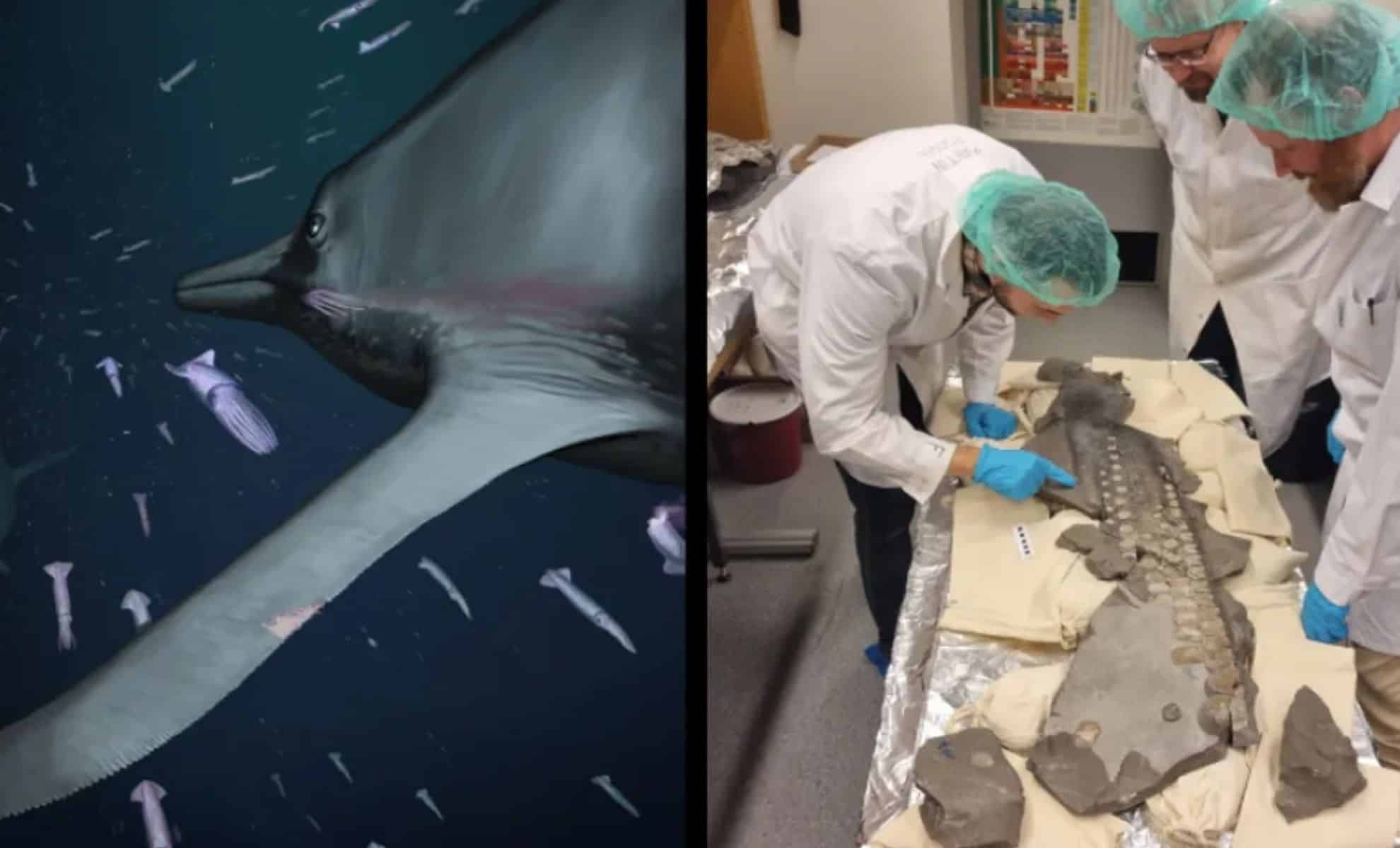
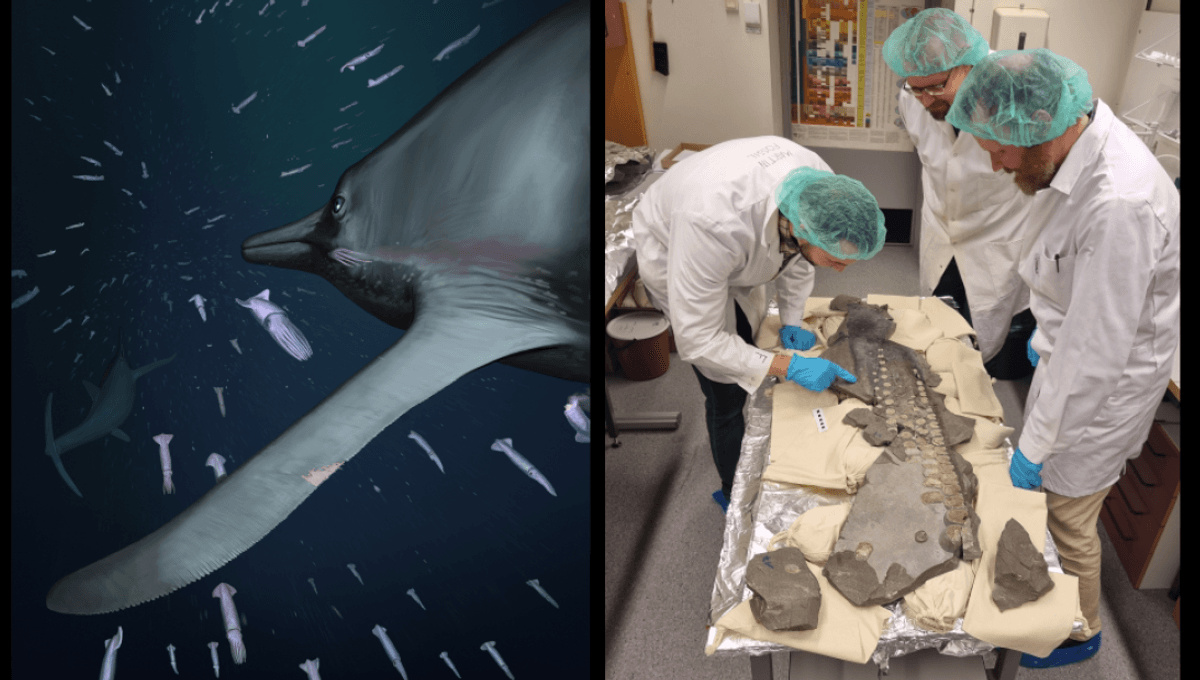
A groundbreaking discovery of the first soft tissue fossil of a giant ichthyosaur from 183 million years ago reveals new features like chondroderms, which suggest the ichthyosaur was a stealthy, apex predator. This find challenges previous understanding of these marine reptiles, offering insights into their hunting strategies, evolution, and ecological role in the Jurassic seas.
A groundbreaking 183-million-year-old fossil of an ichthyosaur's flipper reveals new features called chondroderms, suggesting these marine reptiles were silent, stealthy hunters capable of ambushing prey, which could revolutionize our understanding of their biology and evolution.
Scientists discovered a nearly complete 100-million-year-old fossil of Fiona, an ichthyosaur, in Patagonia, revealing her as a pregnant apex predator and providing insights into marine life during the Early Cretaceous, including reproductive strategies, environmental adaptations, and injury history.
A 131-million-year-old fossil of a pregnant ichthyosaur named Fiona, found in Chile, provides insights into the breakup of Gondwanaland and the formation of the South Atlantic Ocean, revealing details about ancient marine environments and the evolution of ocean currents.
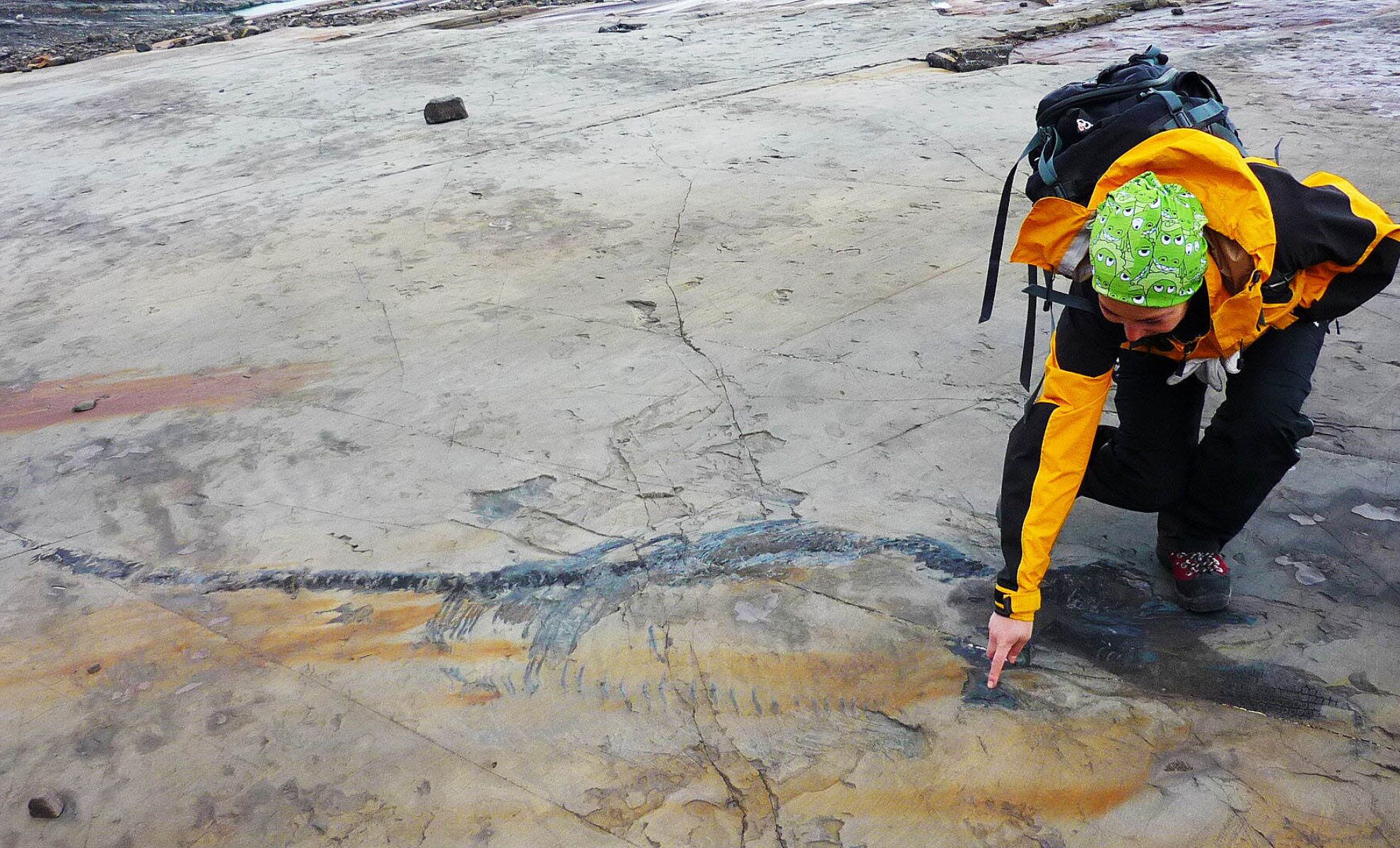
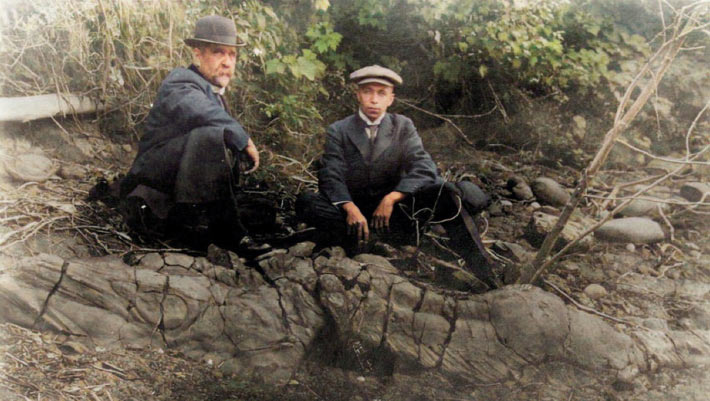
Paleontologists identified a new genus and species of Early Jurassic ichthyosaur, Fernatator prenticei, from a partial skeleton found in British Columbia in 1916, marking a significant discovery as North American ichthyosaurs from this period are rare.
Paleontologists in New Zealand have uncovered a 98-million-year-old partial skeleton of a platypterygiid ichthyosaur from the Cretaceous period, marking the most complete ichthyosaur fossil found in the country. This discovery, located in the Waiau Toa/Clarence valley, adds to the understanding of ichthyosaur diversity and suggests regional differences among Gondwanan Cretaceous ichthyosaur populations. The findings, published in the Journal of Vertebrate Paleontology, highlight the ichthyosaur's unique anatomical features and its relation to other species in Eastern Gondwana.
An 11-year-old made a significant discovery by unearthing fossils of the largest known marine reptile, an Ichthyosaur measuring over 80 feet long, furthering paleontologists' understanding of this ancient creature. The finding has been detailed in a study published in the journal PLOS One, shedding light on the "giant fish lizard of the Severn sea."