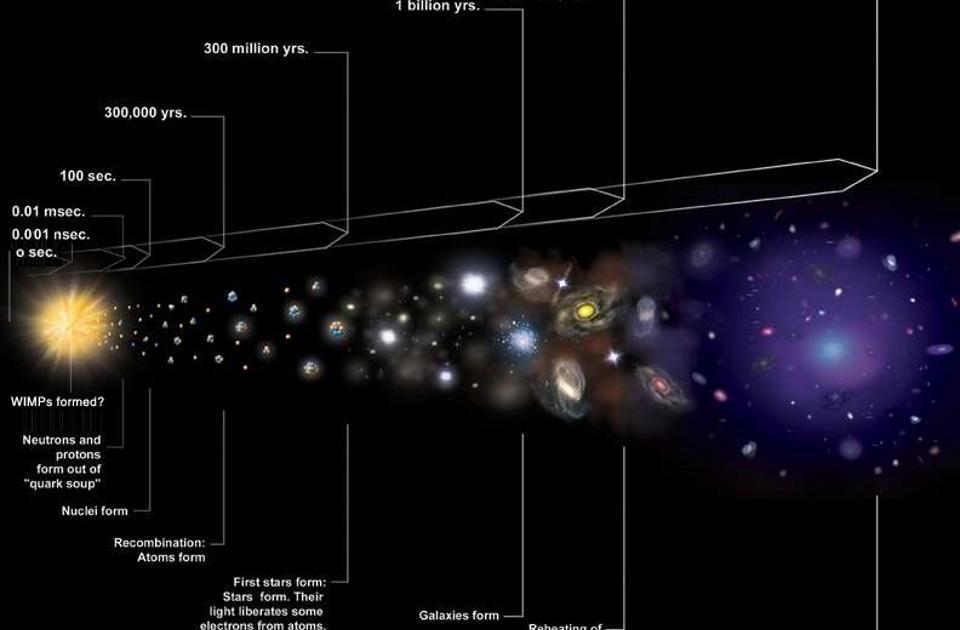
A new study challenges the existence of dark matter and suggests the universe may be 27 billion years old, proposing a model that incorporates variable constants and energy loss in light, which could reshape our understanding of cosmic evolution and the universe's age.
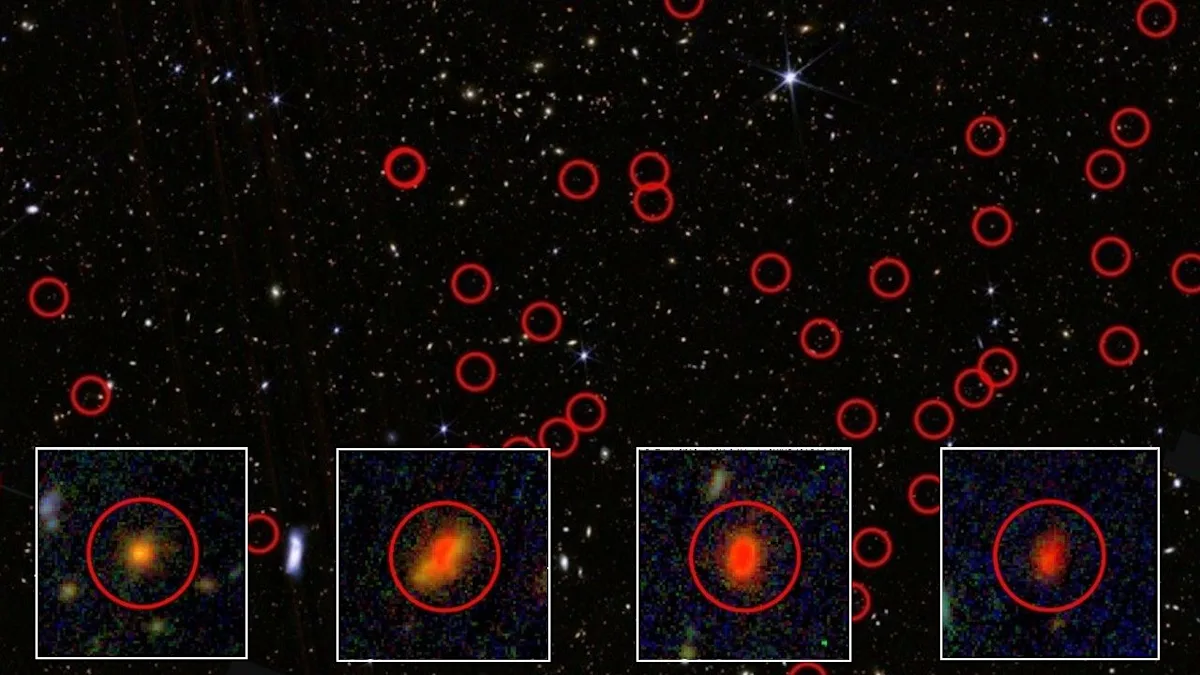
NASA's James Webb Space Telescope has identified 300 unexpectedly bright objects in the early universe, which may be galaxies or something else, potentially challenging current models of galaxy formation shortly after the Big Bang.
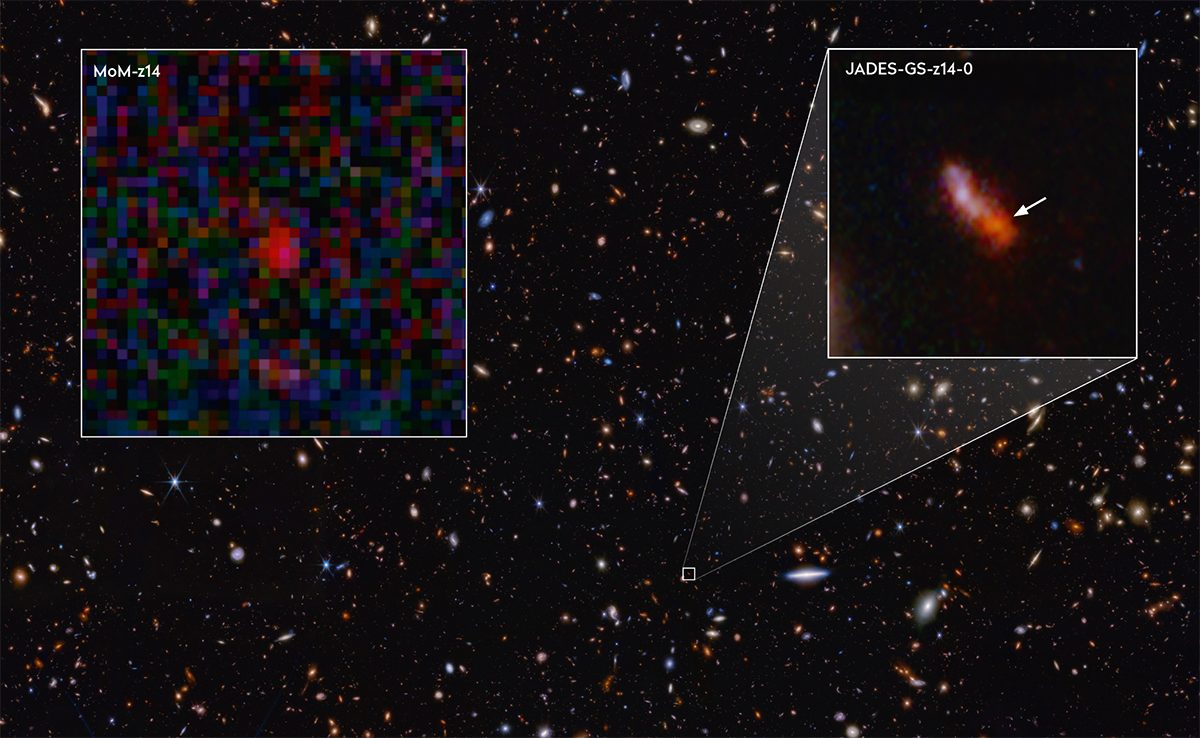
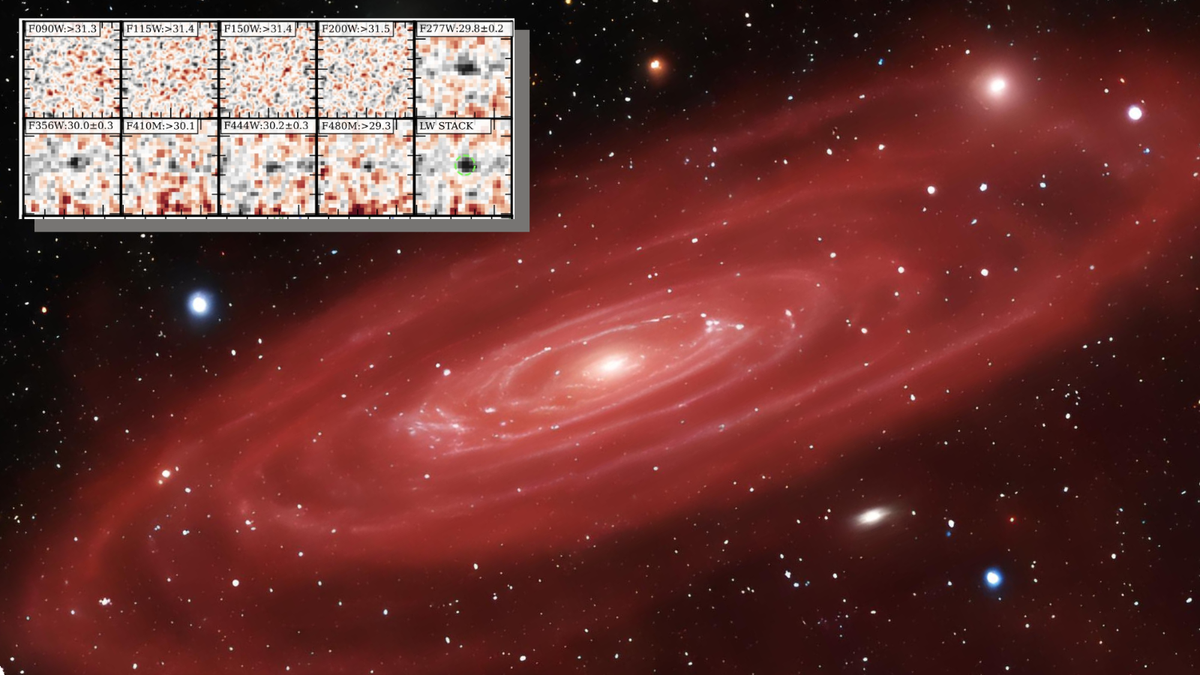
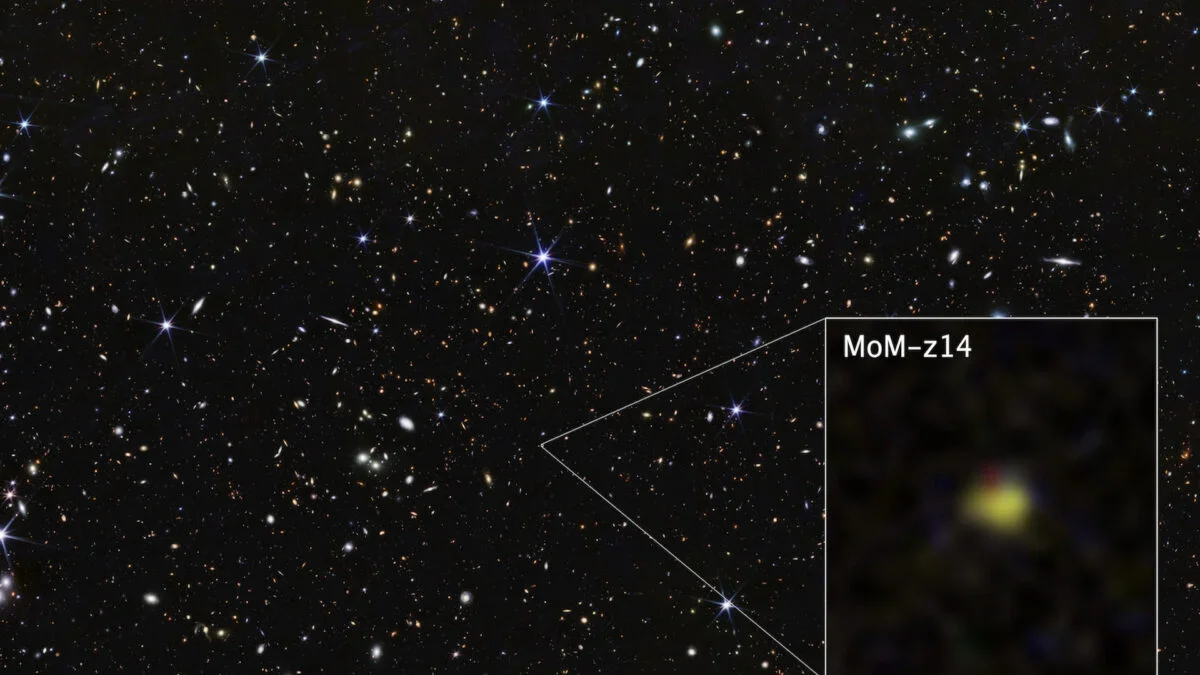
The James Webb Space Telescope has discovered the most distant galaxy ever observed, MoM-z14, which existed just 280 million years after the Big Bang, revealing a surprisingly rich population of early galaxies and heavier elements, and indicating that the universe's earliest structures are more complex and abundant than previously thought.
The James Webb Space Telescope has discovered the earliest galaxy ever seen, named MoM z14, which existed just 280 million years after the Big Bang, breaking previous records and providing new insights into the early universe.
The James Webb Space Telescope has discovered the earliest galaxy ever seen, named MoM z14, which existed just 280 million years after the Big Bang, breaking previous records and providing new insights into the universe's infancy.
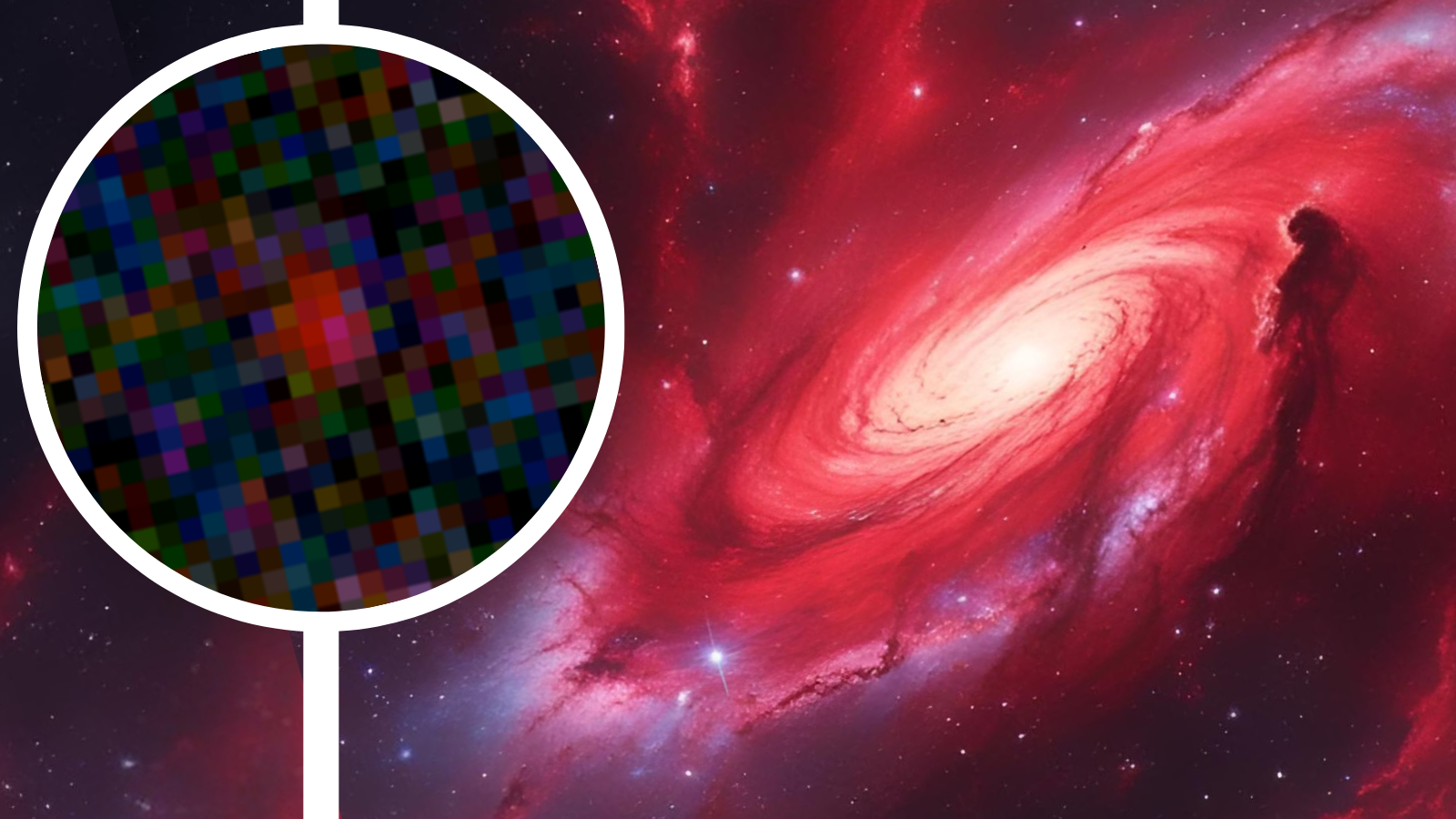
The James Webb Space Telescope has set a new record by discovering the farthest known galaxy, MoM-z14, which emitted light just 280 million years after the Big Bang, challenging existing theories about early galaxy formation and suggesting JWST may continue to push the cosmic frontier.
The James Webb Space Telescope (JWST) may have identified the most distant galaxies ever observed, potentially dating back to just 200 million years after the Big Bang. These five candidate galaxies, part of the GLIMPSE project, exhibit high redshifts between z = 16 and z = 18, indicating their extreme distance and age. The discovery was aided by gravitational lensing from the galaxy cluster Abell S1063, allowing JWST to detect these faint, early galaxies. Confirmation of these findings could provide new insights into the universe's early evolution.
Early election results indicate a shift towards Republican candidates across the United States, suggesting a potential change in political power dynamics.
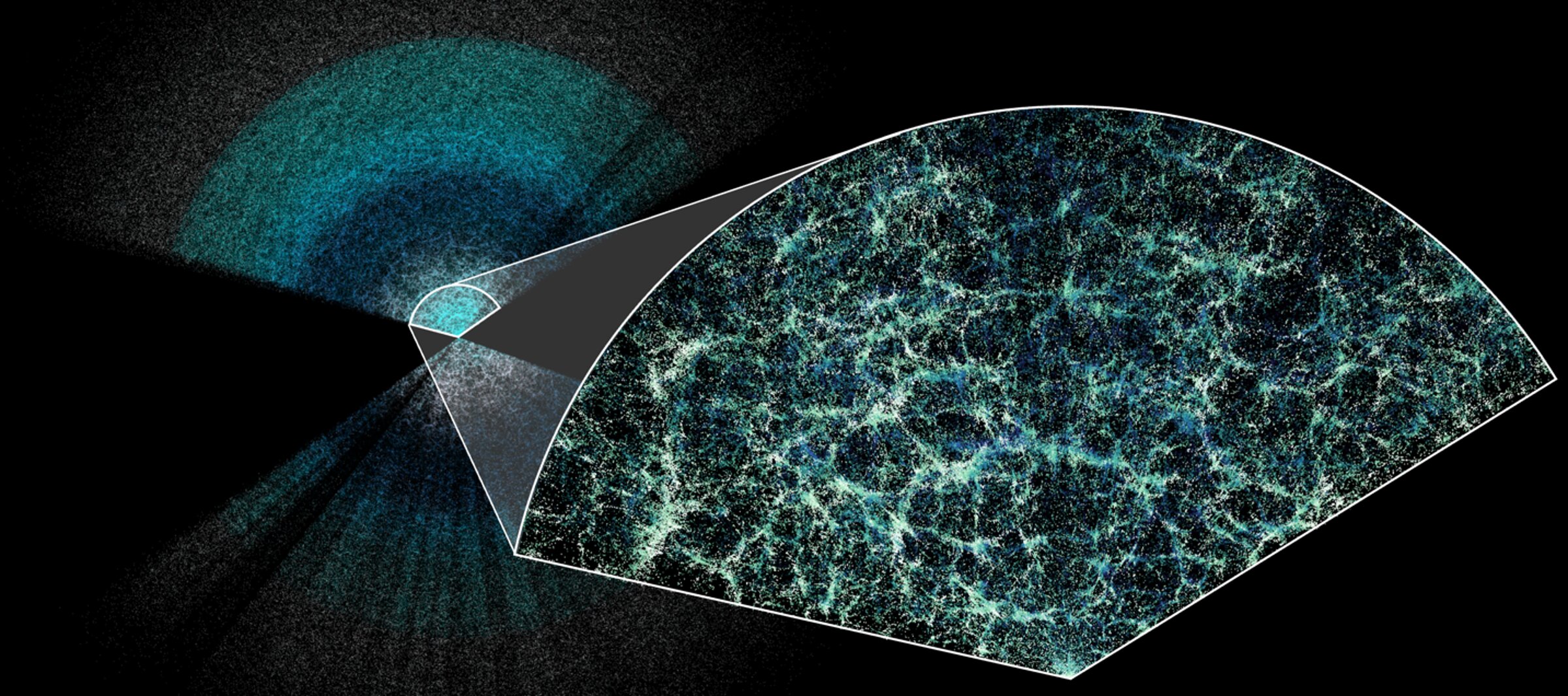
Researchers from Ludwig Maximilian University have developed a model that uses the color of galaxies to determine their distance, aiding in the measurement of cosmic structures. By analyzing data from the Dark Energy Spectroscopic Instrument and the KiDS-VIKING survey, they found a relationship between a galaxy's color and its redshift. This model helps in understanding the large-scale structure of the universe and the interplay between dark matter and dark energy.
The James Webb Space Telescope (JWST) has discovered early galaxies that initially seemed to challenge the Big Bang theory due to their unexpected size and brightness. However, more precise measurements have shown these galaxies to be less extraordinary than first thought, aligning with current cosmological models. While JWST's findings raise intriguing questions about early galaxy formation, they do not "break" the Big Bang theory, but rather enhance our understanding of the universe's early stages.
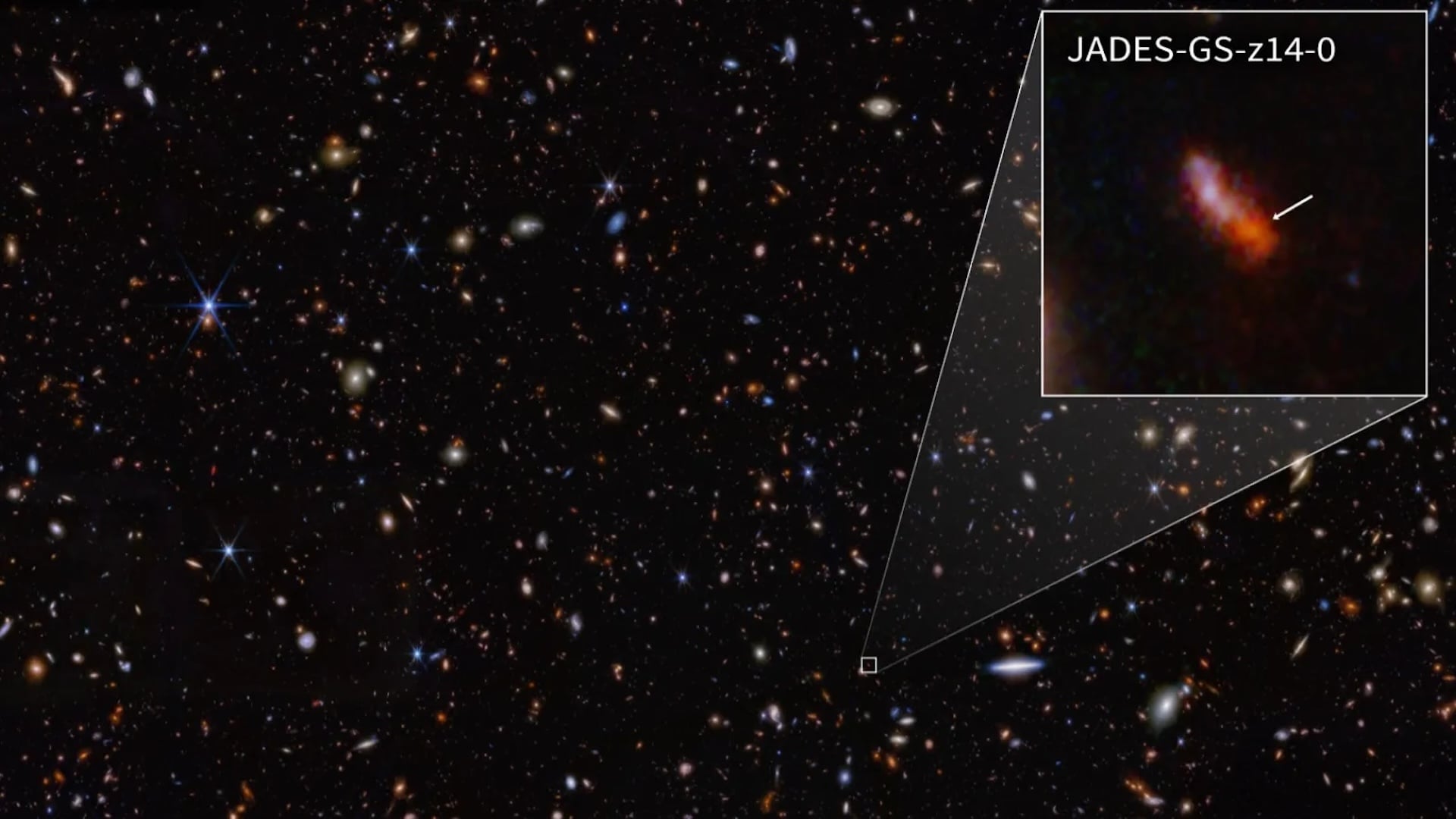
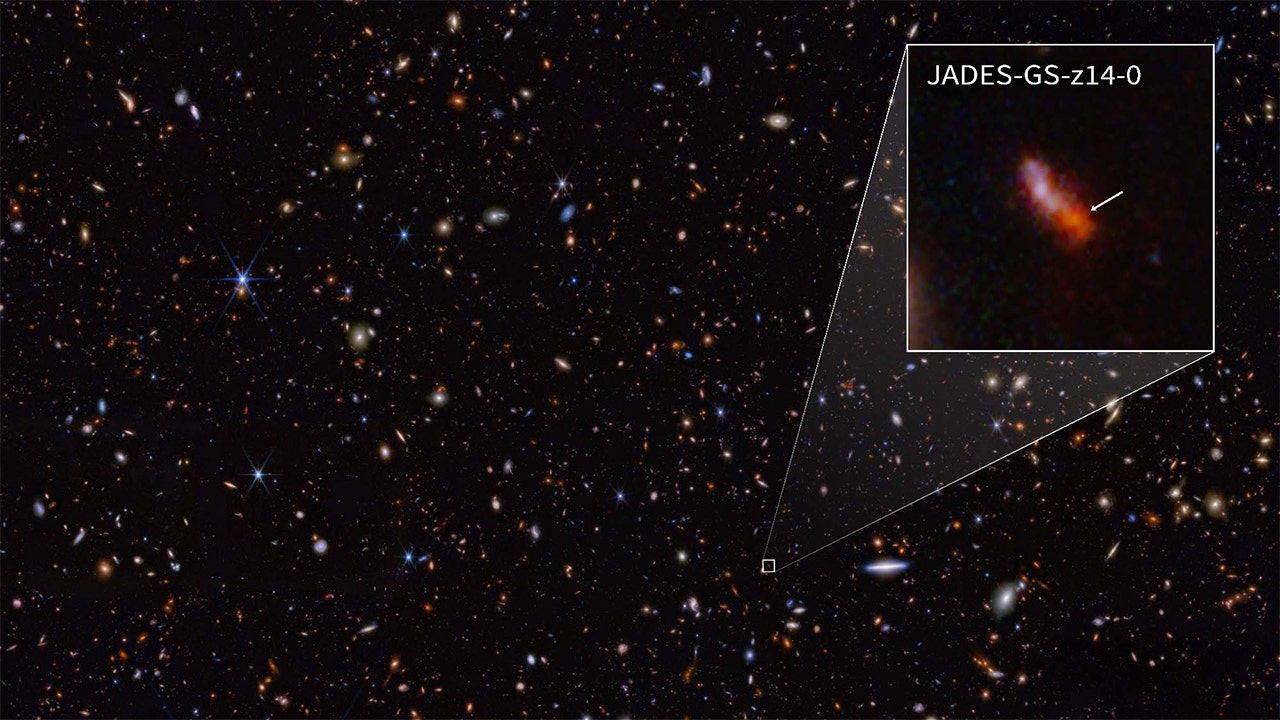
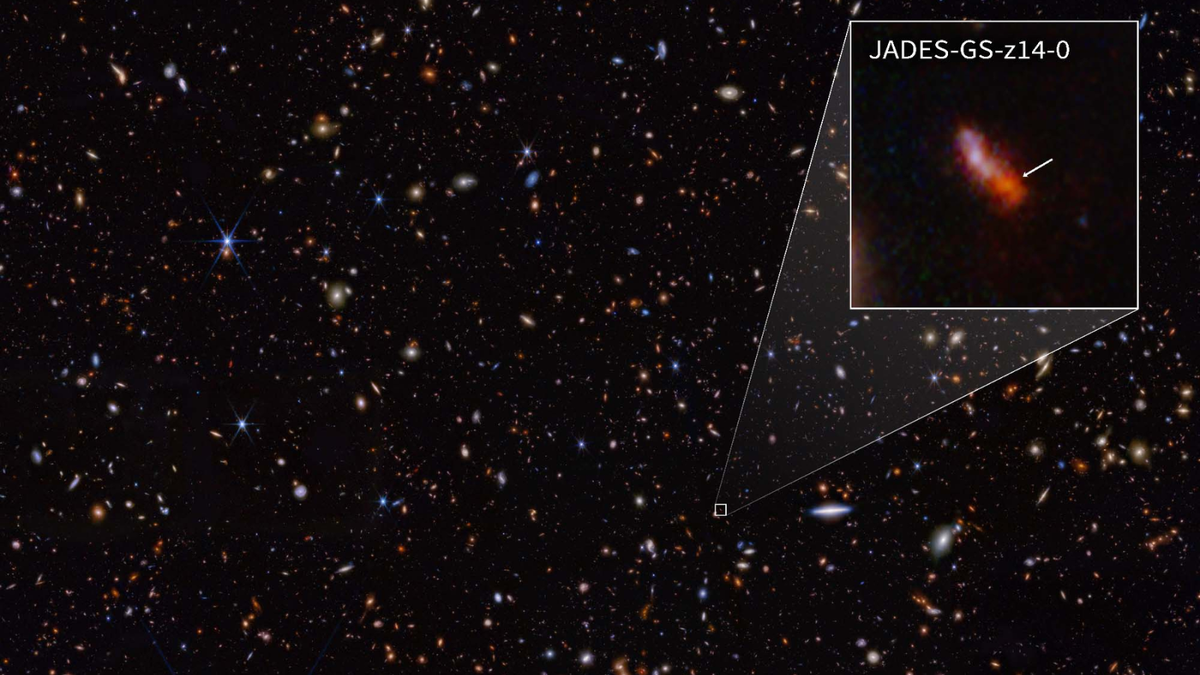
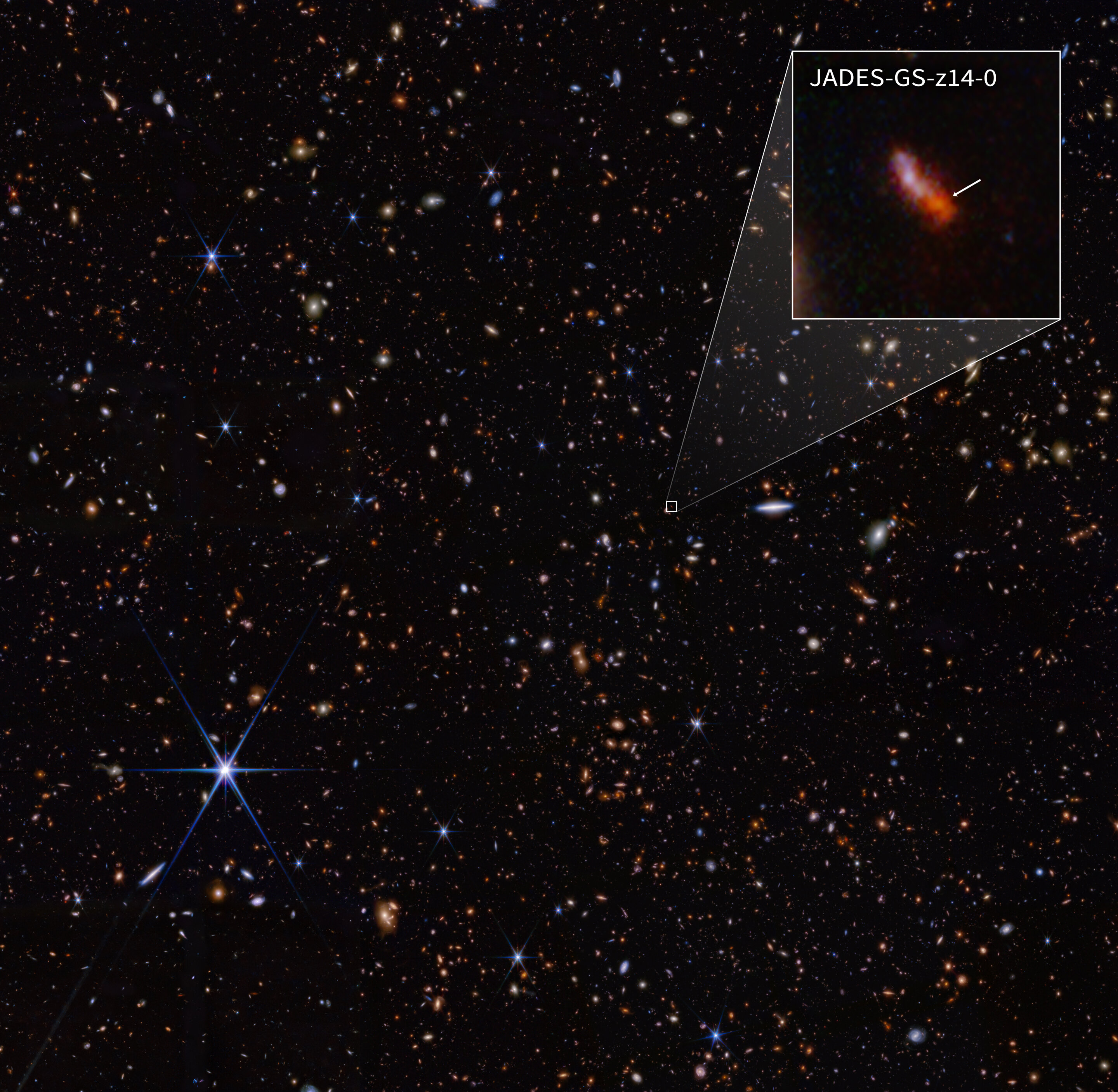
The James Webb Space Telescope has captured the most distant known galaxy, JADES-GS-z14-0, dating back to less than 300 million years after the big bang. Using its Near-Infrared Spectrograph, scientists measured the galaxy's redshift at 14.32, breaking previous records. The discovery provides new insights into the early universe, revealing unexpected characteristics and suggesting the presence of multiple generations of massive stars. The findings are still under study and have not yet been peer-reviewed.
The James Webb Space Telescope (JWST) has identified the most distant galaxy ever observed, JADES-GS-z14-0, which existed around 300 million years after the Big Bang. This discovery, along with another distant galaxy, JADES-GS-z14-1, provides significant insights into the rapid formation of galaxies in the early universe. The findings highlight the JWST's capability to explore cosmic dawn and the evolution of primordial galaxies.
Using the James Webb Space Telescope, astronomers have discovered the most distant known galaxy, JADES-GS-z14-0, at a redshift of 14.32, dating back to less than 300 million years after the Big Bang. This discovery, part of the JWST Advanced Deep Extragalactic Survey (JADES), provides significant insights into rapid galaxy formation in the early universe.
The expansion of the Universe does not break the speed of light. The speed of the expansion of space is not a constant value, but rather varies depending on the distance of the object being observed. The redshift observed in light from distant objects is caused by the expanding Universe, gravitational potential differences, and relative motion between the source and the observer. The expansion rate is typically expressed in terms of kilometers-per-second-per-megaparsec, and current measurements fall within a range of 67 to 74 km/s/Mpc. Objects closer than 14 billion light-years are receding from us at speeds slower than light, while those farther away are receding faster than light due to the expanding space between them.
The rise of dark energy and its impact on the expanding Universe has been a transformative discovery. As the Universe expanded, distant objects appeared to speed up, leading to the revelation of accelerated expansion. Dark energy, a novel form of energy inherent to space itself, remains at a constant density as the Universe expands, counteracting the attractive effects of matter. Over time, dark energy has come to dominate the Universe, causing distant galaxies to accelerate in their apparent recession from our perspective. This acceleration has led to the realization that 94% of galaxies are already forever beyond our reach, shaping our cosmic fate.