
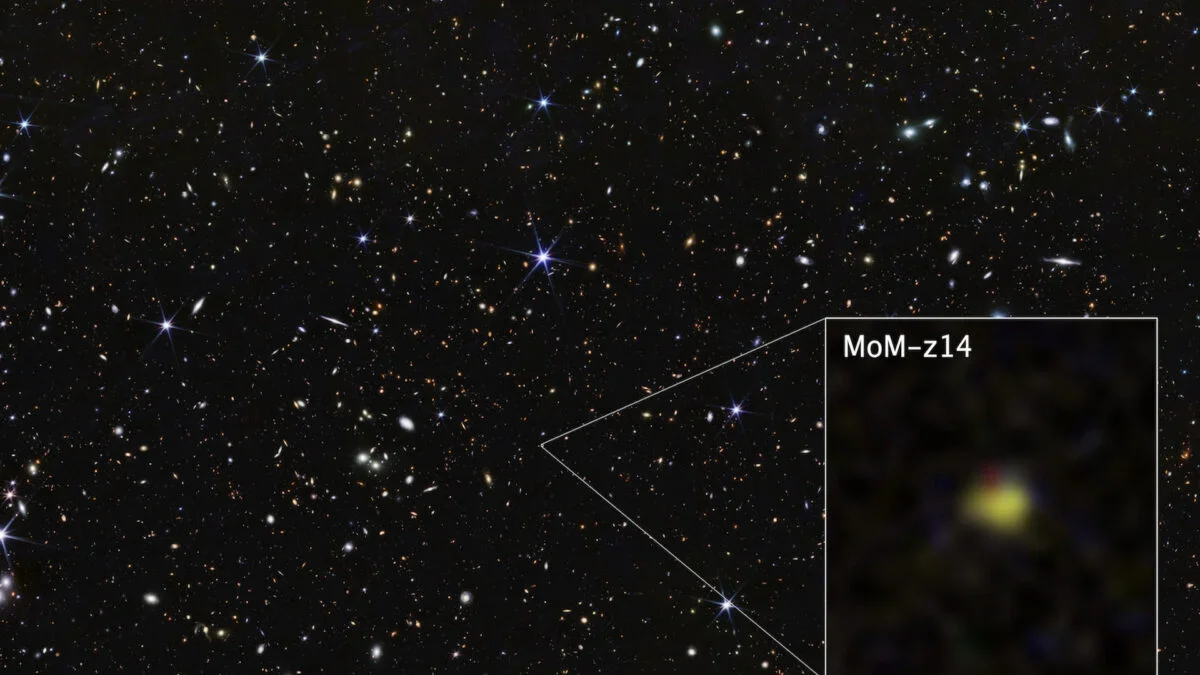
Webb Spots MoM-z14, the Galaxy Born 280 Million Years After the Big Bang
TL;DR Summary
NASA’s James Webb Space Telescope has confirmed MoM-z14 as the most distant galaxy observed to date, with a redshift of 14.44 implying its light has traveled about 13.5 billion years—roughly 280 million years after the Big Bang. The galaxy is exceptionally compact yet luminous, about 50 times smaller than the Milky Way, signaling intense early star formation and raising questions about nitrogen production in the infant universe. It surpasses the previous record holder and demonstrates Webb’s power to illuminate the cosmos’s infancy and refine models of early galaxy growth.
- The Age of the Most Distant Galaxy Ever Seen Barely Makes Any Sense Gizmodo
- Webb has done it again. New-found galaxy at the dawn of time is challenging what we know about the Universe BBC Sky at Night Magazine
- JWST spots most distant galaxy ever, pushing the limits of the observable universe Scientific American
- Astronomers share new insights about the early universe via the Webb Space Telescope Engadget
- Discovery of a Galaxy at Redshift 14.4, 280-Million Years After the Big-Bang Avi Loeb – Medium
Reading Insights
Total Reads
1
Unique Readers
13
Time Saved
3 min
vs 4 min read
Condensed
86%
639 → 89 words
Want the full story? Read the original article
Read on Gizmodo