Tag

Gravitational Lensing

All articles tagged with #gravitational lensing

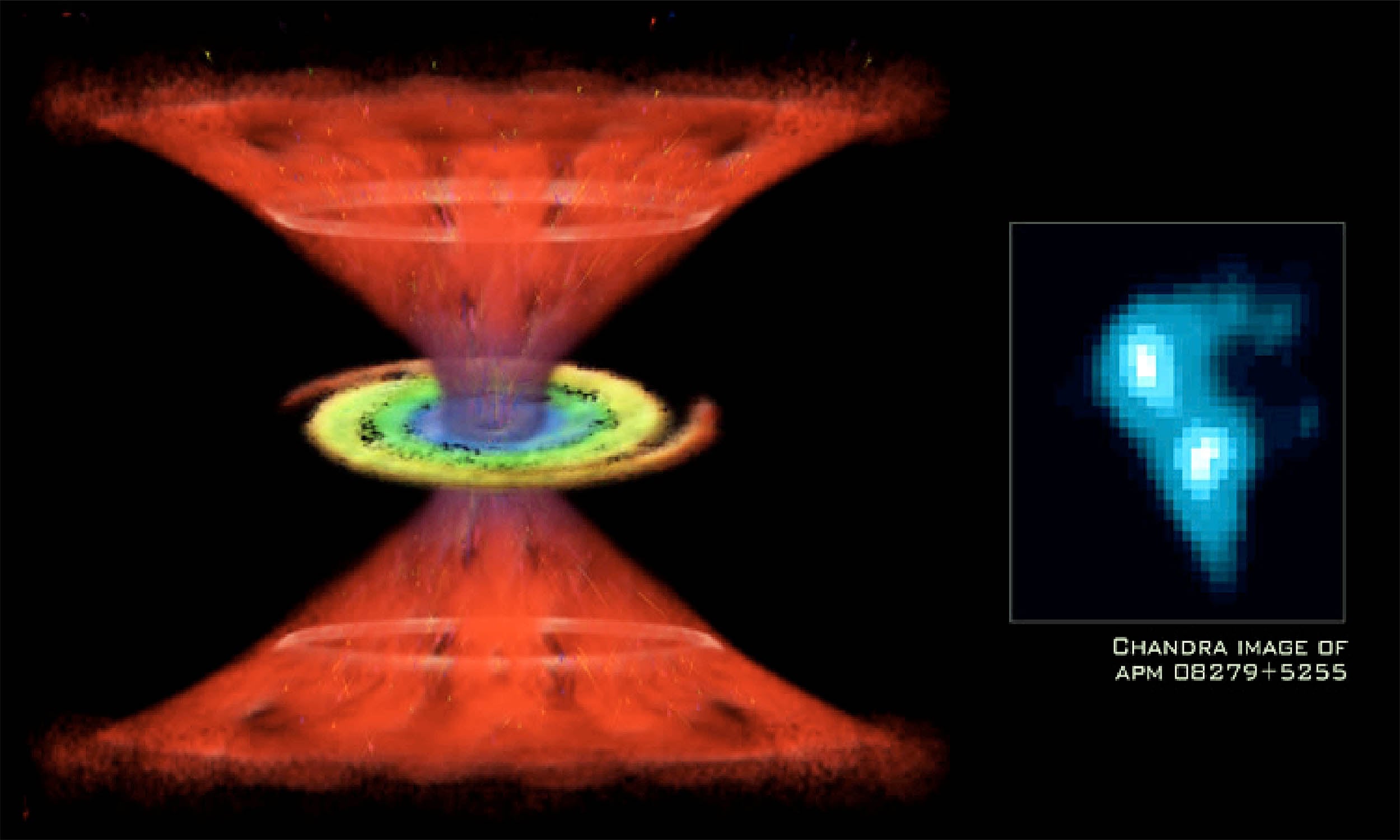
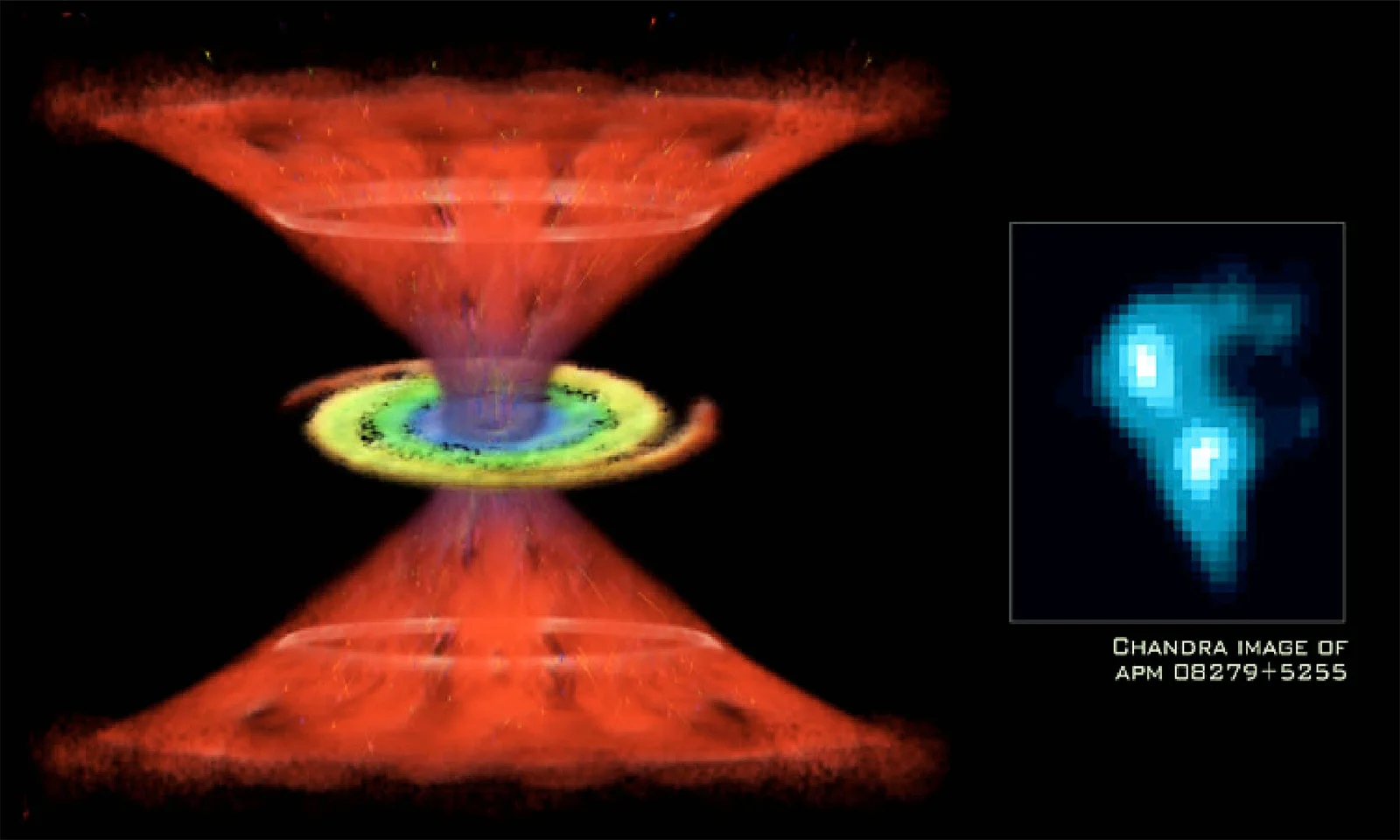
Cosmic water reservoir: distant quasar harbors trillions of oceans
science3 days ago

Cosmic water reservoir: distant quasar harbors trillions of oceans

Astronomers report that the quasar APM 08279+5255, about 12 billion light-years away, contains roughly 140 trillion times the amount of water in Earth’s oceans, making it the largest known reservoir of water in the cosmos. Water was detected through multiple emission lines, aided by gravitational lensing that magnifies the source. The finding shows water is pervasive even in the early universe and helps illuminate how black holes grow and galaxies form, with lensing suggesting there may be more such water-rich systems hiding in existing catalogs.

Gigamaser: The Universe’s Brightest Microwave Laser Detected in Deep Space
space-and-spaceflight4 days ago

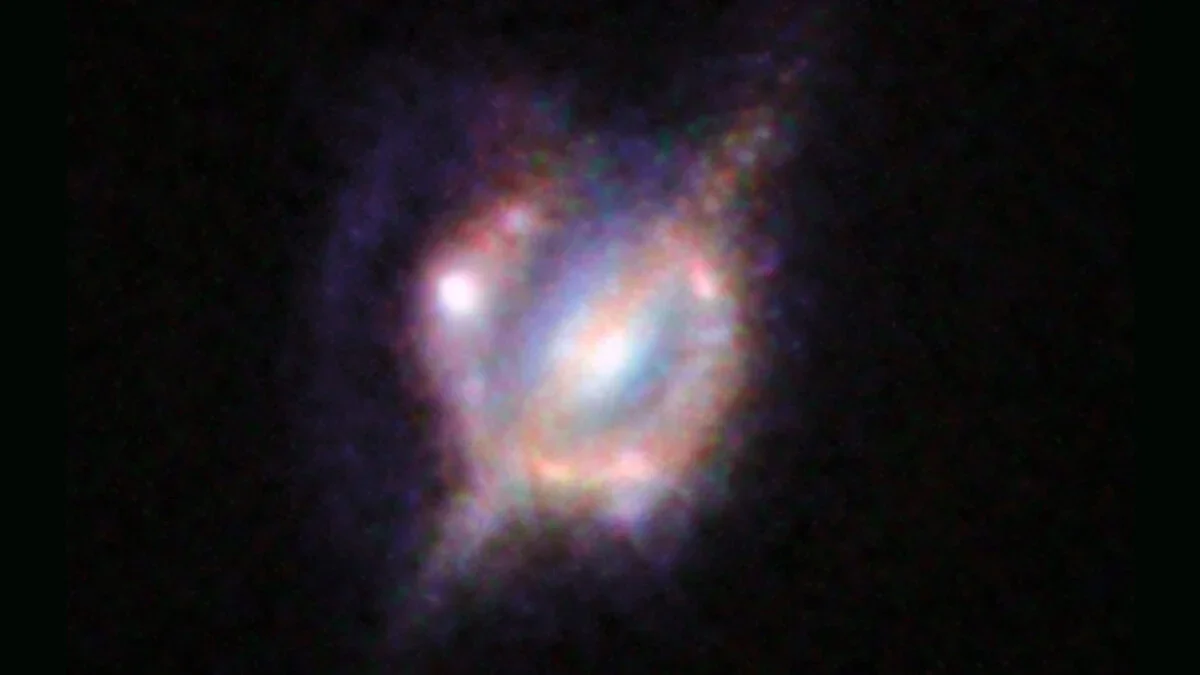
Gigamaser: The Universe’s Brightest Microwave Laser Detected in Deep Space

Astronomers using the MeerKAT radio telescope spotted an extremely bright hydroxyl maser in the distant galaxy merger H-ATLAS J142935.3–002836, whose signal was amplified by an unrelated foreground galaxy acting as a gravitational lens, yielding the first gigamaser—about 100,000 times the luminosity of a star—and enabling new ways to probe cosmic evolution from billions of light-years away.

Cosmic dance through starlight: binary black holes could be spotted before waves wake the universe
astronomy4 days ago

Cosmic dance through starlight: binary black holes could be spotted before waves wake the universe

Astronomers propose that gravitational lensing by pairs of merging supermassive black holes can magnify background stars into repeating, bright flashes as the black holes orbit, creating a rotating “caustic” pattern. Detecting these periodic light bursts would reveal binary supermassive black holes long before they merge and emit low‑frequency gravitational waves, enabling early multi‑messenger studies with future surveys from the Vera C. Rubin Observatory and the Roman Space Telescope, and later collaboration with LISA.

Infrared-running gravity hints a gravity-based path to galaxy rotation without dark matter
space22 days ago

Infrared-running gravity hints a gravity-based path to galaxy rotation without dark matter

A Space.com article reports a new theory by Naman Kumar proposing infrared-running gravity, a scale-dependent modification of gravity that could explain galaxy rotation curves without invoking dark matter while remaining compatible with early-universe constraints; however, the approach is not yet a full replacement for dark matter in cosmology, and further work is needed to compare its predictions with gravitational lensing and galaxy-cluster observations.

Cosmic time-delay twins could settle the universe’s expansion rate
space28 days ago

Cosmic time-delay twins could settle the universe’s expansion rate

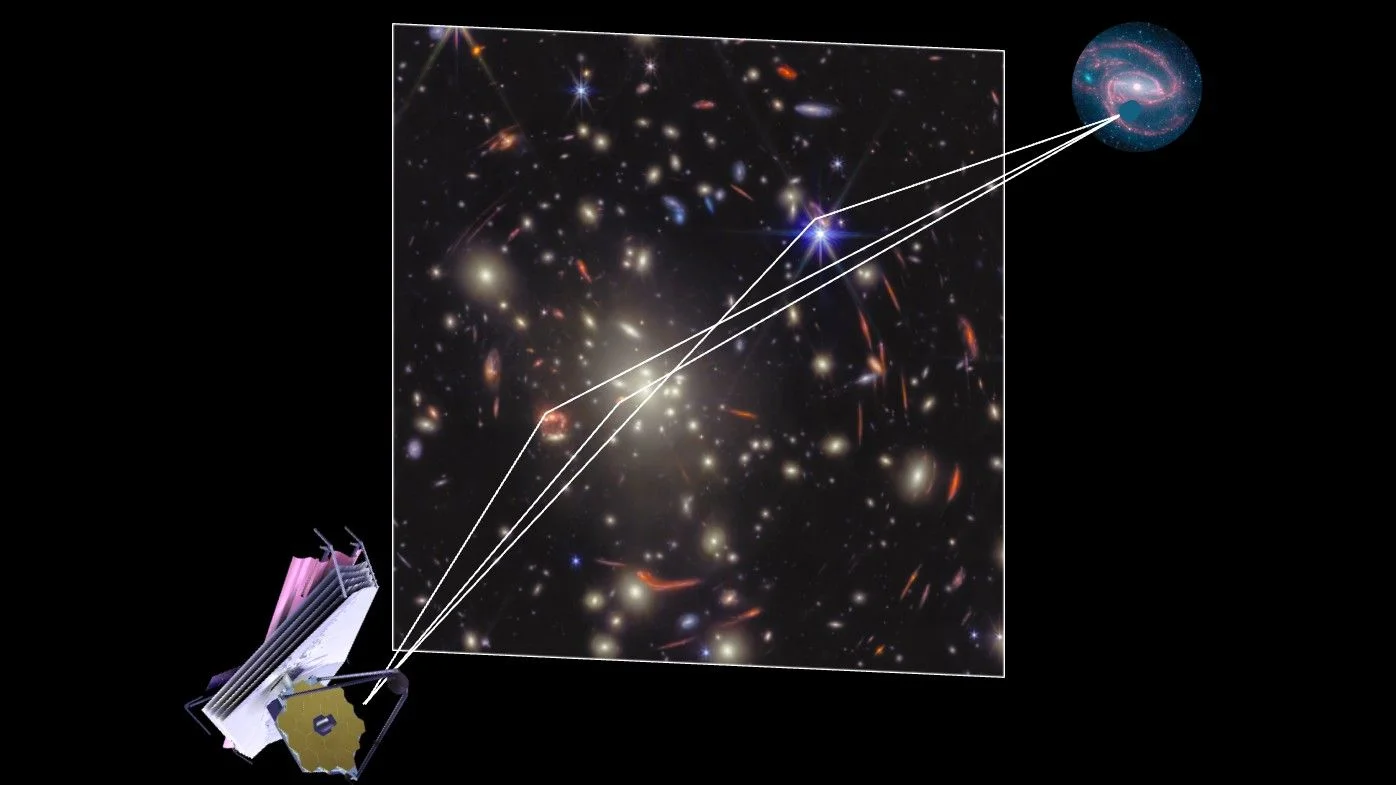
Astronomers using the James Webb Space Telescope under the VENUS program have identified two gravitationally lensed supernovas, SN Ares and SN Athena. The foreground galaxy cluster MJ0308 splits their light into multiple images; the delayed images will reach Earth in the future—Ares in about 60 years and Athena within the next 1–2 years—providing a rare, self-consistent way to measure cosmic distances and constrain the Hubble constant, potentially helping resolve the ongoing disagreement over the universe’s expansion rate.

AI Delivers 1,300 Cosmic Anomalies From Hubble Archive
science1 month ago

AI Delivers 1,300 Cosmic Anomalies From Hubble Archive

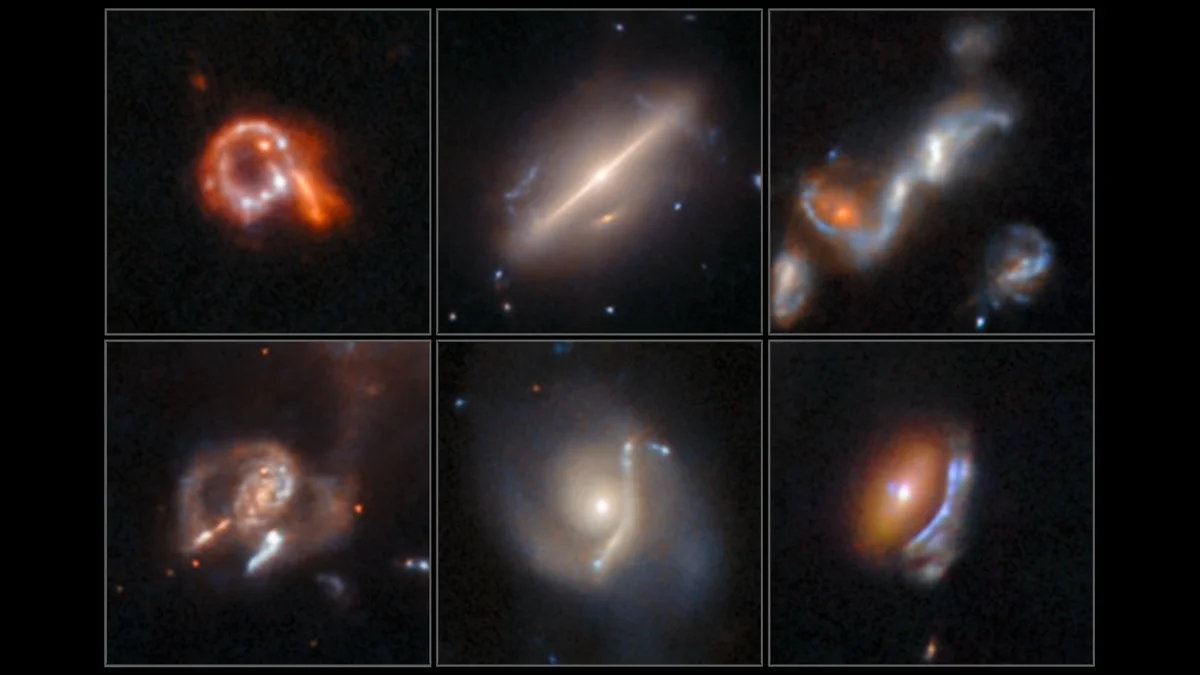
Astronomers using the AnomalyMatch AI tool scanned nearly 100 million Hubble image cutouts from about 35 years of data, uncovering around 1,300 anomalies, with more than 800 previously undocumented. The majority are merging/interacting galaxies; the search also flagged 86 new gravitational lens candidates and rare objects like jellyfish galaxies, demonstrating AI's power to extract discoveries from the data deluge of current and future observatories.

Webb maps the universe's invisible backbone in unprecedented detail
science1 month ago

Webb maps the universe's invisible backbone in unprecedented detail

The James Webb Space Telescope has produced the sharpest-ever map of dark matter, revealing the universe's invisible scaffolding and how gravity links dark matter to the distribution of galaxies and the cosmic web. The Webb map covers a Sextans region about 2.5 full moons across, highlights about 800,000 galaxies (roughly 10x more than ground-based surveys and twice Hubble’s count), and shows dark and regular matter co-located in clusters and filaments. This strengthens the case that dark matter shaped the formation of galaxies—and plans exist to expand the map with the Roman Space Telescope.

SN Ares to Reappear in 2086 Through Gravitational Lensing, Say Scientists
science1 month ago

SN Ares to Reappear in 2086 Through Gravitational Lensing, Say Scientists

Using gravitational lensing by a foreground galaxy cluster, scientists predict the lensed supernova SN Ares will reappear in 2086, with a 60-year light-delay that could enable ultra-precise cosmology and improved measurements of the Hubble Constant; a second lensed event, SN Athena, may reappear within 1–2 years, offering an earlier data point.