Tag

Distant Galaxy

All articles tagged with #distant galaxy

James Webb Telescope uncovers ancient pristine galaxies supporting Big Bang theory

Originally Published 5 months ago — by BBC Sky at Night Magazine

Featured image for James Webb Telescope uncovers ancient pristine galaxies supporting Big Bang theory
Source: BBC Sky at Night Magazine

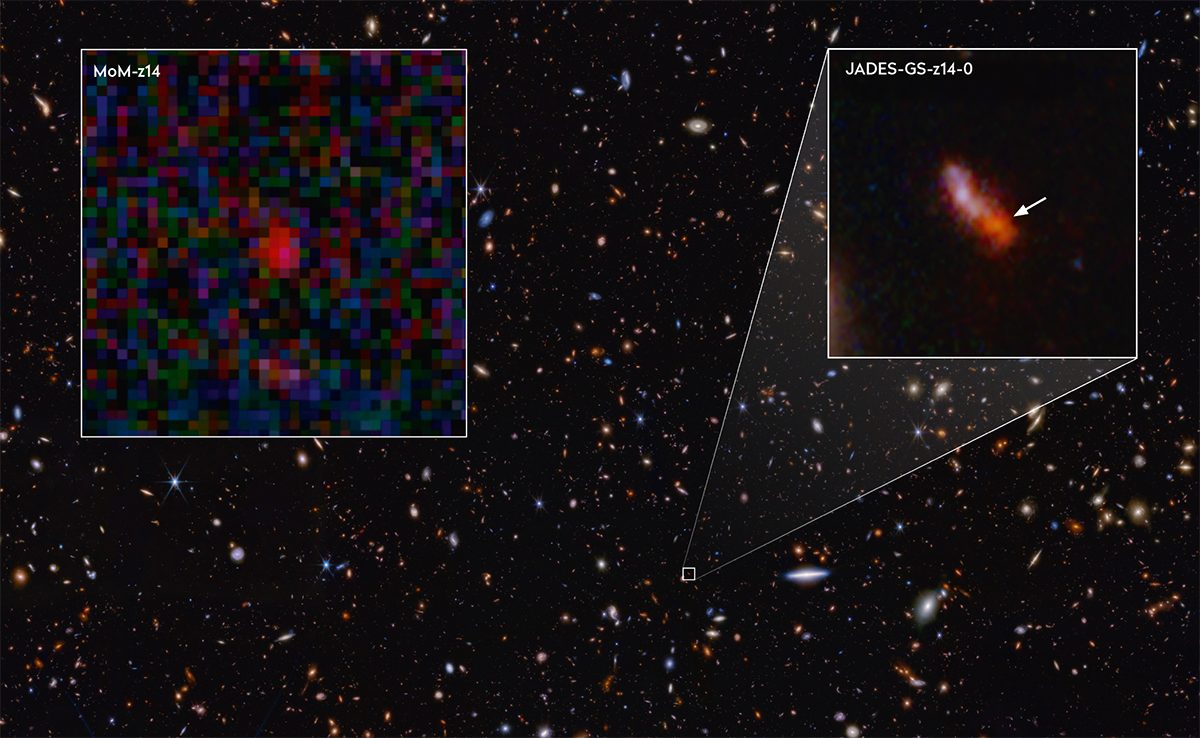
The James Webb Space Telescope has discovered the most distant galaxy ever observed, MoM-z14, which existed just 280 million years after the Big Bang, revealing a surprisingly rich population of early galaxies and heavier elements, and indicating that the universe's earliest structures are more complex and abundant than previously thought.

James Webb Telescope Sets New Record for Most Distant Galaxy

Originally Published 7 months ago — by Live Science

Featured image for James Webb Telescope Sets New Record for Most Distant Galaxy
Source: Live Science

The James Webb Space Telescope has set a new record by discovering the farthest known galaxy, MoM-z14, which emitted light just 280 million years after the Big Bang, challenging existing theories about early galaxy formation and suggesting JWST may continue to push the cosmic frontier.

"James Webb Telescope Unveils Most Distant and Earliest Galaxies"

Originally Published 1 year ago — by Ars Technica

Featured image for "James Webb Telescope Unveils Most Distant and Earliest Galaxies"
Source: Ars Technica

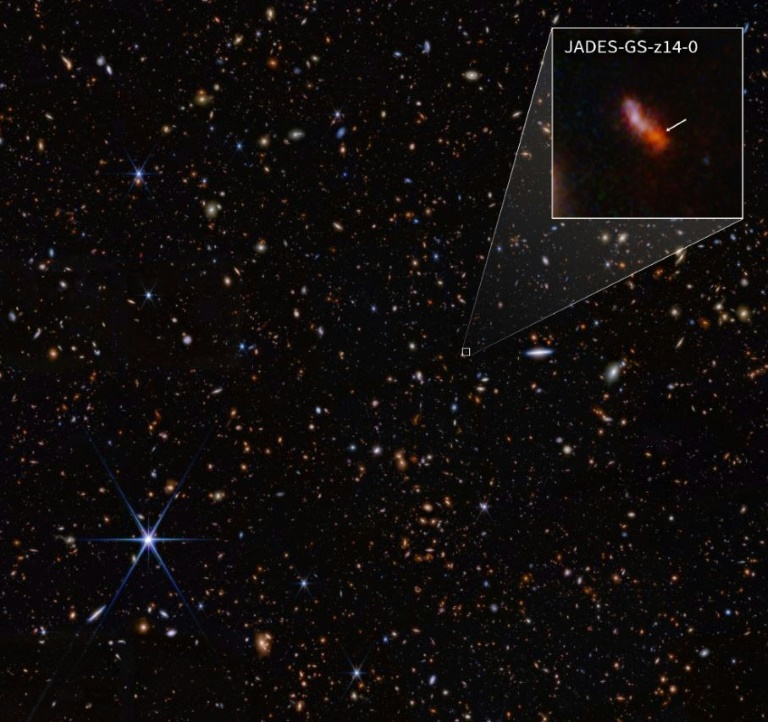
The James Webb Space Telescope has discovered the most distant galaxy to date, JADES-GS-z14-0, which existed just 300 million years after the Big Bang. This galaxy, with a mass several hundreds of millions of times that of the Sun, challenges existing theoretical models and has significant implications for our understanding of the early universe.

Webb Telescope Discovers Most Distant Galaxy Ever

Originally Published 1 year ago — by Fox News

Featured image for Webb Telescope Discovers Most Distant Galaxy Ever
Source: Fox News

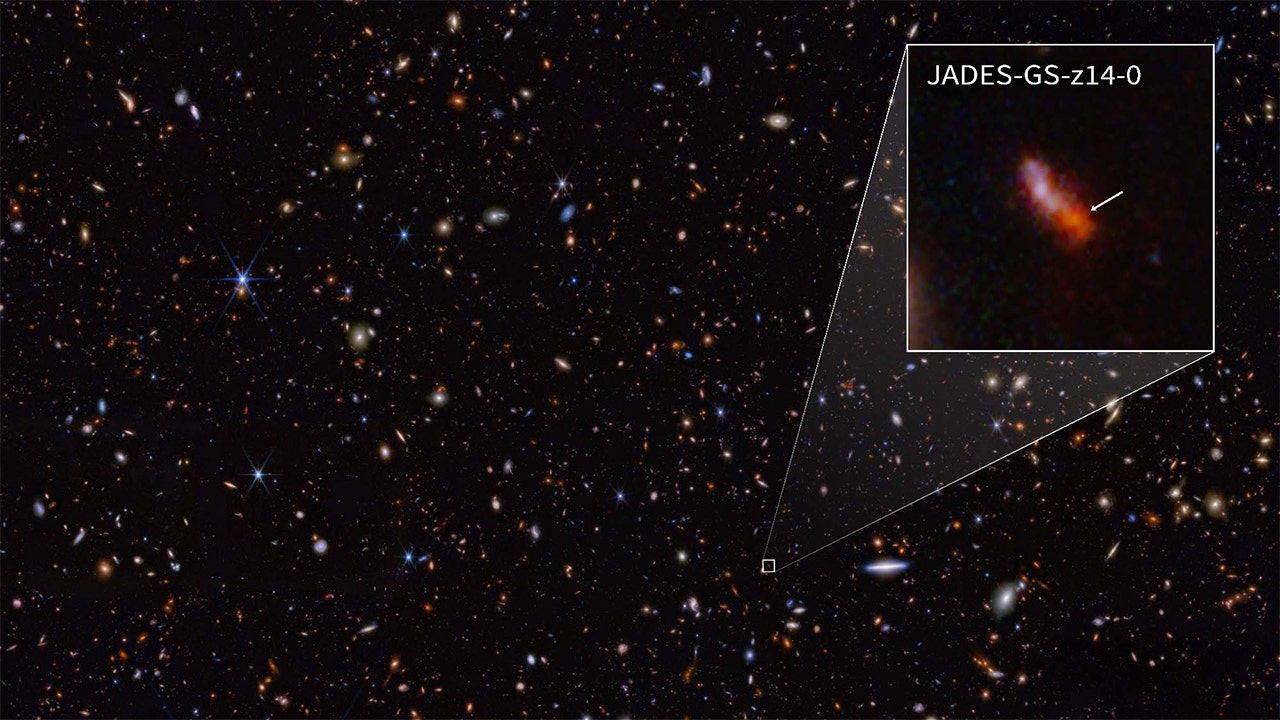
The James Webb Space Telescope has captured the most distant known galaxy, JADES-GS-z14-0, dating back to less than 300 million years after the big bang. Using its Near-Infrared Spectrograph, scientists measured the galaxy's redshift at 14.32, breaking previous records. The discovery provides new insights into the early universe, revealing unexpected characteristics and suggesting the presence of multiple generations of massive stars. The findings are still under study and have not yet been peer-reviewed.

"James Webb Telescope Discovers Most Distant Galaxies Ever Observed"

Originally Published 1 year ago — by BBC.com

Featured image for "James Webb Telescope Discovers Most Distant Galaxies Ever Observed"
Source: BBC.com

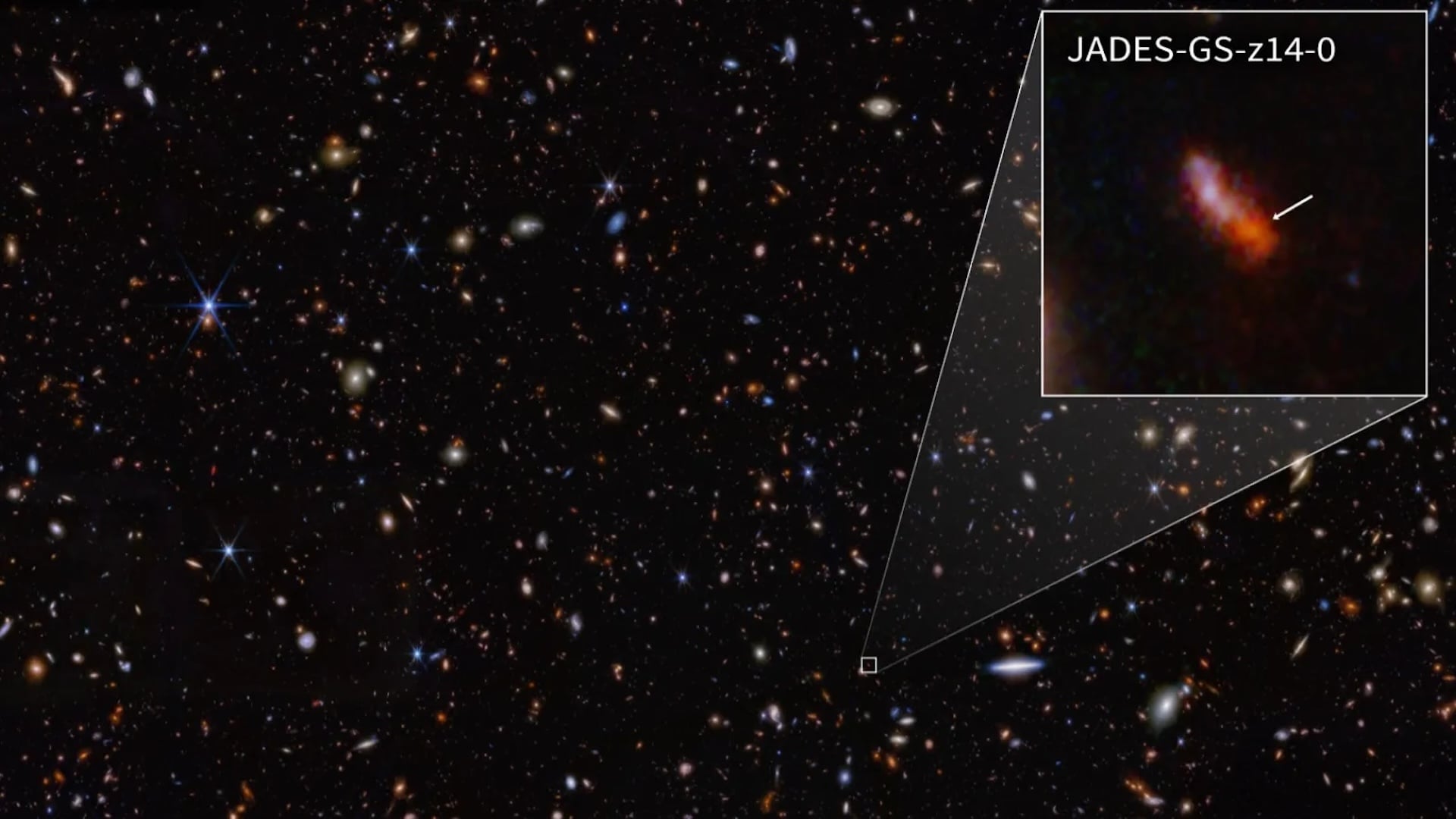
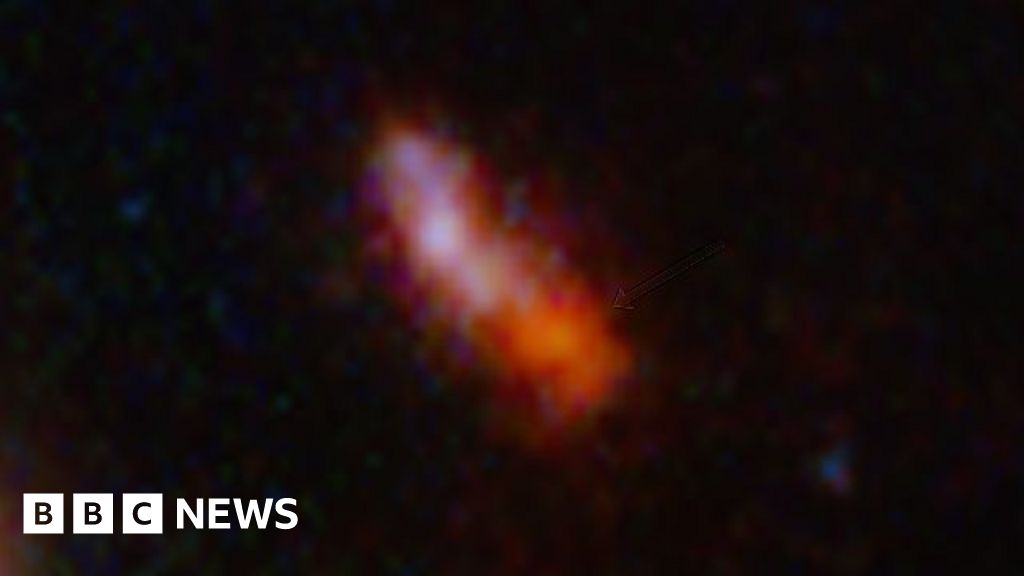
The James Webb Space Telescope has identified the most distant known galaxy, JADES-GS-z14-0, which existed just 290 million years after the Big Bang. This discovery surpasses Webb's previous record and reveals a galaxy over 1,600 light years across, with light produced by young stars rather than a supermassive black hole. The presence of oxygen suggests the galaxy is already mature, indicating multiple generations of massive stars. This finding highlights Webb's capability to observe the early Universe and may lead to further discoveries from the first 200 million years.

James Webb Telescope Discovers Most Distant Galaxies Ever

Originally Published 1 year ago — by Yahoo! Voices

Featured image for James Webb Telescope Discovers Most Distant Galaxies Ever
Source: Yahoo! Voices

The James Webb Space Telescope has discovered the most distant known galaxy, JADES-GS-z14-0, which existed just 290 million years after the Big Bang. This finding challenges existing astronomical predictions about the early universe and suggests that more luminous galaxies may be discovered in the future.

"Unraveling the Dark Matter Mystery: James Webb Telescope's Einstein Ring Discovery"

Originally Published 1 year ago — by Livescience.com

Featured image for "Unraveling the Dark Matter Mystery: James Webb Telescope's Einstein Ring Discovery"
Source: Livescience.com

Researchers have discovered a dense galaxy surrounded by an "Einstein ring" using the James Webb Space Telescope (JWST), and have proposed that the galaxy's unusual density is due to a massive halo of dark matter compressing regular matter into it. This explanation could account for the galaxy's high mass, even after considering dark matter. The discovery, named JWST-ER1, is the most distant gravitationally lensed object ever found, and researchers hope to find more such objects to further test their theory.

"Webb Telescope Reveals Secrets of Primeval Galaxies and Early Universe"

Originally Published 1 year ago — by CBS News

Featured image for "Webb Telescope Reveals Secrets of Primeval Galaxies and Early Universe"
Source: CBS News

The James Webb Space Telescope has enabled two teams of researchers to make significant discoveries about the distant galaxy GN-z11, including the identification of the most distant active supermassive black hole ever found. This black hole, located in a galaxy formed when the universe was only 430 million years old, is vigorously growing and likely responsible for the galaxy's exceptional luminosity. Additionally, the telescope's observations revealed a clump of pristine helium gas, indicating the potential formation of Population III star clusters, a significant goal in modern astrophysics. These findings have been published in academic journals, and further research will focus on understanding the nature of these distant celestial phenomena.

"James Webb Space Telescope Discovers Second Lensed Supernova in Distant Galaxy"

Originally Published 2 years ago — by Phys.org

Featured image for "James Webb Space Telescope Discovers Second Lensed Supernova in Distant Galaxy"
Source: Phys.org

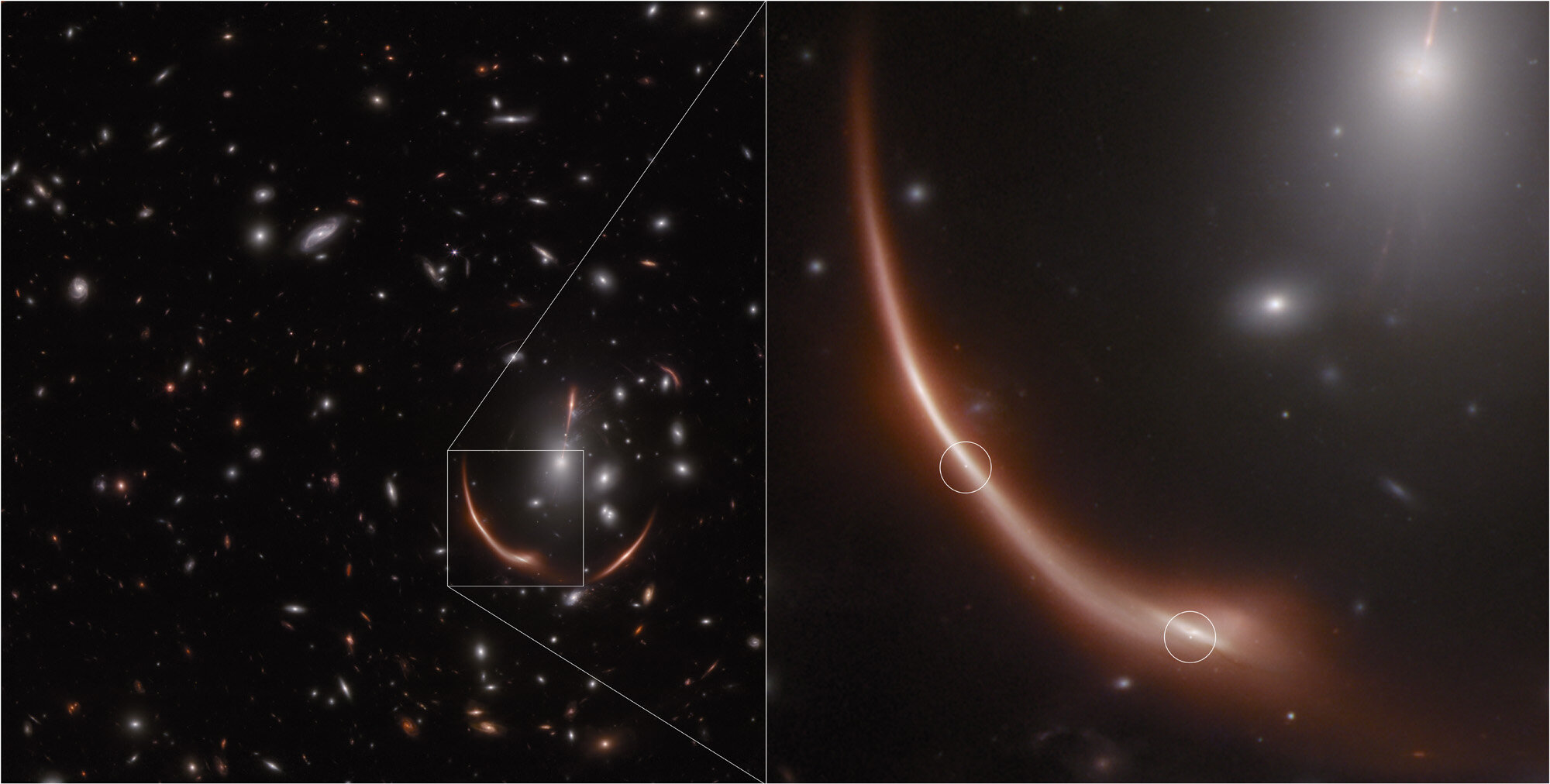
NASA's James Webb Space Telescope has discovered a second gravitationally lensed supernova in a distant galaxy, MRG-M0138. The first supernova, named Requiem, was found in 2019 and was too late to measure the Hubble constant. The second supernova, named Encore, was discovered serendipitously and will be used to measure and confirm the Hubble constant. These multiply imaged supernovae provide valuable insights into the expansion rate of the universe. Infrared observations in 2035 will capture the final appearances of both supernovae and provide a precise measurement of the Hubble constant.

Ancient Radio Burst Baffles Scientists, Challenges Theories

Originally Published 2 years ago — by Mashable

Featured image for Ancient Radio Burst Baffles Scientists, Challenges Theories
Source: Mashable

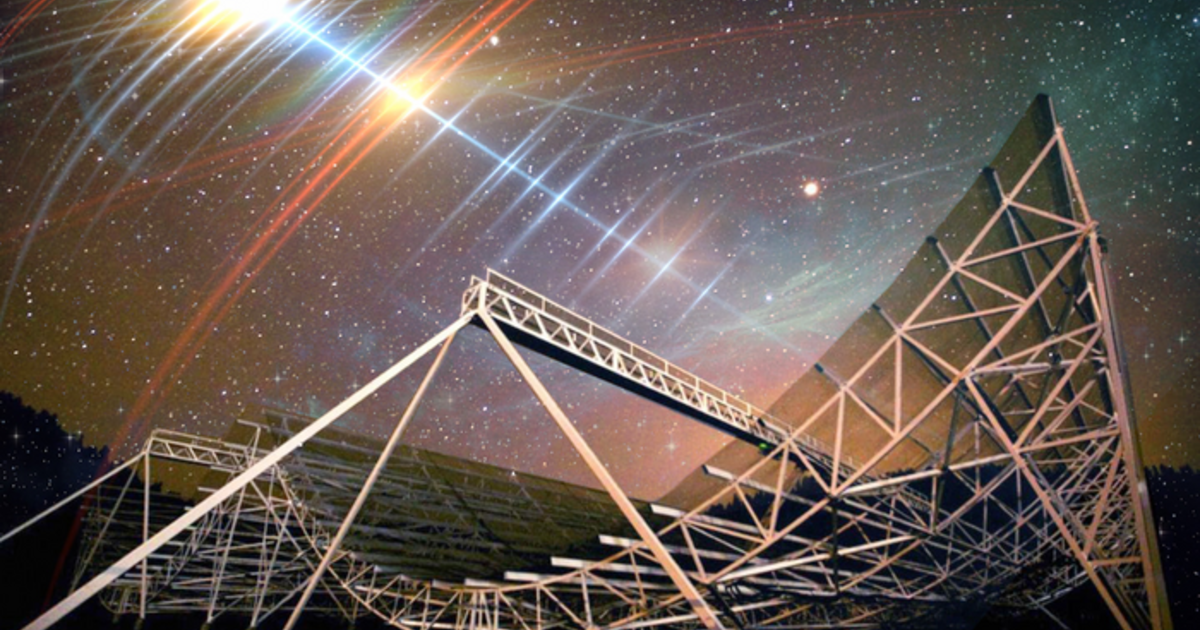
Astronomers have detected the most distant fast radio burst (FRB) ever recorded, originating from an 8-billion-year-old pulse that took half the lifetime of the universe to reach Earth. Using the Australian SKA Pathfinder (ASKAP) radio telescope, researchers confirmed the burst's origin by locating faint smudges of light in an extremely distant galaxy using the Very Large Telescope. The mystery of FRBs continues, with leading theories suggesting they may come from powerful magnetars or the merging of massive objects in space. Detecting FRBs can provide insights into the structure of the universe and the presence of hot gases between galaxies.

"8 Billion-Year-Old Radio Signal Shocks Astronomers"

Originally Published 2 years ago — by CBS News

Featured image for "8 Billion-Year-Old Radio Signal Shocks Astronomers"
Source: CBS News

Astronomers have detected a record-breaking radio signal that traveled eight billion light years from a distant galaxy to reach Earth. The fast radio burst (FRB) was more powerful and came from farther away than any previously recorded. The cause of FRBs remains a mystery, but scientists believe magnetars, highly magnetic dead stars, are the prime suspects. The recent FRB, named FRB 20220610A, originated from a clumpy galaxy that may have been merging with other galaxies. Scientists hope that studying FRBs will help uncover the secrets of the universe, including the missing matter known as dark matter and dark energy.

James Webb Space Telescope Captures Most Distant Gravitational Lensing: The Einstein Ring

Originally Published 2 years ago — by Space.com

Featured image for James Webb Space Telescope Captures Most Distant Gravitational Lensing: The Einstein Ring
Source: Space.com

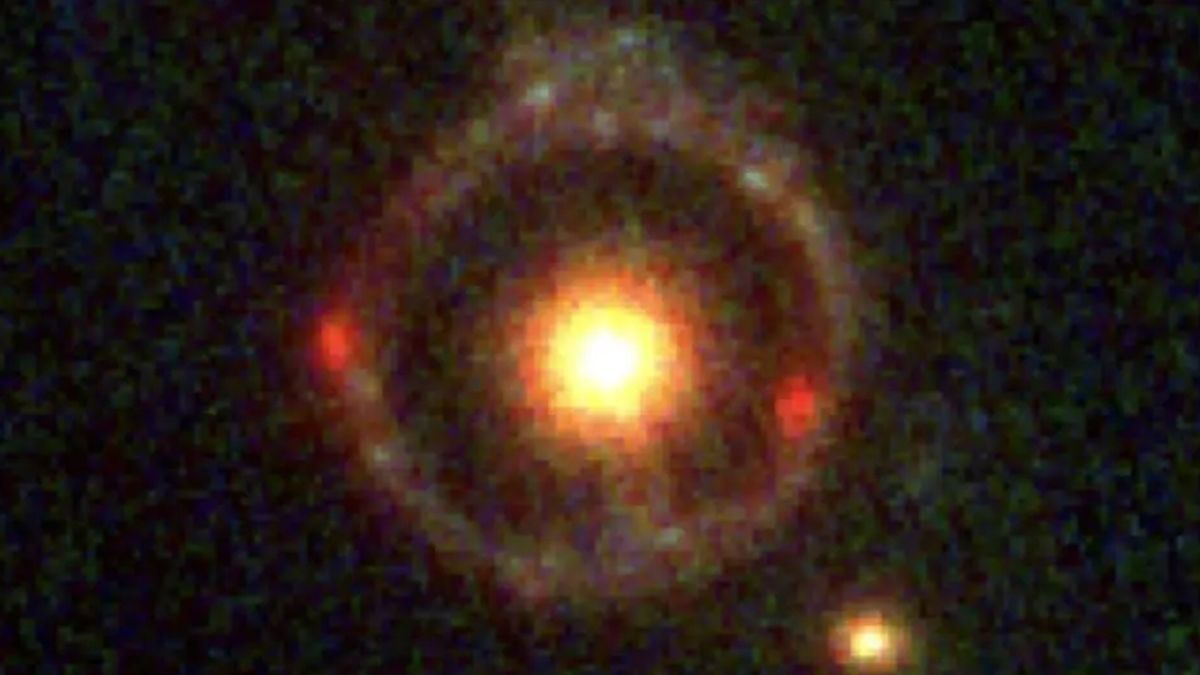
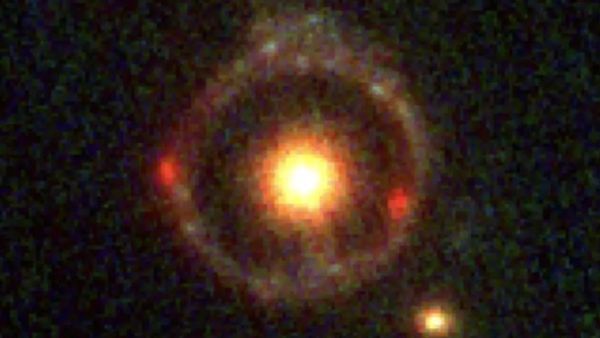
The James Webb Space Telescope (JWST) has captured images of the most distant Einstein ring ever seen, located 21 billion light-years away. An Einstein ring is a rare type of gravitationally lensed object that forms a complete circle around a closer object, resulting in a halo of warped light. The newly discovered Einstein ring, named JWST-ER1, consists of a compact galaxy acting as the lensing object and a more distant galaxy forming the luminous ring. The lensing galaxy is unusually dense, with a mass equivalent to around 650 billion suns, suggesting the presence of additional mass beyond dark matter. Further research is needed to understand the nature of these ancient, massive galaxies.

JWST Captures Farthest Gravitational Lens in Stunning Detail

Originally Published 2 years ago — by Livescience.com

Featured image for JWST Captures Farthest Gravitational Lens in Stunning Detail
Source: Livescience.com

The James Webb Space Telescope (JWST) has captured images of the farthest-ever Einstein ring, a halo of warped light located 21 billion light-years away. This record-breaking discovery surrounds a dense galaxy and is the most distant gravitationally lensed object ever observed. Gravitational lensing occurs when the gravity of a massive foreground object warps space-time, causing light from more distant objects to appear curved. The complete Einstein ring, named JWST-ER1, was found within the COSMOS-Web survey and consists of a compact galaxy acting as the lensing object and a more distant galaxy forming the luminous ring. The lensing galaxy's unusually high mass suggests the presence of dark matter, but additional mass is still unexplained. Further research is needed to understand the nature of these ancient, dense galaxies.

Rare Gravitational Lensing 'Flower' Captured in Deep Space, Defying Einstein's Prediction

Originally Published 2 years ago — by Space.com

Featured image for Rare Gravitational Lensing 'Flower' Captured in Deep Space, Defying Einstein's Prediction
Source: Space.com

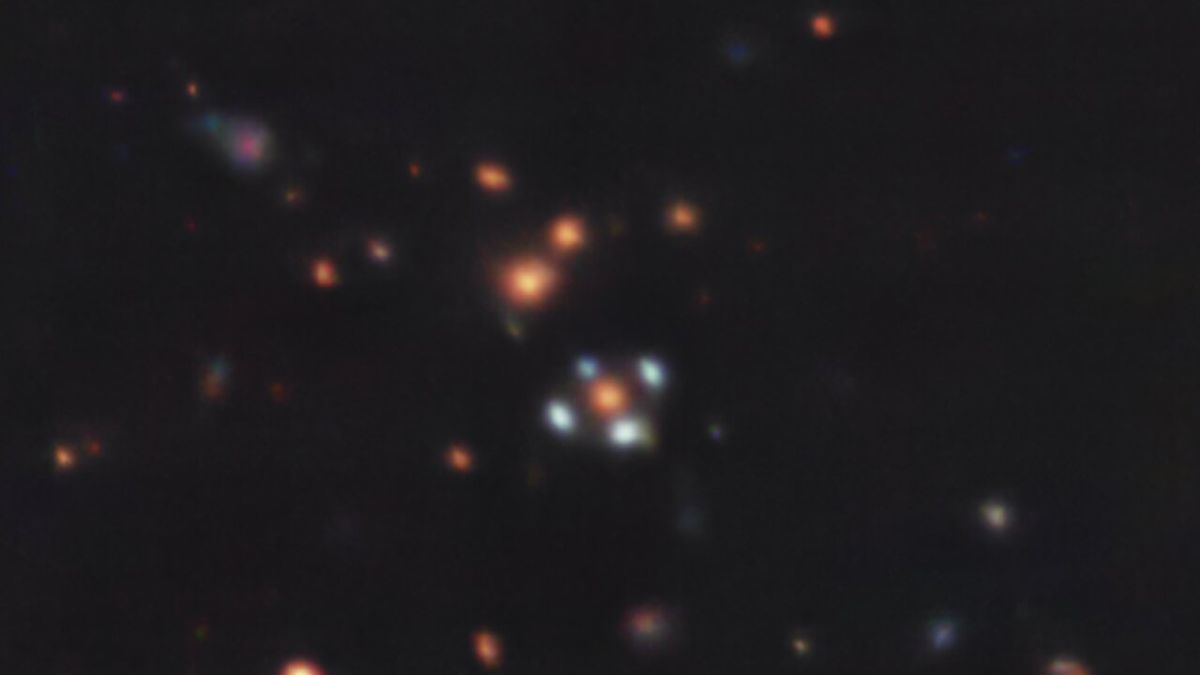
Astronomers using the European Southern Observatory's Very Large Telescope (VLT) have captured an image of a distant galaxy surrounded by four light-blue "petals," forming an Einstein Cross. The central galaxy acts as a gravitational lens, bending and magnifying light from a hidden galaxy behind it, creating duplicate images. The foreground galaxy splits the light from the background galaxy into four smudges of blue light, revealing clues about galaxy formation in the early universe. The observations were made using the Multi Unit Spectroscopic Explorer (MUSE) instrument on the VLT.
"Hubble Space Telescope Reveals Stunning Cosmic Spectacles"

Originally Published 2 years ago — by Space.com

Featured image for "Hubble Space Telescope Reveals Stunning Cosmic Spectacles"
Source: Space.com

The Hubble Space Telescope has captured a stunning image of the distant galaxy ESO 300-16, located 28.7 million light-years away in the Eridanus constellation. The galaxy appears as a cloud of sparkling stars against the dark backdrop of space. This image is part of a series aimed at surveying Earth's galactic neighbors, with around three-quarters of known galaxies within 10 megaparsecs of Earth already observed by Hubble. ESO 300-16 is classified as an irregular galaxy, resembling a cloud of tiny stars clumped together, with a bubble of bright blue gas at its core.