Tag

Dark Energy

All articles tagged with #dark energy

Cosmic census begins: Rubin Observatory to map 20 billion galaxies over a decade
science2 days ago

Cosmic census begins: Rubin Observatory to map 20 billion galaxies over a decade

Over the next decade, the Vera C. Rubin Observatory will image the southern sky in unprecedented detail, cataloging about 6 million asteroids, 17 billion stars, and 20 billion galaxies. With roughly 10 terabytes of data per night, the Legacy Survey of Space and Time aims to uncover the nature of dark matter and dark energy, while a network of community brokers processes detections in near real time and the public can participate as citizen scientists via online tools and data releases.
Cosmic Fate Rewritten: Could the Universe End in a Big Crunch
science8 days ago

Cosmic Fate Rewritten: Could the Universe End in a Big Crunch

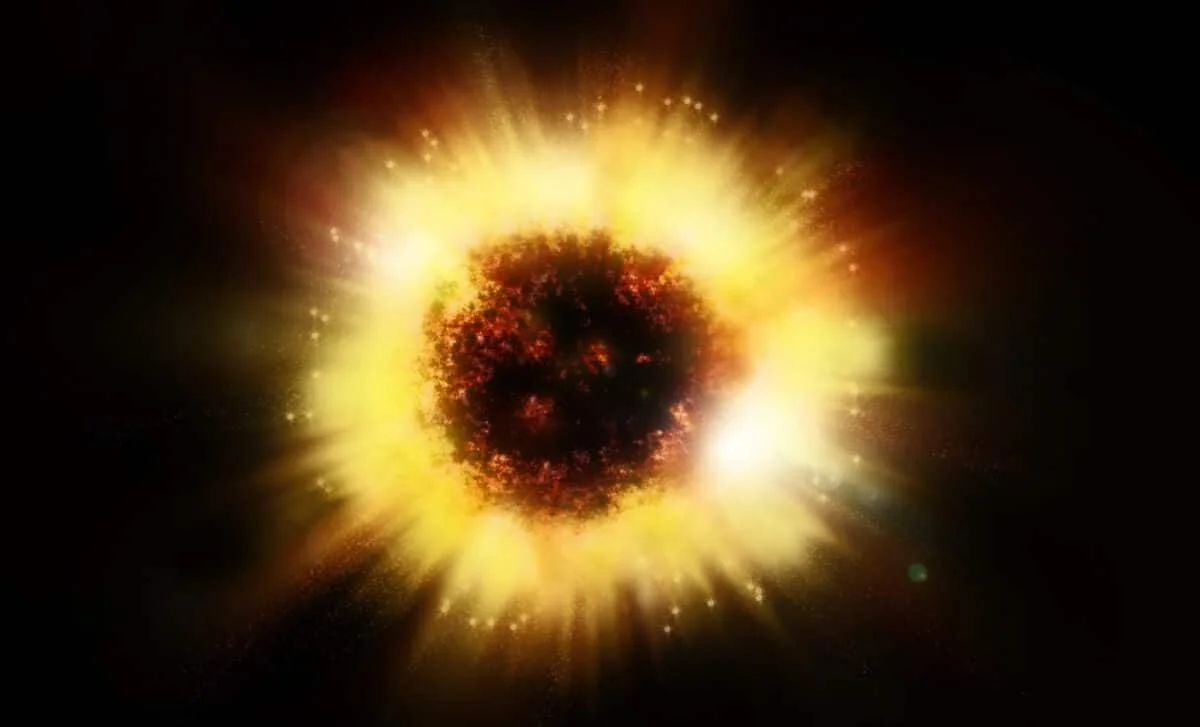
A Cornell-led analysis proposes the expansion of the universe could be temporary and eventually reverse if the cosmological constant is negative, driven by an ultralight axion field. The model places the universe’s total lifespan at about 33.3 billion years, with a slow crunch starting in roughly 11 billion years and final collapse about 8 billion years later (around 19–20 billion years from now). If dark energy’s behavior continues to deviate from a true constant, this Big Crunch scenario could hold; upcoming surveys and missions (Euclid, Rubin Observatory, SPHEREx) are expected to refine measurements and test the idea.

Tiny Measurement Bias Could Resolve the Dark Energy Tension
science11 days ago

Tiny Measurement Bias Could Resolve the Dark Energy Tension

A new paper by Slava Turyshev argues that small systematic biases in how we measure supernova brightness and the standard ruler set by baryon acoustic oscillations could explain the DESI DR2–CMB mismatch, potentially removing the case for evolving dark energy. He also advocates the Alcock-Paczynski diagnostic to reduce dependence on early-universe benchmarks and outlines scenarios like the Late-Transition Interacting Thawer (LTIT) and Phantom Crossing as alternative explanations, with upcoming data from Euclid expected to test these ideas.

Viscous Universe: A Fluid-Damped Expansion Could Redefine Dark Energy
science12 days ago

Viscous Universe: A Fluid-Damped Expansion Could Redefine Dark Energy

A new preprint suggests empty space behaves like a viscous fluid with bulk viscosity that resists expansion, introducing a time-varying drag on cosmic expansion to address DESI measurements. If future data from galaxy surveys, supernovae, and lensing align with this drag pattern, the idea could challenge the idea of a constant dark-energy driver, potentially replacing it with a dynamic picture—but the proposal remains speculative and requires peer review and broader observational checks.

Dark-energy clues push the universe toward a future Big Crunch
cosmology12 days ago

Dark-energy clues push the universe toward a future Big Crunch

New measurements from the Dark Energy Survey (DES) and DESI suggest the cosmological constant may be negative, causing the universe to keep expanding for about 11 billion more years before contracting to a Big Crunch roughly 20 billion years from now, for an approximate total lifespan of 33 billion years. The scenario relies on evolving dark energy, potentially linked to a very light particle, and is consistent with observations from DES and DESI, with future surveys like Euclid, SPHEREx, and Rubin Observatory planned to test the idea.

DES six-year results largely confirm standard cosmology, with a notable caveat on galaxy clustering
physics-and-astronomy1 month ago

DES six-year results largely confirm standard cosmology, with a notable caveat on galaxy clustering

The Dark Energy Survey’s six-year analysis of 669 million galaxies finds results consistent with the standard cosmology, with both a constant dark-energy density and a time-varying version fitting the data comparably well. However, patterns in how galaxies cluster still show slight tensions with predictions, indicating the model is not complete. The study tightens expansion history constraints and paves the way for further tests with the Vera C. Rubin Observatory, aiming to clarify dark energy’s nature and whether new physics may be needed.

DES six-year dataset teases possible cracks in the dark-energy picture
science1 month ago

DES six-year dataset teases possible cracks in the dark-energy picture

A six-year analysis from the Dark Energy Survey finds results largely consistent with the standard lambda-CDM cosmology (constant dark energy density) but also fits the evolving-energy wCDM model. Hints of late-time discrepancies in how galaxies cluster could point to new physics, though nothing is yet conclusive (not five-sigma). The DES team plans to explore alternative gravity models and other fits with forthcoming data, with 19 papers detailing the analysis.

Dark Energy Revealed: DES Maps the Cosmos Across 669 Million Galaxies
space1 month ago

Dark Energy Revealed: DES Maps the Cosmos Across 669 Million Galaxies

Using six years of DES data from the Dark Energy Camera, researchers mapped 669 million galaxies (2013–2019) to trace how dark energy drives cosmic expansion and how matter clusters, applying four probes (Type Ia supernovae, weak lensing, galaxy clustering, and baryon acoustic oscillations). The results largely support ΛCDM and wCDM expansion scenarios but show a growing mismatch in current matter clustering, hinting at potential new physics or gaps in existing models; DES will merge with Rubin Observatory's LSST to map ~20 billion galaxies and sharpen tests of gravity and dark energy.

570-Megapixel Eye Maps the Cosmos, Tightening Dark Energy Clues
space1 month ago

570-Megapixel Eye Maps the Cosmos, Tightening Dark Energy Clues

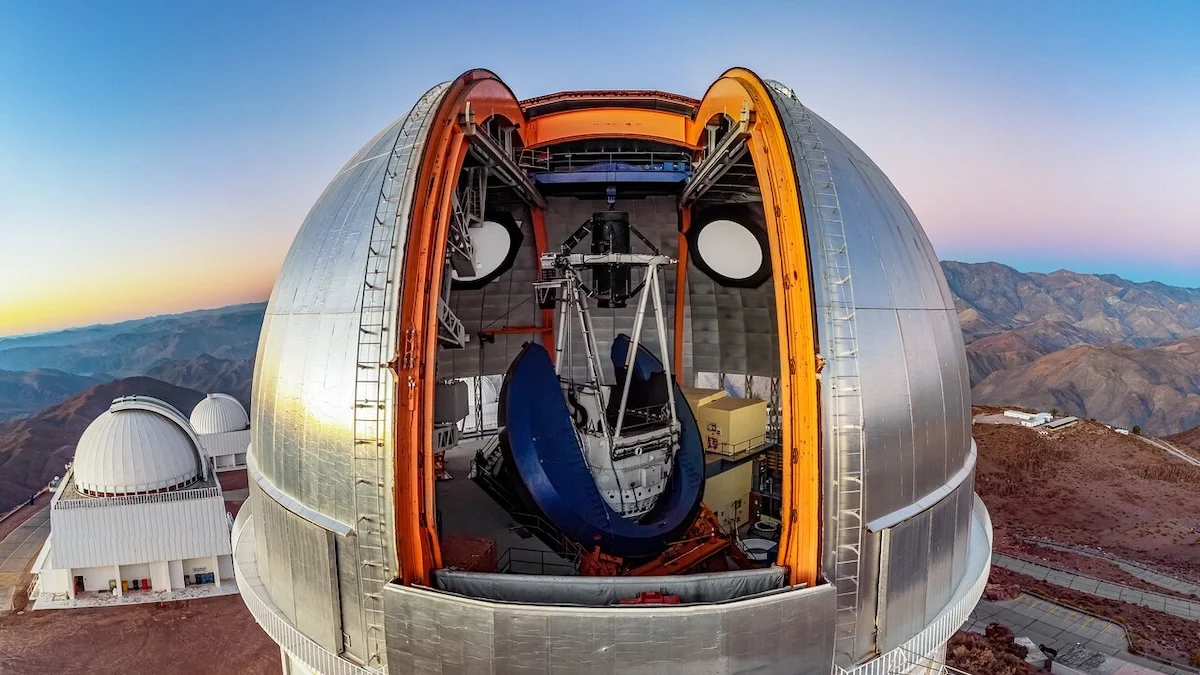
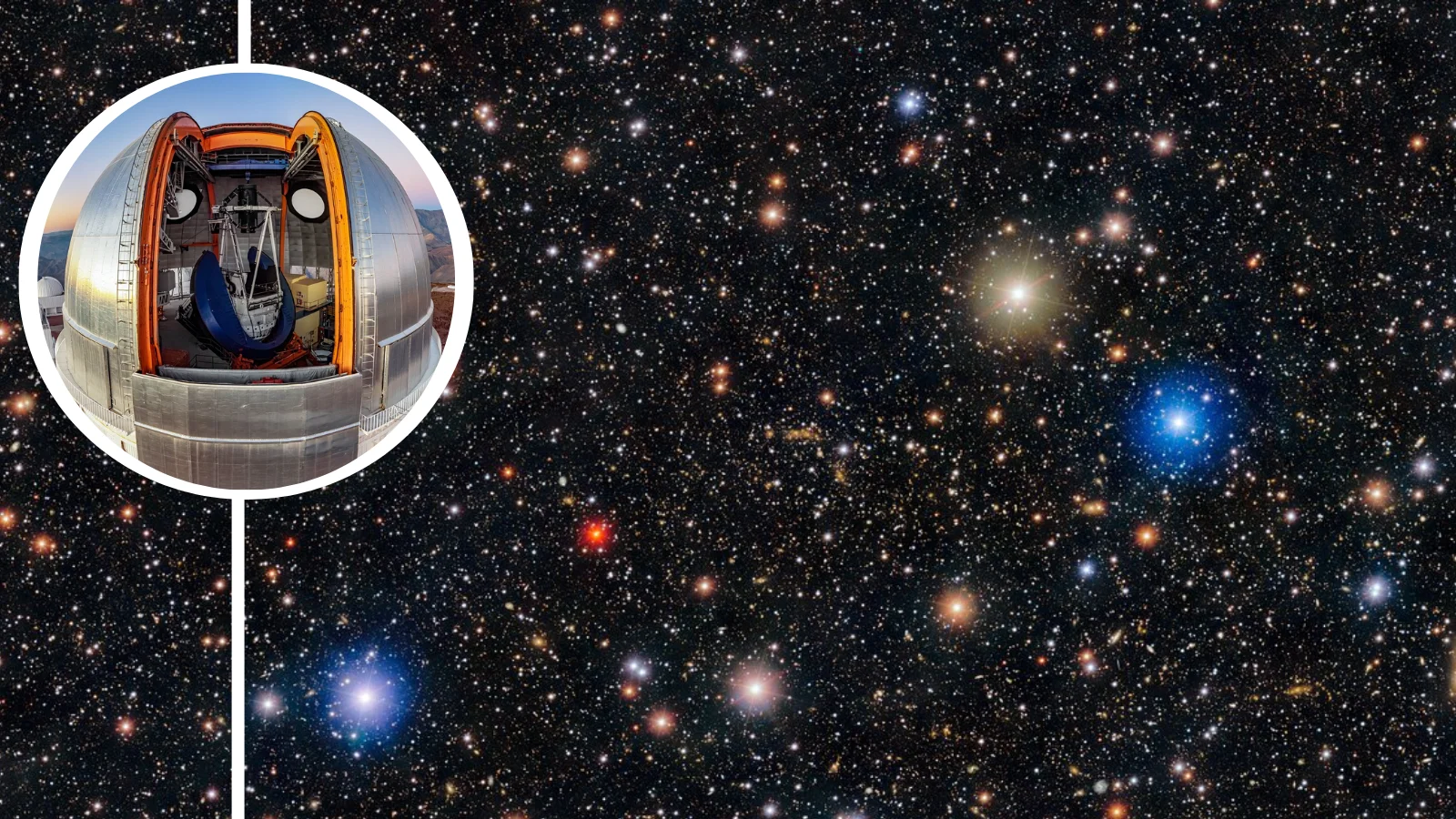
The Dark Energy Survey used the 570‑megapixel Dark Energy Camera on the Blanco telescope to combine weak lensing, galaxy clustering, BAO, Type Ia supernovae, and other probes over six years, delivering the clearest expansion history of the Universe to date and broadly supporting the standard Lambda-CDM model while noting a remaining tension, with the Rubin Observatory’s decade‑long Legacy Survey approaching.

Sharper dark‑energy map tightens cosmic clues while hinting at clustering mysteries
space1 month ago

Sharper dark‑energy map tightens cosmic clues while hinting at clustering mysteries

Six years of DES data from the Dark Energy Camera (DECam) on the Blanco telescope, spanning 758 nights and about 669 million galaxies, were analyzed using four probes—Type Ia supernovae, weak gravitational lensing, galaxy clustering and baryon acoustic oscillations—to dramatically tighten constraints on dark energy and the expansion of the universe. The results largely align with LCDM and the wCDM model, but reveal a tension in how matter clusters today compared with early-universe predictions, hinting at potential new physics as DES plans to combine its data with observations from the Vera C. Rubin Observatory’s LSST for even clearer cosmic maps.

Cosmic Fluid Dynamics: Space May Be a Viscous Medium
science1 month ago

Cosmic Fluid Dynamics: Space May Be a Viscous Medium

A preprint from IIT Jodhpur proposes treating outer space as a slow-moving viscous fluid with “spatial phonons” that could subtly push back on dark energy. The idea, meant to reconcile discrepancies between observations and the standard ΛCDM model (notably from DESI/DESI surveys), keeps dark energy as a cosmological constant while adding a mechanism for nonuniform cosmic expansion. It is not yet peer-reviewed and requires more data to test its viability.

Could the Universe Be a Sticky Fluid? New Research Hints at Viscous Space
science1 month ago

Could the Universe Be a Sticky Fluid? New Research Hints at Viscous Space

A recent arXiv preprint proposes that space has bulk viscosity, acting like a viscous fluid with spatial phonons creating drag that slows cosmic expansion. This viscous-dark-energy model fits DESI data and could resolve tensions with the standard Lambda-CDM framework, but it remains provisional and will be tested by upcoming observations from missions like Euclid and continued DESI data.

Sticky Space? New Idea Says the Vacuum Could Be a Viscous Fluid Shaping the Cosmos
physics-and-mathematics1 month ago

Sticky Space? New Idea Says the Vacuum Could Be a Viscous Fluid Shaping the Cosmos

A new arXiv preprint proposes space may have bulk viscosity, effectively making the vacuum a viscous medium with spatial phonons that could slow cosmic expansion and better align DESI observations with reality. If true, this viscous-space model would challenge the standard Lambda-CDM cosmology and the cosmological constant, potentially redefining our understanding of dark energy. However, the idea is unreviewed and data-driven, with questions about whether viscosity is fundamental or a measurement artifact; upcoming data from Euclid and further DESI analyses will be crucial to test this hypothesis.

Cosmic Acceleration Reinterpreted: Finsler Gravity Challenges Dark Energy
science1 month ago

Cosmic Acceleration Reinterpreted: Finsler Gravity Challenges Dark Energy

A German team proposes that dark energy may not be necessary if gravity is described by Finsler geometry, an anisotropic modification to gravity that can reproduce the universe’s accelerating expansion without dark energy; the study presents an intriguing alternative to the standard model, but it does not definitively overturn dark energy and further research is needed to test these ideas.