Tag

Quantum Chemistry

All articles tagged with #quantum chemistry

science-and-technology2 years ago

"Revealing the Enigma of Electron Tunneling through Quantum Breakthrough"

New research using a van der Waals complex Ar-Kr+ has unveiled insights into electron tunneling dynamics at the sub-nanometer scale, highlighting the crucial influence of neighboring atoms in quantum tunneling. This breakthrough has important implications for quantum physics, nanoelectronics, and the study of complex biomolecules, providing a new way to understand the key role of the Coulomb effect in electron tunneling dynamics and laying a solid research foundation for probing and controlling the tunneling dynamics of complex biomolecules.

science-and-technology2 years ago

"The Science Behind the Dark and Rough Surface of Black Silicon in Solar Cells"

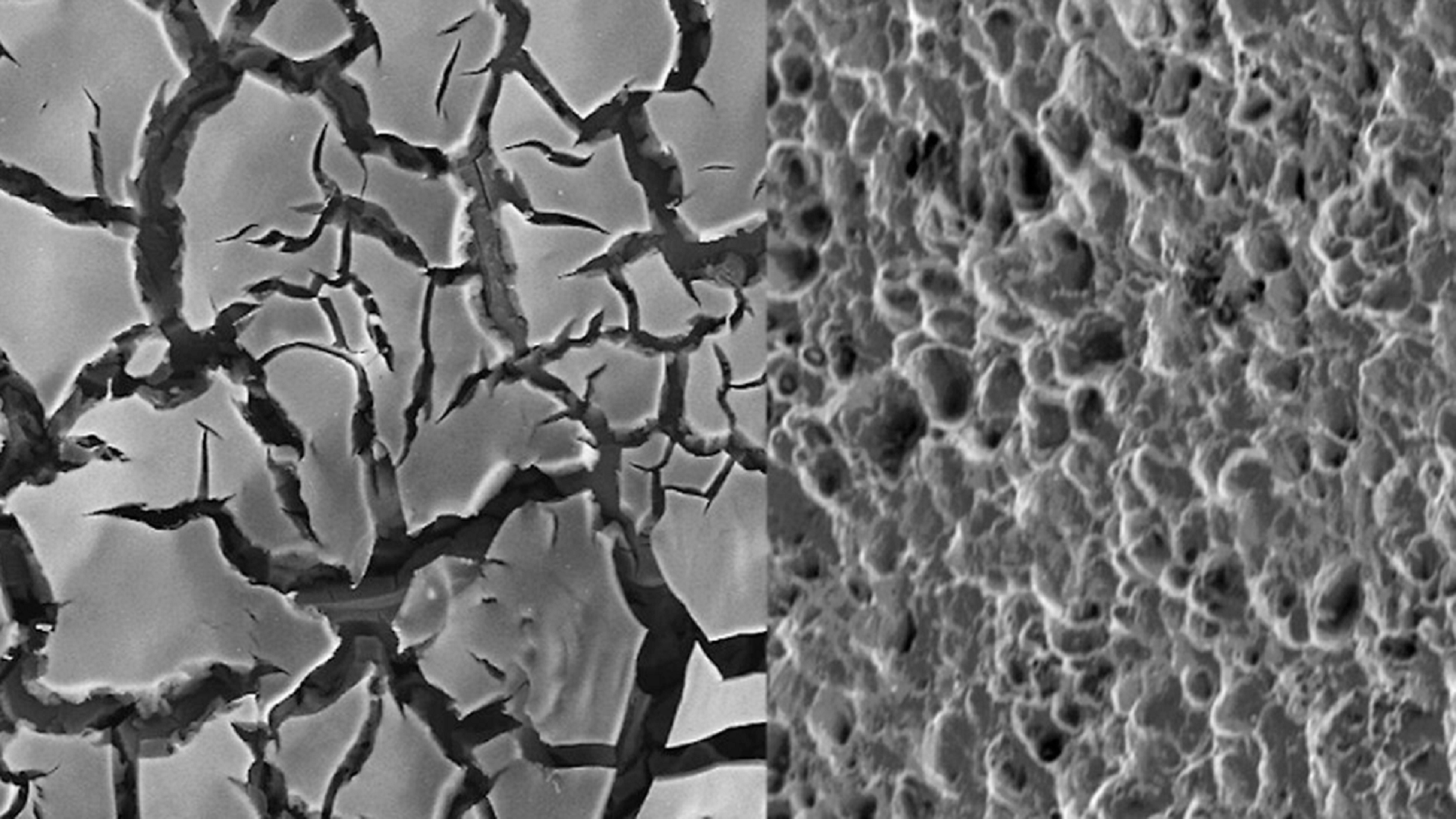
Researchers at the U.S. Department of Energy's Princeton Plasma Physics Laboratory (PPPL) have developed a new theoretical model explaining how black silicon, a crucial material used in solar cells and other applications, is created by etching the surface of regular silicon with fluorine gas to produce tiny nanoscale pits that trap more light. The new model reveals how fluorine gas breaks certain bonds in the silicon based on their orientation, creating a rough surface ideal for light absorption. This research represents an early success in PPPL's foray into quantum chemistry and fills a gap in publicly available research on the production of black silicon.

science-and-technology2 years ago

Revolutionary AI Model Predicts Chemical Reactions with Unprecedented Accuracy and Speed

Researchers at MIT have developed a machine learning-based computational model that can quickly calculate the structures of transition states in chemical reactions. Transition states are fleeting and difficult to observe experimentally, but their structures are crucial for designing catalysts and understanding natural chemical reactions. The model, which uses a diffusion model approach, was trained on 9,000 different chemical reactions and accurately predicted transition state structures for 1,000 new reactions. The entire computational process takes just a few seconds per reaction, making it significantly faster than traditional quantum chemistry methods. The model could have applications in designing new reactions and catalysts for fuel and drug synthesis, as well as modeling chemical reactions on other planets or during the early evolution of life on Earth.

science-and-astronomy2 years ago

"NASA's Quantum Chemistry Experiment on ISS Achieves Exotic 5th State of Matter"

Scientists operating the Cold Atom Lab on the International Space Station have successfully generated a quantum gas containing two species of atoms, achieving a milestone in quantum chemistry research. The creation of a Bose-Einstein condensate, an exotic fifth state of matter, in microgravity opens up new possibilities for space-based experiments. This breakthrough could lead to the development of space-based quantum technologies, such as highly sensitive gyroscopes for deep space navigation and improved clocks for applications like high-speed internet and GPS. Additionally, researchers hope to use the Cold Atom Lab to test the equivalence principle, a fundamental concept in Albert Einstein's theory of general relativity.

science-and-technology2 years ago

"Groundbreaking Experiment on ISS Achieves Fifth State of Matter through Quantum Chemistry"

Scientists operating the Cold Atom Lab aboard the International Space Station have successfully generated a quantum gas containing two species of atoms, achieving a milestone in quantum chemistry research. The creation of a Bose-Einstein condensate, an exotic fifth state of matter, in microgravity opens up new possibilities for space-based experiments. This breakthrough could lead to the development of space-based quantum technologies, such as highly sensitive gyroscopes for deep space navigation and improved clocks for applications like high-speed internet and GPS. Additionally, researchers hope to use the Cold Atom Lab to test the equivalence principle, a fundamental concept in Albert Einstein's theory of general relativity.

science-and-technology2 years ago

"Scientists Unveil Long-Held Theory, Shedding Light on Mysterious Molecular Realm"

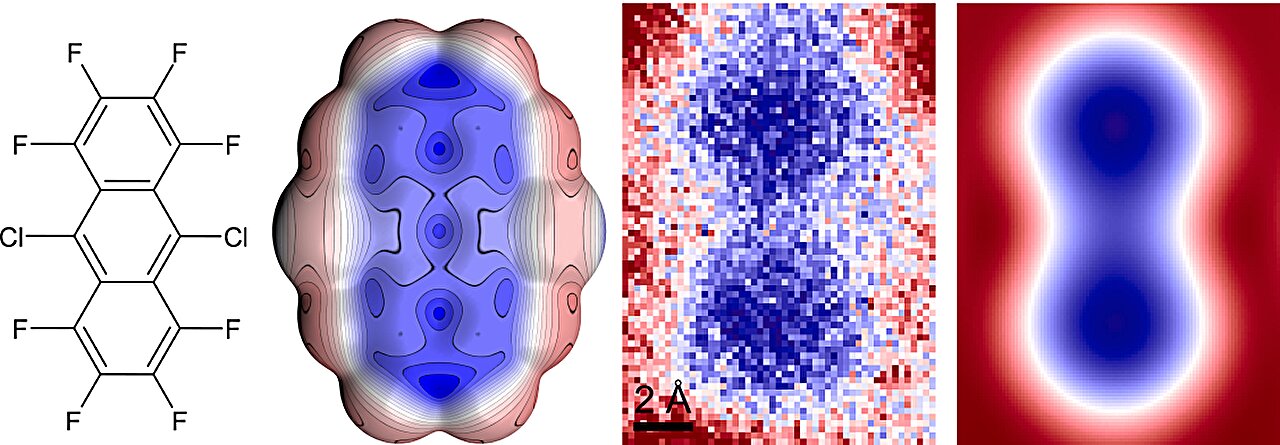
Scientists have experimentally confirmed a long-standing theory about the non-uniform distribution of electron density in aromatic molecules, expanding possibilities for designing new nanomaterials. Utilizing advanced scanning electron microscopy, researchers verified the existence of the π-hole, a phenomenon that significantly affects the physicochemical properties of molecules. This research provides a better understanding of electron charge distribution and has implications for chemical and biological processes, as well as the development of advanced nanomaterials.

science-and-technology2 years ago

Unprecedented Slowdown: Scientists Observe Chemical Reaction at 100 Billionth of its Normal Speed

Scientists have successfully observed a conical intersection, a common interaction in quantum chemistry, by using a quantum computer to slow down the process by 100 billion times. This allowed them to make meaningful observations and measurements that were previously impossible due to the extremely short duration of the interactions. The research team used a charged particle trapped in a field to monitor the reaction, providing valuable insights into light-based reactions in various scenarios. The study demonstrates the potential of quantum computers in simulating reactions and opens up new possibilities in materials science, drug design, and solar energy harvesting.

science2 years ago

Decades-old theory of electron density in aromatic molecules confirmed by scientists

Scientists have experimentally confirmed a decades-old theory of a non-uniform distribution of electron density in aromatic molecules. This discovery expands the possibilities for designing new nanomaterials and understanding chemical and biological processes. The researchers used advanced scanning electron microscopy to visualize the electron shell structure of atoms and confirmed the existence of the π-hole, a positively charged electron hole. The success of the experiment was attributed to the excellent facilities and participation of Ph.D. students. Theoretical predictions in quantum chemistry have been validated, demonstrating their reliability even without available experiments.

technology2 years ago

"Fermionic Quantum Processor: A Breakthrough in Scientific Advancements"

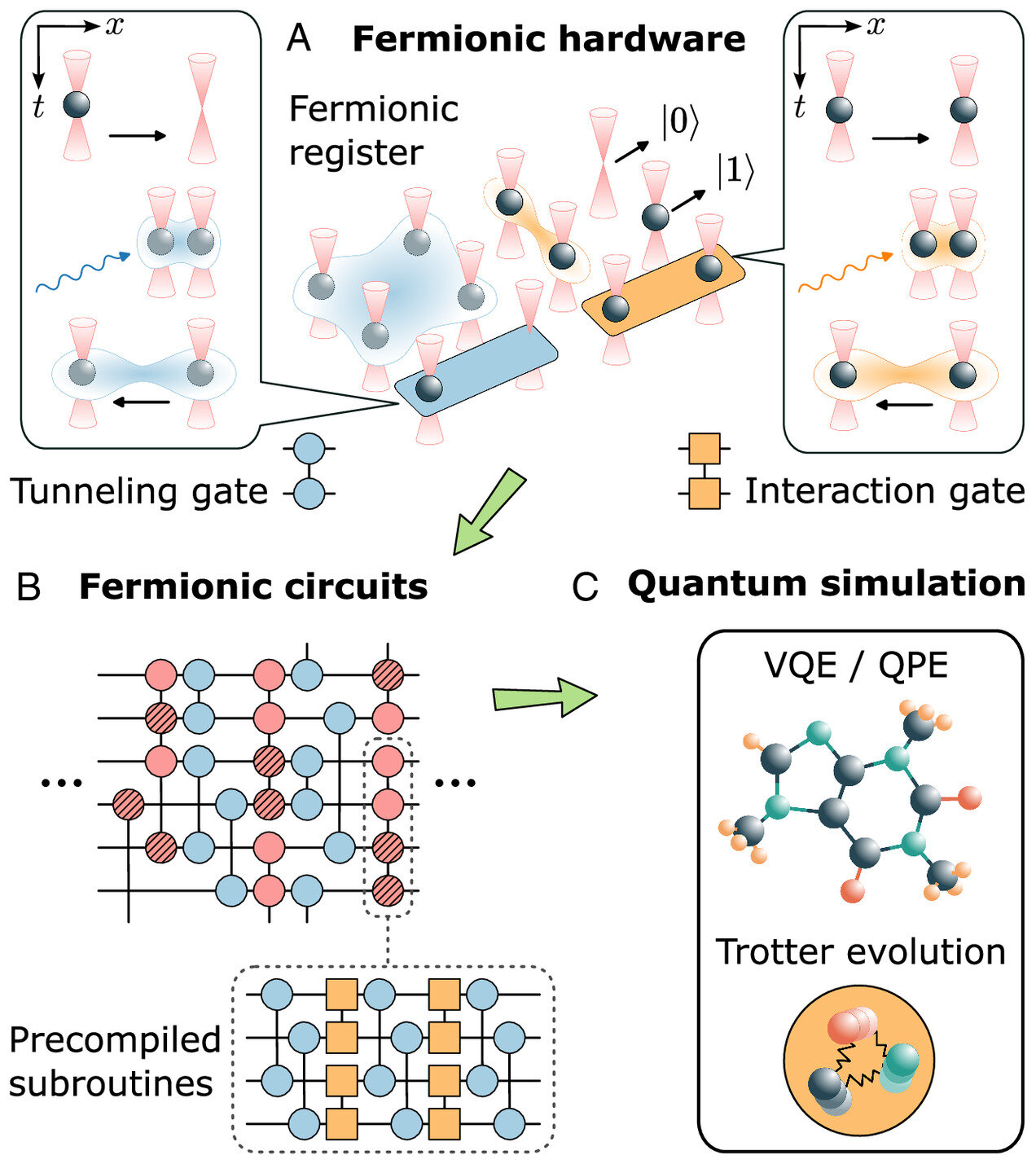
Scientists have developed a fermionic quantum processor that uses fermionic atoms to efficiently simulate complex physical systems, such as molecules and quark-gluon plasmas. The processor utilizes programmable neutral atom arrays and fermionic gates to simulate fermionic models in a hardware-efficient manner. This advancement has applications in quantum chemistry and particle physics, offering a promising future for fermionic quantum processing.

science2 years ago

Quantum Chemistry in Eyes Prevents Vision Loss.

Researchers from the University of Tübingen and Yale University have discovered that melanin, the pigment responsible for darkening hair, skin, and eyes, plays a crucial role in protecting the retina from toxic compounds that can cause vision loss. The process involves a quantum-like behavior called chemexcitation, which boosts melanin's electrons to a high energy state, allowing it to degrade dangerous compounds. The knowledge gained from this study could lead to the development of pharmaceuticals that can break down toxic compounds in aging individuals, preventing age-related macular degeneration.

quantum-computing2 years ago

"Quantum Computing Advancements: Algorithms and AI Comparison"

Researchers at RIKEN have developed a hybrid quantum-computational algorithm that can efficiently calculate atomic-level interactions in complex materials, enabling the use of smaller quantum computers or conventional ones to study condensed-matter physics and quantum chemistry. The algorithm can compile time-evolution operators at a lower computational cost, making it practical for small quantum computers. The team intends to clarify how the time-evolution operators optimized by their method can be applied to various quantum algorithms that can compute the properties of quantum materials.