Researchers observed a superconductor behavior that defies current physics understanding, as quantum fluctuations unexpectedly ceased at a certain electron density in a superconducting experiment using tungsten ditelluride. This phenomenon challenges existing theories and requires new understanding of superconducting quantum phase transitions, presenting an intriguing puzzle for physicists to solve.

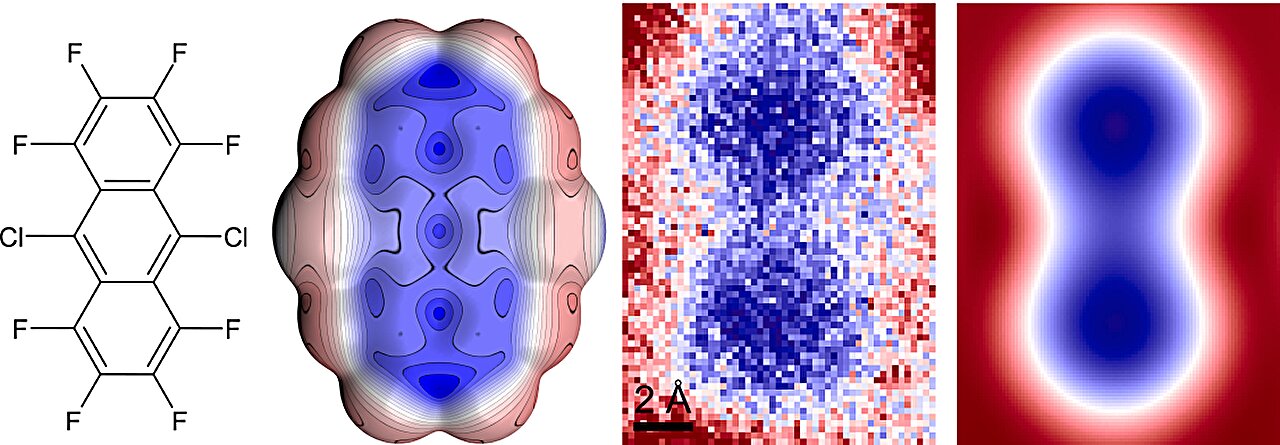
Scientists have experimentally confirmed a long-standing theory about the non-uniform distribution of electron density in aromatic molecules, expanding possibilities for designing new nanomaterials. Utilizing advanced scanning electron microscopy, researchers verified the existence of the π-hole, a phenomenon that significantly affects the physicochemical properties of molecules. This research provides a better understanding of electron charge distribution and has implications for chemical and biological processes, as well as the development of advanced nanomaterials.
Scientists have experimentally confirmed a decades-old theory of a non-uniform distribution of electron density in aromatic molecules. This discovery expands the possibilities for designing new nanomaterials and understanding chemical and biological processes. The researchers used advanced scanning electron microscopy to visualize the electron shell structure of atoms and confirmed the existence of the π-hole, a positively charged electron hole. The success of the experiment was attributed to the excellent facilities and participation of Ph.D. students. Theoretical predictions in quantum chemistry have been validated, demonstrating their reliability even without available experiments.