quantum-computing4.445 min read
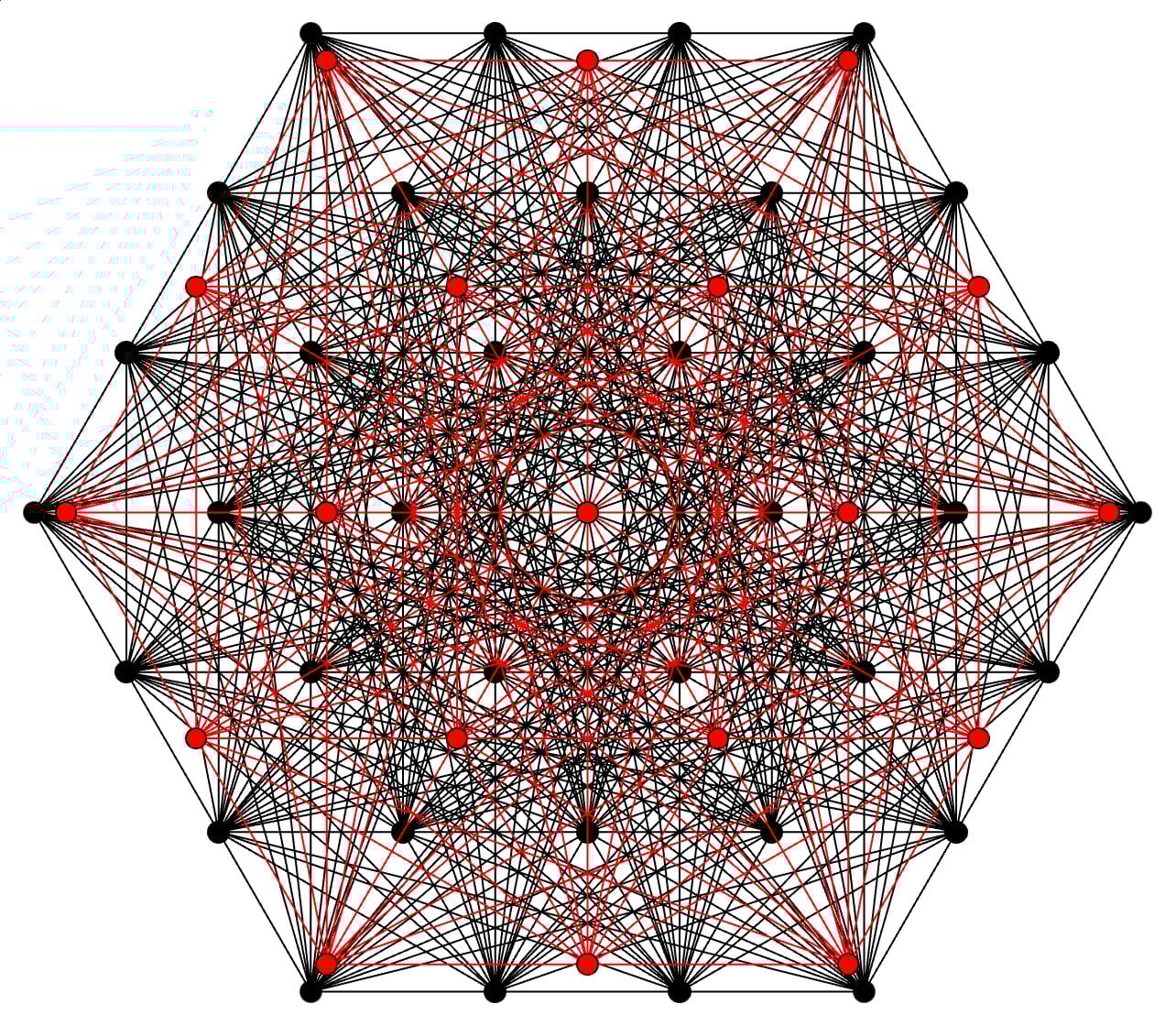
"Building Quantum Spherical Codes: A New Framework"
1 year ago•Source: Phys.org

The latest quantum computing stories, summarized by AI
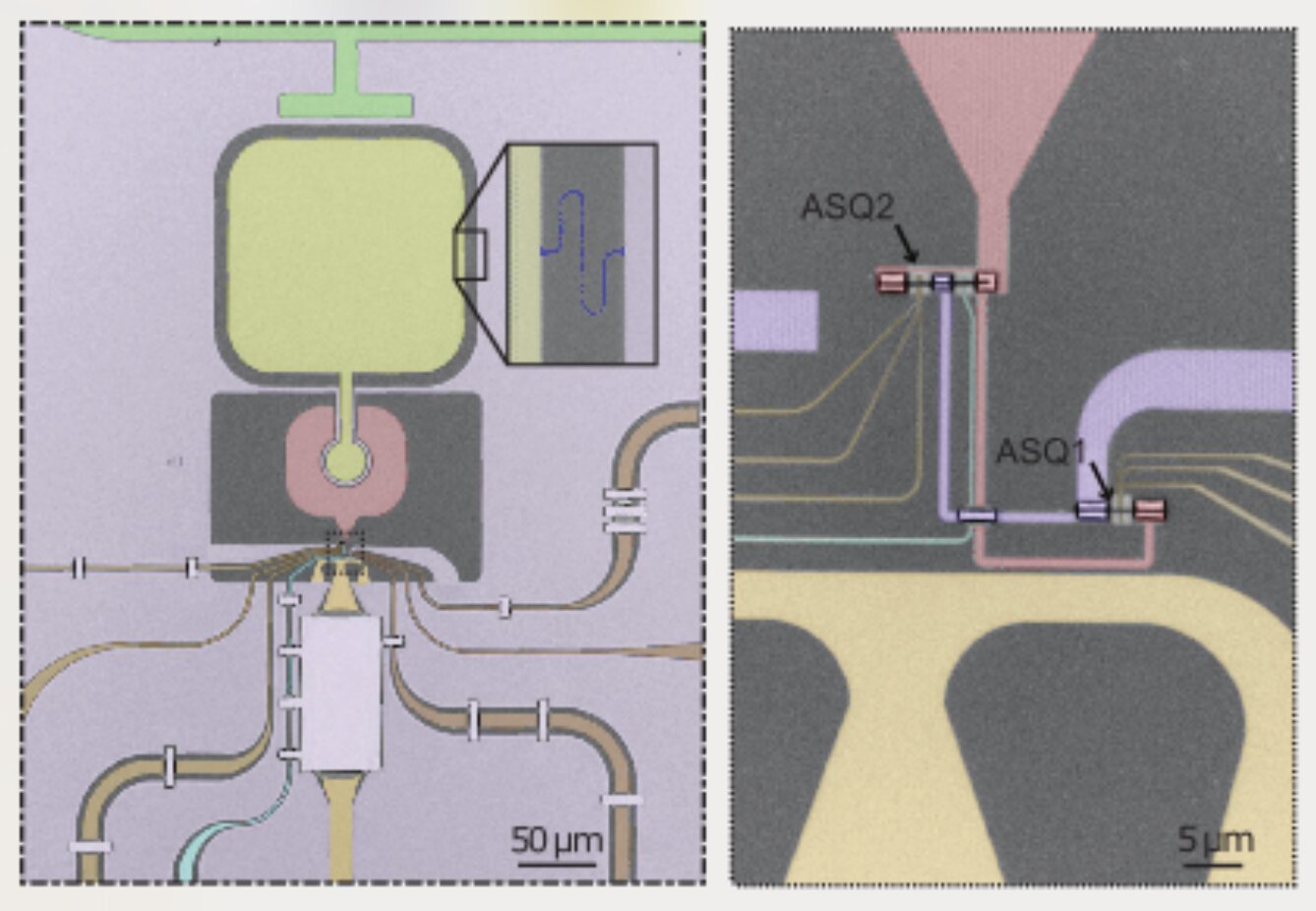
Researchers at Delft University of Technology have demonstrated strong and tunable coupling between two distant Andreev spin qubits, leveraging superconducting and semiconductor materials. This breakthrough could enhance the design flexibility and performance of quantum computers by enabling long-distance qubit coupling and closer packing of qubits. Future studies aim to improve coherence times by using cleaner semiconductor platforms.
Phys.org•1 year ago
SciTechDaily•1 year ago
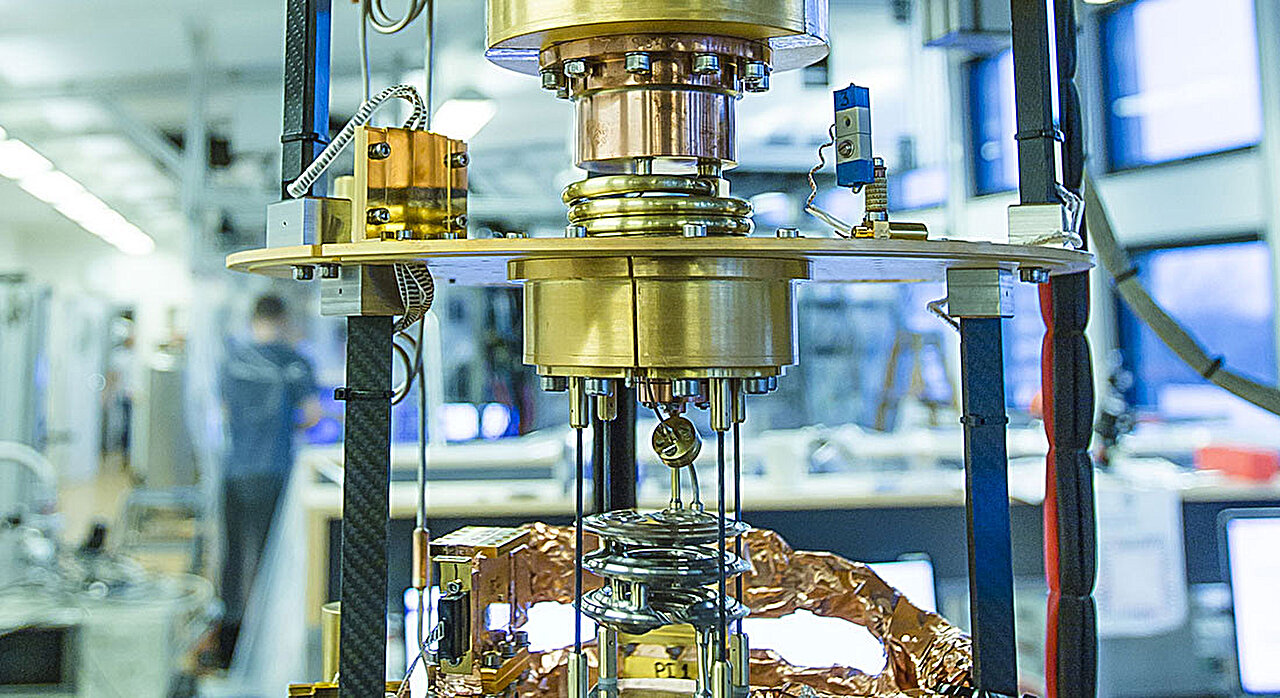
Researchers at the Niels Bohr Institute have developed a method to use noise to process quantum information, increasing the performance of qubits by 700%. By continuously monitoring and adapting to environmental changes in real time, they have demonstrated a new approach to quantum computing that could lead to more powerful computers in the future. This interdisciplinary effort involves the integration of a singlet-triplet spin qubit with FPGA-powered qubit controllers and has the potential to revolutionize quantum computing by actively adjusting for environmental noise.

Researchers at Paderborn University have developed a method using photon detectors for homodyne detection to accurately characterize optical quantum states, a crucial advancement for quantum information processing and computing. By utilizing superconducting nanowire single photon detectors, they have demonstrated a linear response to input photon flux, potentially leading to the development of highly efficient homodyne detectors with single-photon sensitive detectors, opening up new possibilities in quantum information processing beyond qubits.

Scientists have made a breakthrough in quantum error correction by creating an error-free quantum bit, or qubit, from a single pulse of light, potentially paving the way for light-based room-temperature quantum computers in the future. This development could address the instability and failure issues associated with traditional qubits, which are typically made from superconducting metals and require near absolute zero temperatures for stability. The new approach involves creating a logical qubit from a single laser pulse containing multiple entangled photons, offering inherent error correction capabilities. While the experimental results are promising, further research is needed to achieve the error-correction levels required for practical use in quantum computing.

Quantum error-correcting codes, first discovered by Peter Shor in 1995, distribute quantum information across many qubits to prevent errors from derailing computations. These codes can absorb errors and reverse them using established procedures specific to each code. Zhi Li and Latham Boyle discovered a connection between quantum error correction and aperiodic tilings, leading to the possibility of building a quantum error-correcting code based on a class of aperiodic tilings. They started with Penrose tilings and identified tiling configurations that wouldn't be affected by localized errors, similar to virtual qubit states in ordinary quantum error-correcting codes.
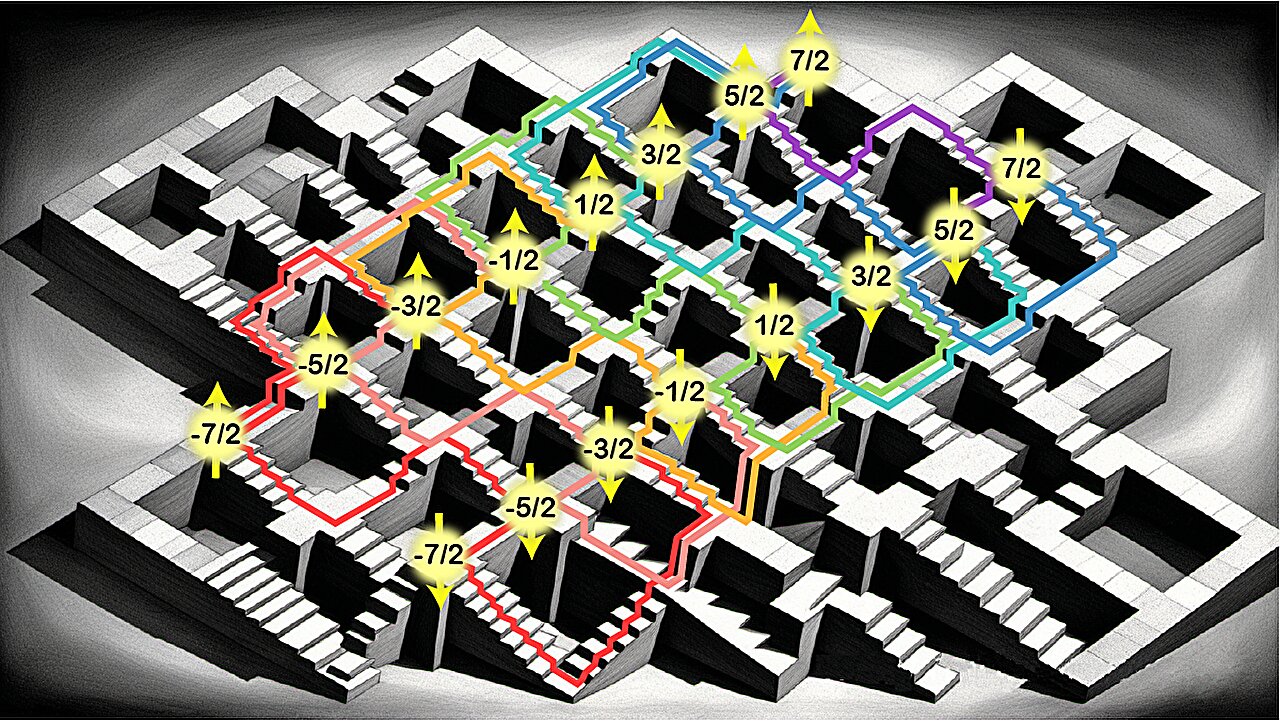
Quantum computing engineers at UNSW Sydney have successfully encoded quantum information in four unique ways within a single antimony atom implanted in a silicon chip, demonstrating the ability to perform multiple control methods within the same atom. This breakthrough could address challenges in operating millions of quantum computing units within a small space. The engineers utilized the 16 quantum states of the antimony atom to achieve this feat, providing flexibility for future quantum computing chip designs. The next step for the team is to use the large computational space of the antimony atom to perform more sophisticated quantum operations and encode a 'logical' qubit within the atom, which could lead to commercially useful quantum computer hardware.

Researchers from the University of Tokyo, along with colleagues from Mainz University and Palacký University Olomouc, have demonstrated a new method for constructing a photonic quantum computer using a laser-generated light pulse that can consist of several photons. This approach provides an inherent capacity to correct errors, eliminating the need to generate individual photons as qubits via numerous light pulses and then have them interact as logical qubits. The research, published in the journal Science, shows the potential for transforming non-universally correctable qubits into correctable qubits using innovative quantum optical methods.

Researchers have achieved quantum coherence at room temperature, a crucial step in the development of quantum computers, by creating an entangled quintet state in electrons using a chromophore embedded in a metal-organic framework. This breakthrough could lead to more efficient generation of multiexciton state qubits and open doors to room-temperature molecular quantum computing and quantum sensing technologies with higher resolutions and sensitivities.
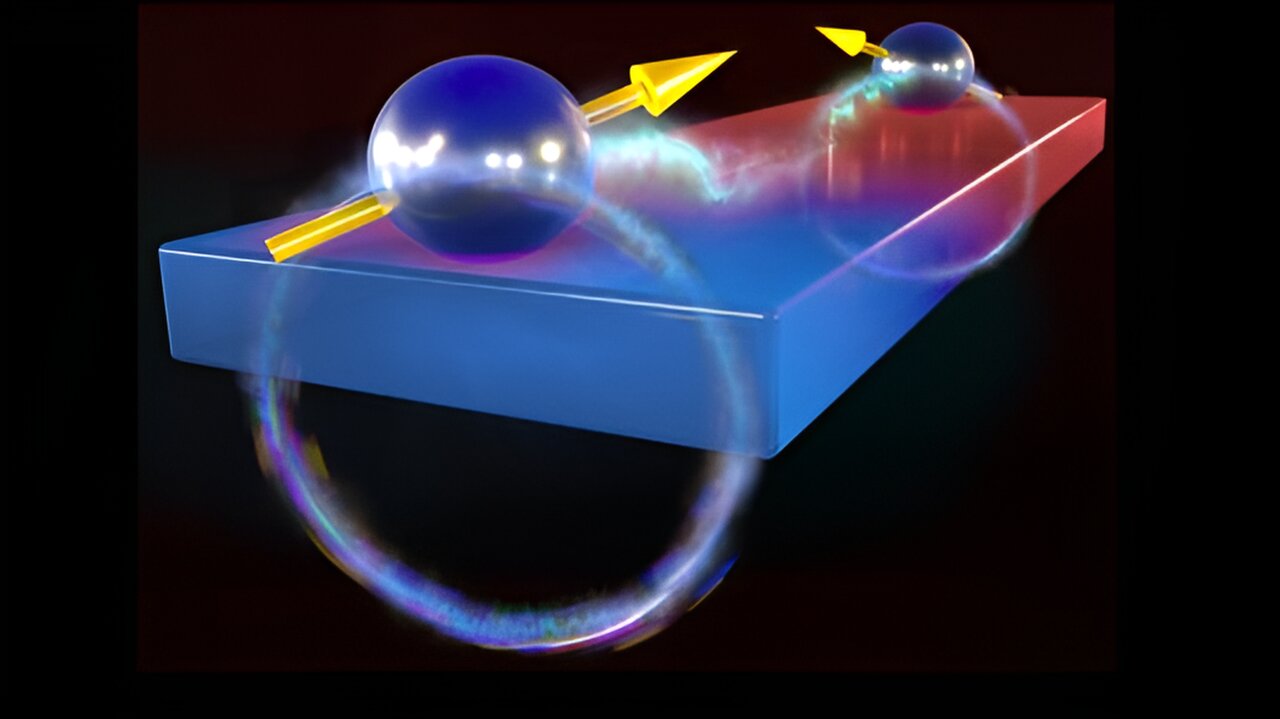
Researchers have demonstrated a novel quantum computer design in which qubits, the building blocks of quantum computers, can communicate with each other through magnets instead of through the air. This technology allows for selective interaction between qubits and enables them to be situated farther apart than is typical, potentially unlocking complex capabilities for quantum computing. The use of magnets to entangle qubits could provide a scalable and robust quantum technology using conventional materials, with potential applications for other solid-state qubit systems.

MIT researchers have achieved a breakthrough in quantum technologies by controlling quantum randomness using "vacuum fluctuations." This milestone opens up possibilities for probabilistic computing and ultra-precise field sensing. By injecting a weak laser "bias" into an optical parametric oscillator, the researchers were able to create controllable quantum randomness, allowing for the manipulation of probability distributions. This development has implications for simulating complex dynamics and optimizing systems that involve uncertainty and randomness.
Researchers have developed new LDPC codes that could make quantum computing 10 times more efficient by protecting reliable qubits with fewer raw qubits. LDPC codes, which feature nonlocal connections between qubits, have shown promising results in simulations, requiring significantly fewer input qubits compared to the surface code. However, implementing LDPC codes in real quantum devices poses challenges, particularly in creating nonlocal connections between qubits. Despite the obstacles, these advancements in error correction could bring substantial fault tolerance to devices with the number of qubits available today.