Tag

Nanomaterials

All articles tagged with #nanomaterials

science-and-technology1 year ago

"Breakthrough: Two-Dimensional Nanomaterial Achieves Unprecedented Expansion Record"

A new two-dimensional nanomaterial, tungsten semi-carbide, has been developed by researchers at Western University, demonstrating an unprecedented expansion behavior known as auxetics. The nanosheets can expand perpendicular to the applied force, setting a new world record of 40% expansion, surpassing the previous 10% record. This innovation was achieved through the use of remote plasma vapor deposition, a technique that relies on plasma physics to form single-atom layers. The material's potential applications include strain gauges, sensors, and stretchable electronics due to its enhanced electrical conductivity when subjected to stretching.

science-and-technology1 year ago

"Study Confirms Quantum Paths for Electron Movement"

Researchers, including Professor Jong Han, have published a study in Nature Communications exploring the physics behind insulator-to-metal transitions. They propose that a relatively small electric field can collapse the gap between energy bands in materials, creating a quantum pathway for electrons to transition freely. This insight into the behavior of novel nanomaterials at low temperatures could have implications for future microelectronic technologies, such as compact memories for data-intensive applications like artificial intelligence. Further research is needed to understand the precise conditions required for this quantum avalanche phenomenon to occur.

science-and-technology1 year ago

"Wonder Material Graphene Shows Promise in Human Trials for Tackling Global Challenges Safely"

A study published in Nature Nanotechnology suggests that carefully controlled inhalation of a specific type of graphene, a revolutionary nanomaterial, has no short-term adverse effects on lung or cardiovascular function. The study, involving 14 volunteers, indicates that this graphene oxide material could be further developed with minimal risk to human health, paving the way for potential applications in electronics, healthcare, and environmental solutions. Researchers emphasize the need for further investigation into potential long-term effects and different forms of graphene, but the findings represent a significant step in understanding the safety of nanomaterials for broader use.

science-and-technology1 year ago

"Showcasing Breakthroughs in Plasmonics Potential"

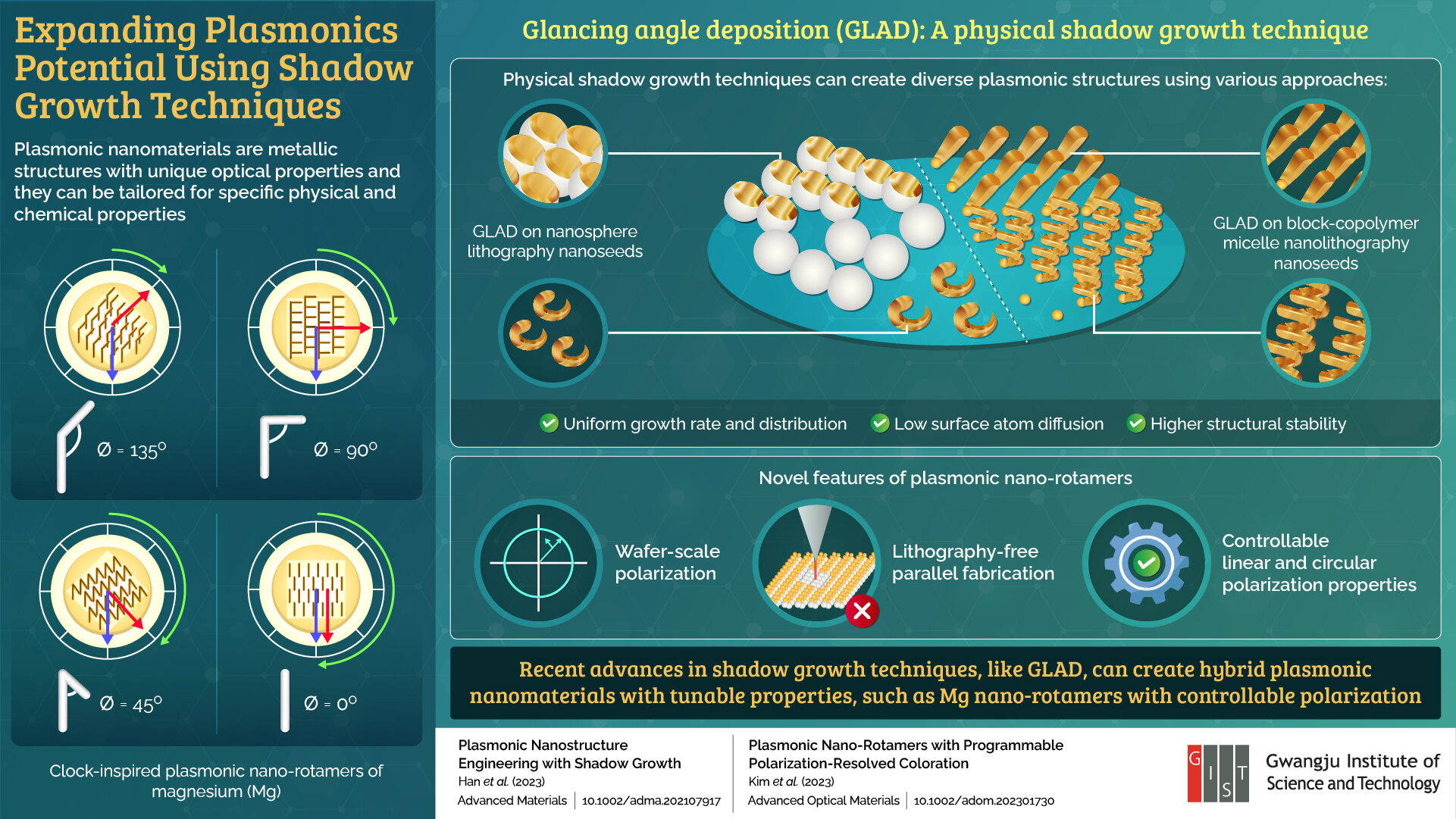
Researchers from the Gwangju Institute of Science and Technology in Korea have presented new breakthroughs in plasmonics, focusing on growth techniques for tailored plasmonic nanomaterials and clock-inspired magnesium nano-rotamers. They have showcased the potential of shadow growth techniques for creating diverse nanostructures with tunable optical properties, with applications in areas such as wound healing, drug delivery, photonic devices, and chiral spectroscopy. The studies also introduced 3D rotamers capable of linear and circular polarization, holding promise for applications in security verification, anti-counterfeiting devices, and displays with programmable optical states.

science-and-technology2 years ago

"Graphene Ribbons: Building Nanoscale Power Plants for Quantum Energy Generation"

Quantum physicist Mickael Perrin is researching the use of graphene nanoribbons to build nanoscale power plants that can efficiently convert thermal energy into electricity using quantum effects, with potential applications in smartphones and minisensors. His work combines thermodynamics and quantum mechanics, and has earned him prestigious research grants and fellowships. Perrin's research group at Empa has demonstrated that graphene nanoribbons can preserve quantum effects at higher temperatures, paving the way for future practical applications. However, challenges remain in scaling up and incorporating these materials into devices, with an estimated timeline of at least 15 years for practical implementation.

science-and-technology2 years ago

"Transformative Nanomaterials from NASA Research Revolutionize Martian Sustainability"

Scientists at the University of Sussex have repurposed a waste product from NASA research to create transformative nanomaterials with potential applications in clean energy production and building materials on Mars. By using sustainable production methods and water-based chemistry, the researchers identified electrical properties within gypsum nanomaterials, opening avenues for sustainable technology and habitation on the red planet. The nanobelts, produced from the waste material anhydrite, could also have implications for clean energy production on Earth.

technology2 years ago

"Nanomaterials Expert: Meet the Chatbot Revolutionizing Research"

Kevin Yager, a researcher at the Center for Functional Nanomaterials, has developed a specialized chatbot with knowledge in nanomaterial science. By leveraging a document-retrieval method, the chatbot is able to provide accurate and sourced answers to scientific questions. The chatbot uses embedding to understand the context of the user's query and generates responses based on a large language model. This AI tool has the potential to assist scientists in tasks such as organizing documents, summarizing publications, and gaining knowledge in new areas. The source code for the chatbot is available for researchers to try out.

energy2 years ago

Revolutionary Nanomaterial Fuel Tanks Propel Hydrogen Revolution

California startup H2MOF is developing nanomaterial-based fuel tanks that aim to revolutionize the storage and transportation of hydrogen. The tanks, designed to absorb hydrogen in a solid state, offer a cheaper and safer alternative to conventional tanks, while also holding more fuel. H2MOF plans to sell these tanks to heavy-duty vehicle manufacturers, enabling the transition to zero-emission fuel cell vehicles. By storing hydrogen at lower pressure, the technology could significantly reduce energy costs and increase the range of hydrogen-powered vehicles. The Biden Administration's support for clean hydrogen further boosts the potential of this technology to replace fossil fuels.

science-and-technology2 years ago

"Revolutionary Nanomaterials Created through Bottom-Up Method by Scientists"

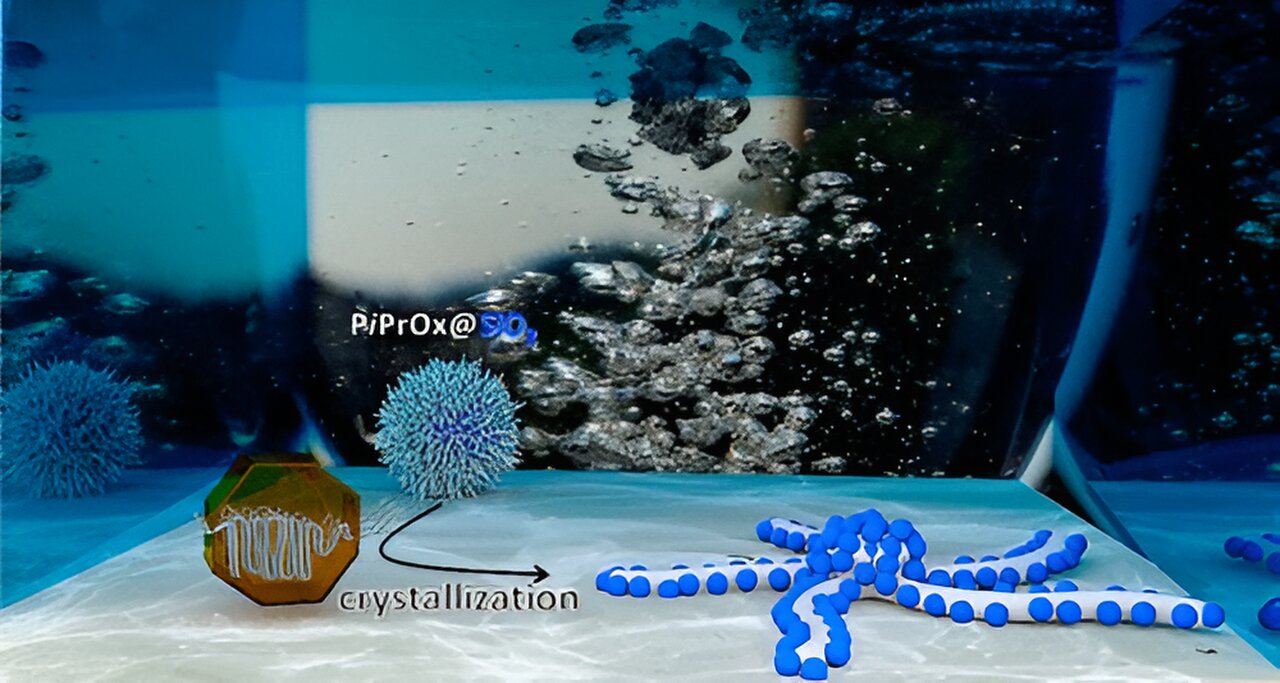
Scientists from Friedrich Schiller University Jena and Friedrich Alexander University Erlangen-Nuremberg have developed nanomaterials using a bottom-up approach, exploiting the directional growth of crystals during crystallization. The resulting nanostructures, which consist of worm-like rods with embedded nanoparticles, have potential applications in various fields, including information processing and catalysis. The researchers used individual silicon dioxide particles and grafted polymer molecules to control the building-up process. The collaboration between the two universities and the use of computer simulations were crucial in understanding the complex molecular processes involved in the formation of these nanostructures.

science-and-technology2 years ago

Cutting-Edge Technologies Harness Atmospheric Humidity for Continuous Electricity and Sustainable Adhesives

Scientists have developed a power generator that utilizes atmospheric humidity and polyoxometalates to produce continuous electricity, offering a sustainable way to harness low-value energy. The generator employs nano-sized polyoxometalates, which can collect atmospheric humidity and generate a voltage of 0.68 V. The device has high stability and can work continuously under various humidity levels. Potential applications include detecting human respiratory processes, recording environmental humidity, and providing continuous power supply for electrical appliances. The researchers aim to improve the efficiency of atmospheric humidity power generation and further understand the process for sustainable energy utilization.

science-and-technology2 years ago

"Revolutionary Electrolysis Catalyst Unleashes Clean Energy Potential"

Researchers at City University of Hong Kong have developed a highly efficient electrocatalyst using transition-metal dichalcogenide (TMD) nanosheets with unconventional crystal phases as supports. The electrocatalyst enhances the generation of hydrogen through electrochemical water splitting, offering great potential for the clean energy industry. The team's findings, published in the journal Nature, demonstrate the superior activity and stability of the electrocatalyst in acidic media, making it a promising candidate for replacing fossil fuels and reducing environmental pollution.

science-and-technology2 years ago

"Scientists Unveil Long-Held Theory, Shedding Light on Mysterious Molecular Realm"

Scientists have experimentally confirmed a long-standing theory about the non-uniform distribution of electron density in aromatic molecules, expanding possibilities for designing new nanomaterials. Utilizing advanced scanning electron microscopy, researchers verified the existence of the π-hole, a phenomenon that significantly affects the physicochemical properties of molecules. This research provides a better understanding of electron charge distribution and has implications for chemical and biological processes, as well as the development of advanced nanomaterials.

science2 years ago

Decades-old theory of electron density in aromatic molecules confirmed by scientists

Scientists have experimentally confirmed a decades-old theory of a non-uniform distribution of electron density in aromatic molecules. This discovery expands the possibilities for designing new nanomaterials and understanding chemical and biological processes. The researchers used advanced scanning electron microscopy to visualize the electron shell structure of atoms and confirmed the existence of the π-hole, a positively charged electron hole. The success of the experiment was attributed to the excellent facilities and participation of Ph.D. students. Theoretical predictions in quantum chemistry have been validated, demonstrating their reliability even without available experiments.