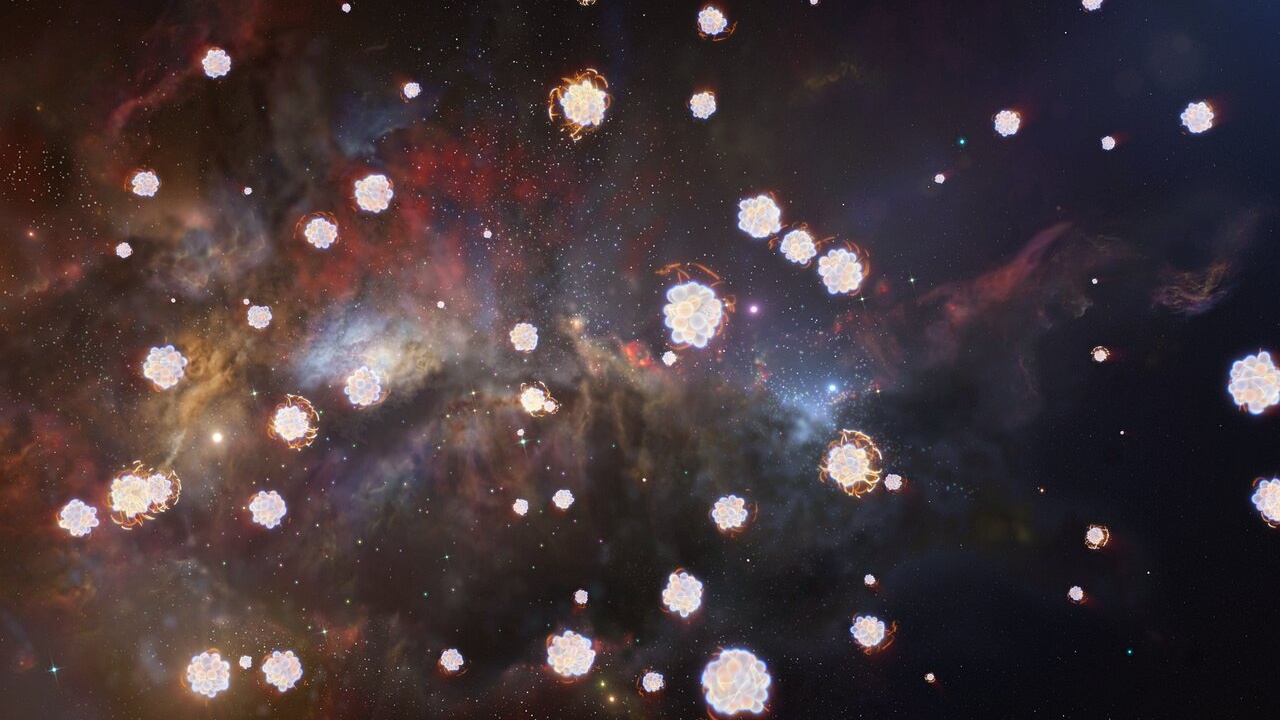
Scientists have recreated the universe's first molecules, specifically helium hydride ions, revealing that their reactions at low temperatures are more significant for early star formation than previously thought, challenging existing theories about the origins of stars in the universe.
Scientists have recreated the universe's first molecules, specifically helium hydride ions, under conditions mimicking the early universe, challenging previous assumptions about star formation and helium chemistry in the cosmos.
Scientists have recreated the universe's first molecules, specifically helium hydride ions, revealing that their reactions at low temperatures are more significant for early star formation than previously thought, prompting a reassessment of early cosmic chemistry.
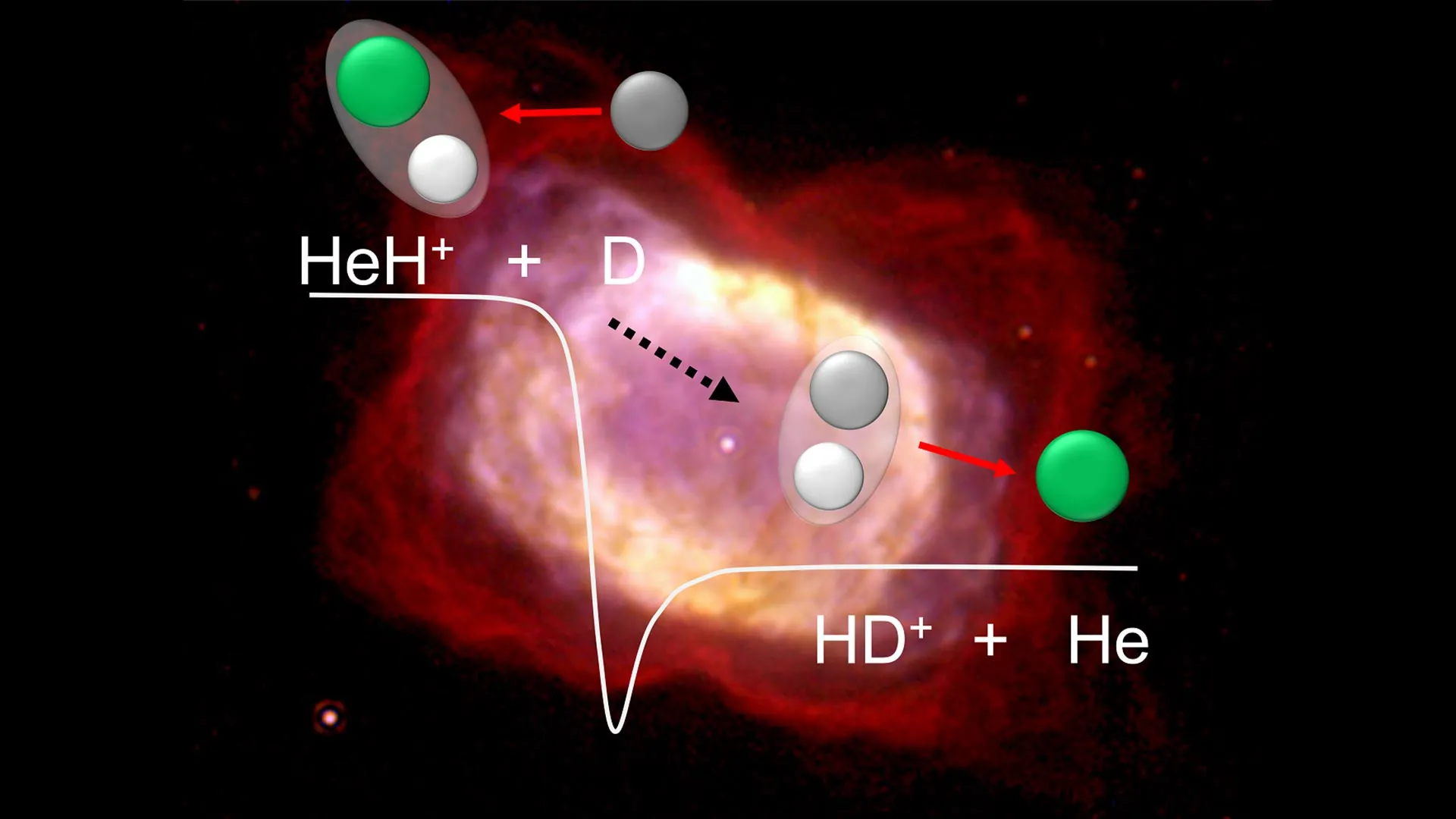
Scientists at MPIK recreated the reaction of helium hydride ion (HeH+) with deuterium under space-like conditions, revealing that this reaction remained efficient at low temperatures, which could significantly impact our understanding of the formation of the first stars in the universe.
The article explores the deep connection between smell, emotion, and memory, highlighting recent scientific advances in understanding how scent molecules are perceived and processed in the brain, challenging the outdated notion that humans have a poor sense of smell.
A recent study explores the role of a simple chiral shape called the sphinx in understanding the prevalence of left- and right-handedness in biology. Researchers used computer models to investigate how sphinx tiles, based on triangles, interact in different arrangements. The study revealed that even in symmetrical systems, sphinxes of the same chirality tend to cluster together, shedding light on the emergence of chiral patterns. Understanding these geometric patterns could have implications for various scientific fields, from virus structure to the origins of molecular asymmetry.
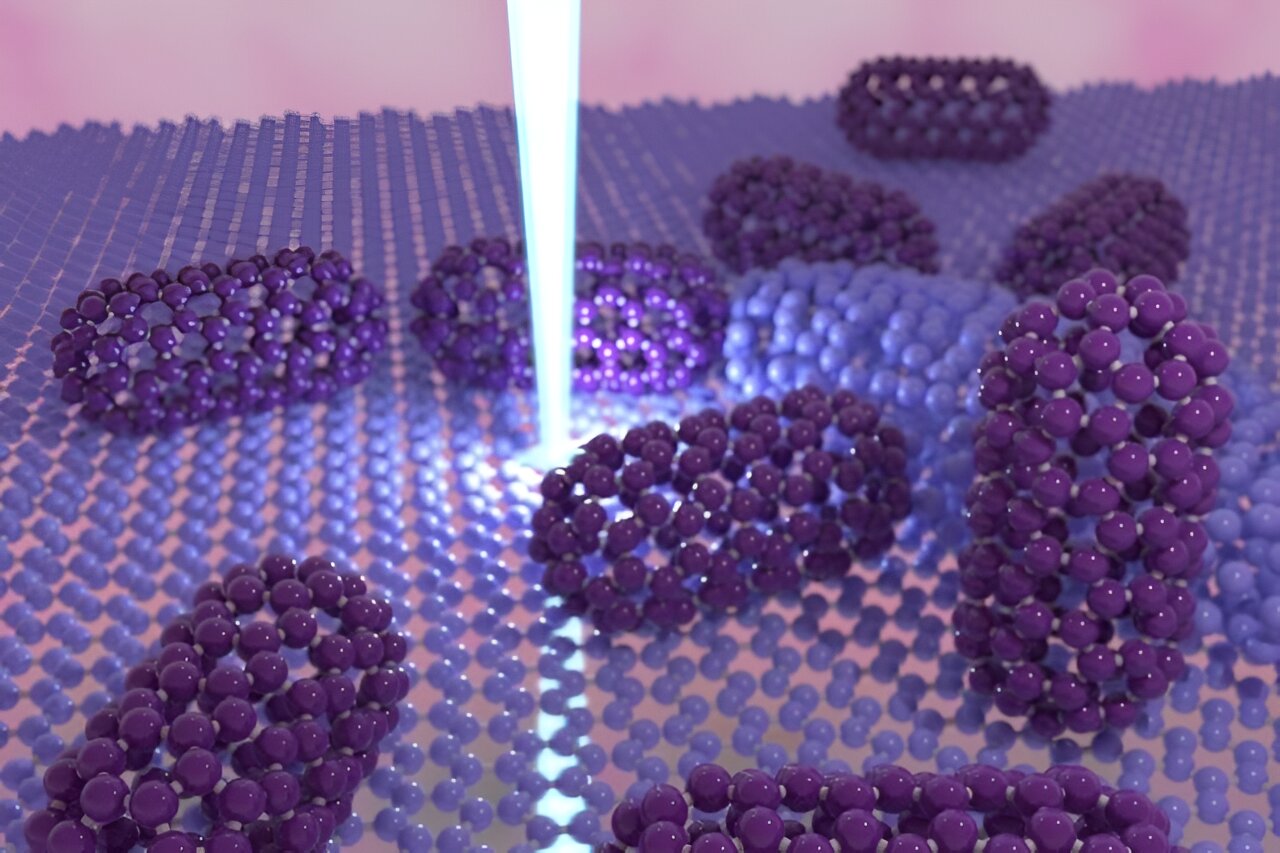
A UdeM doctoral student in physics, Emmanuel Bourret, has led an international team of scientists to successfully demonstrate the existence of C130 fullertubes, molecules made up of 130 carbon atoms, which had previously only existed in theory. Using principles of quantum mechanics, the team isolated these rare molecules from soot and calculated their electronic structure. The discovery, published in the Journal of the American Chemical Society, could have potential applications in green hydrogen production.
Researchers at the University of Rochester have developed a method to extract the spectral density for molecules in solvent using resonance Raman experiments, allowing for a better understanding of quantum decoherence. By mapping decoherence pathways, scientists can now connect molecular structure with quantum decoherence, opening the door to designing molecules with specific quantum coherence properties. The team demonstrated how electronic superpositions in thymine, a DNA building block, unravel in just 30 femtoseconds following UV light absorption. They also found that chemical modifications to thymine can significantly alter the decoherence rate.
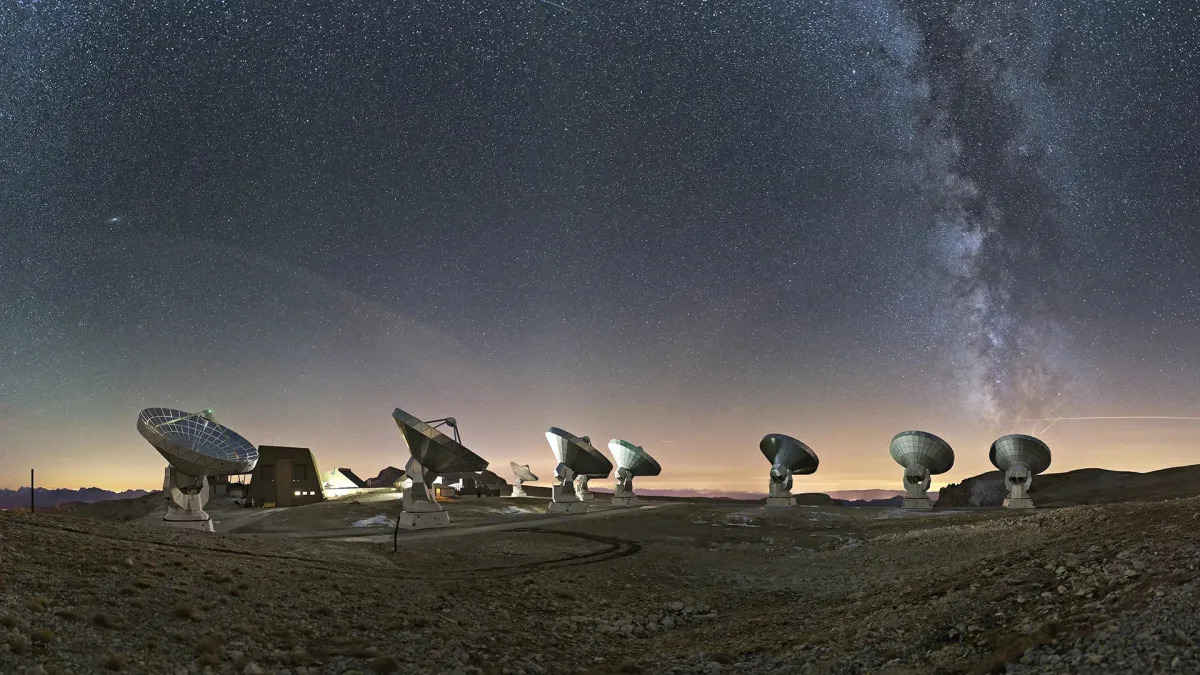
Scientists have discovered a rare collection of 13 different molecules in two ancient galaxies that existed over 12 billion years ago. Using the NOEMA radio telescope array, the team detected emissions from molecules such as carbon monoxide, water, and radicals of organic molecules. The findings provide insights into the star formation processes and environments in these early galaxies, suggesting the presence of more massive stars and a "top-heavy initial mass function." This discovery represents the largest collection of molecules ever detected in galaxies at such extreme distances.
Scientists using the NOEMA radio telescope array have discovered a record-breaking collection of 13 different molecules in two galaxies that existed over 12 billion years ago. The galaxies, one of which is home to a quasar, are forming stars at a rate hundreds of times greater than the Milky Way. The discovery provides insights into the formation of stars in ancient realms and suggests the presence of more massive stars that accelerate the development of chemistry in galaxies.
Astronomers using the NOEMA radio telescope in France have discovered a record-breaking collection of 13 different molecules in two extremely ancient galaxies, APM 08279+5255 and NCv1.143, which are over 12 billion light-years away. The galaxies are forming stars at a rapid rate, and the detected molecules provide insights into the environments in which they are found. The discovery suggests a "top-heavy initial mass function," indicating that more massive stars were able to form in the early universe. This finding may explain the higher luminosity of galaxies in the early universe and the accelerated development of chemistry through supernova explosions.
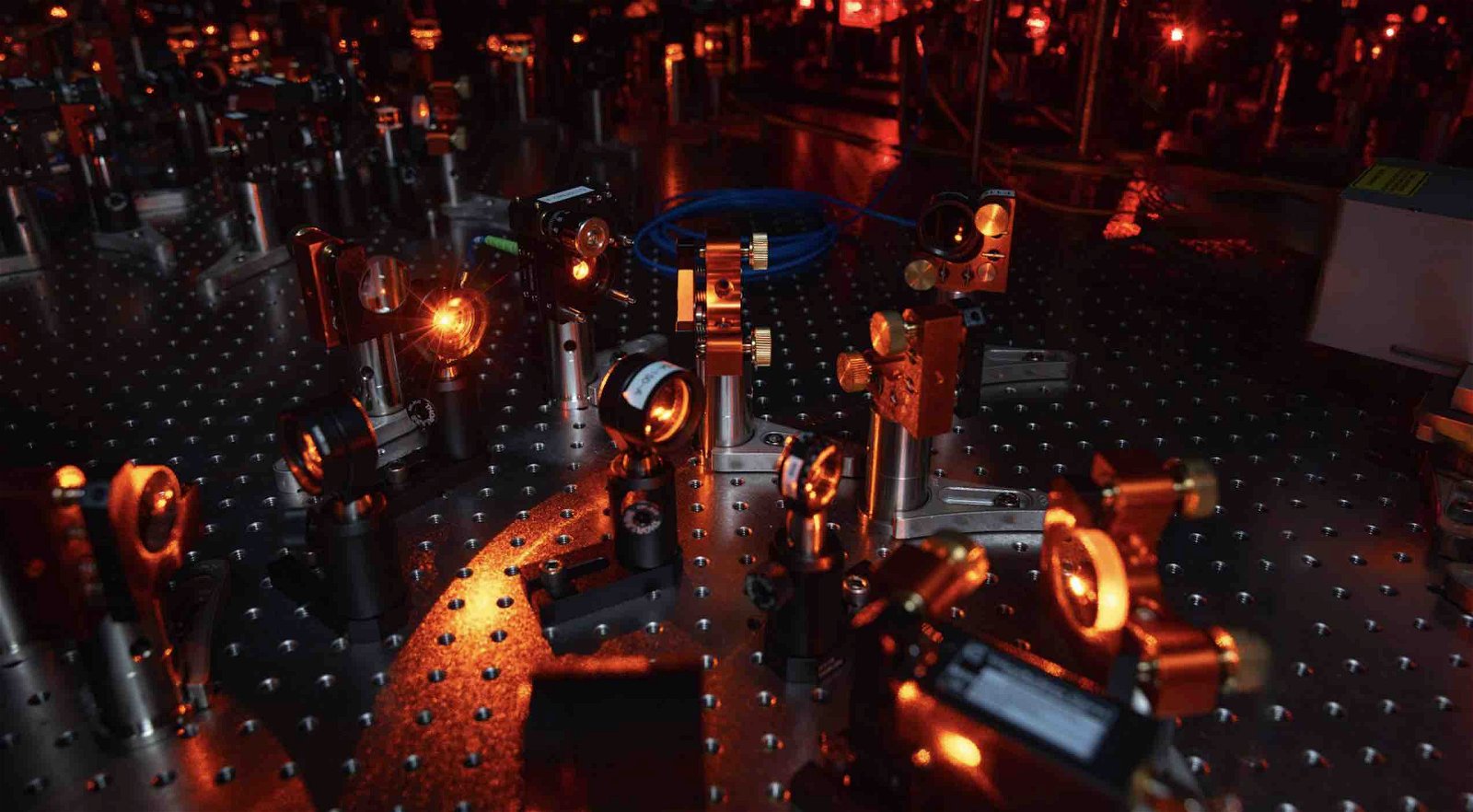
Physicists have successfully entangled pairs of ultra-cold molecules using microscopically precise optical 'tweezer traps', a significant breakthrough in the field of quantum entanglement. Molecules have proven difficult to control due to their interactions with the environment, but by trapping individual molecules and manipulating them with laser light, researchers were able to create entangled quantum states. This development opens up new possibilities for quantum computing and quantum technologies, such as super-sensitive quantum sensors capable of detecting ultraweak electric fields.
Princeton physicists have achieved a breakthrough in quantum mechanics by successfully entangling individual molecules, opening up new possibilities for quantum computing, simulation, and sensing. By using innovative techniques with optical tweezers, the team overcame previous challenges in quantum entanglement, marking a significant advancement in the field. This breakthrough has practical applications, as entangled molecules can serve as building blocks for future technologies such as quantum computers, quantum simulators, and quantum sensors. The research demonstrates the potential of molecules as a viable platform for quantum science and has been independently verified by another research group.
Physicists at Princeton University have achieved on-demand entanglement of individual molecules, a significant breakthrough in quantum science. This achievement leverages quantum mechanics and paves the way for the development of quantum computers and related technologies. The successful control of entanglement in molecules opens up possibilities for practical applications in quantum information processing and the simulation of complex materials. The research demonstrates the potential of using molecules as building blocks for quantum science and confirms the reliability of the "tweezer array" approach. Similar results were obtained in a separate study by Harvard University and MIT researchers, further validating the findings.
Physicists at Princeton University have successfully entangled individual molecules for the first time, a breakthrough that has significant implications for quantum information processing. Quantum entanglement allows molecules to remain correlated and interact simultaneously, even when separated by large distances. This achievement opens up possibilities for applications such as quantum computers, quantum simulators, and quantum sensors. The researchers used a carefully controlled experiment involving laser cooling and optical tweezers to manipulate and entangle the molecules. This research demonstrates the potential of molecules as a viable platform for quantum science.