Tag

Psychotherapy

All articles tagged with #psychotherapy

health1 year ago

FDA Panel Reviews MDMA Therapy for PTSD

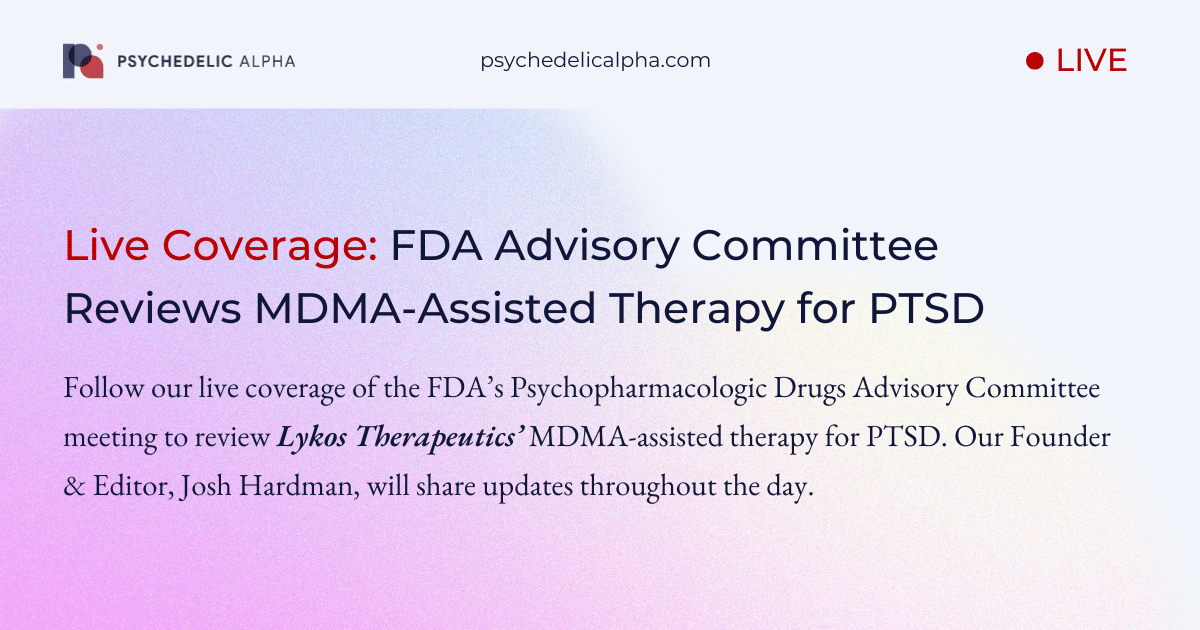
The FDA’s Psychopharmacologic Drugs Advisory Committee is reviewing Lykos Therapeutics’ New Drug Application for MDMA-assisted therapy for PTSD. The meeting includes presentations from both the FDA and Lykos, public comments, and a vote on two questions that could influence the FDA's decision on August 11th. Key discussions involve the role of psychotherapy, trial misconduct, patient recruitment, and safety concerns. The meeting is being live-streamed on YouTube, with periodic updates provided by Psychedelic Alpha's Founder & Editor, Josh Hardman.

health-and-wellness1 year ago

"Exploring the Benefits of EMDR Therapy for Trauma Recovery"

EMDR therapy, developed in 1989, helps individuals process and heal from disturbing life experiences by reprocessing unhelpfully stored memories in the brain. Sessions involve bilateral stimulation to activate both sides of the brain, and typically consist of eight phases, with treatment duration varying based on the complexity of the trauma. EMDR is primarily used to treat PTSD and trauma-related disorders, but can also benefit individuals with anxiety, mood disorders, sleep disorders, eating disorders, addictions, grief and loss, and those on the autism spectrum. While EMDR has minimal risks, it may not be suitable for individuals with certain medical conditions or those using specific substances.

science-and-medicine1 year ago

"MDMA's Impact on Positive Social Feedback Uncovered in New Study"

A new study published in the Journal of Psychopharmacology suggests that MDMA, commonly known as ecstasy, may uniquely enhance positive emotional responses to social interactions, shedding light on its potential to influence social perception and treat conditions characterized by impaired social processing. The research, led by Anya Bershad and her colleagues at UCLA, found that MDMA increased feelings of happiness and acceptance in response to positive social feedback, aligning with its empathogenic properties. The study's findings highlight the need for further research into MDMA's prosocial effects and its potential integration into psychotherapeutic settings to improve social connectivity and emotional well-being.

relationships-and-marriage1 year ago

"Key Steps Before Divorce: What to Know and Do"

A licensed psychotherapist specializing in marriage and family counseling emphasizes the importance of self-reflection and seeking counseling before deciding to divorce. By understanding the meanings we make about ourselves in stressful situations, individuals can take responsibility for their own worth and transform old ideas about themselves, potentially leading to significant changes in their marriage. The article recommends finding a counselor specializing in family systems to evaluate personal upbringing and its impact on relationships, ultimately encouraging individuals to do their own work before making the decision to end their marriage.

mental-health1 year ago

"The Lingering Impact of Childhood Trauma: 8 Subtle Ways It Continues to Shape Your Life"

Childhood trauma can have long-lasting effects on mental health, leading to symptoms of PTSD such as hypervigilance, a sense of impending doom, fear of anger, and distrust of relationships. It can also contribute to anxiety, depression, OCD, and substance abuse. Seeking psychotherapy with a specialist in childhood trauma can help individuals understand and address the unconscious meaning of their symptoms, learn to trust again, and work through their fears and trauma to ultimately find healing and safety.

health-and-medicine2 years ago

"Brain Zapping Technique Increases Susceptibility to Hypnosis"

Stanford Medicine researchers have discovered that targeted electrical stimulation of the brain can temporarily increase a person's hypnotizability, which may allow more individuals to benefit from hypnosis-based therapies, especially for pain relief. The study, which will be published in Nature Mental Health, showed that less than two minutes of transcranial magnetic stimulation to the left dorsolateral prefrontal cortex enhanced hypnotizability for about an hour. This finding could lead to new approaches in pain management and psychotherapy by altering stable traits like hypnotizability.

militaryhealth2 years ago

Ukraine's Battle Against Combat Stress and Russian Aggression

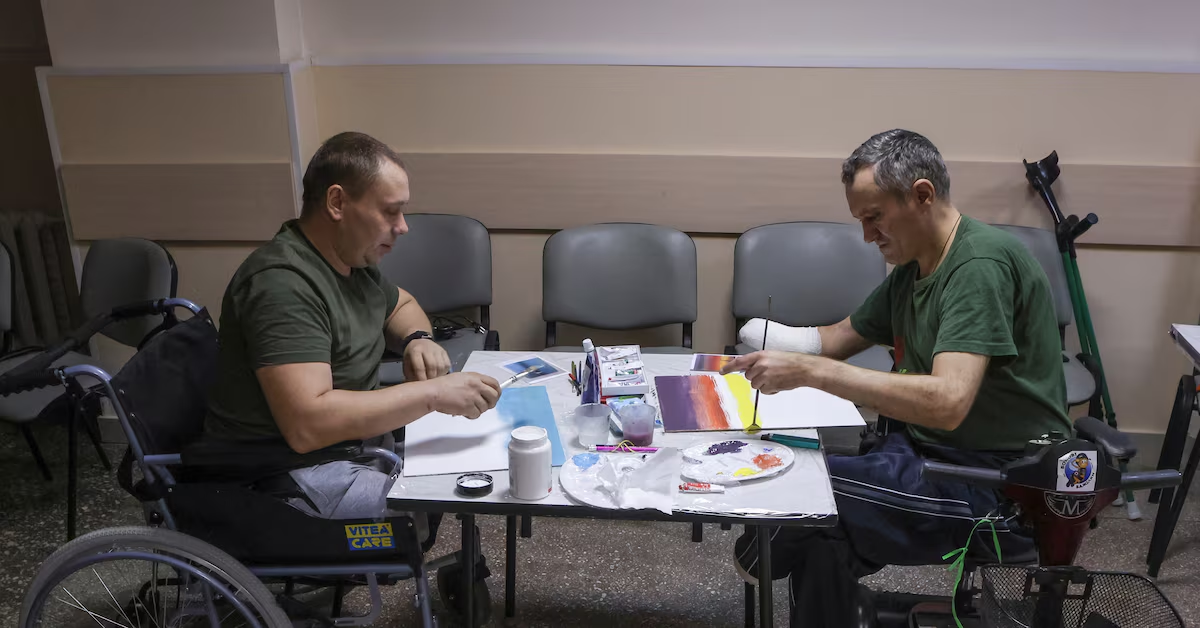
Ukraine's citizen army, comprised of many volunteers with little combat preparation, is struggling with combat stress as the war with Russia enters its second year. The army is facing exhaustion as it tries to hold off the larger enemy, and mental health issues among soldiers are becoming a growing challenge. Psychotherapists and volunteers across Ukraine are treating soldiers for mental health problems, offering basic psychological theory and coping techniques. However, the limited time and resources available make it difficult to provide full recovery for soldiers, and more serious cases are sent for further treatment at rehabilitation points away from the front. The Ukrainian military is trying to recruit more people for psychological support, but details on the scale of the recruitment drive and the number of soldiers treated for psychological conditions remain undisclosed.

health2 years ago

Exploring the Therapeutic Potential of Psilocybin for Mental Health Conditions

A meta-analysis of 13 randomized controlled trials has highlighted the potential of psilocybin-assisted psychotherapy as a treatment for patients with treatment-resistant depression. The analysis found that patients receiving psilocybin therapy showed significantly more improvement in depressive symptoms compared to those who did not receive the treatment. Response rates and remission rates were higher in the psilocybin group, and the positive effects of psilocybin therapy were observed shortly after administration and could last for several months. While psilocybin was generally well-tolerated, some participants experienced non-serious side effects. However, careful screening and monitoring of participants, especially those with a complex psychiatric history, is necessary. Further research is needed to establish psilocybin-assisted psychotherapy as an accepted medical alternative.

health2 years ago

Breakthrough Study Shows Psilocybin's Potential in Treating Bipolar II Depression

A study published in JAMA Network Open suggests that a single dose of psilocybin, combined with supportive psychotherapy, may significantly reduce depression symptoms in individuals with bipolar II disorder. The study involved 15 participants who had not responded to previous treatments, and they experienced a 76.3% reduction in depression symptoms three weeks after psilocybin administration. Secondary outcomes showed improvements in self-reported depression symptoms and quality of life. The study also found no significant adverse events associated with psilocybin dosing. However, the study's limitations, such as the small sample size and lack of a control group, highlight the need for further research to confirm these findings and explore long-term effects.

mental-health2 years ago

Psilocybin's Potential in Treating Bipolar II Depression Shown by Recent Study

A clinical trial conducted at Sheppard Pratt Hospital in Baltimore and published by the American Medical Association has found that psilocybin-assisted psychotherapy shows efficacy and safety in treating bipolar II depression. The trial involved 15 participants with treatment-resistant BDII depression, and after seven psychotherapy sessions, including one with a single dose of psilocybin, the study subjects displayed strong and persistent antidepressant effects without worsening mood instability or increased suicidality. The study also found improvements in patients' self-reported quality of life scores, and safety metrics such as suicidal ideation and mania did not change significantly. However, the authors caution against casual or unsupported psilocybin use and note that further follow-up studies are needed.

mental-health2 years ago

"The Narcissistic Influence: Unraveling its Effects on Psychotherapy"

A German study with over 2,000 participants receiving psychotherapy found that narcissistic personality traits are associated with a poorer response to treatment. The study, conducted by researchers from Jena University Hospital and the University of Münster, revealed that strong narcissistic rivalry was linked to more severe depression symptoms before therapy. However, the negative effects of narcissism on treatment response were not observed in psychoanalytic-interactional therapy, suggesting that the therapeutic relationship plays a crucial role. The findings highlight the importance of assessing patients' narcissistic tendencies and emphasizing the therapeutic relationship in mental health treatment.

science-and-technology2 years ago

"Unlocking the Mind: How Psychedelics and Psychotherapy Spark Rapid Brain Transformations"

Psychedelic-assisted psychotherapy has been found to trigger rapid and lasting changes in the brain. Research suggests that psychedelics, such as psilocybin, stimulate the 5-HT2A receptor inside neurons, leading to increased dendritic growth and spine formation. This natural neural mechanism allows for accelerated change and encoding of pivotal mental states. While psychedelic-assisted therapy shows promise in treating conditions like depression and PTSD, caution should be exercised due to the powerful nature of these substances.

neuroscience2 years ago

"MDMA: The Promising Path to Enhanced Social Connections and FDA Approval"

A study conducted by researchers at the University of Chicago has found that individuals who took MDMA or methamphetamine reported feeling more connected during conversations compared to those who took a placebo. Surprisingly, the feelings of closeness induced by methamphetamine were not related to oxytocin levels. These findings highlight the potential for MDMA to enhance traditional psychotherapy, particularly for individuals with post-traumatic stress disorder (PTSD). The study suggests that MDMA could increase the connection between patients and therapists, facilitating conversations and making the therapy process more effective.