Tag

Oceans

All articles tagged with #oceans

Scientists Discover $2 Quadrillion Gold Reserve in Oceans, But Extraction Challenges Remain

Originally Published 3 months ago — by WION

Featured image for Scientists Discover $2 Quadrillion Gold Reserve in Oceans, But Extraction Challenges Remain
Source: WION

There are approximately 20 million tons of gold dissolved in Earth's oceans, worth around $2 quadrillion, but extracting it remains a significant technological and financial challenge, with current efforts focusing on industrial waste recovery and future possibilities including space mining.

Where the Pacific and Atlantic Oceans Converge

Originally Published 5 months ago — by Boy Genius Report

Featured image for Where the Pacific and Atlantic Oceans Converge
Source: Boy Genius Report

The Pacific and Atlantic Oceans meet off South America and do mix, despite appearances of a visible line due to differences in temperature, salinity, and sediment. Factors like climate change and pollution influence the rate of mixing, and misleading photos have circulated online, but the waters eventually blend together.

Earth's Heat Trap Doubled in 20 Years, Signaling Accelerated Climate Change

Originally Published 6 months ago — by ScienceAlert

Featured image for Earth's Heat Trap Doubled in 20 Years, Signaling Accelerated Climate Change
Source: ScienceAlert

A recent study warns that Earth's energy imbalance has doubled over the past 20 years, surpassing climate model predictions, primarily due to changes in cloud cover and increased greenhouse gases, indicating accelerated global warming and potential for more severe climate impacts.

Prince William and David Attenborough Unite to Advocate for Ocean Conservation

Originally Published 7 months ago — by BBC

Featured image for Prince William and David Attenborough Unite to Advocate for Ocean Conservation
Source: BBC

Prince William will speak at a Monaco forum on World Oceans Day to rally global action and investment for ocean protection, emphasizing the importance of sustainable solutions and collaboration among environmentalists, investors, and world leaders, with a focus on innovative projects like CoralVita that aim to restore marine ecosystems.

One-Fifth of Earth's Oceans Have Darkened, Endangering Marine Life

Originally Published 7 months ago — by Fox News

Featured image for One-Fifth of Earth's Oceans Have Darkened, Endangering Marine Life
Source: Fox News

A recent study reveals that Earth's oceans have darkened over the past two decades, reducing the depth of the photic zone where marine life depends on light, potentially threatening marine ecosystems, food webs, and global fisheries, with climate change and ocean currents likely contributing to this phenomenon.

Scientist Unveils Deep Ocean Secrets of Uranus and Neptune

Originally Published 1 year ago — by Indian Defence Review

Featured image for Scientist Unveils Deep Ocean Secrets of Uranus and Neptune
Source: Indian Defence Review

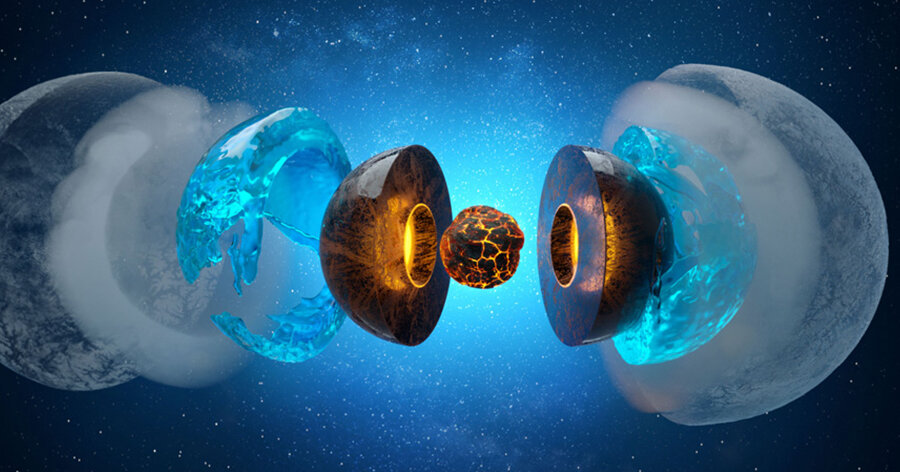
A recent study suggests that Uranus and Neptune may have vast oceans up to 5,000 miles deep beneath their atmospheres, potentially reshaping our understanding of these ice giants and their capacity to harbor life. Led by Professor Burkhard Militzer, the research used advanced computer simulations to reveal a layered structure within these planets, which could explain their unique magnetic fields. This discovery has significant implications for the search for extraterrestrial life, as similar gas giants are common in the Milky Way. Future missions to these planets could confirm these findings.

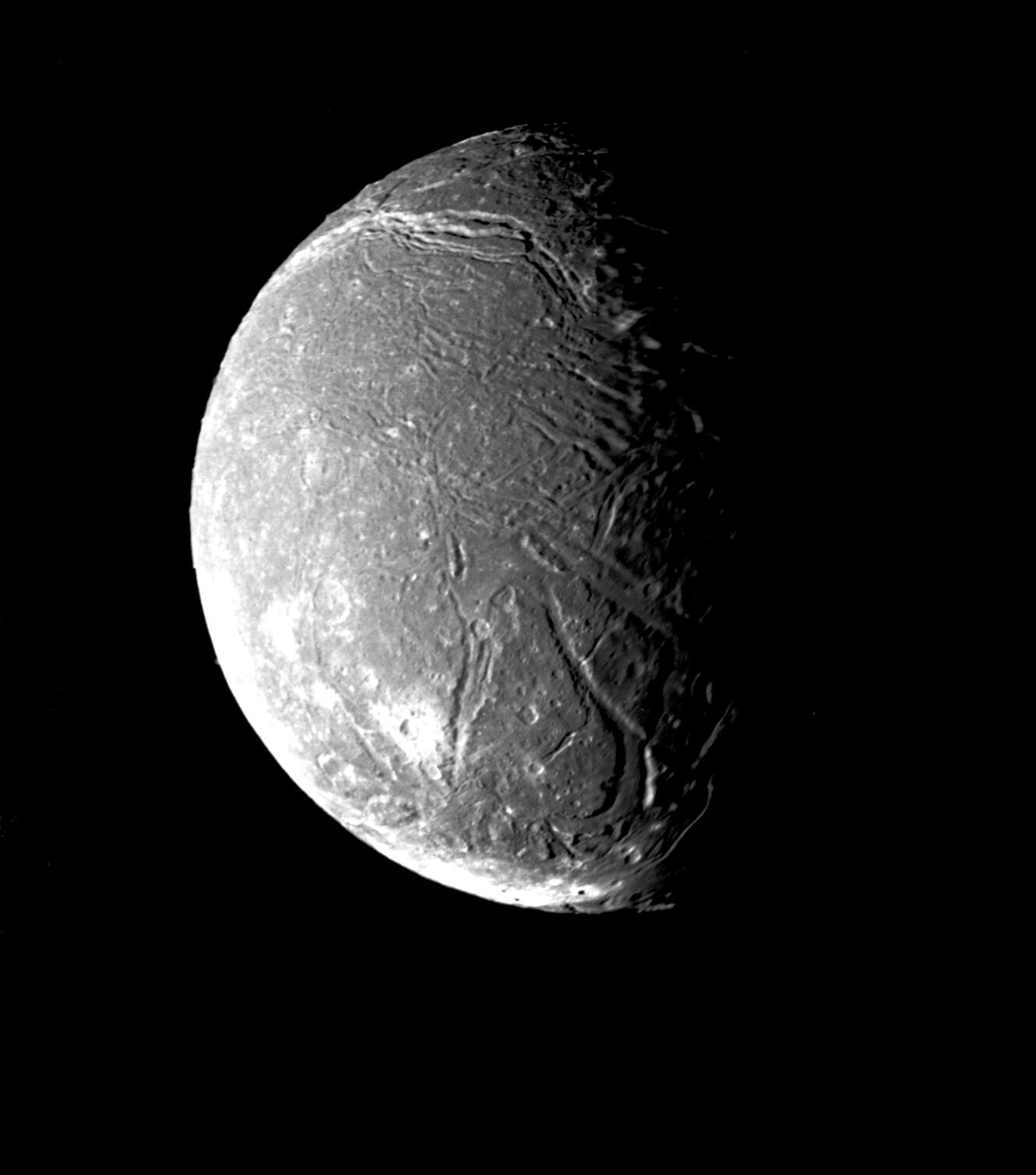
Wobbles May Reveal Hidden Oceans on Uranus' Moons

Originally Published 1 year ago — by Space.com

Featured image for Wobbles May Reveal Hidden Oceans on Uranus' Moons
Source: Space.com

NASA is planning a mission to explore the possibility of hidden liquid oceans beneath the moons of Uranus, which could provide insights into the potential for life beyond Earth. The mission, still in the conceptual stage, would use a spacecraft to measure the wobbles of Uranus's moons, as moons with internal oceans tend to sway more due to the liquid inside. This method has previously been used to confirm an ocean on Saturn's moon Enceladus. Discovering such oceans could expand our understanding of where life might exist in the galaxy.

Unveiling Hidden Oceans on Uranus and Neptune: A New Frontier

Originally Published 1 year ago — by Phys.org

Featured image for Unveiling Hidden Oceans on Uranus and Neptune: A New Frontier
Source: Phys.org

Researchers at the University of Texas Institute for Geophysics have developed a computer model to detect potential liquid water oceans beneath the icy surfaces of Uranus's moons, such as Ariel. This model analyzes the wobbles in a moon's spin to determine its internal composition, which could indicate the presence of subsurface oceans. The findings could significantly impact our understanding of where life might exist in the universe, as similar techniques have confirmed oceans on Saturn's moon Enceladus. The research aims to aid future NASA missions to Uranus in detecting these hidden oceans.

Unveiling the Mysteries of Uranus and Neptune: Oceans, Magnetism, and Temperature Shifts

Originally Published 1 year ago — by The New York Times

Featured image for Unveiling the Mysteries of Uranus and Neptune: Oceans, Magnetism, and Temperature Shifts
Source: The New York Times

Recent studies suggest that Uranus and Neptune may harbor vast oceans beneath their icy surfaces, challenging previous assumptions about these distant planets. This discovery could have significant implications for our understanding of the solar system and the potential for life beyond Earth.

"Potential Warm Oceans on Dwarf Planets at Solar System's Edge"

Originally Published 1 year ago — by ScienceAlert

Featured image for "Potential Warm Oceans on Dwarf Planets at Solar System's Edge"
Source: ScienceAlert

Scientists have discovered evidence suggesting that dwarf planets Eris and Makemake, located in the Kuiper Belt, may have warm oceans beneath their frozen surfaces. Data from the James Webb Space Telescope revealed isotope ratios in methane on their surfaces consistent with internal heating, indicating the presence of potential subsurface oceans. These findings challenge previous assumptions about the dynamics of the outer Solar System and suggest that conditions for microbial marine life might exist in the Kuiper Belt, making it more dynamic and potentially hospitable than previously thought.

"NASA's PACE Satellite: Studying Earth's Changing Climate from Space"

Originally Published 1 year ago — by VOA Learning English

Featured image for "NASA's PACE Satellite: Studying Earth's Changing Climate from Space"
Source: VOA Learning English

NASA has launched the PACE satellite to study the world’s oceans and atmosphere, aiming to provide detailed data on temperature-related changes, aerosols, and phytoplankton. The satellite will map the entire world each day with two science instruments and collect monthly measurements with a third instrument. PACE is expected to help scientists improve their ability to predict severe weather events and understand the impact of aerosols on clouds and climate. The mission follows the recent launch of NASA’s SWOT satellite and is part of the agency's efforts to gather more detailed data on Earth's environment.

"Discovery of Venomous Cross-Shaped Jellyfish in Remote Japanese Waters"

Originally Published 1 year ago — by CBS News

Featured image for "Discovery of Venomous Cross-Shaped Jellyfish in Remote Japanese Waters"
Source: CBS News

Scientists have discovered a new species of jellyfish, named "Santjordia pagesi," with a bright red "X" on its stomach in a deep-sea volcanic structure south of Tokyo, Japan. The creature, which has 240 tentacles, was first spotted in 2002 and is relatively small compared to other deep-sea medusae. The unique red cross is believed to be related to capturing food. Despite the rarity of the discovery, the species was named and described based on the capture of just one specimen due to the inhospitable environment, and researchers hope to conduct further research in the area, which has potential for commercial development.