Tag

Neuroimaging

All articles tagged with #neuroimaging

Puberty sharpens sex-based brain-network differences
science10 days ago

Puberty sharpens sex-based brain-network differences

A study of 1,286 people aged 8–100 using MRI finds sex differences in brain connectivity are minimal in early life but widen at puberty and persist into adulthood, in both structural and functional networks. The timing roughly tracks sex-hormone changes and may relate to differing risks of mental-health disorders between men and women. The work is a bioRxiv preprint and relies on birth sex data; some scientists caution that differences may reflect gender roles or a mosaic of brain features rather than a binary sex, so conclusions are preliminary.
Polygenic anhedonia risk linked to altered reward-brain activity
neuroimaging12 days ago

Polygenic anhedonia risk linked to altered reward-brain activity

A German neuroimaging study found that individuals with higher polygenic risk scores for anhedonia show distinct brain activity during a monetary incentive delay task: they exhibit decreased activation in the bilateral putamen and left middle frontal gyrus during reward anticipation and reduced right caudate activity during reward feedback. Higher risk is also associated with lower activity in the left middle frontal gyrus when anticipating losses and during salience processing, while there is heightened activity in the bilateral putamen and right caudate during loss feedback. The results highlight the involvement of striatal and prefrontal circuits in genetic risk for anhedonia, though replication and further research are needed.

Prima: a health-system-scale MRI foundation model reshaping neuroimaging
technology21 days ago

Prima: a health-system-scale MRI foundation model reshaping neuroimaging

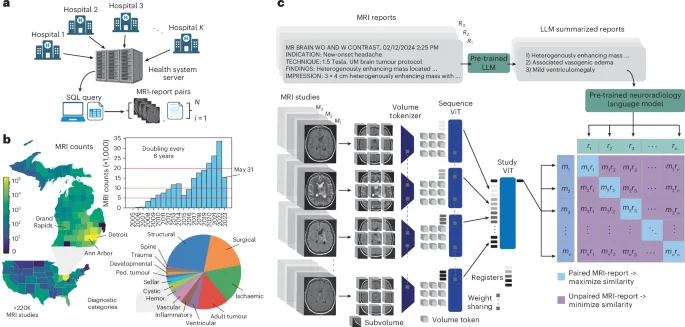
A team trains Prima, a health-system-scale AI foundation model for MRI, using over 220,000 studies. In a one-year, system-wide study (29,431 MRIs across 52 neurologic diagnoses), Prima achieves a mean AUC of 92.0%, outperforming state-of-the-art models, and offers explainable predictions, radiologist worklist prioritization, and clinical referral recommendations. The model demonstrates algorithmic fairness across sensitive groups and leverages a hierarchical ViT with a VQ-VAE-based volume tokenizer and CLIP objective, aided by LLM-assisted report summarization. Data originates from the University of Michigan with MIT-licensed code; data sharing is governed by IRB and institutional agreements. Overall, the work showcases health system-scale AI training as a pathway to faster, fairer AI-driven neuroimaging in clinical care.

Alcohol Reconfigures Brain Networks into Local Clusters
science26 days ago

Alcohol Reconfigures Brain Networks into Local Clusters

A double-blind, placebo-controlled study of 107 healthy social drinkers used resting-state fMRI and graph-theory analysis to show that acute alcohol intake (0.08 BAC) shifts the brain from a globally integrated network to a more fragmented, locally connected topology: global efficiency drops (notably in the occipital cortex) while local efficiency and clustering rise, effectively fracturing the brain into smaller communities. The insula also increases local connections, and these network changes correlate with how intoxicated participants felt. The findings offer a neural basis for alcohol-related sensory deficits and individual differences in intoxication, though limitations include incomplete cerebellum data and a young, healthy sample. Overall, intoxication appears to trade long-range integration for localized processing.

AI-suspected technobabble prompts Springer Nature inquiry into prolific editor
science1 month ago

AI-suspected technobabble prompts Springer Nature inquiry into prolific editor

A Turkish associate professor and editor, Eren Öğüt, faces a Springer Nature investigation after reviewers flagged multiple 2025 papers that read like technobabble, use irrelevant MATLAB code, and lack reproducible data or overlaid brain images. His unusually high volume of peer reviews (about 650 in one year) and roles as editor across journals raise concerns about editorial bias and integrity, with critics noting AI-assisted editing and a pattern of single-authored works that resemble prior templates. The investigation focuses on methodological gaps, data sharing, and potential misrepresentation of results in Neuroinformatics and related journals.

Engaging in Creative Activities May Help Slow Brain Aging
health-and-science2 months ago

Engaging in Creative Activities May Help Slow Brain Aging

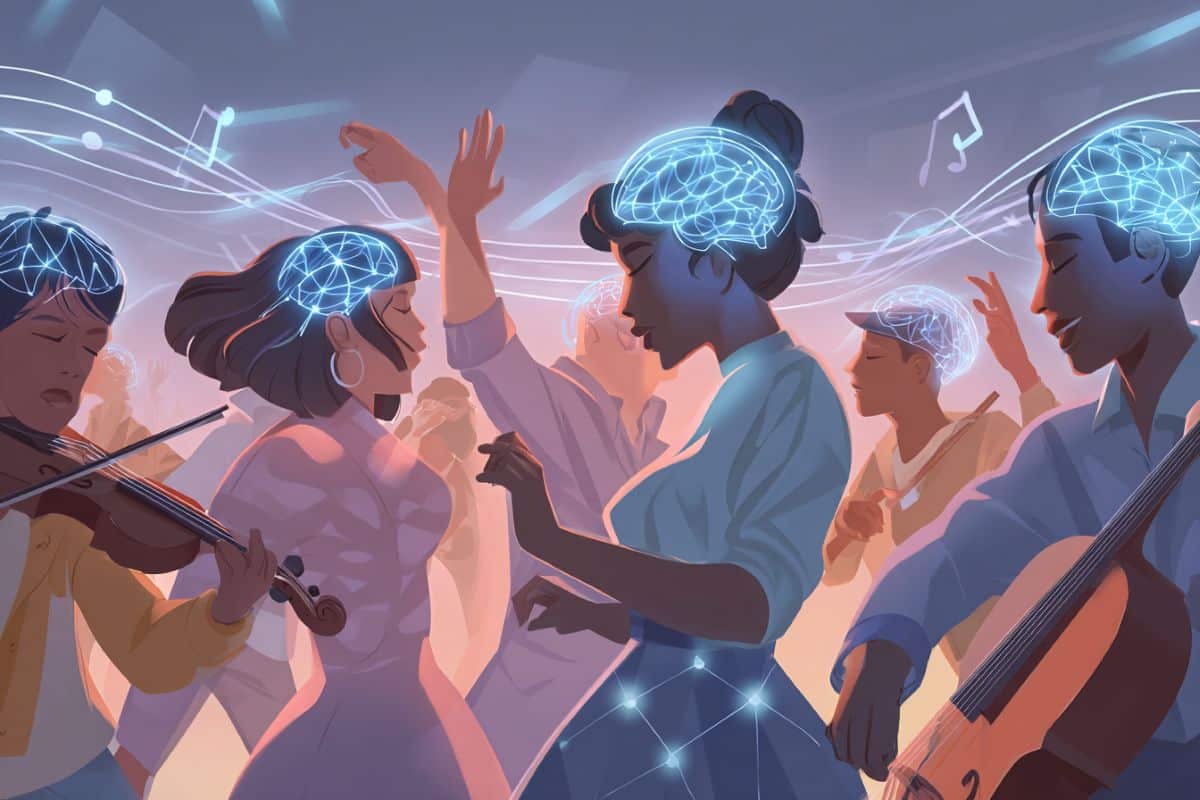
Engaging in creative activities like dancing, music, art, or playing strategy video games is linked to a younger-looking brain and slower brain aging, with long-term practice providing stronger benefits. Even short-term creative training can improve brain aging markers, suggesting that regular creative engagement supports neural health and cognitive resilience.

New Research Challenges Beliefs About Ultra-Processed Foods and Addiction
science3 months ago

New Research Challenges Beliefs About Ultra-Processed Foods and Addiction

A study found that consuming a milkshake did not cause a significant dopamine release in the brain's reward region, challenging the idea that ultra-processed foods are highly addictive due to dopamine surges. The research showed individual variability in dopamine response, unrelated to body weight, and suggested that the reward response to such foods may be weaker than that of addictive drugs.