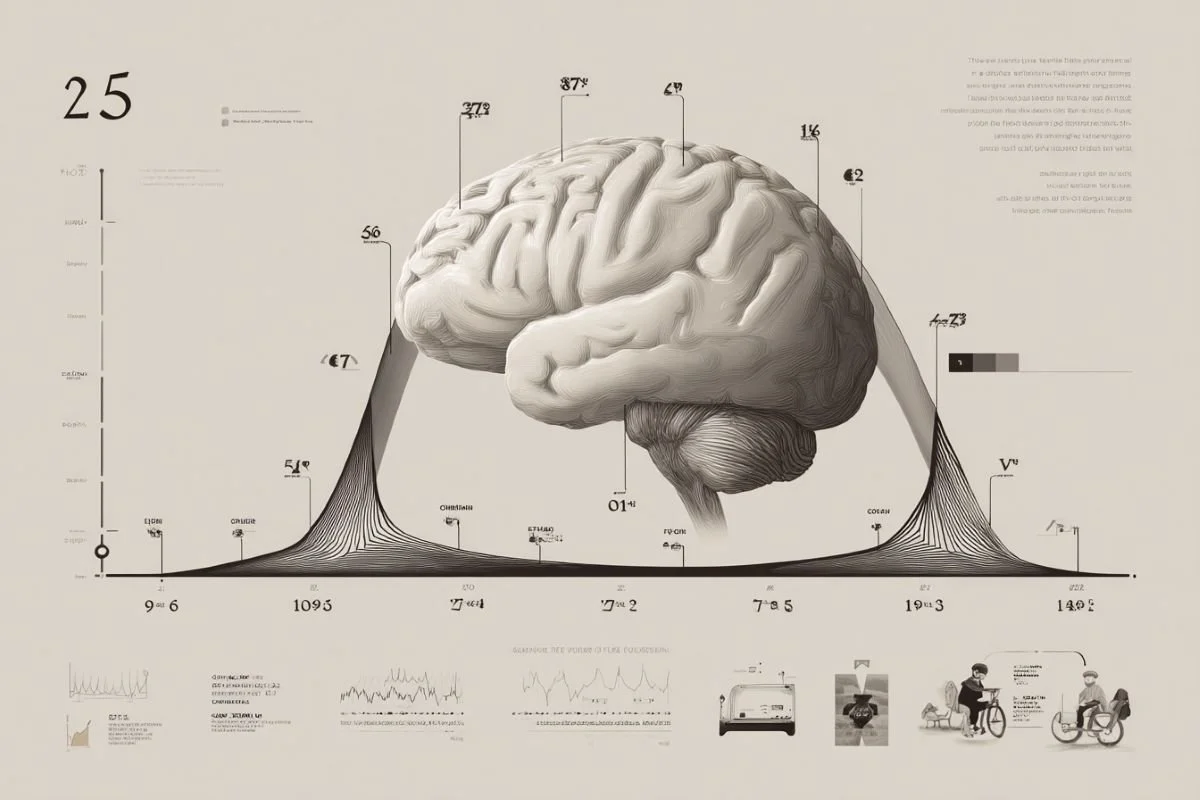
Research analyzing 139 neuroimaging studies found that brain activity related to cognitive control peaks between ages 27 and 36, following an inverted U-shaped pattern across the lifespan, emphasizing the importance of brain health maintenance in midlife.
A study led by UCL researchers found that brain training exercises for children do not significantly improve cognitive control, academic performance, or delay gratification, nor do they lead to changes in brain structure or function. The research suggests focusing on motivational factors rather than cognitive control training for better real-life outcomes.
Researchers at Brown University's Carney Institute for Brain Science have uncovered the brain's ability to separately control the enhancement of relevant information and the filtering out of distractions, akin to coordinating muscles for physical tasks. Using functional magnetic resonance imaging (fMRI), they found that the anterior cingulate cortex and the intraparietal sulcus work together to adjust focus and filter settings, shedding light on human attention flexibility and potential implications for attention-related disorders like ADHD. This breakthrough offers new insights into how the brain manages to focus in noisy environments and provides a deeper understanding of attention mechanisms.
A new study by researchers at Brown University's Carney Institute for Brain Science provides detailed insights into the brain mechanisms that help people pay attention amid distraction, revealing the intricate process by which the brain coordinates focusing and filtering functions. Lead author Harrison Ritz likened this coordination to the way muscles work together for physical tasks. The findings offer insight into cognitive flexibility and attention-related disorders, such as ADHD, challenging the misconception that lack of focus equates to lack of intelligence. Ongoing research projects are exploring focus-and-filter strategies in patients with treatment-resistant depression and the impact of financial incentives on attention.
Excessive smartphone use is linked to weakened brain networks responsible for cognitive control and executive function, according to a study published in Psychiatry Research: Neuroimaging. The research found that individuals who excessively use smartphones showed lower strength in the frontoparietal network, which affects attention and impulse control. These neural patterns were similar to those observed in other forms of addiction, suggesting a common neural basis. However, the study's small sample size and limited demographic raise concerns about generalizability, and further research is needed to determine causality and the permanence of these neural changes.
Exposure and response prevention (EX/RP) therapy, a primary treatment for obsessive-compulsive disorder (OCD), has been found to reshape brain connectivity and enhance cognitive control. Using advanced MRI techniques, researchers observed significant changes in key neural networks among OCD patients who underwent EX/RP compared to those who received stress management training. This study provides insights into the neurological mechanisms underlying the effectiveness of EX/RP in treating OCD and highlights the potential for cognitive training video games to further enhance therapy outcomes.
A study from the University of Iowa reveals that the human brain can quickly differentiate between outcomes caused by human error and those that are not. The brain recognizes an error within one second and engages in a longer process to prevent future errors. This specialized error-awareness mechanism involves internal communication to avoid repeating mistakes. The research used EEGs to observe unique neural activity associated with human error, supporting the existence of a specialized error-detection system in the brain.
Researchers have identified a potential marker in the brain that might indicate an increased risk of suicide. They observed that veterans with a history of suicide attempts demonstrated distinct functional connectivity between cognitive control and self-referential thought-processing networks. This connectivity pattern was present both before and after a suicide attempt, making it a potentially crucial indicator of suicide-specific risk. The study also suggests that suicide attempts could lead to brain changes, potentially escalating future suicide risk.
Our brains create shortcuts, known as heuristics, which help us make decisions in the real world. But these shortcuts can also make us repeat our errors. Acknowledging our failures and becoming comfortable with making mistakes can help us reduce frequency bias, which will make us less likely to repeat our mistakes and reinforce the mistake pathways. We do have a mental ability that can override heuristic shortcuts, known as ‘cognitive control’. Researchers are exploring whether a better understanding of this could help with development of better treatments and support for Alzheimer’s, for example, as preserved cognitive control is crucial for wellbeing in later life.
Researchers are using data from the game "Ebb and Flow" to train machine learning algorithms to mimic the human ability to switch attention between tasks. The findings shed new light on cognitive control and may expand the current understanding of disorders marked by cognitive control deficits, such as bipolar disorder and schizophrenia. The team developed a new way of modeling these data that imposes fewer assumptions on how the brain goes about doing a particular task. The research may also inform the understanding of diseases in which patients exhibit deficits in cognitive control.
Researchers at Weill Cornell Medicine have discovered that ocular drift, a subtle and seemingly random type of eye movement, can be influenced by prior knowledge of the expected visual target, suggesting a surprising level of cognitive control over the eyes. The study adds to the scientific understanding of how vision is controlled and directed by cognitive processes. The findings could lead to better insights into the neuroscience of vision and visual disorders, which may sometimes have a motor component too.