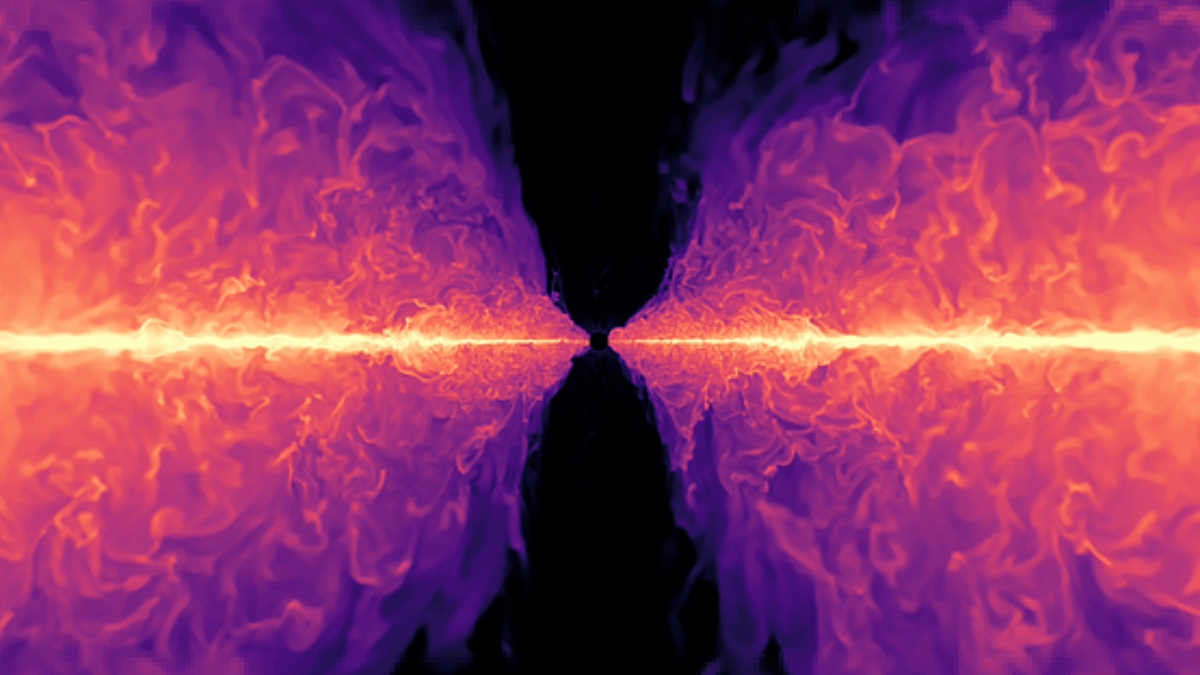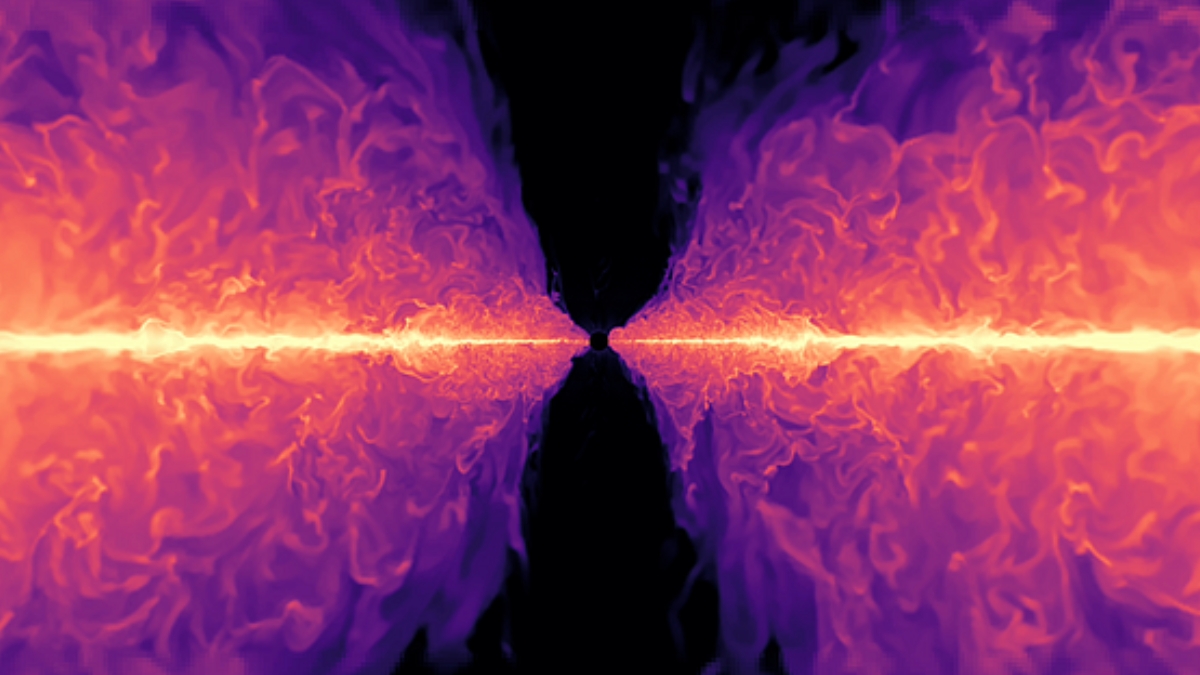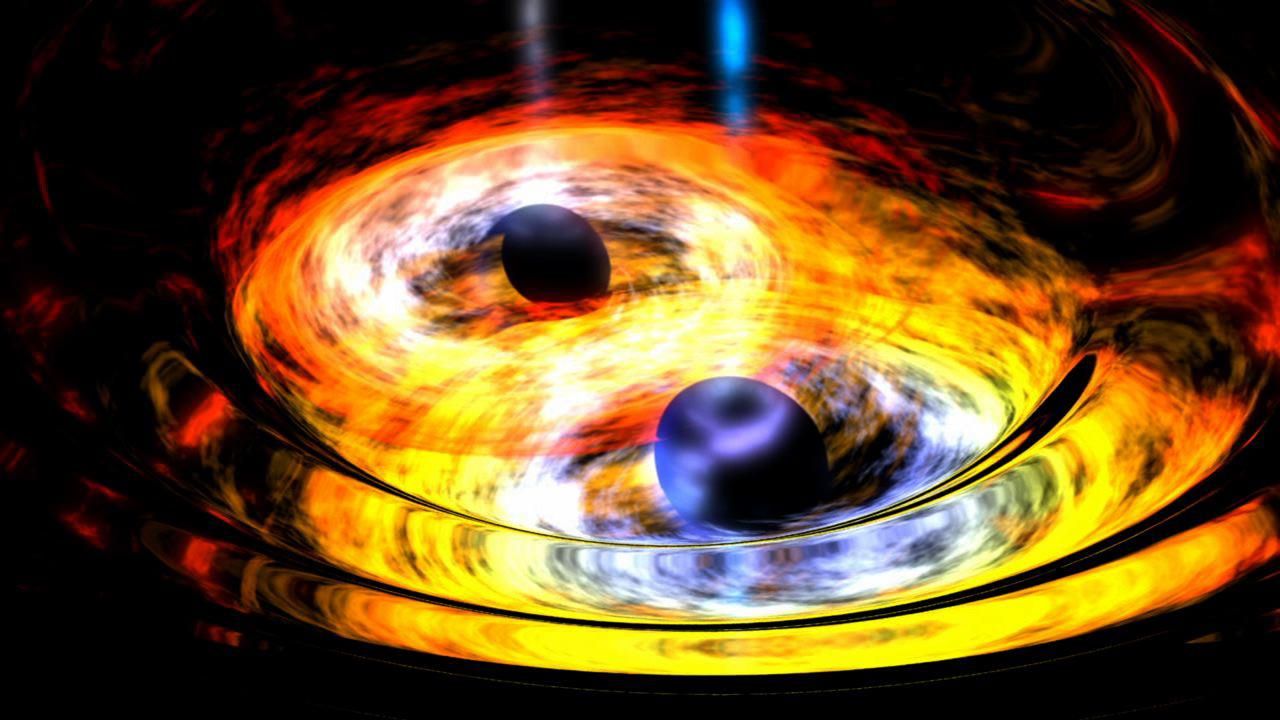
A new study using supercomputers has produced the most detailed simulations to date of how stellar-mass black holes consume and eject matter, incorporating complex physics and general relativity, revealing insights into the behavior of accretion disks, jets, and magnetic fields around black holes.
A new study using supercomputers has produced the most detailed simulations to date of how stellar-mass black holes consume and eject matter, incorporating complex physics and general relativity, which could also apply to supermassive black holes and help explain recent astronomical observations.
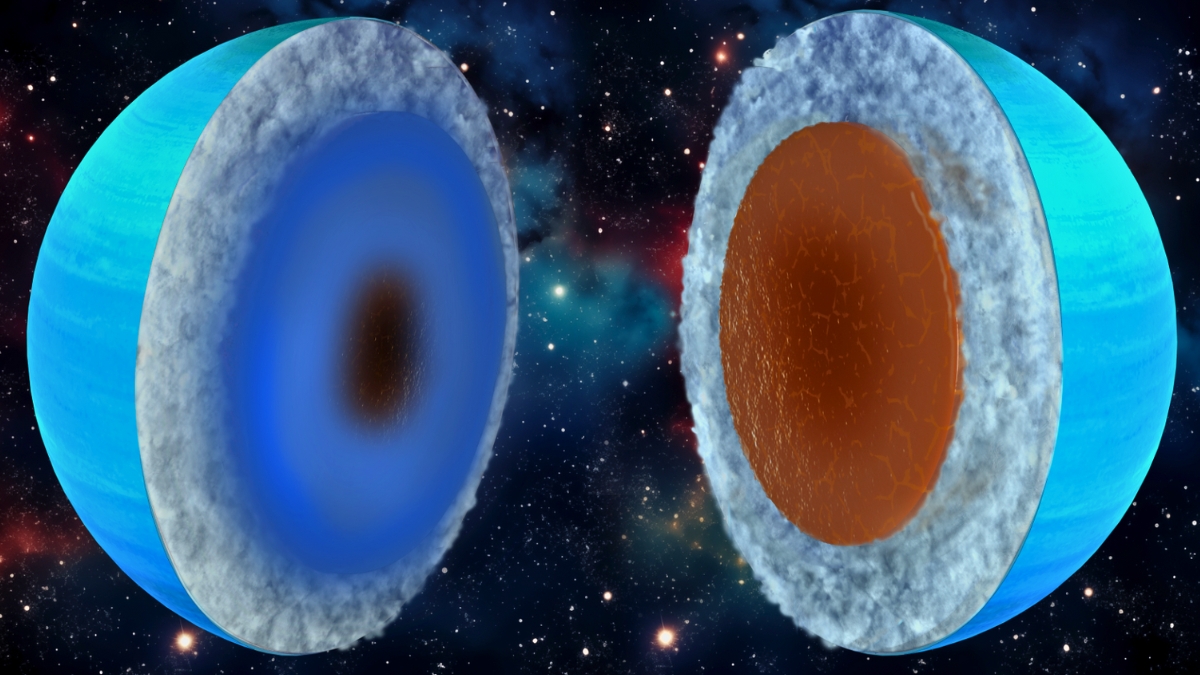
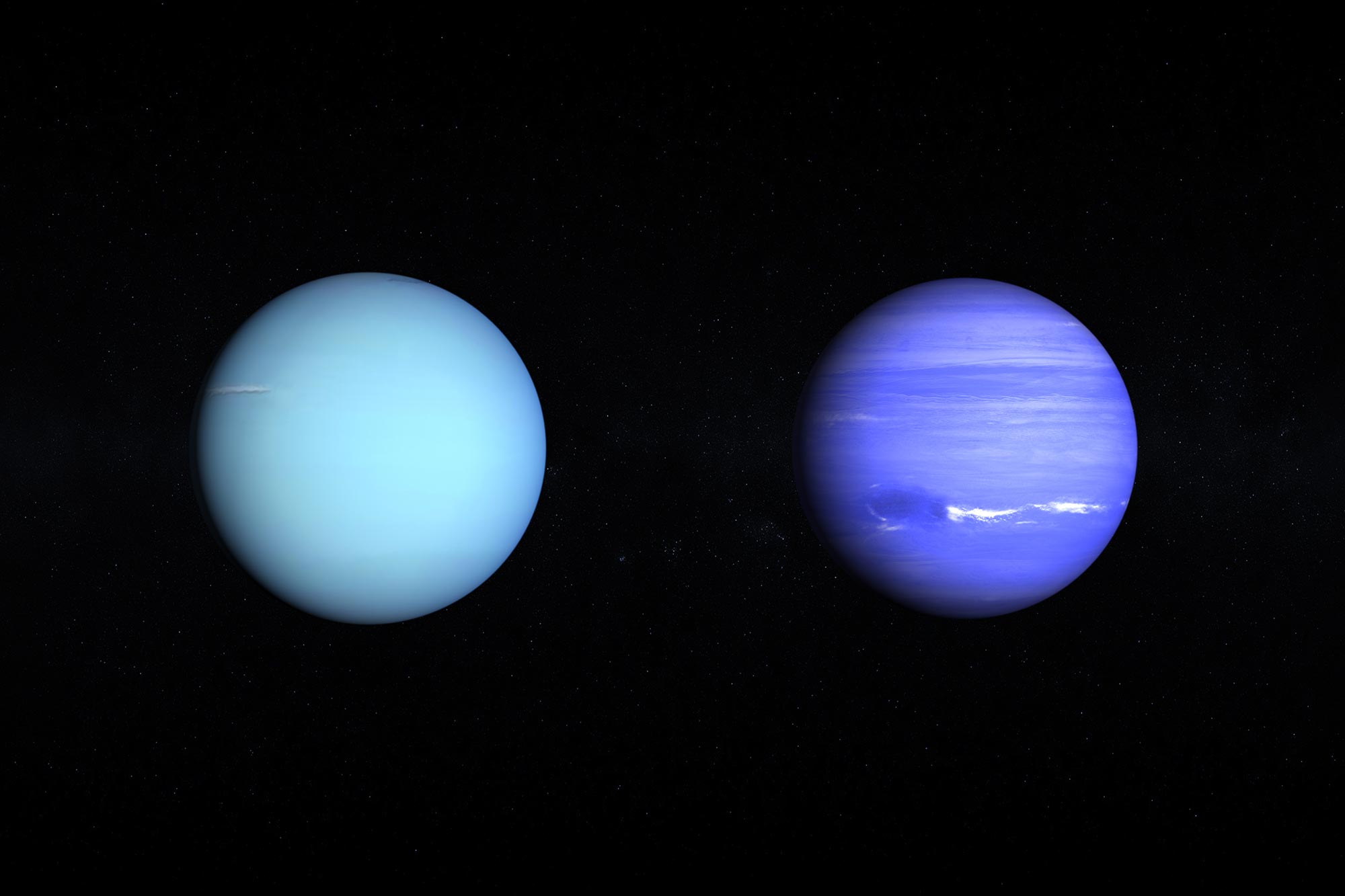
New research suggests that Uranus and Neptune may be more rocky and less icy than previously thought, challenging the traditional classification of these planets as 'ice giants' and highlighting the need for future missions to better understand their true nature.
New research suggests Uranus and Neptune may be more rock-rich than previously thought, challenging the traditional view of them as ice giants, and highlights the need for future missions to better understand their true nature.
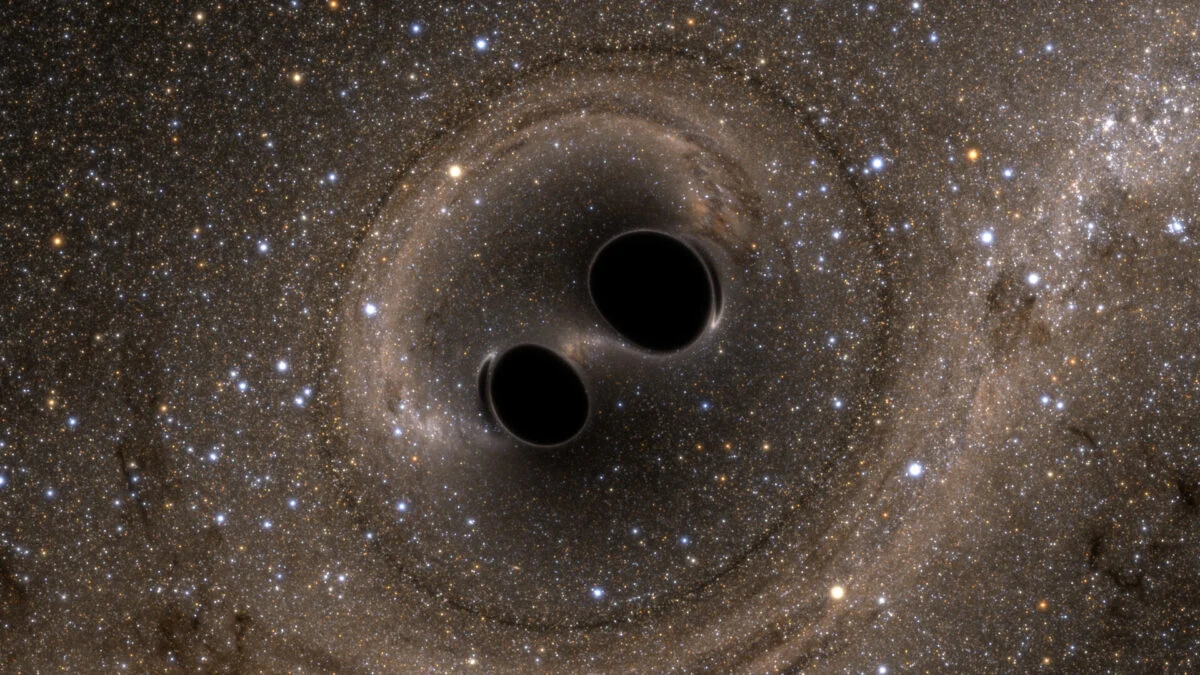
Scientists have explained the 'impossible' merger of massive, rapidly spinning black holes by considering the role of magnetic fields in the evolution of progenitor stars, revealing that magnetic forces can influence black hole mass and spin, and potentially produce black holes within the mass gap observed in previous theories.
Scientists propose that magnetic fields during stellar collapse can eject mass from black holes, explaining the formation of unexpectedly large black holes within the 'mass gap' and potentially resolving the mystery of a recent, unusual black hole merger detected by LIGO.
In 2023, astronomers observed a black hole merger that defied existing physics, involving black holes within a forbidden mass range and spinning at near light speed. New simulations incorporating magnetic fields reveal that these fields can eject mass during a star's collapse, producing lighter, fast-spinning black holes and potentially observable gamma-ray bursts, offering insights into these 'impossible' black holes.
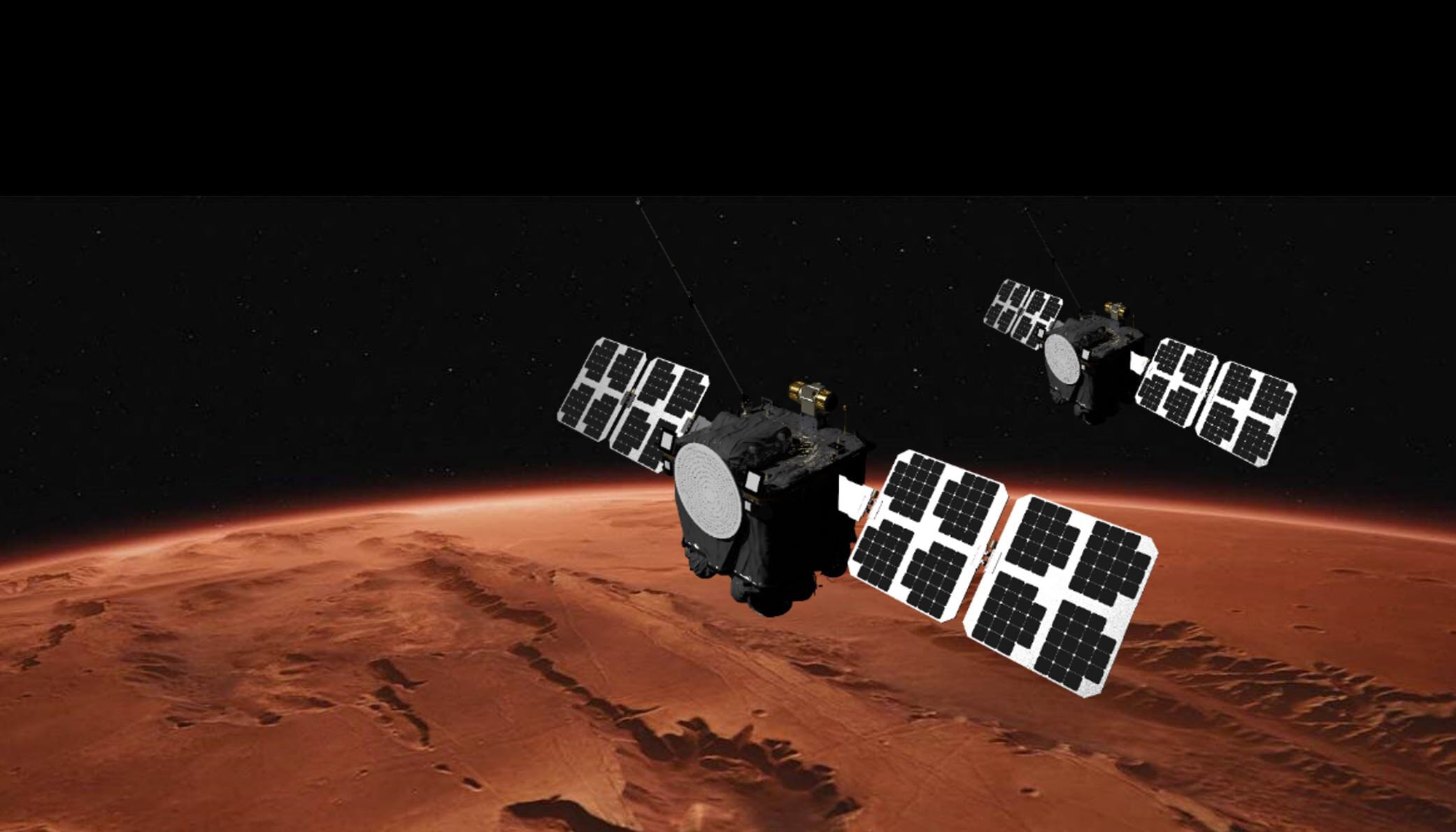
NASA's ESCAPADE mission, launching in early November, will deploy twin satellites, Blue and Gold, to study Mars's magnetic fields and atmosphere in 3D, helping scientists understand atmospheric loss and space weather effects crucial for future human missions to Mars.
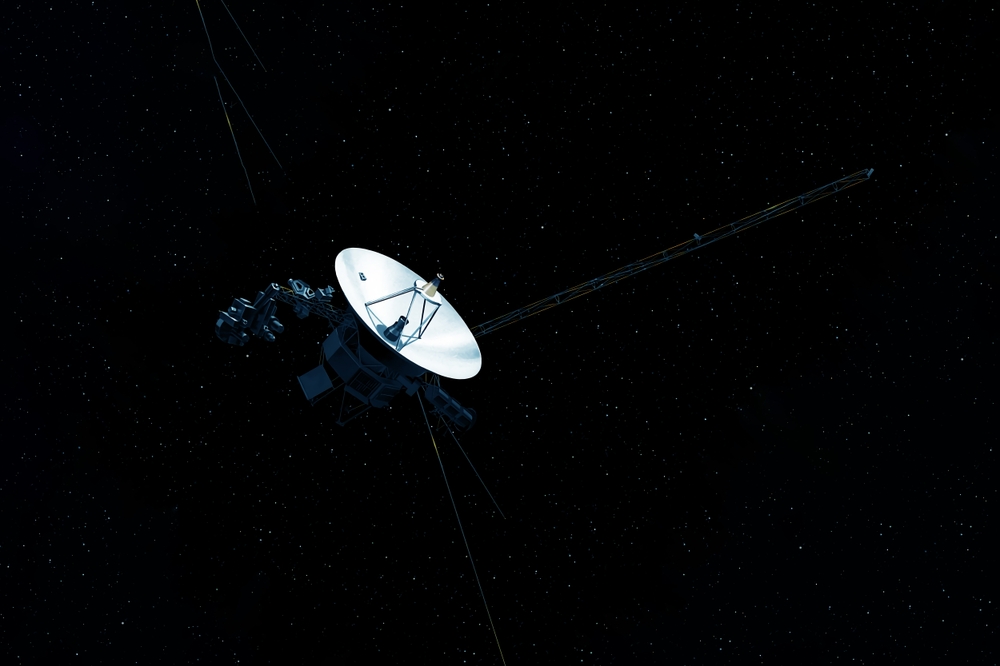
NASA's Voyager 1 has encountered a 'wall of fire' at the edge of the Solar System, a hot zone near the heliopause, which marks the boundary between our Solar System and interstellar space. Data from Voyager 1 and Voyager 2 reveal that beyond this boundary, magnetic fields are aligned parallel to those inside the heliosphere, providing new insights into the nature of this frontier.
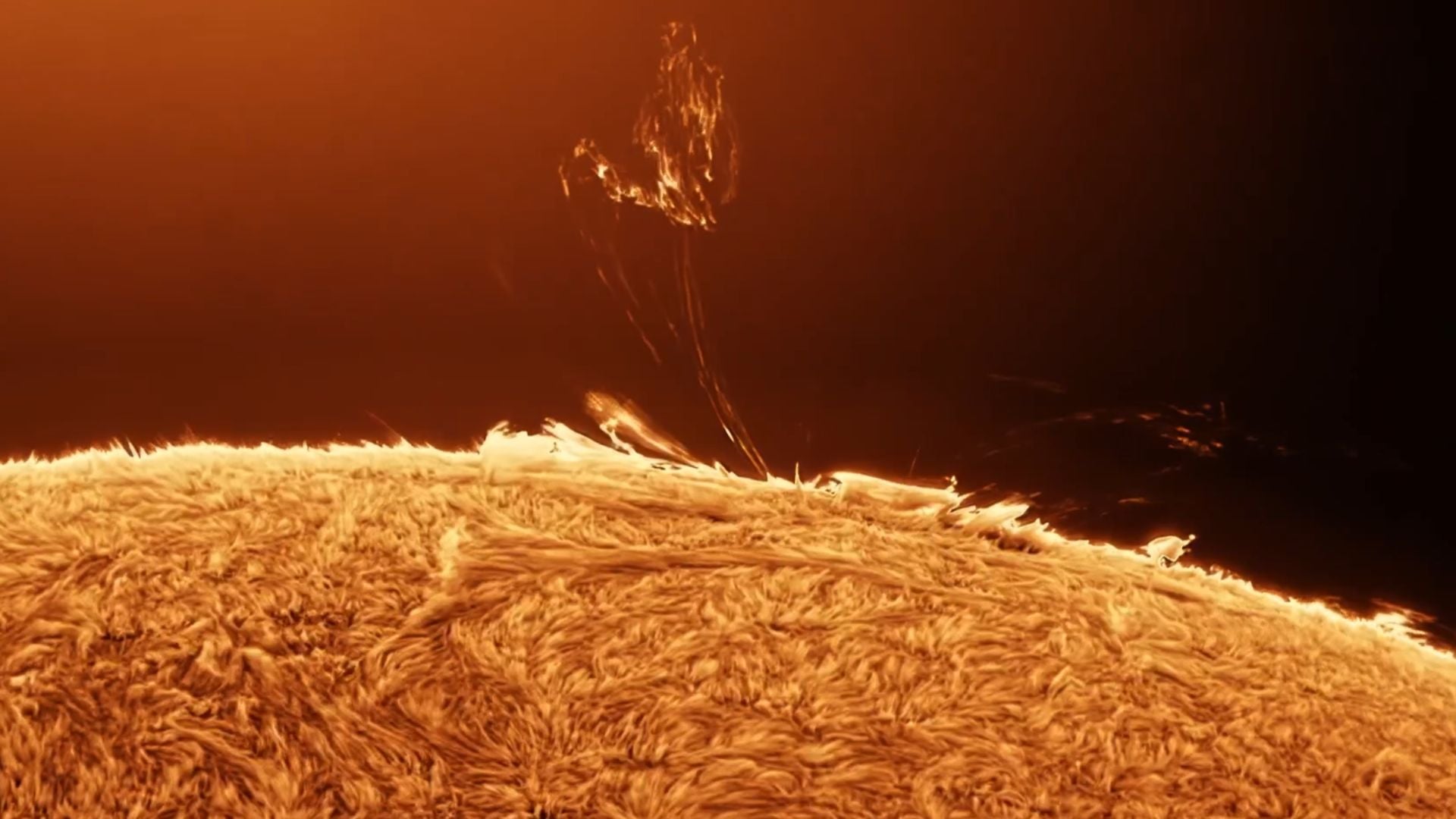
Astrophotographer Mark Johnston captured detailed footage of a solar prominence, a large plasma structure extending from the sun's surface, showcasing the dynamic magnetic environment of the sun with high-resolution imaging.
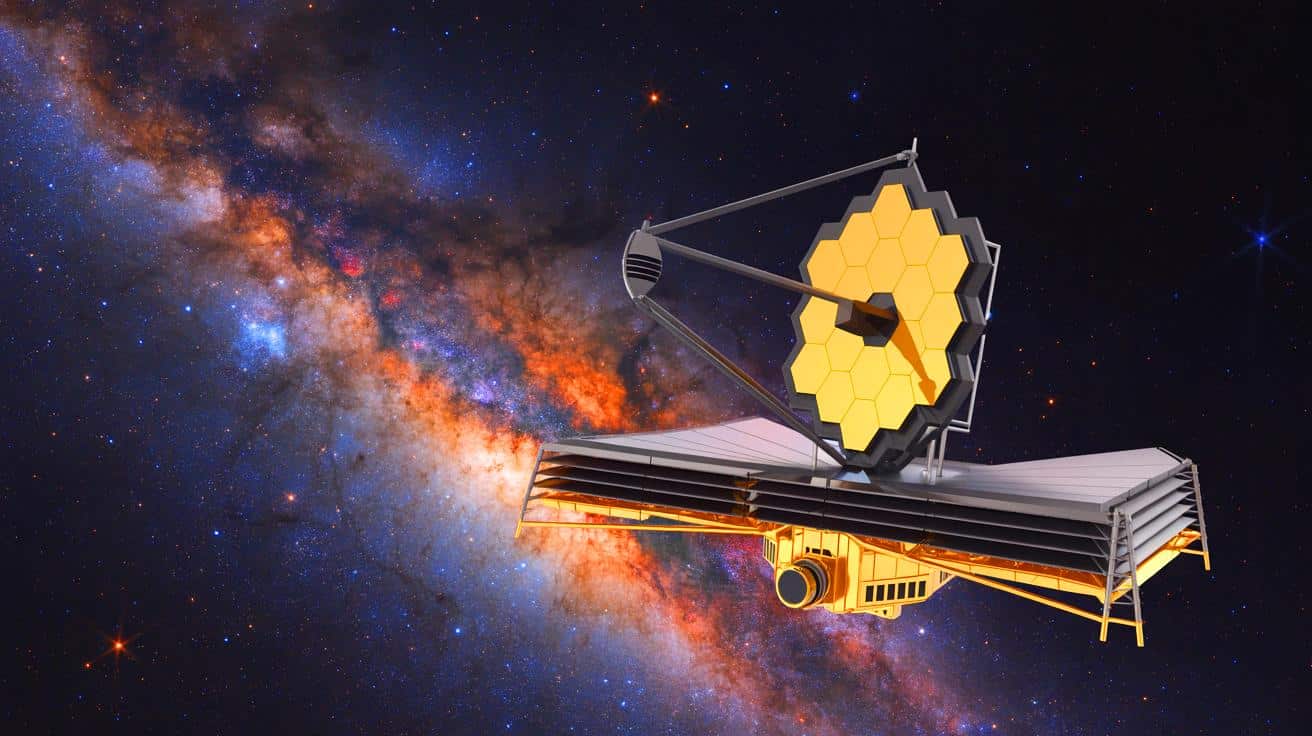
The James Webb Space Telescope has provided new insights into the star-forming region Sagittarius B2 in the Milky Way, revealing that strong magnetic fields may hinder star formation despite the presence of dense gas and young stars, which could reshape our understanding of galactic evolution.
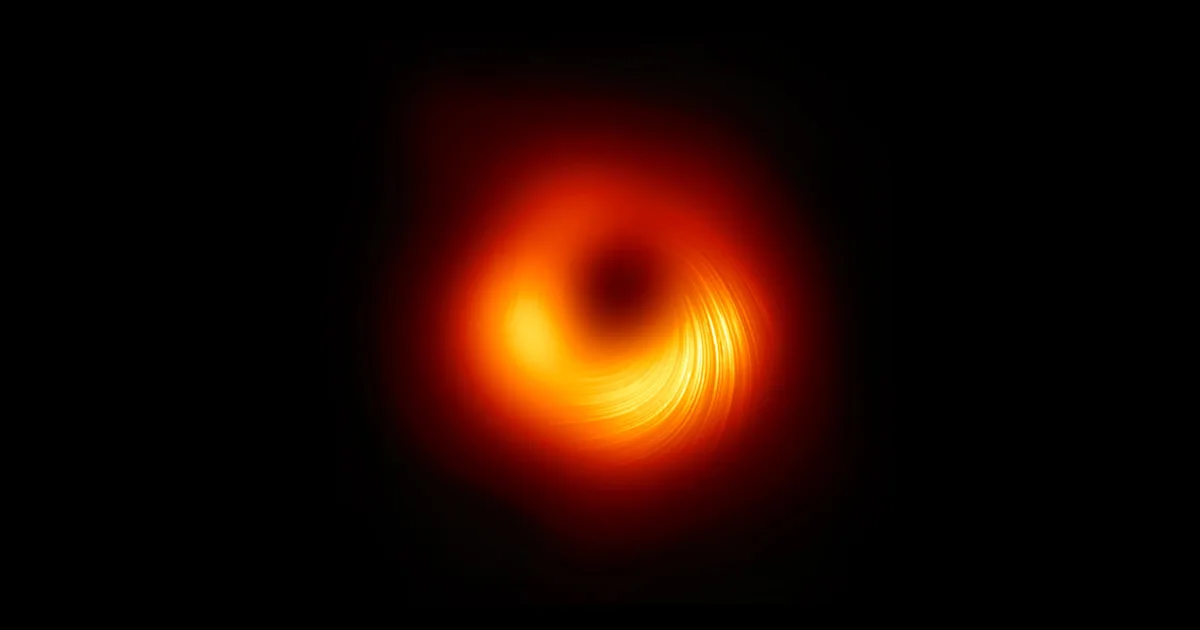
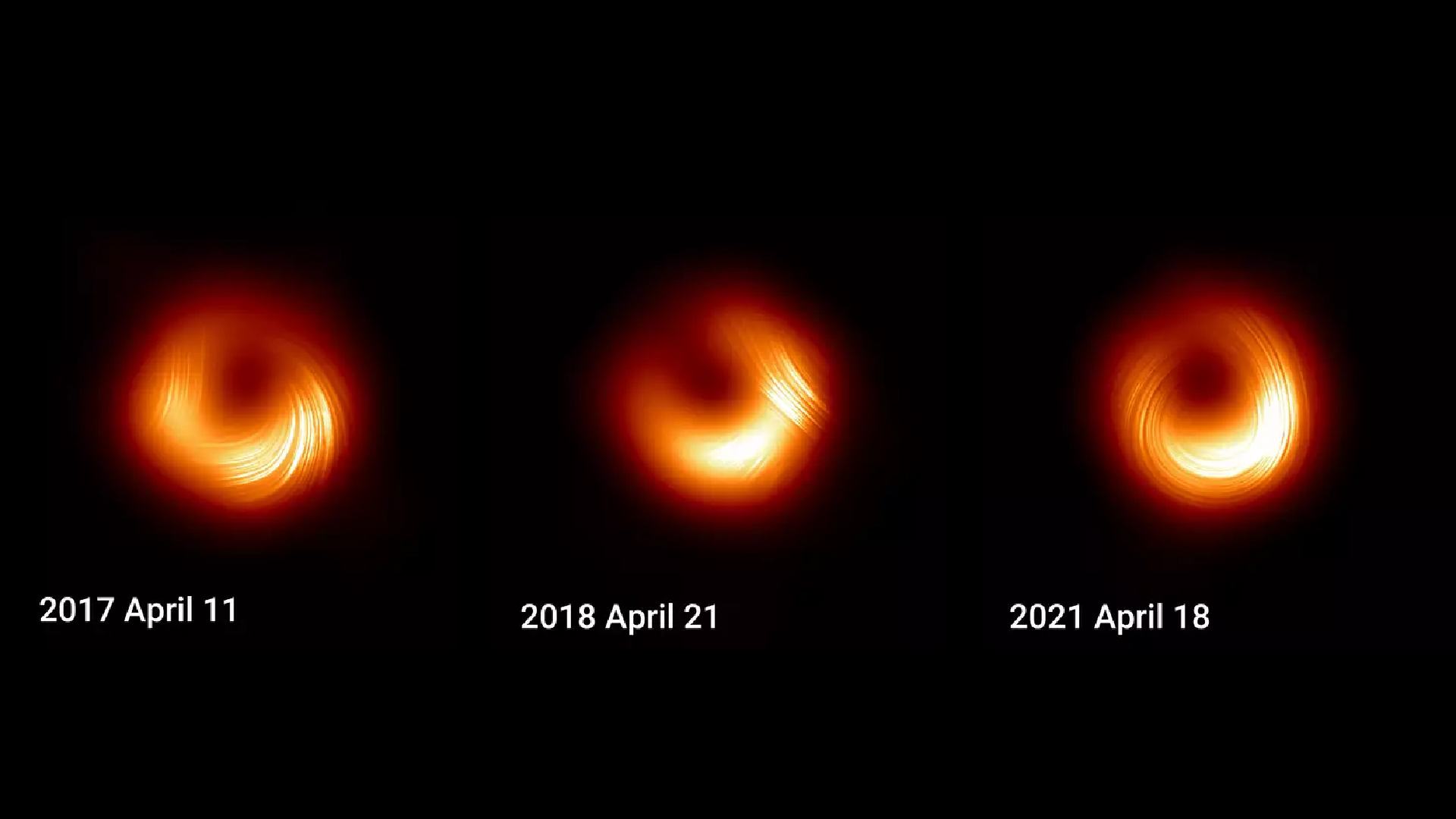
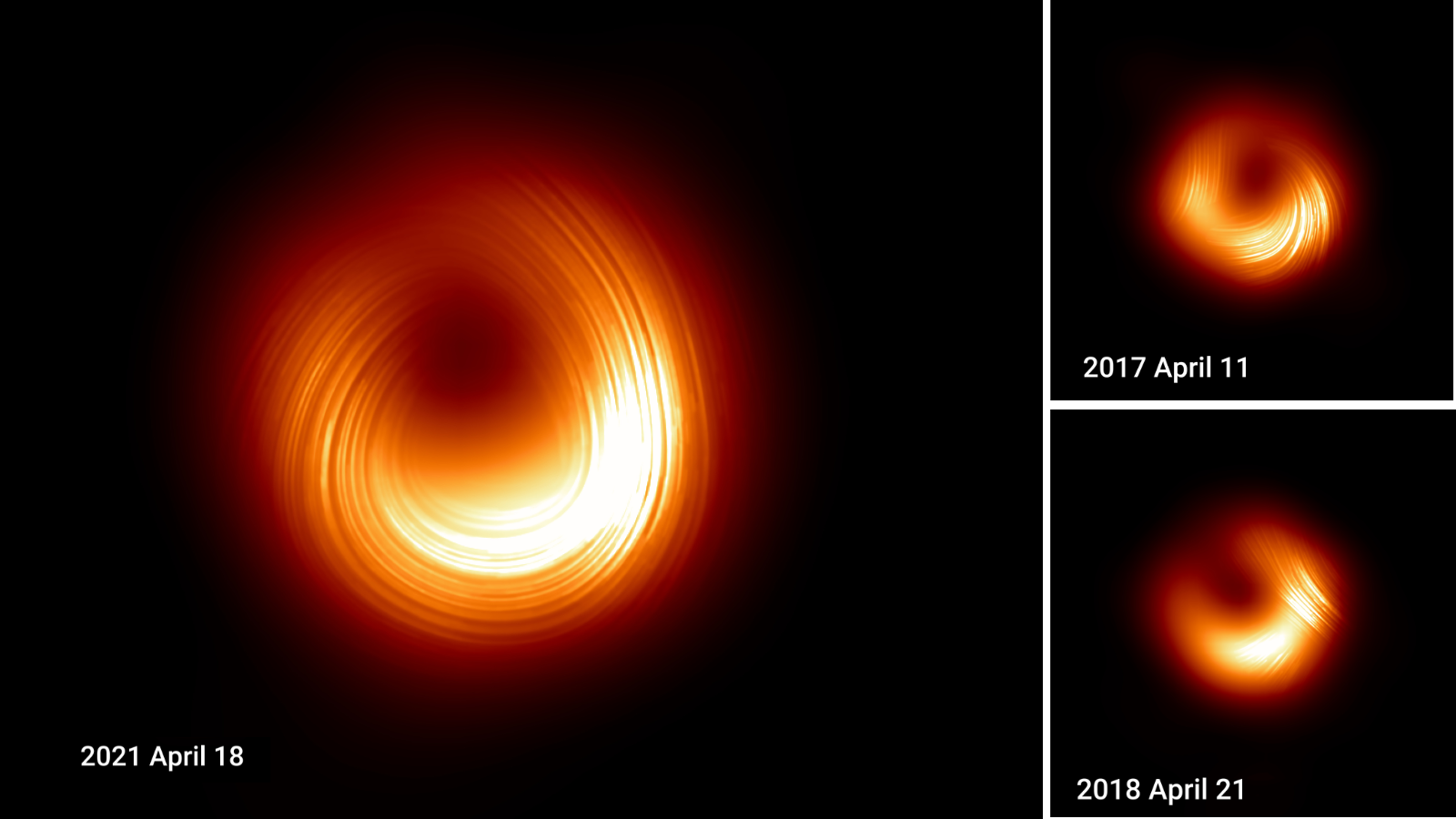
Astronomers observing the supermassive black hole in galaxy M87 have discovered unexpected changes in its magnetic field polarization over several years, indicating a more complex and dynamic magnetic environment near the event horizon than previously thought, challenging existing models and highlighting the evolving capabilities of the Event Horizon Telescope.
New images of the black hole M87* taken in 2017, 2018, and 2021 reveal dramatic changes in its magnetic fields, with polarization patterns flipping direction, indicating dynamic environmental changes around this supermassive black hole, which is over six billion times the mass of the sun.
New images of the supermassive black hole M87* taken by the Event Horizon Telescope reveal unexpected changes in the polarization of its magnetic fields over four years, challenging existing models and indicating a dynamic environment near the black hole. The observations also captured the base of a jet of matter emerging from the black hole, providing insights into how black holes influence their host galaxies. These findings demonstrate the evolving capabilities of the EHT and its potential to deepen our understanding of black hole physics.
New images of the supermassive black hole M87* reveal unexpected changes in magnetic field polarization over four years, challenging existing models and providing insights into the dynamic environment near black holes, including the first detailed view of the jet of matter emerging from it.