Tag

Gamma Ray Bursts

All articles tagged with #gamma ray bursts

science2 months ago

Scientists Unveil Explanation for 'Impossible' Black Hole Mergers

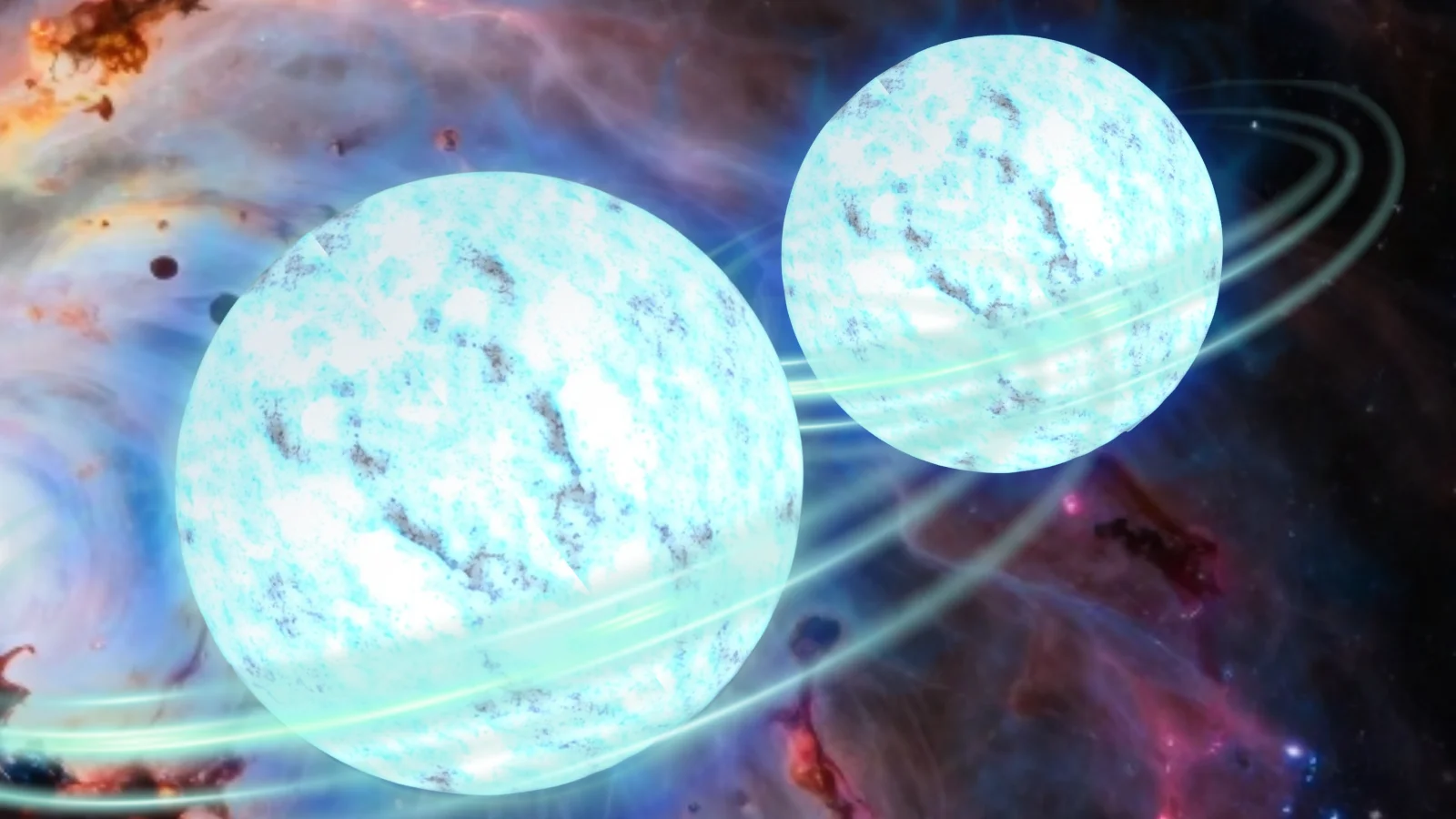
In 2023, astronomers observed a black hole merger that defied existing physics, involving black holes within a forbidden mass range and spinning at near light speed. New simulations incorporating magnetic fields reveal that these fields can eject mass during a star's collapse, producing lighter, fast-spinning black holes and potentially observable gamma-ray bursts, offering insights into these 'impossible' black holes.

science3 months ago

Astronomers Discover Rare, Mysterious Repeating Gamma-Ray Bursts Beyond the Milky Way

Astronomers have observed a rare series of repeating gamma-ray bursts, lasting much longer than typical bursts and originating outside our galaxy, which could reveal new insights into the death of stars and extreme cosmic events. The cause remains uncertain, with theories including unusual supernovae or star-black hole interactions, and ongoing observations aim to uncover more about these extraordinary phenomena.

science4 months ago

Record-Breaking and Unprecedented Gamma-Ray Bursts Challenge Existing Theories

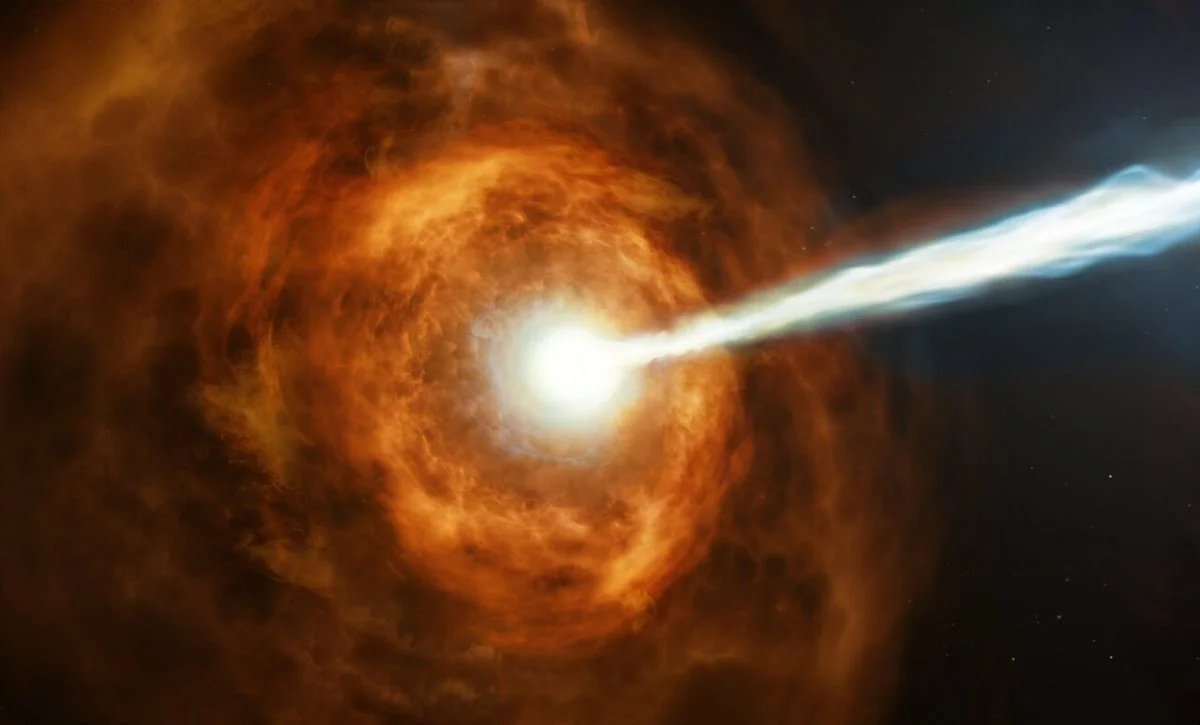
Astronomers have discovered a record-breaking, unusually long gamma-ray burst, GRB 250702B, which lasted about a day and originated from a galaxy billions of light-years away. Its peculiar duration and repeated signals challenge existing theories about such cosmic explosions, suggesting a possible involvement of an intermediate black hole and a white dwarf, but the exact cause remains unknown.

science1 year ago

Black Holes Retain Magnetic Fields from Stellar Origins

Scientists at the Flatiron Institute have discovered that black holes inherit their magnetic fields from their parent stars, specifically from the collapsing proto-neutron stars. This finding, published in The Astrophysical Journal Letters, resolves a long-standing mystery about the origin of black hole magnetism, which is crucial for the formation of powerful jets and gamma ray bursts. The study suggests that the accretion disk of a neutron star can preserve its magnetic field, allowing the newly formed black hole to inherit it, thus enabling jet formation.

science1 year ago

The Potential Threat of a Supernova to Earth

A supernova, like the anticipated explosion of Betelgeuse, would be a spectacular sight but not a threat to Earth due to its distance of 650 light-years. For a supernova to cause significant harm, it would need to be within 25-30 light-years, which could strip Earth's ozone layer and lead to mass extinction. Fortunately, no such stars are currently close enough to pose a danger. However, the potential for future threats exists as our solar system moves through the Milky Way's Orion arm, increasing the likelihood of encountering a lethal supernova over millions of years.

science1 year ago

New Evidence Suggests Hawking Radiation May Soon Be Detectable

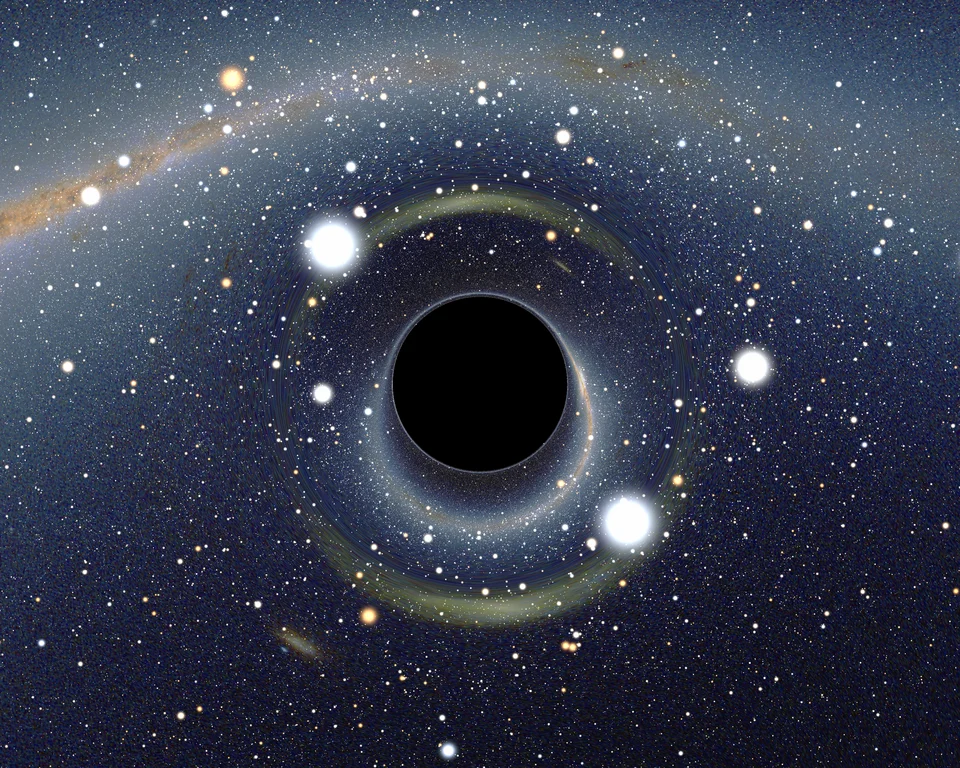
Scientists may be close to proving Stephen Hawking's theory that black holes emit thermal radiation, known as Hawking radiation. Researchers propose that tiny black holes, formed during the collision of larger black holes, could evaporate and explode in a detectable manner, providing evidence for Hawking's hypothesis. These "morsel" black holes, or "Bocconcini di Buchi Neri," could emit high-energy gamma-ray bursts, offering a unique signature for their existence. The team plans further research to confirm these findings and validate Hawking radiation.

science1 year ago

"Black Hole 'Morsels' May Validate Hawking's Theory"

Scientists may be close to proving Stephen Hawking's theory that black holes emit thermal radiation, known as Hawking radiation. Researchers propose that tiny black holes, formed during the merger of larger black holes, could evaporate and explode in a detectable manner, providing evidence for Hawking's hypothesis. These "morsel" black holes, or "Bocconcini di Buchi Neri," could emit high-energy gamma-ray bursts, offering a unique signature to confirm their existence and validate Hawking radiation.

science1 year ago

"Unveiling the Mystery Source of Life's Essential Elements"

While gamma-ray bursts (GRBs) are known to be the universe's most powerful explosions and potential sources of heavy elements, recent studies, including observations of the brightest GRB ever recorded (GRB 221009), suggest they may not be the primary source of these elements. The findings indicate that another, yet unidentified, source must be responsible for the abundance of heavy elements in the universe.

science1 year ago

"Unveiling the Mystery Source of Elements in the Universe"

Gamma-ray bursts (GRBs), the universe's most powerful explosions, have been studied to understand the creation of heavy elements. While short GRBs from neutron star collisions have shown evidence of heavy element production, recent observations of the brightest long GRB, dubbed the BOAT, revealed no such elements. This suggests that GRBs may not be the primary source of the universe's heavy elements, indicating another unknown source.

science-and-technology1 year ago

"NASA Swift and AI Measure Record-Breaking Gamma-Ray Burst Distance"

NASA's Swift satellite and AI have been used to measure the distances of gamma-ray bursts (GRBs) with unprecedented precision. Led by Maria Dainotti, the research employs multiple machine learning models to overcome current observational limitations, enhancing our understanding of the universe's expansion and star evolution. The studies reveal that GRBs can be observed at various distances, aiding in cosmological research, and suggest that some GRBs may result from neutron star mergers rather than massive star collapses.

space1 year ago

"NASA Halts Swift Gamma-Ray Space Telescope Operations"

NASA has temporarily suspended science observations by the Neil Gehrels Swift Observatory due to the deteriorating performance of one of its gyroscopes. The space telescope, which studies gamma-ray bursts, was placed into safe mode on March 15, and its onboard flight software needs a patch to operate properly in two-gyroscope mode. Despite this setback, Swift has made significant discoveries in its almost 20 years of operation, including the detection of the "Brightest Of All Time" gamma-ray burst and a black hole in a distant galaxy. Scientists are eager for the pioneering space telescope to resume operations and reveal new high-energy aspects of the universe.

space-exploration1 year ago

"BurstCube: NASA's Tiny Satellite Probes Cosmic Mysteries from International Space Station"

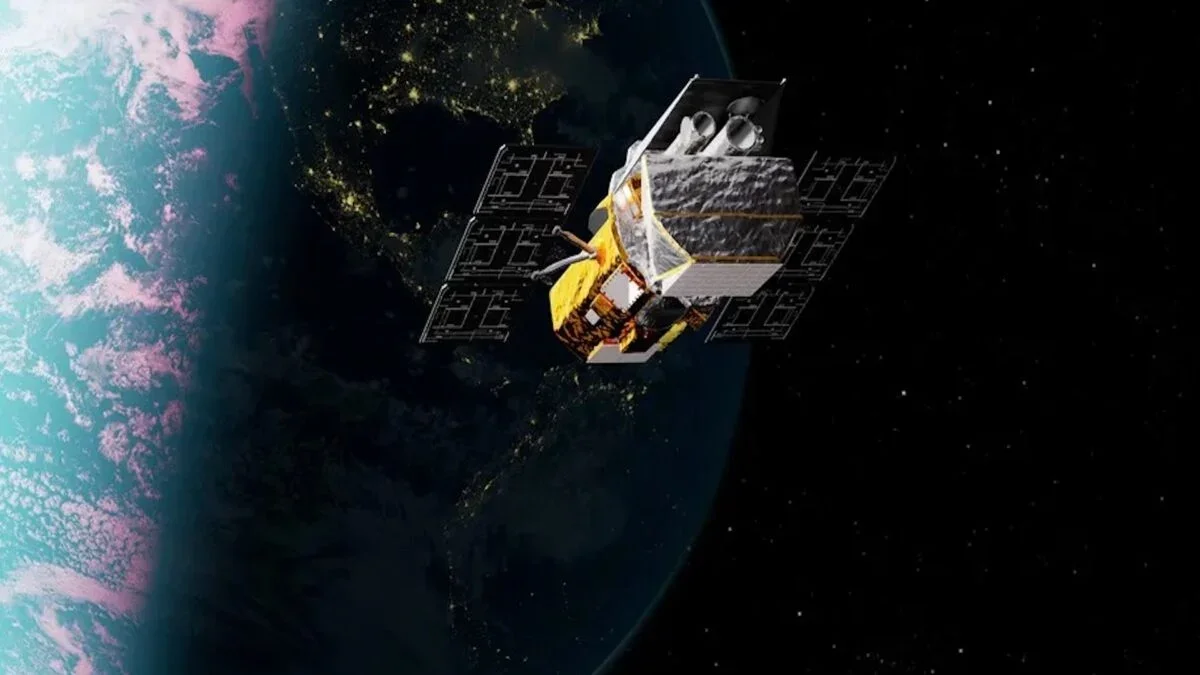
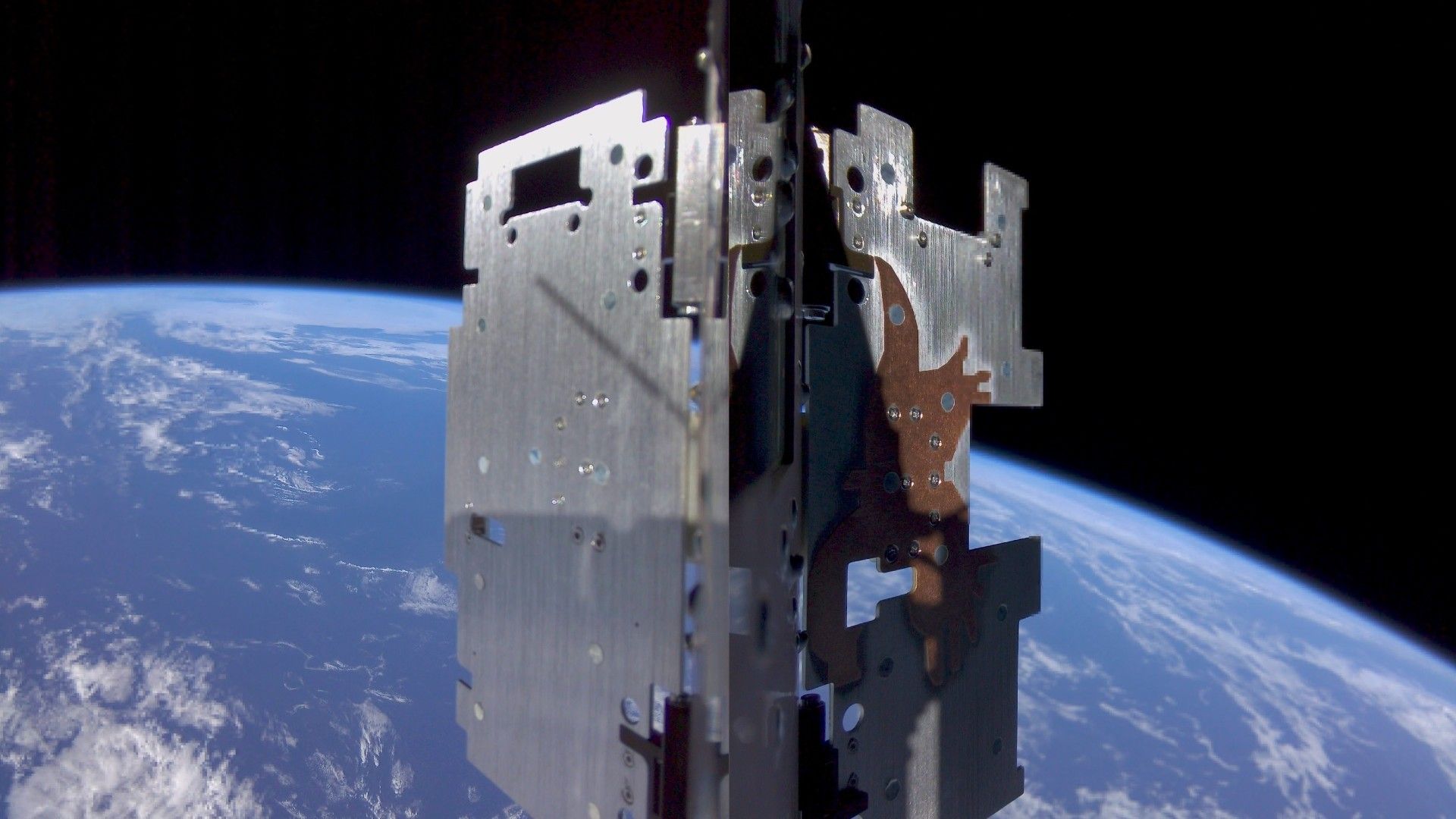
NASA's BurstCube mission, a small spacecraft designed to detect and study short gamma-ray bursts, has been launched aboard SpaceX's 30th Commercial Resupply Services mission. BurstCube will detect, locate, and study these high-energy cosmic events, providing important experience for early career astronomers and aerospace engineers. The spacecraft's detectors are angled to allow for a wider coverage of the sky, improving the odds of catching more bursts coincident with gravitational wave detections. BurstCube belongs to a class of spacecraft called CubeSats, which provide cost-effective access to space for groundbreaking science and testing new technologies.