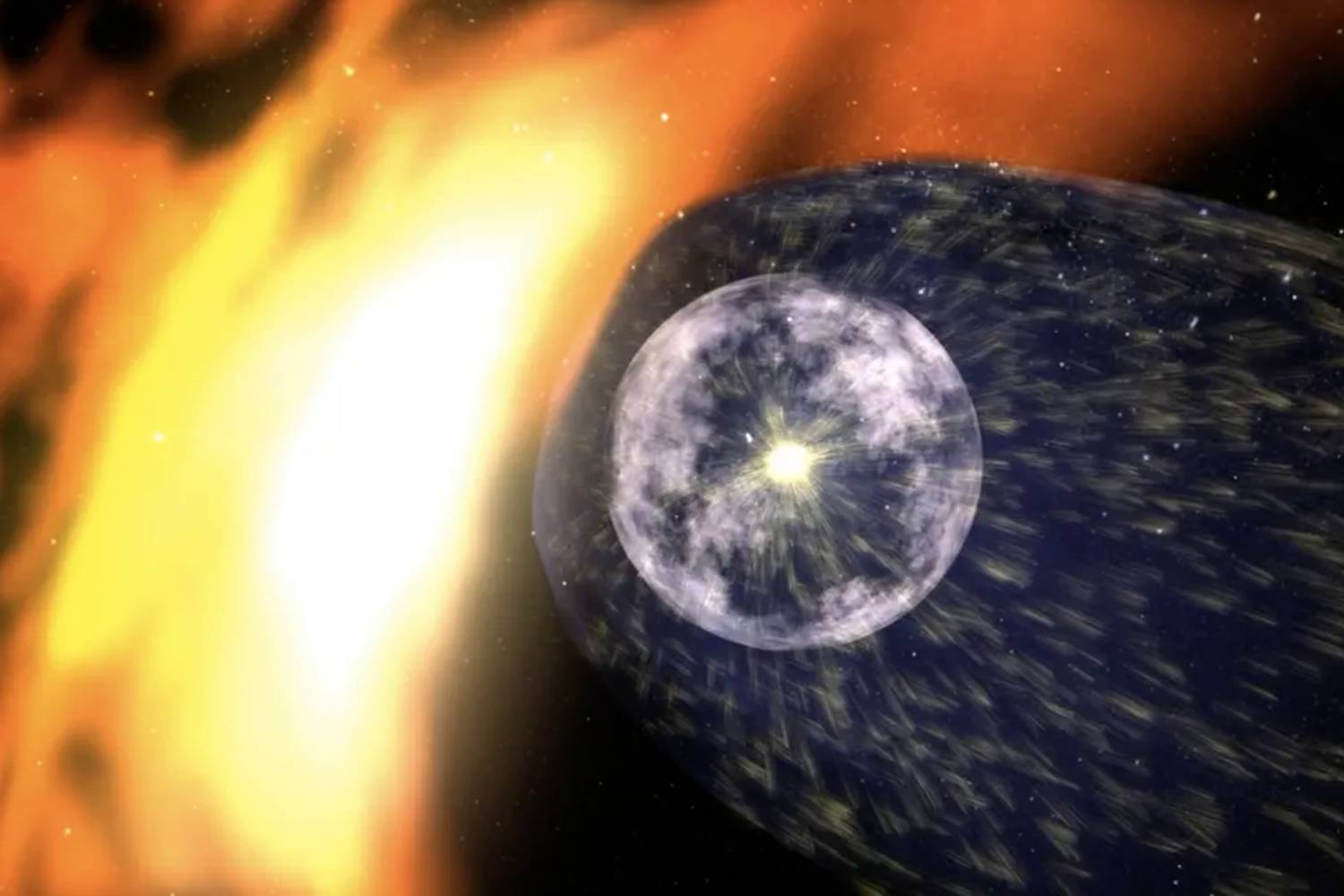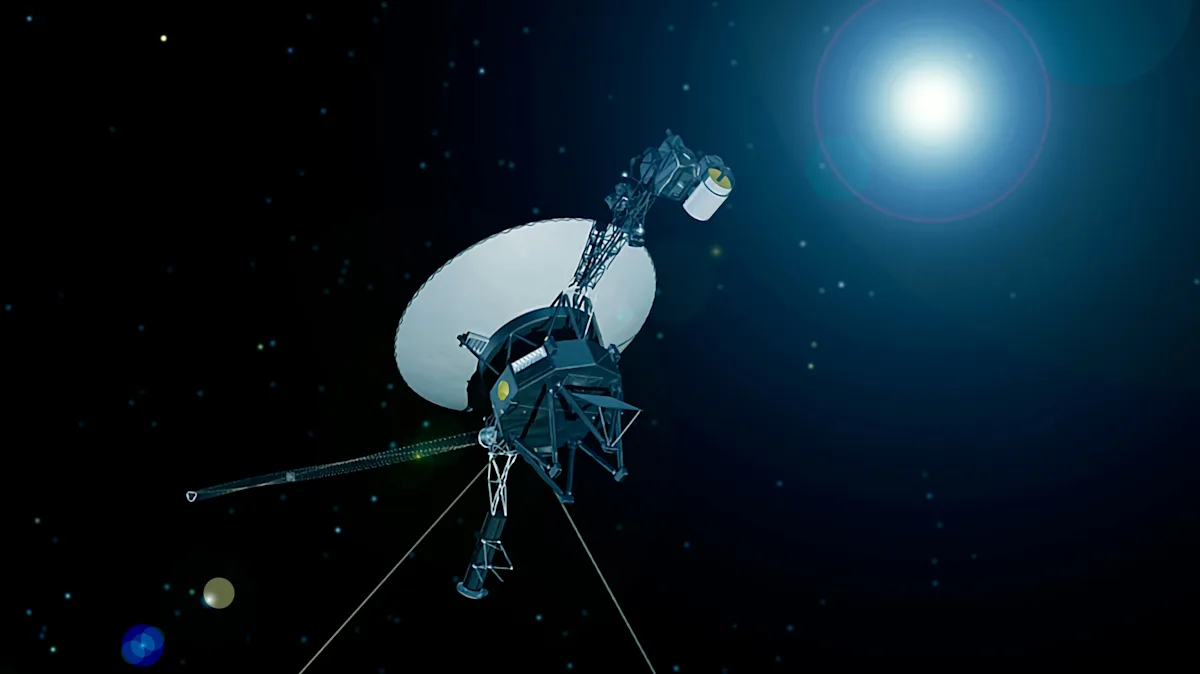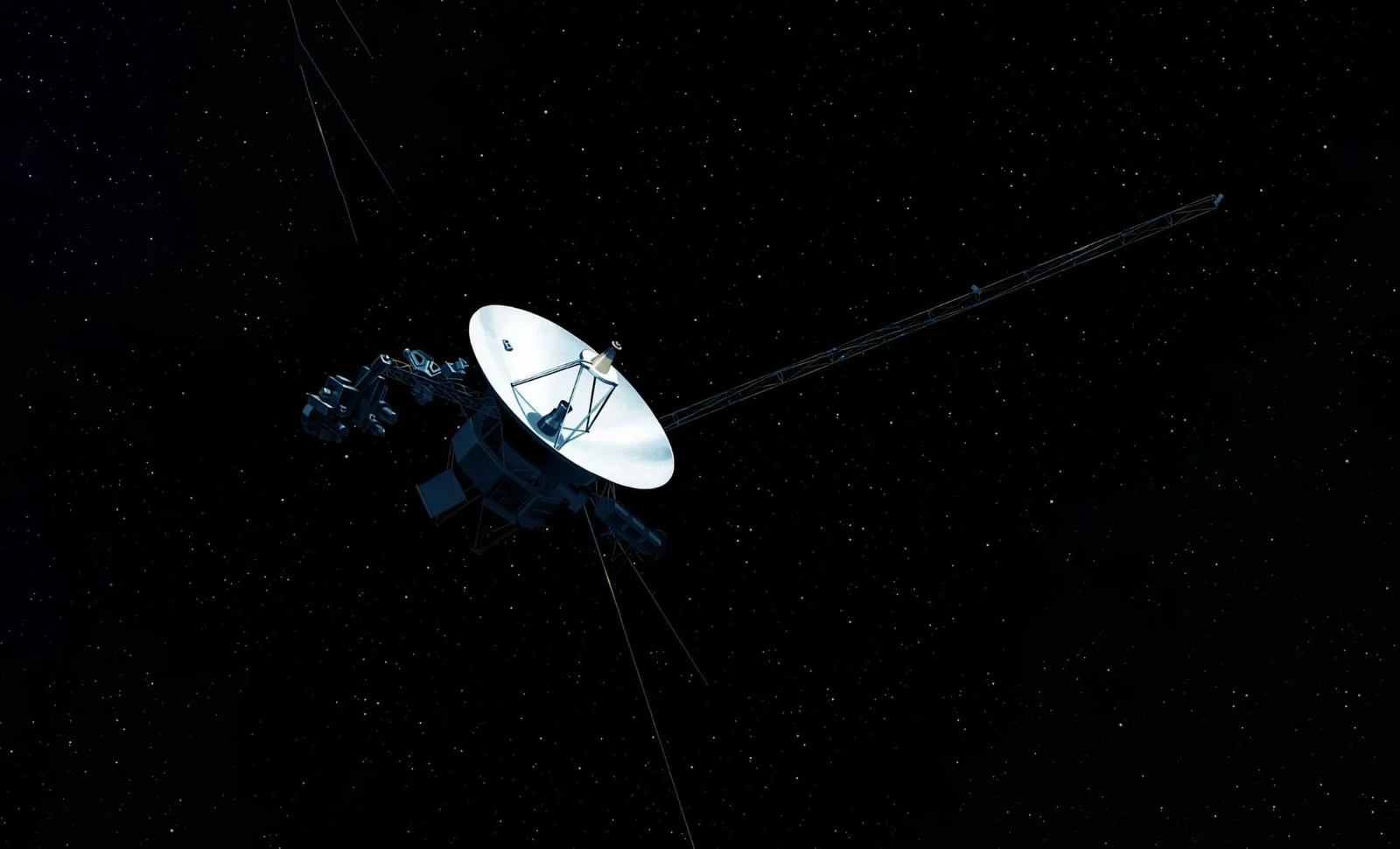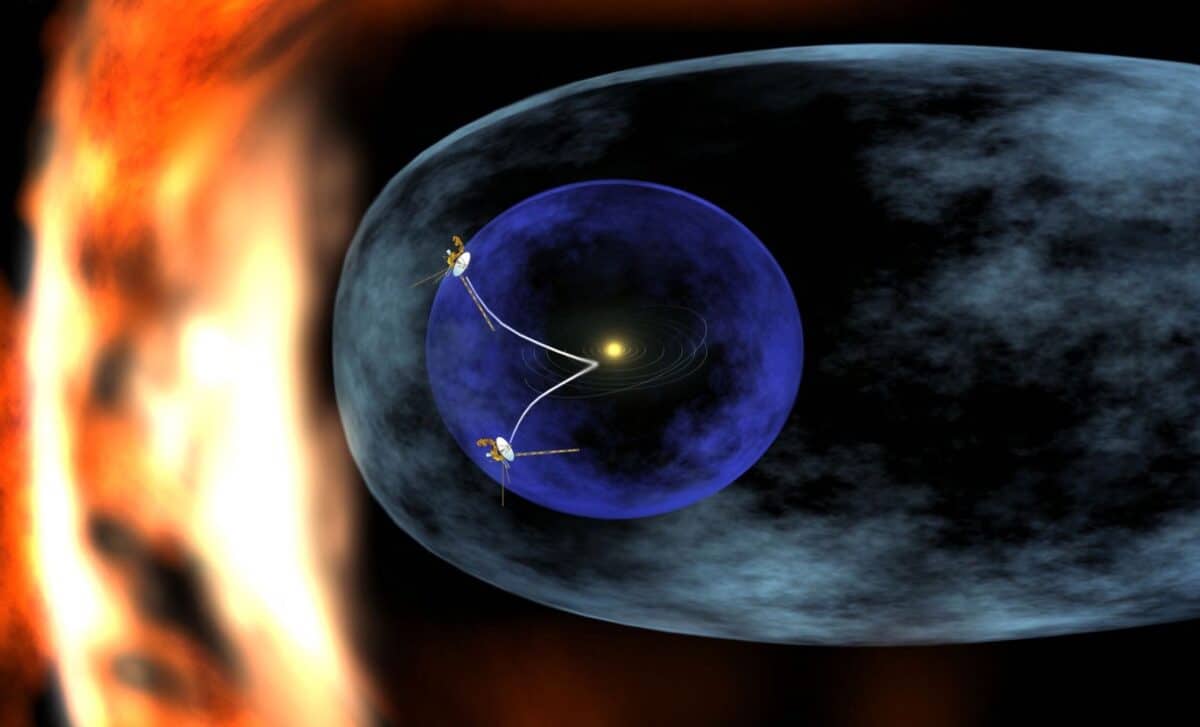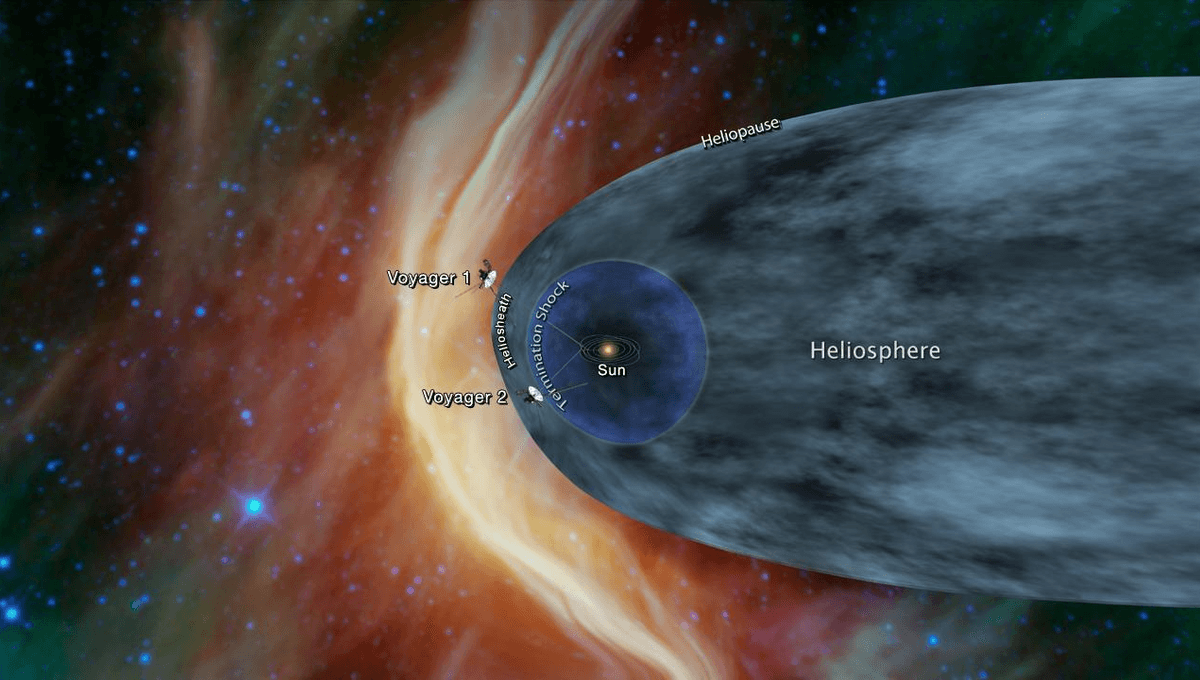
NASA's Voyager 1 and Voyager 2 spacecraft have detected a hot, energetic boundary at the edge of our solar system called the heliopause, where temperatures spike to 30,000-50,000 Kelvin, marking the transition from solar to interstellar space. The findings challenge previous assumptions about the magnetic field and permeability of this boundary, providing new insights into how our solar system interacts with the galaxy.
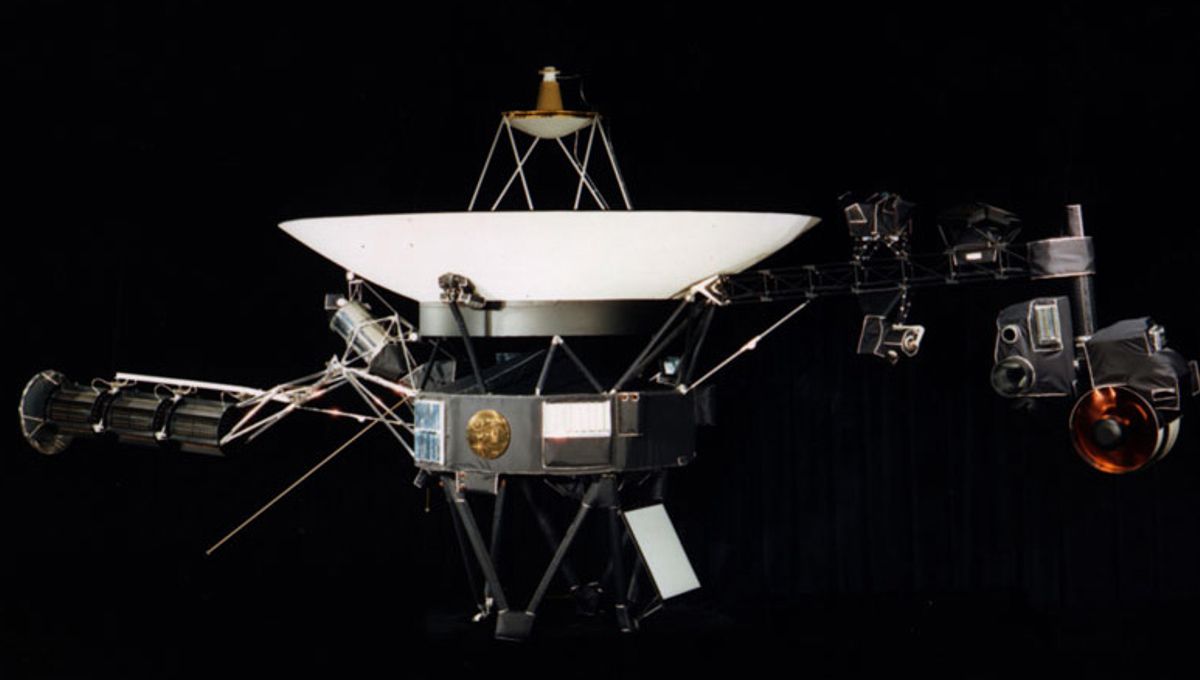
NASA's Voyager 1 has encountered a 'wall of fire' at the edge of the Solar System, a hot zone near the heliopause, which marks the boundary between our Solar System and interstellar space. Data from Voyager 1 and Voyager 2 reveal that beyond this boundary, magnetic fields are aligned parallel to those inside the heliosphere, providing new insights into the nature of this frontier.
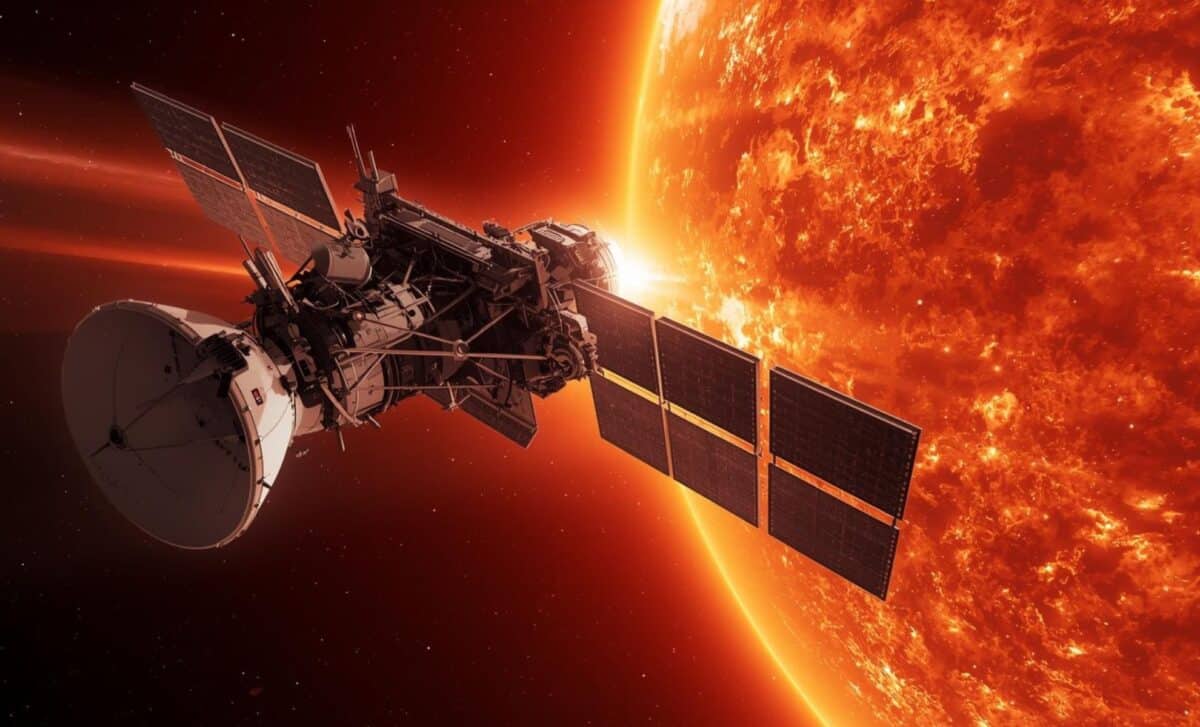
NASA's Voyager spacecraft have discovered a blazing 'wall of fire' at the edge of the solar system, a boundary where solar wind meets interstellar space, with temperatures reaching up to 50,000 Kelvin, providing new insights into the solar system's boundary and its dynamic nature.
NASA's Voyager spacecraft discovered a 'wall of fire' at the edge of the solar system, with temperatures between 30,000 and 50,000 Kelvin, as they crossed the heliopause, marking the boundary where the solar wind meets interstellar space. Despite the extreme temperatures, the probes survived due to the sparse particle environment, providing valuable data about the solar system's outer limits and magnetic field alignment beyond the heliosphere.
NASA's Voyager probes have crossed the solar system's boundary, the heliopause, and discovered a mysterious 'firewall' region with extreme temperatures and unexpected magnetic field alignments, revealing new insights into the solar system's edge and our cosmic environment.
NASA's Voyager 1 spacecraft has discovered a turbulent and fiery boundary at the edge of our solar system, known as the heliopause, where solar influence ends and interstellar space begins, revealing unexpected heat, magnetic activity, and turbulence that challenge previous assumptions about this frontier.
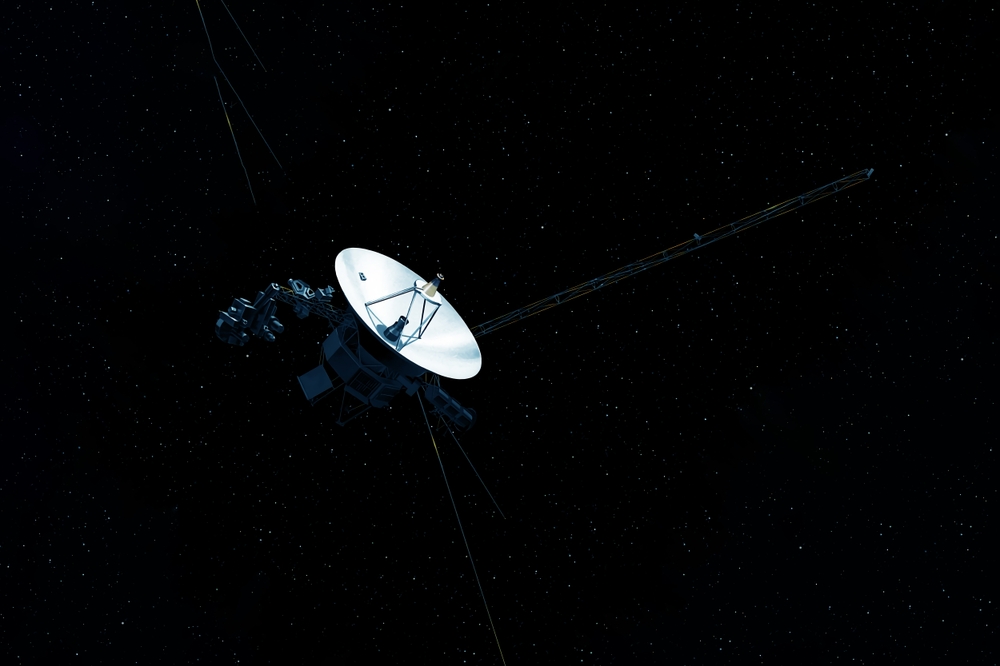
Voyager 1 has traveled beyond the heliopause into interstellar space, now just a light-day from Earth, marking a historic milestone in space exploration and human persistence, with ongoing data transmission that continues to expand our understanding of the solar system's boundaries.
NASA's Voyager probes confirmed a hot, dynamic boundary called the heliopause at the edge of the solar system, characterized by temperatures up to 50,000 kelvin, providing new insights into the solar system's interaction with interstellar space.
NASA's Voyager probes have crossed the heliopause, revealing a high-temperature 'wall of fire' and surprising magnetic field alignment beyond our Solar System, providing new insights into the boundary between solar and interstellar space.
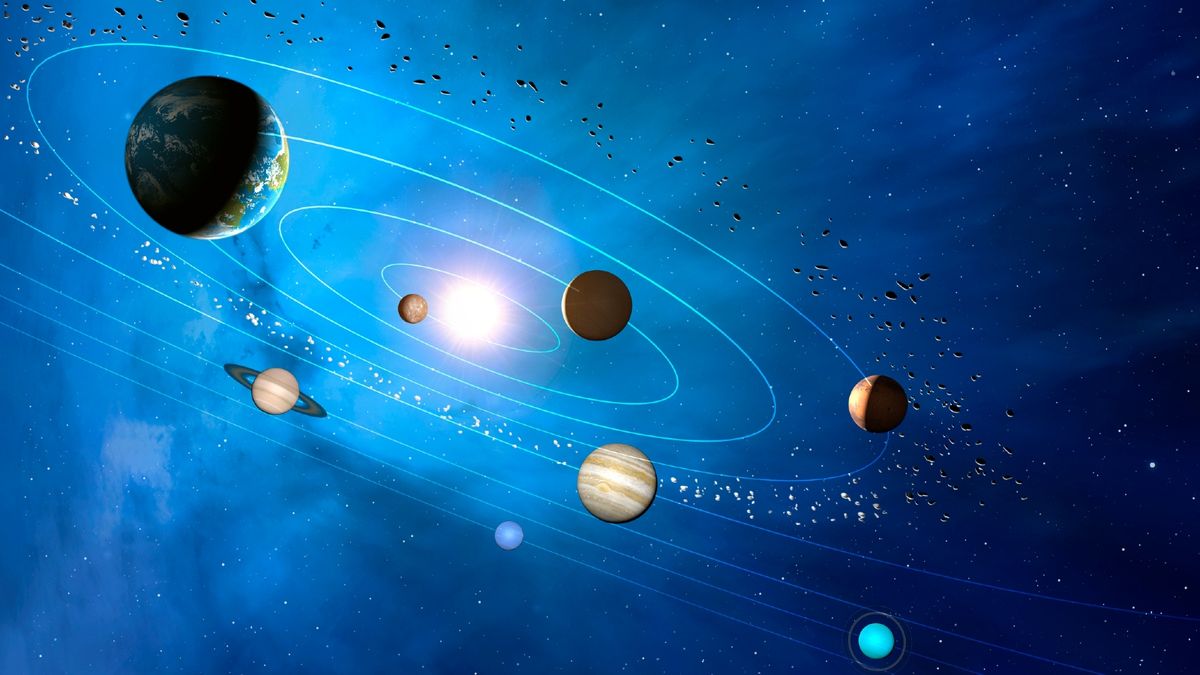
The solar system has three potential boundaries: the Kuiper Belt, the heliopause, and the Oort Cloud. The Kuiper Belt, located 30-50 AU from the sun, is considered by some as the edge due to its representation of the sun's protoplanetary disk. The heliopause, the outer edge of the sun's magnetic influence, is often used to define the solar system's edge due to its distinct properties. The Oort Cloud, extending up to 100,000 AU from the sun, is considered by some as the clear choice for a solar system boundary. While the heliopause is most commonly used to define the solar system's edge, some researchers argue for multiple boundaries.
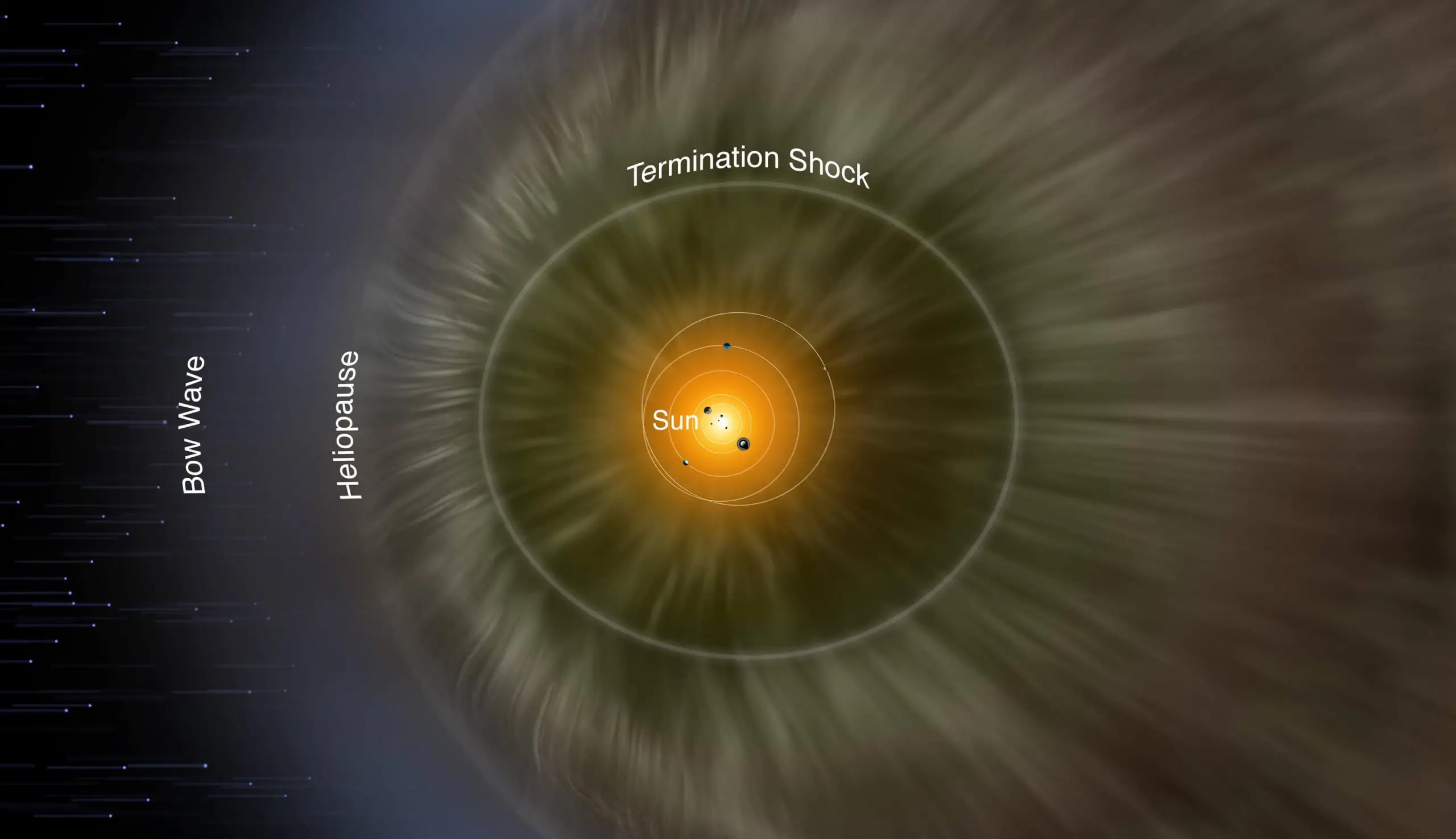
The region where the solar wind meets interstellar space, known as the heliopause, has been dubbed the "Wall of Fire" due to its remarkably high temperatures, measured by the Voyager spacecraft. Despite the dramatic name, the "wall" is actually a region of hot plasma with extremely low density, making it unlikely to affect spacecraft passing through. The high temperatures at the heliopause have been attributed to either plasma compression or magnetic reconnection, and the Voyager missions' findings have provided valuable insights into this boundary region of the Solar System.
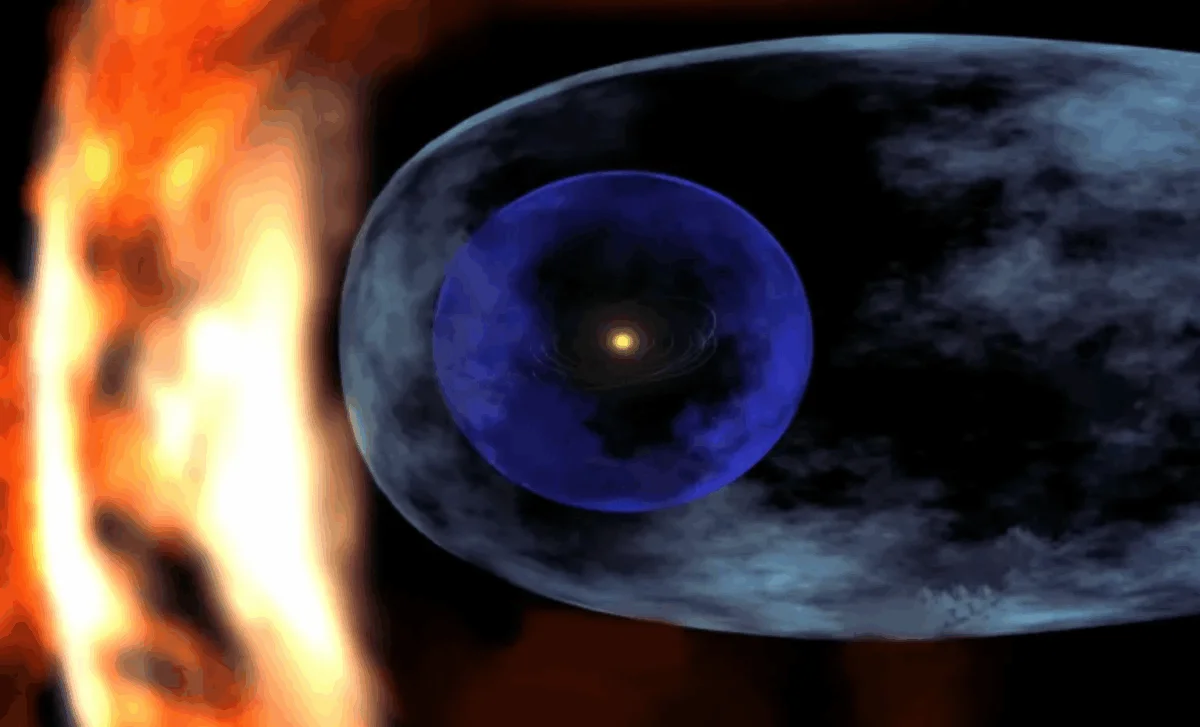
NASA's Interstellar Boundary Explorer (IBEX) mission has discovered that the heliosphere, the magnetic bubble created by the Sun that we live in, has ripples that change over time, likely due to influences from the Sun itself. These ripples could be caused by changes in the outward pressure of the solar wind, and the boundary of the heliosphere, called the heliopause, may change and oscillate over time. Future NASA missions will help us discover more about this mysterious bubble we live in.