
Cosmic predators: active black holes suppress star formation in neighboring galaxies
TL;DR Summary
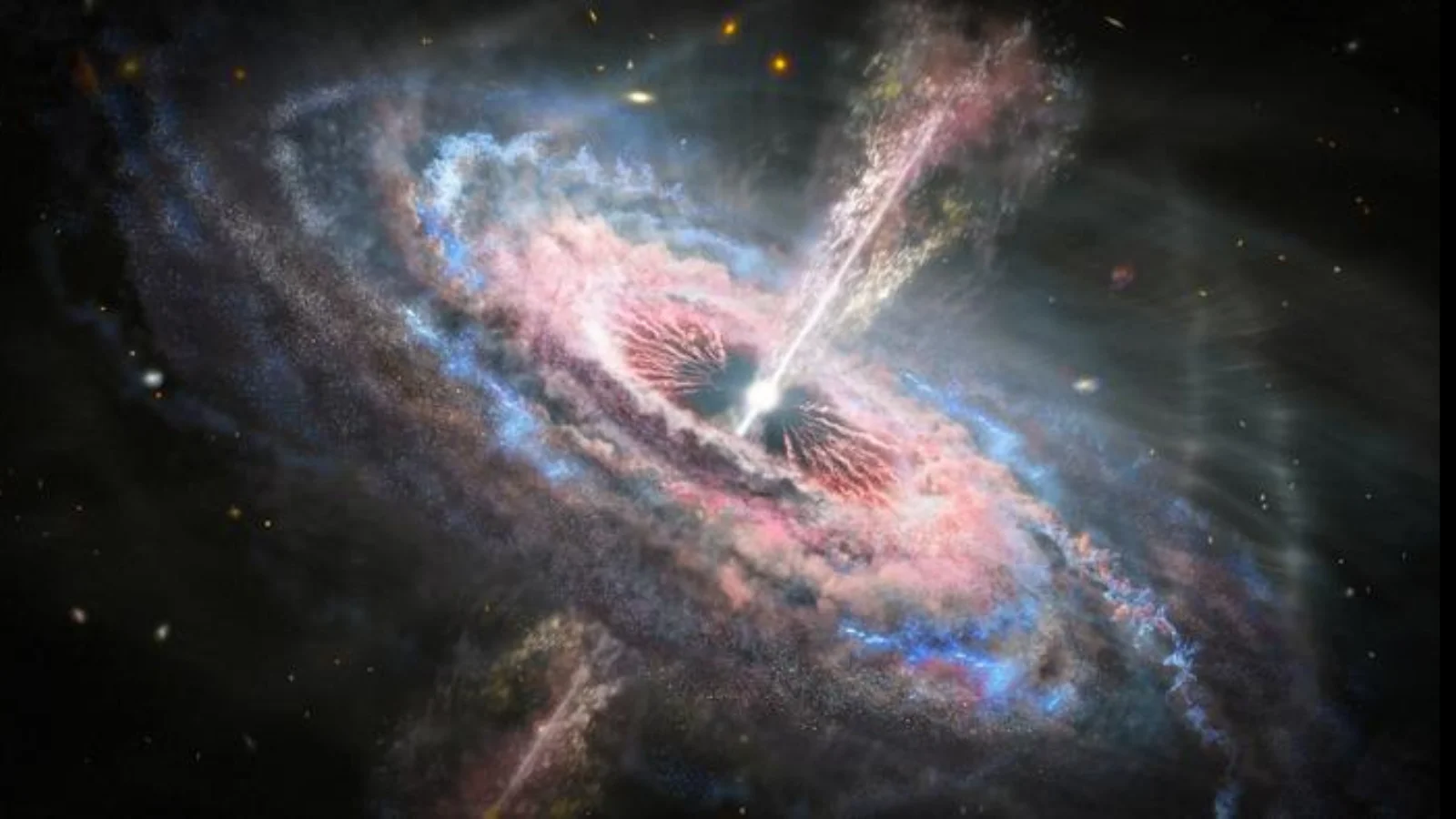
Astronomers using the James Webb Space Telescope found that one of the universe’s brightest quasars appears to quench star formation not only in its host galaxy but also in neighboring galaxies within about a million light-years. The study of quasar J0100+2802 showed reduced ionized oxygen in nearby galaxies, indicating suppressed star birth likely caused by intense radiation and outflows from the active supermassive black hole, suggesting a galactic “ecosystem” where massive black holes influence galaxy evolution beyond their own hosts, especially in the early universe.
Topics:science#astronomy#black-holes#galaxy-evolution#james-webb-space-telescope#quasars#star-formation
Reading Insights
Total Reads
0
Unique Readers
2
Time Saved
55 min
vs 56 min read
Condensed
99%
11,060 → 85 words
Want the full story? Read the original article
Read on Space