
JWST Detects Rich Organic Chemistry in a Distant Galaxy
TL;DR Summary
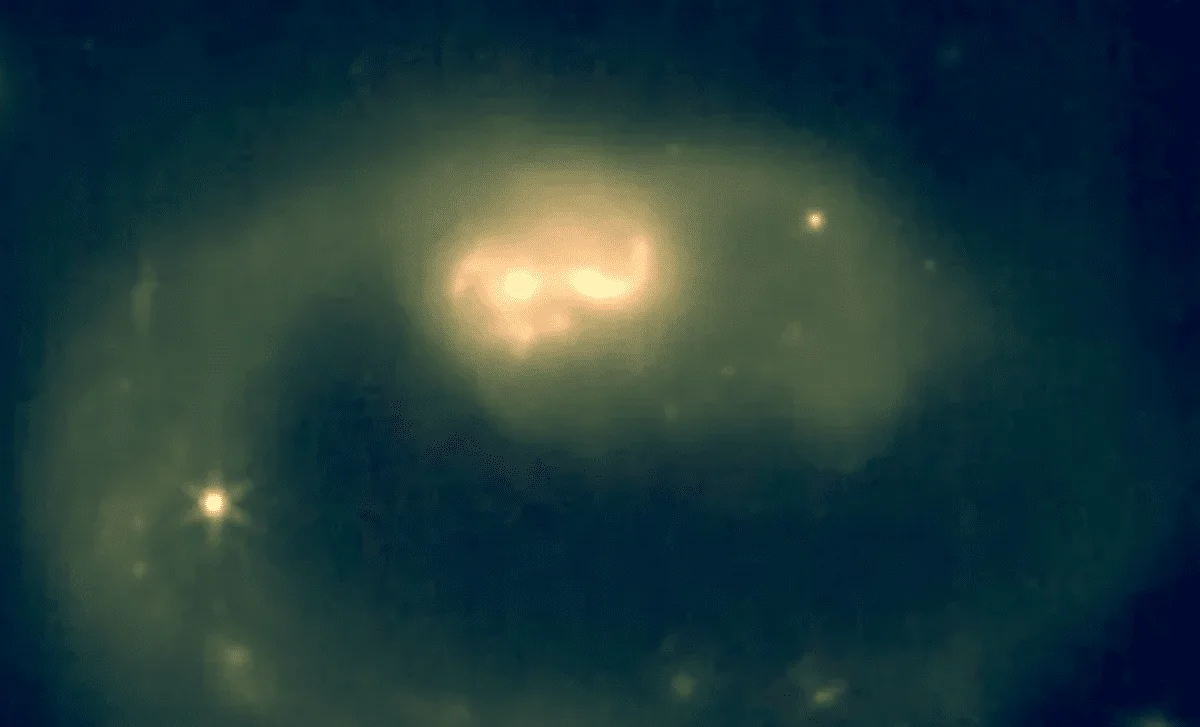
The James Webb Space Telescope unveils a surprisingly rich set of organic molecules in IRAS 07251–0248, an ultra-luminous infrared galaxy about 10+ billion light-years away. Detected molecules include methane, acetylene, benzene, and the methyl radical, indicating a complex chemical network far exceeding current models and potentially driven by cosmic rays that fragment larger carbon-rich grains into smaller organics. This suggests distant galactic nuclei can be ongoing sources of carbon for prebiotic chemistry, offering new insights into the origins of life and showcasing JWST’s power to study chemical evolution in the early universe.
Topics:science#astrobiology#astronomy#cosmic-rays#distant-galaxy#james-webb-space-telescope#organic-molecules
- James Webb Telescope Uncovers Key Ingredients for Life in Galaxy Over 10 Billion Light Years Away The Daily Galaxy
- JWST uncovers rich organic chemistry in a nearby ultra-luminous infrared galaxy Phys.org
- James Webb Space Telescope finds precursors to 'building blocks of life' in nearby galaxy Space
- Abundant Hydrocarbons In A Buried Galactic Nucleus With Signs Of Carbonaceous Grain And Polycyclic Aromatic Hydrocarbon Processing astrobiology.com
- JWST reveals hydrocarbon-rich material in a buried galactic nucleus Nature
Reading Insights
Total Reads
0
Unique Readers
18
Time Saved
5 min
vs 6 min read
Condensed
92%
1,094 → 92 words
Want the full story? Read the original article
Read on The Daily Galaxy