
JWST unveils a cosmic jellyfish, offering clues to how galaxies evolved in the early universe
TL;DR Summary
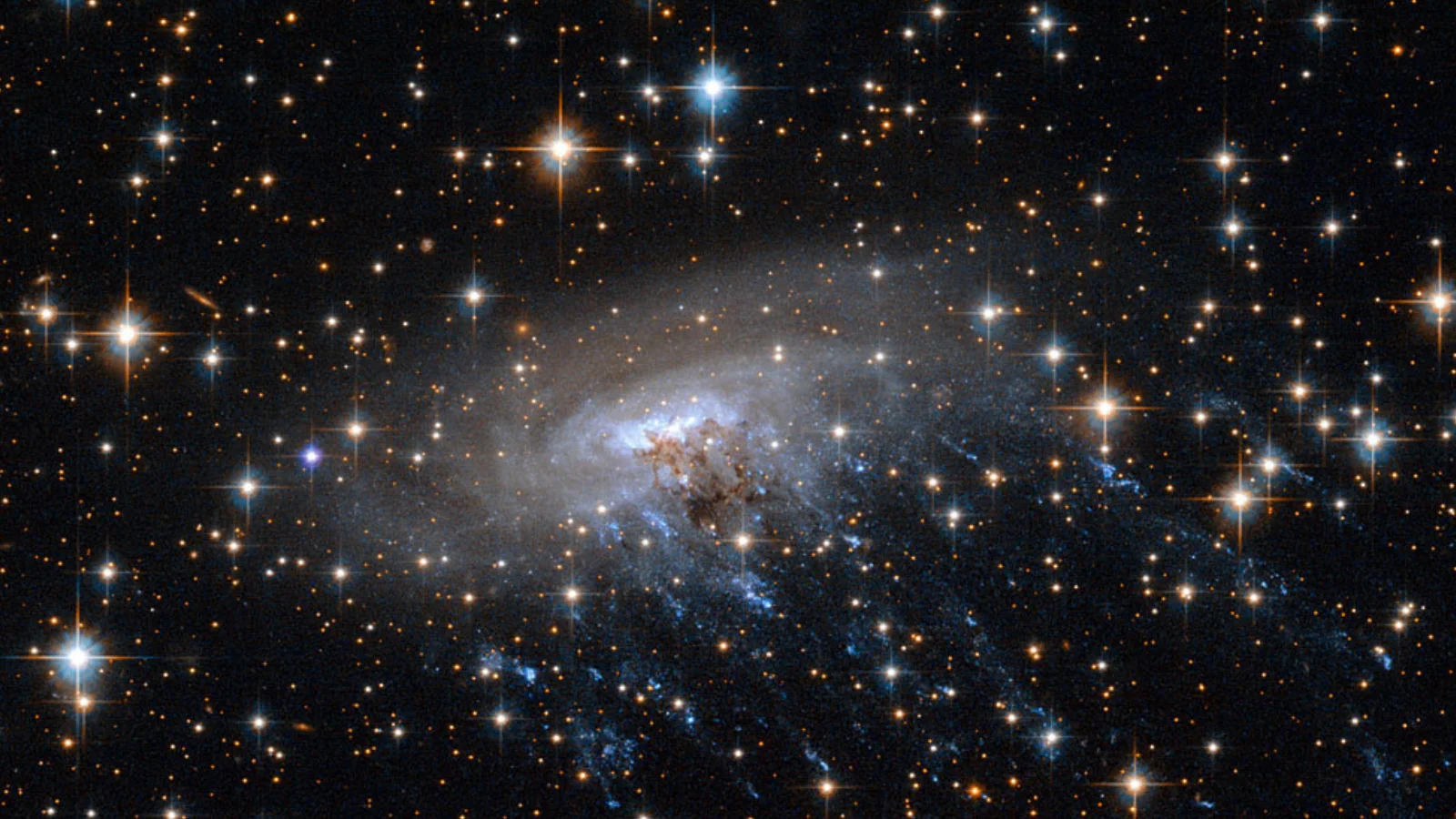
Using the James Webb Space Telescope, astronomers captured ESO 137-001, a jellyfish galaxy in the COSMOS field, showing trailing gas filaments stripped by ram pressure as it moves through a cluster. The image reveals blue, star-forming knots in the tails and places the system at about 8.5 billion years ago (roughly 5.3 billion years after the Big Bang), suggesting harsh cluster environments were already shaping galaxies earlier than thought; researchers plan further JWST studies to deepen understanding of galactic evolution.
Topics:science#astronomy#eso-137-001#galaxy-evolution#james-webb-space-telescope#jellyfish-galaxies#ram-pressure-stripping
- James Webb Space Telescope spots a stunning 'cosmic jellyfish' solve the mysteries of galactic evolution (photo) Space
- JWST spots most distant jellyfish galaxy to date Phys.org
- Highest redshift Jellyfish Galaxy University of Waterloo
- Astronomers spot ‘jellyfish galaxy’ torn apart 8.5 billion years ago The Brighter Side of News
- The Most Distant Jellyfish Galaxy Ever Seen Is Rewriting What We Know About Cosmic Death ScienceBlog.com
Reading Insights
Total Reads
0
Unique Readers
10
Time Saved
53 min
vs 53 min read
Condensed
99%
10,584 → 80 words
Want the full story? Read the original article
Read on Space